
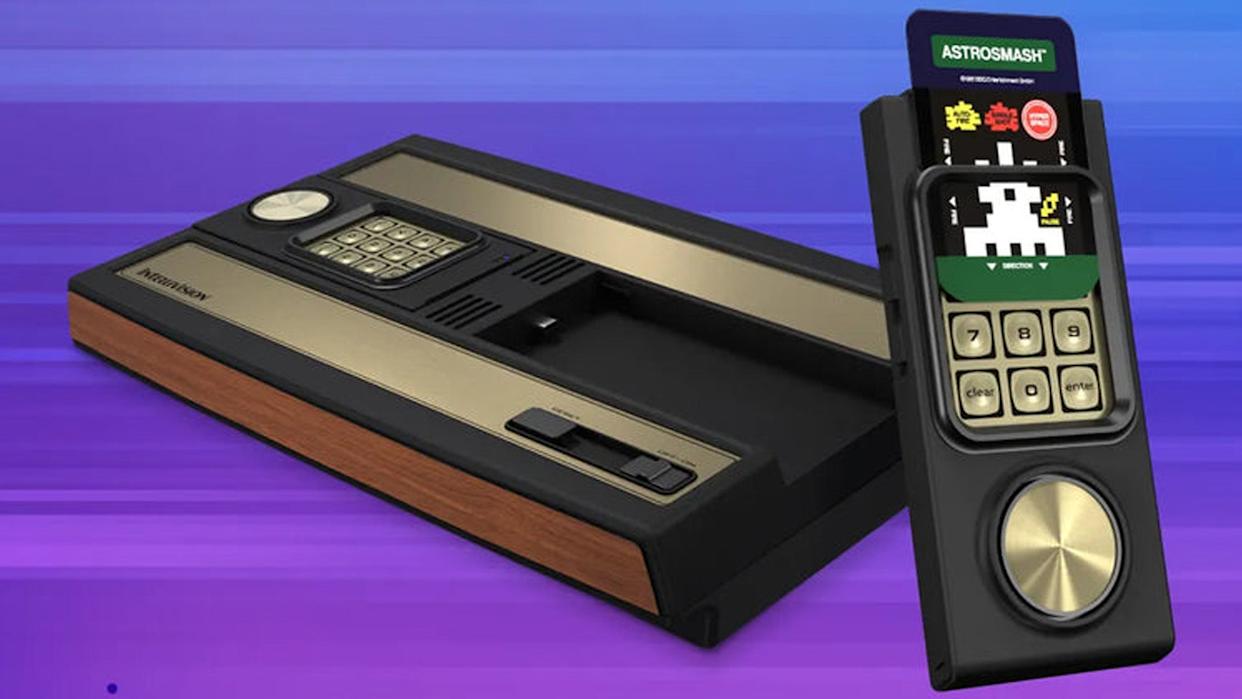
Atari’s Intellivision Sprint is the kind of product that would have felt impossible 45 years ago. Atari and Intellivision competed for living rooms in what is now known as “The First Console War,” but decades later the brands exist under the same umbrella.
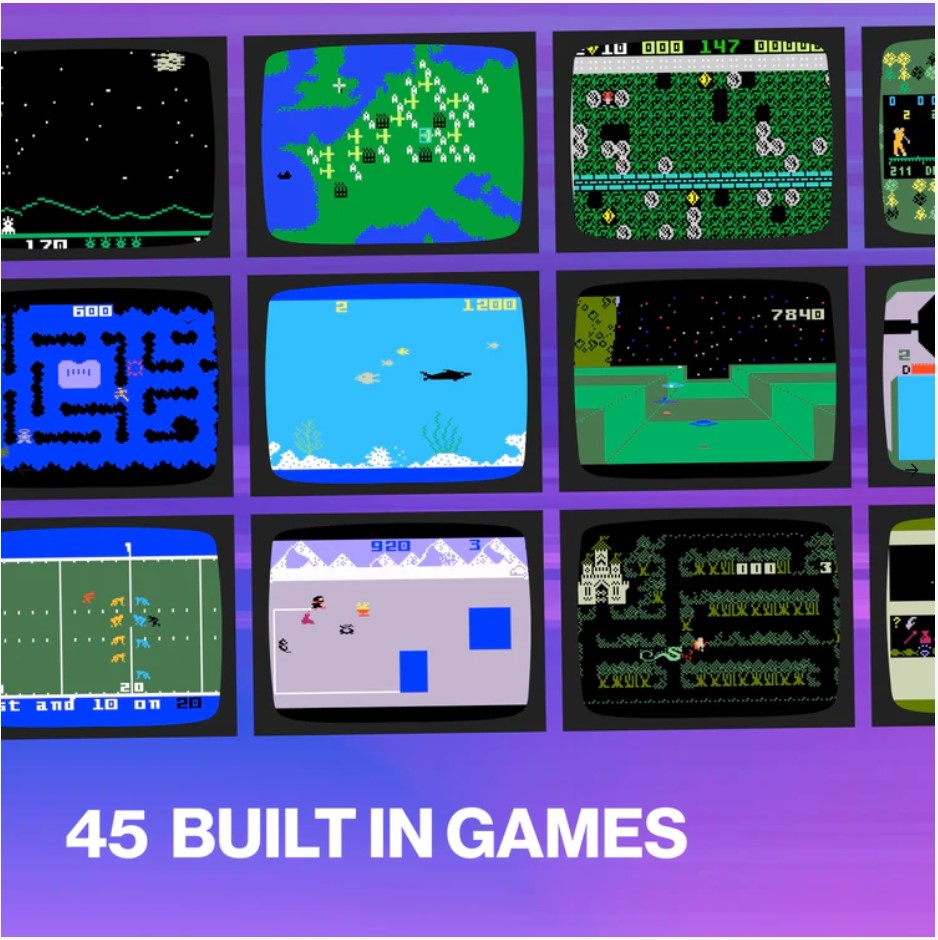
Overall, the Intellivision Sprint is surprisingly cohesive. It’s not trying to be a do-everything retro box, or an FPGA “purist” solution, or a subscription platform. It’s a focused nostalgia capsule with 45 built-in games, HDMI output, two wireless controllers, and physical overlays to map each game’s weirdly specific control needs, which feels very on-brand as an Intellivision device.
Past and present of Intellivision
The original Intellivision launched at the tail end of the 1970s and carved out a distinct identity in the early-’80s boom: more “serious,” more sports-heavy, a little more premium, and often more technically ambitious than what many families were used to at the time. Its calling card wasn’t just graphics or sound, but the controller: a disc-like directional control paired with a numeric keypad that many games relied on for extra inputs.
That’s why any modern revival lives or dies by the pad. Emulation is easy, but recreating the signature feel is the hard part.
Thankfully, the Intellivision Sprint nails the “museum piece you can actually use” aesthetic with its black-and-gold look, the retro stance, the sense that you’re booting up a curated slice of video game history rather than browsing a generic ROM list.
Setup is painless, too. HDMI does what it’s supposed to do, and within minutes I was hopping between a mix of familiar staples (Astrosmash, Shark! Shark!, Baseball) and deeper cuts that reminded me of just how weird and experimental the era could be.
The “headline” inclusion, at least for retro heads, is Boulder Dash being positioned as its first official Intellivision release, which is the kind of trivia-flex that tells you exactly who this product is for.
All that being said, Atari was the more popular platform at the time, and I’d wager a big reason for that is the joystick controller. It was just more intuitive and natural, especially coming from the arcade, rather than a circular disc with a numerical keypad attached, such as the Intellivision.
It’s odd, it’s quirky, and it’s still not very comfortable to use.
On the positive side, the controller is absolutely doing what it’s meant to do. In this new iteration, the disc acts more like a rocker-style directional input than a modern stick, and once your brain adjusts, it’s easy to understand why certain games were designed around it. Atari also deserves credit for going all-in on the overlays concept.
The Intellivision Sprint’s overlays are newly produced and designed to clearly map the controls per game, which is essential when the keypad is part of the experience rather than just a novelty.
On the negative side, “authentic” can sometimes be a polite way of saying “archaic.” The trade-off for historical accuracy is a controller I’d never choose to use willingly.
But if you grew up with Intellivision, the Sprint feels like coming home. If you didn’t, the Sprint can feel like you’re learning a new instrument.
Final verdict
The 45 built-in games are a deliberate, curated collection with enough variety to keep you bouncing around for weeks, but not so many that it becomes “scroll fatigue.” And because this is Intellivision, the collection’s personality leans into sports, arcade scoring-chases, and that distinctive early-console energy of experimentation before mastery.
There’s also a key limitation that helps define Sprint’s lane: it’s not pretending to be a cartridge ecosystem. Instead, it’s a “complete in the box” throwback. I’m not so sure I like the approach, admittedly. The inability to play original or new games from a cartridge is a huge limitation. Especially compared to the excellent Atari 2600+, which can play cartridges. That’s a practical compromise, but it’s a huge limitation.
Even more than the software lineup, the Intellivision Sprint’s biggest hook is the meta-story: Atari bringing back Intellivision. Atari framed its 2024 deal as a kind of symbolic end to a decades-long rivalry. The business logic is obvious: retro is healthy, physical nostalgia sells, and owning a classic brand plus 200+ game rights gives Atari a lot of runway for compilations, licensing, and boutique hardware like this.
The Sprint isn’t trying to win over the Steam Deck crowd. It’s aiming for collectors, retro-curious players, and anyone who wants a living-room conversation piece that’s more playable than a shelf relic.
You can purchase the Intellivision Sprint directly from Atari here.