
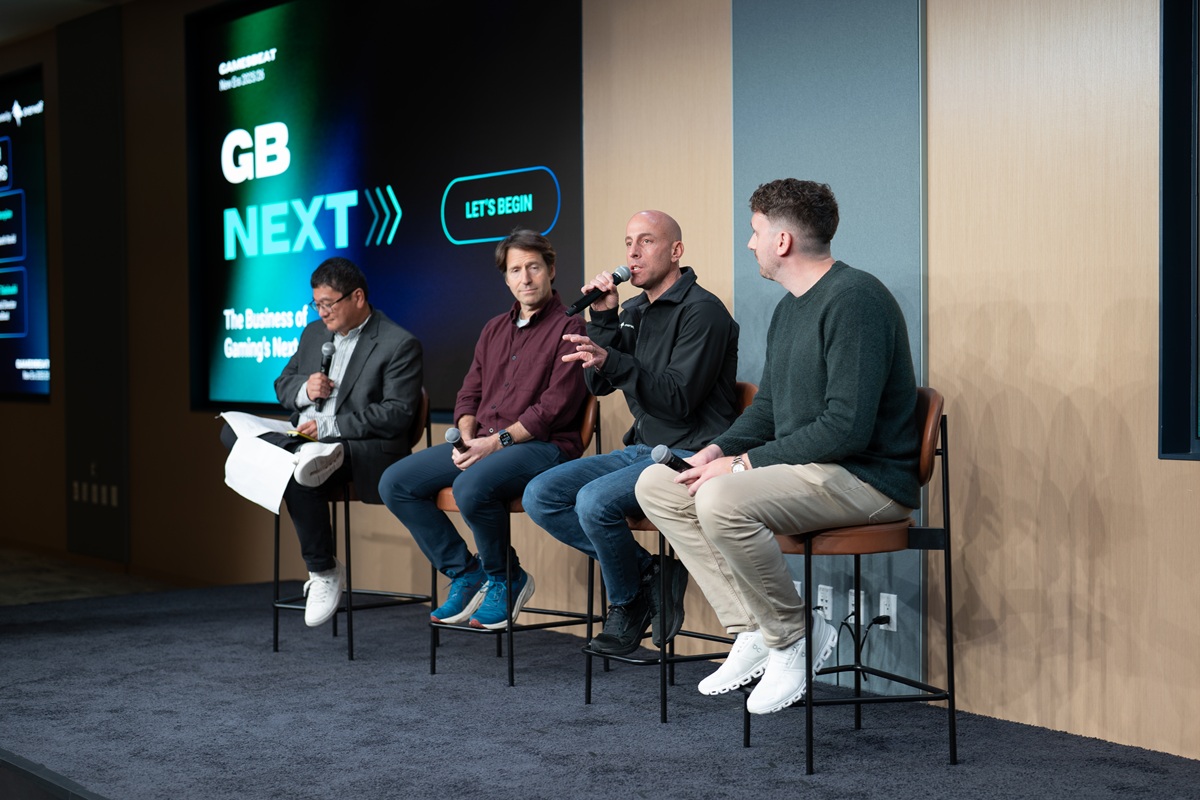
User-generated content has moved to center stage. And that’s where it was at our GamesBeat Next 2025 event, with a panel about how studios are building on three major ecosystems: Roblox, Epic/Unreal Editor for Fortnite (UEFN), and Overwolf/CurseForge.
I moderated the panel and it included Alex Seropian, CEO of Look North World, Uri Marchand, CEO of Overwolf, and Zachary Letter, CEO of Wonder Works Studio. They all carved out unique roles in the UGC ecosystem and they shared their collective wisdom.
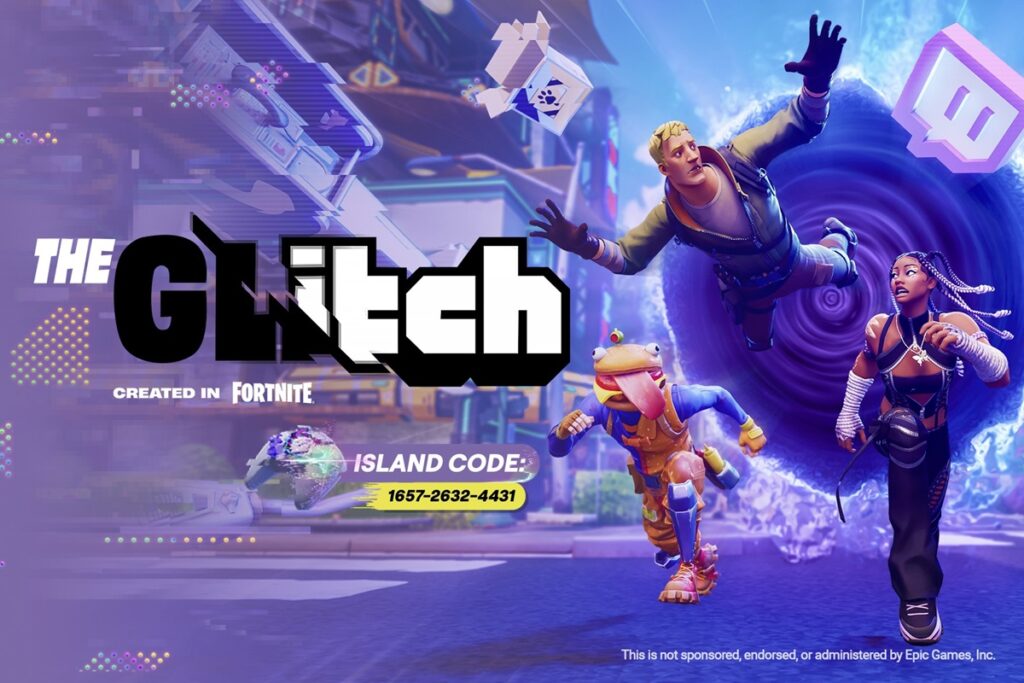
Our panel addressed how these platforms redefine how UGC experiences are built, distributed, and how creators earn. Seropian, whose long career goes back to his time as CEO of Bungie and co-creator of games like Halo, now runs a company that makes branded games for UEFN. Just like he did when he jumped from triple-A games into mobile, Seropian is now the first penguin diving into UEFN games.
Letter, meanwhile, had a good career as an influencer, garnering more than 10 million followers on social media with billions of views.
Six years ago, he parlayed that YouTube fame into running a studio focused on making games for Roblox. Roblox recently enabled self-serve IP licensing, where in a matter of hours Roblox devs can get a license to make games based on famous intellectual properties, like Sega’s Like a Dragon or Netflix’s Squid Games.
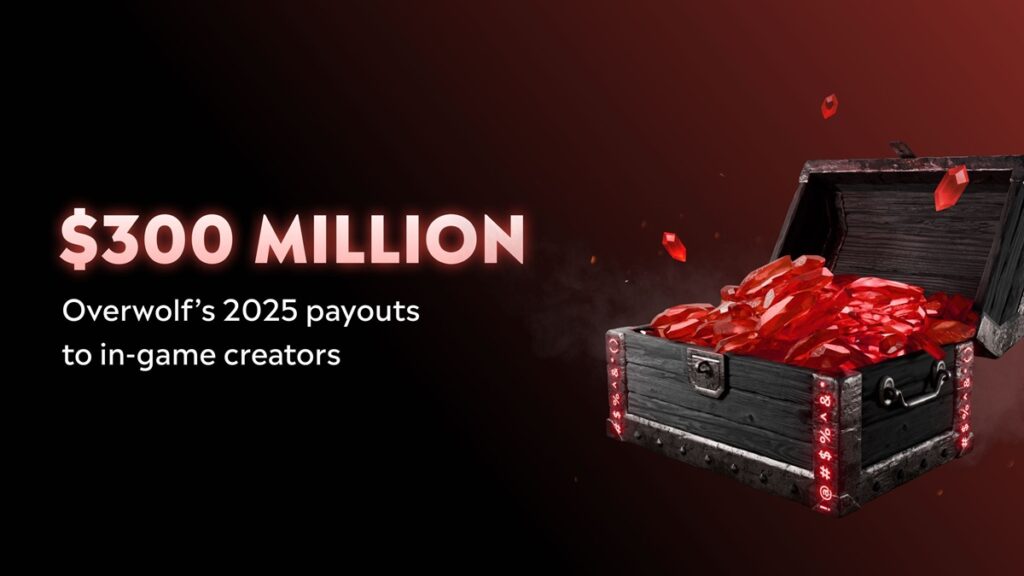
And Marchand oversees Overwolf, which makes tools for devs to create in-game apps, mods, and overlays for popular titles like Minecraft, The Sims, Hogwarts Legacy and League of Legends. As CEO of Overwolf and shepherd for CurseForge, Marchand has been working in UGC professionally for the past 15 years. He helps companies build UGC in a way that is safe and sustainable, with a real business model and Overwolf tools that provide support. This year, Overwolf paid out $300 million to creators.
Whatever your approach to UGC, the upshot is that UGC has transformed from a community-driven experiment into a central pillar of game growth. What triggered that shift and how are the leading UGC platforms (UEFN, Roblox, Overwolf) responding?
How do you get brands to understand things like authenticity and the right way to reach out to gamers on these platforms? We addressed these topics.
Origins
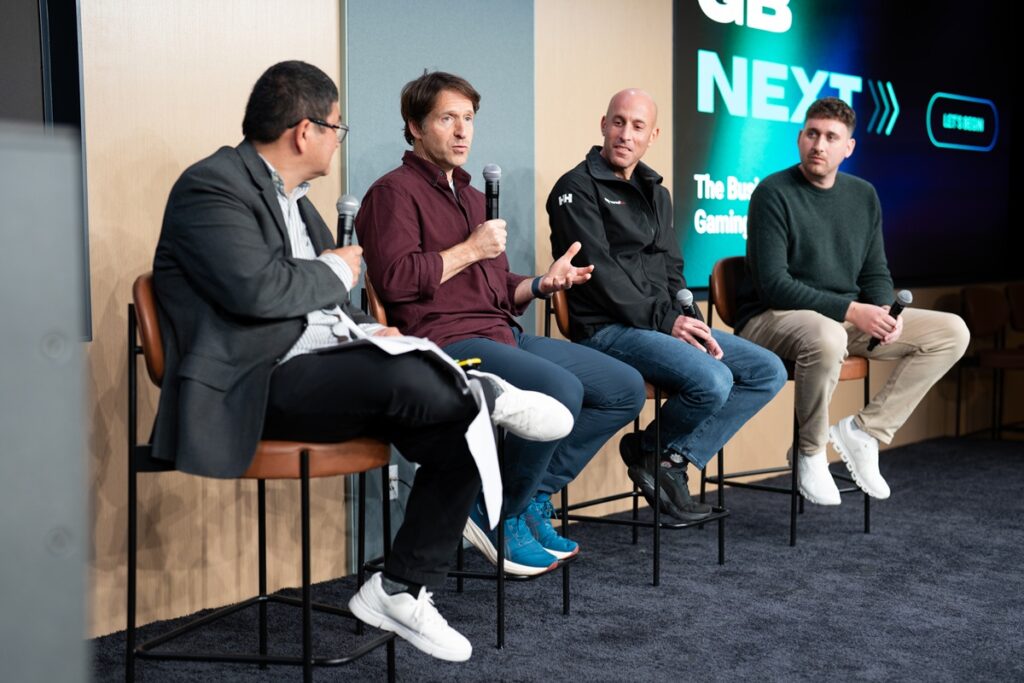
I started out by asking how UGC got on Letter’s radar. He said he started YouTube full-time in 2007 and he saw that transition where people moved to viewing or playing UGC content on platforms like YouTube, Twitch, TikTok, Reels and Instagram. Roblox and Minecraft took off, and he felt he had to make the move based on the quality of the tools for making UGC.
For Marchand, UGC was a part of his life as a gamer at first and ten it became his profession.
“When we started the company, we were modders. Like the whole thesis behind the company was that we’re going to build features that were missing from the games that we were playing back then, and we hoped to be able to build a big company from that,” Marchand said. “But then we faced all of the difficulties that sometimes creators face when they’re building content around existing games. So that was back in 2010 when we started doing this professionally, fresh out of universities and computer science.”
After 3.5 years, they ran out of money. Instead of building the mods and the engine, they focused on the engine, or the tools, to enable other UGC makers.
Seropian said that UGC is an interesting label and for the things happening on Roblox and similar platforms, he would call it something different. Back at Bungie, the team had tools like The Forge to make UGC.
“Somebody would reverse engineer one of our games and we’d hire them,” Seropian said. “It’s always been part of the game-making experience where we can make content that goes out into the world and then players can make content that comes back into the ecosystem,” Seropian said.
That was his introduction to player-creator ecosystems. The modern version of that is Roblox and UEFN. When the latter launched, it coincided with the end of Seropian’s mobile game studio. Now he thinks the engines driving those platforms are fantastic, and they can plug content into an audience of 150 million monthly active users on Roblox alone.
Marchand said he has seen a continuous evolution and the openness of game studios grow when it comes to UGC.
“Some studios that you wouldn’t think would feel comfortable take Warner Bros. Games, for example, put mods in Harry Potter: Hogwarts Legacy.
“Putting mods in this IP feels a bit risky, and they made a decision that this is actually important for the future of the franchise, so they went ahead and partnered with us to enable that,” Marchand said. “This is what we’re seeing in the kind of approach the industry is taking toward UGC and mods. People can do funny things and wrong things when it comes to UGC, if it’s not curated in the right way, then it could get risky to talk about brands.”
He added,”I think some platforms think about brand integrations, complete freedom, do what you will, more openness towards that you have found in Roblox. Some are a lot more closed. For example, Minecraft. There’s only so many things you could do and still be friends with Microsoft, which is really, really important for us. So I think it depends on the studio and depends on the approach.”
I noted that when Battlefield 6 debuted the Portal UGC platform, and one of the first thing modders did was to re-create the Call of Duty maps inside Battlefield.
How brands have evolved
Seropian said that brands know that the platforms have younger players on them. If the fans of the brands are getting older, then these platforms are an incredible way to get in front of and engage new players who aren’t familiar with the brand, he said.
“That seems like a huge opportunity for big brands to engage with these players, but there’s two ways to do it. One is like, ‘Hey, this is a marketing vehicle, and we just want to get our brand in front of these players.’ And that could be through an activation. It could be through something that looks more like advertising.”
Seropian added, “Another is to build an authentic, bottom-up experience, which is really hard. I think it’s probably the more effective thing to do for a brand. But you’ve got to realize that these platforms are like this generation’s punk rock for games. Y’all look like you’re all adults. I think you look at Roblox games, and probably a lot of you scratch your head and go, ‘What is this? Why is this so popular? And it is because it’s owned and built by this younger generation.’ So for an existing brand to come into the space and expect to be able to create something authentic, it’s not easy. Just like anything in games, it’s not easy.”
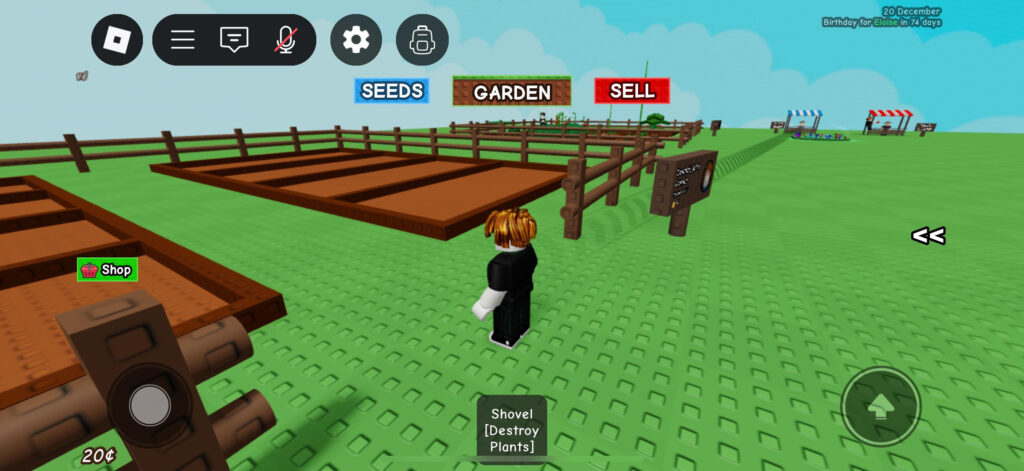
Letter noted that his company has the license to SpongeBob on Roblox and the company makes all of its games in four to six weeks from concept to shipping.
“We basically build an MVP (minimum viable product) and then live up it every single week until the game is no longer relevant. It takes a lot of trust from a brand to be able to operate so fast, when typical approvals are like one to two months. We’re shipping a game in one month or one and a half months,” Letter said.
He concluded, “It really is about finding the right studio and the right partnership, and evolving your process as a big IP holder if you want to work on these UGC platforms.”
I asked Marchand how his company paid $300 million out to creators. He noted they’ve been doing it as creators since 2010 and with the engine since 2013.
“We just started with apps, and then we evolved to mods. Then private servers. So I think it’s just the natural evolution of the company, on the one hand, expanding across multiple creative categories,” Marchand said. “It’s not just mods or just apps or just private servers. It’s all of the above. All of the growth of the UGC ecosystems contributed to that.”
The differences among the platforms

Seropian said the big difference on the platforms today is how gamer expectations have changed. The audience has evolved. On Steam, here are triple-A games that are doing great. But there is a category of new games like Peak where they’re hilarious but they don’t look like triple-A games at all.
“They look like, I think, people call it friend slop, which is an unfortunate name, maybe. But it really is all about that social play experience and the actual distillation down to the simple and pure game mechanics. If you’re making games in weeks, it’s where you have to focus and concentrate,” Seropian said. “We’re just going to see more and more of that. So that’s not necessarily contrasting the different audiences, but it’s more contrasting what is happening in the younger part of the game industry, where all the creators who are going to be making games for the next couple of generations are growing up and learning. I think that’s hugely influential.”
Letter said there is a difference in how people experience content. His t eam makes content for Ark Survival using Marchand’s platform. Those players are super deep and enthusiastic, Letter said.
“We can something like a Power Rangers pack there that could really blow up,” Letter said. “Whereas on UEFN, it’s less of a transactional economy. So it’s really driven more by these, these quicker, current event, gameplay topics that branch out from Battle Royale and Roblox is very much an open ecosystem. It’s not built around one particular game type, like a battle battle royale game,” Letter said.
I noted that Roblox launched its self-serve IP licensing program, where you can get a license in hours for a triple-A game..
So you do see different kinds of experiences or games that work better on different platforms.
“I love that they’re doing it. Obviously it allows so many devs access to these IPs that otherwise wouldn’t be able to sit through months of meetings and pitch themselves to some of these IP holders. I do think it’s still very early, and some of the IPS aren’t quite as attractive as like a SpongeBob or a Halo or something big and captivating like that, but I really like the platform overall for potential integrations into existing experiences,” Letter said.
I asked if the piracy on platforms like Roblox scares off the brands.
Seropian said, “There’s a lot of wait and see. Having done games with big properties or with brands, a lot of it is the one plus one equals three, right? That’s the advantageous math. That comes from a commitment and investment from the developer, the representative, the audience and the brand.”
Letter noted that his team has the exclusive license to SpongeBob on Roblox, and that gives the dev studio the brand the best chance to succeed on the platform.
“But when it comes to user created SpongeBob experiences that aren’t built by an official studio and won’t be necessarily super competitive to us, we prefer them to stay up even if they have small communities, because those small communities can be really, really loud,” Letter said. “If those experiences get taken down, the backlash that we receive being the license holder [is big]. So we always encourage, as long as the experiences are appropriate, that they stay up and we celebrate those individual creators, and their creations.”
I asked why EA doesn’t have a game on Roblox, or whether Grand Theft Auto VI will have mods. Seropian said that some companies and brands have audiences and platforms that they could build their own ecosystems around. They may not need to be on Roblox.
At the same time, Seropian said, “EA has the Sims. It seems like one of the biggest lost opportunities in the history of video games, that the Sims does not have their own platform, like a Minecraft. It’s such an amazing game and such a system like that seems just ripe for it.”
Will we see these big companies launch with cross-platform strategies? Will we see releases on PC, mobile, console and Roblox?
“That’s coming for sure. Whether it’s EA, I don’t know. And I think we look at what’s happened on just Roblox alone, in the last year. Their stock has tripled. The two biggest games of all time in terms of CCU have come off of that platform,” Seropian said. “If you just saw their earnings report a couple of weeks ago, they’re on this hockey stick trajectory. That means money. What does money attract? More money? So there’s more investment. So there’s going to be more people investing here, which ultimately will lead to consolidation. That’s what has always happened in every section of the video game industry, from PC to console to mobile. We’re going to see it on Roblox too. No question.”
Marchand said it requires a paradigm shift.
“If a company like EA is used to working in a different MO that needs to slightly change, go to much more rapid cycles, smaller teams, they’re going to be able to create something that is actually a fit to these platforms versus the playbook that you’re used to.”
I noted that solo devs are knocking it out on the Roblox platform. I wondered if they can work with the big brands or publishers directly. Or do they need to work with partners? Letter believes there are publisher-like natives like Janzen “Jandel” Madsen who can make these small devs successful because they understand the platform. Competing with them is hard.
“Going from zero to one is really hard, but going from one to 100 is easier,” Marchand said.
Letter said that his fame from his YouTube days helps, and his company works with creators to help them become successful. It works with them on Discord channels and tries hard to drive success throughout the community.
One audience member asked a question. There’s a creator strategy and there’s a go-to-market strategy. In mobile, that meant there were casual players and you can pay user-acquisition fees to get them to play your games. How has that changed with UGC?
“We learned the hard way in the first year or so. One is because the algorithm looks at output KPIs to determine how to promote your game within the ecosystem. It’s very important what the quality of the players is on the input side. So if you’re used to buying casual players at a low CPI through Facebook ads or whatever, you’re going to end up with poorly qualified players in your game who are going to produce poor output KPIs, which means the algorithm is going to disfavor you as a result of your spend,” Seropian said.
He added, “So that is a really important distinction between how the feedback loop works on these algorithmic discovery platforms, versus the performance in the paid platforms like mobile. Another thing is, like, when you’re engaging with creators, our initial instinct was, ‘Let’s go partner with a huge creator.’ Yeah, it’s expensive, but they got so many people following. And the reality is that you get a much better bang for your buck by partnering with many smaller creators who had a much better engagement with their audience, and would drive audience engagement in the games that they were playing, produce positive KPI outputs from the play sessions, which would benefit us through the algorithm.”
And he said, “So both of those two things were counterintuitive to us, coming from mobile, but they made a big difference.”
Seropian said that his firm develops games so quickly that they don’t create a big marketing campaign for them. But the company is fortunately enough to get a lot of daily homepage impressions, which spark organic growth for videos.
Disclosure: Overwolf was a sponsor of GamesBeat Next 2025.