
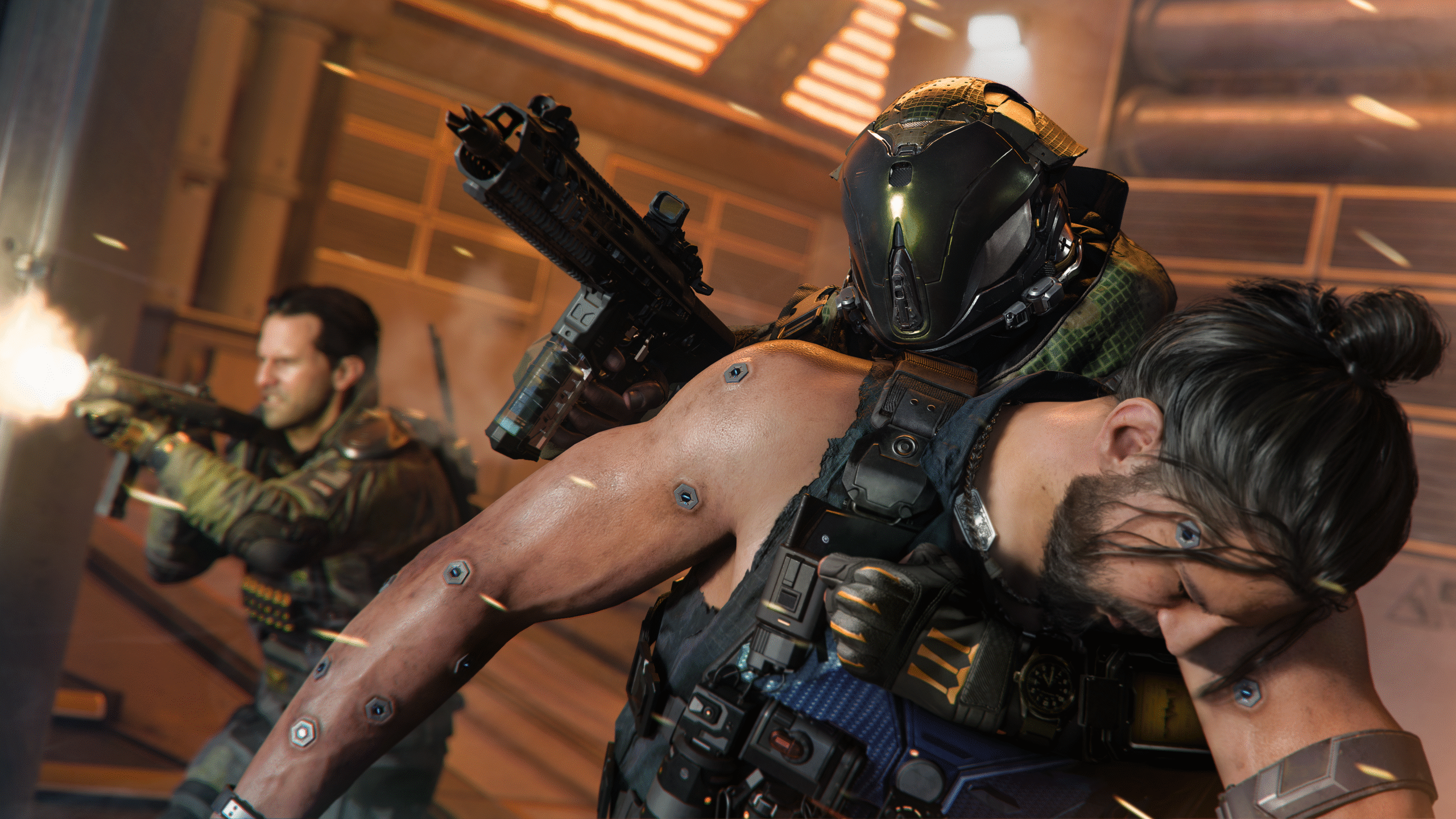
I’m back from a couple of days at Call of Duty Next in Las Vegas. There, I was able to dive into the design of Call of Duty: Black Ops 7 multiplayer in an interview with a couple of Treyarch’s creative leaders.
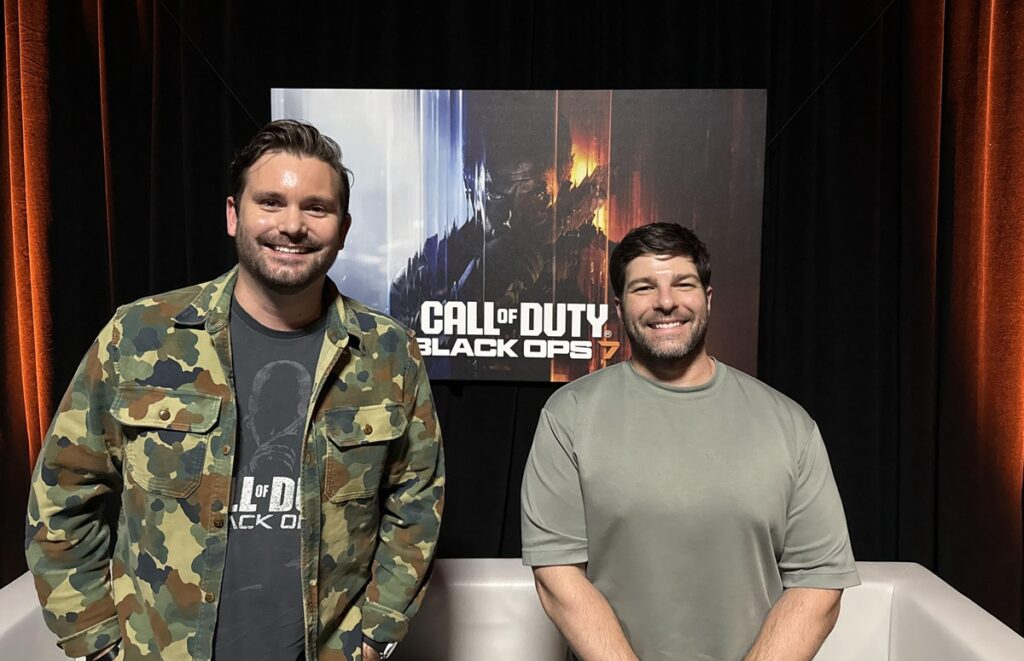
I spoke with Miles Leslie, associate creative director, and Lawrence Metten, associate director of design at Treyarch. We talked about the reaction to the reveal of more gameplay and other details at Next. And I asked them how they felt Call of Duty competes head-on with Battlefield 6 this year, as well as the familiar science fiction curse that has made it hard to stray from modern warfare scenarios.
They answered my questions and they gave your best pitch for why you should choose Call of Duty over the other folks. Please take a look. And check out my gameplay video of one of the multiplayer levels — The Forge in Domination mode — below. It’s great to get this download just a day ahead of the big multiplayer beta that starts tomorrow.
Here’s an edited transcript of our interview.
GamesBeat: How does it feel to reveal all of this today? Was there any particular reaction that you were hoping for?
Miles Leslie: Super excited to finally talk about it. It feels really good to talk about the game. The broadcast went well. We got all the messages out that we wanted. Really give clarity to players about all the exciting things that you can do in the game. And then watching the streams, watching people play, seeing what they could do. We’re most looking forward to the feedback and the impressions, what people really like from the beta and what are some areas for potential improvement before launch. Taking that back to the team and discussing it is exciting. It seems positive overall. Everyone was having fun. That was our main goal. We want people to have fun. There are so many ways to engage with multiplayer that people are going to get in the beta. The beta will be the true test, where players can dive deeper into it.
Lawrence Metten: That’s the next big thing, the beta. A lot of people played it today and reactions, but everyone gets a chance to play it in the beta. We’ll be watching, and playing.
GamesBeat: How many days away is that?
Leslie: Two days. October 2.
GamesBeat: Are there things you’ll watch closely during the beta? Something I noticed that was controversial for some people was taking away the tac sprint. The guys who run around with knives are going to look at that and think, “Oh no.” But it seems like your answer to them might be to play it and see what it feels like before they decide.
Leslie: The thing is, they can still take tac sprint. It’s now a perk. For us it was about how to focus the combat. The vision was, we wanted to evolve omnimovement. We wanted to have wall jump. With that came a refocus of the combat. How fast is it? How fluid is it? We have experience with advanced movement from Black Ops 3. We know we don’t want things to get too vertical and out of frame. We always want it to feel fair when it’s being used against you, but also when you use it yourself. That was a big part of it.
To the question about what to watch out for, a big thing for us is the wall jump and the omnimovement. We’re trying to take great care around focusing the combat. We’ll look at the beta and see how people use it, and also how they’re not using it. We want to see what improvements we can make before launch based on that.
Metten: We’ve had people come in and play. We’ve gotten great feedback. We have the CDL pros visit. We got feedback as far as the upper skill range from them. What’s great about the beta is we get to test this stuff and see the stuff at scale in a live environment. How do all levels of skill engage with these systems and our content? What kind of data can we collect? This is why we do the beta, to really dial stuff in for launch.
GamesBeat: Having everybody move at the same speed seems like it would benefit the game in different ways. If one person is going really fast and the other is really slow, and then one of them goes into a movement, how should that be executed? Do they get the advantage by going first or by going through the omnimovement animation faster? It seems like these things kind of re-synch the game.
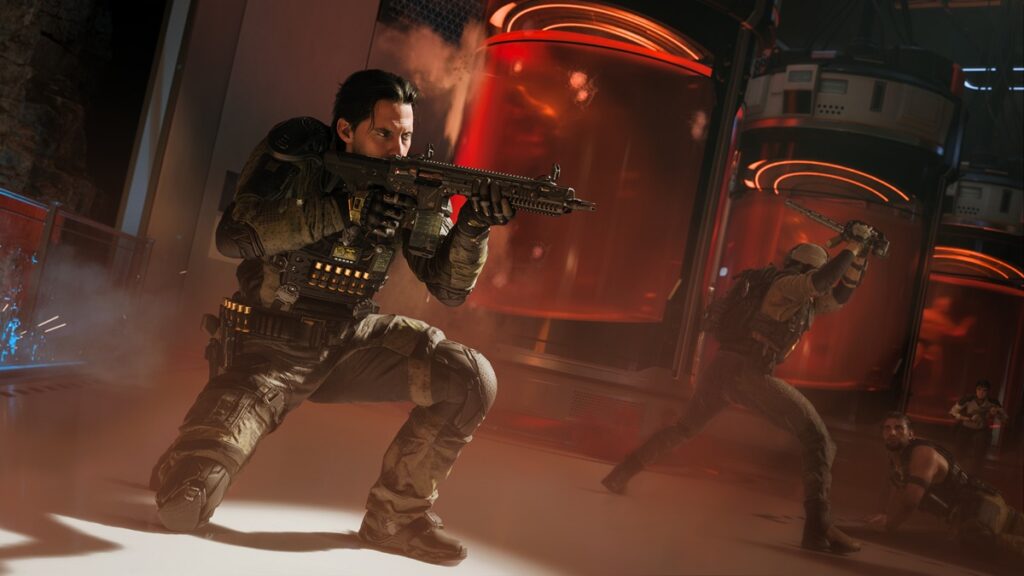
Leslie: Without tac sprint–obviously there’s a base sprint speed, and with it you’re slightly faster. But when you’re still sliding and wall jumping, those don’t change. That is constant for everyone. It’s really just the sprint that’s the change. If you want that, you will be slightly faster. You might get to a position faster. But the slower player also may not be where you expect them to be. If it’s a cover to cover fight, you as the faster player might get to cover, but they won’t be in cover yet anyway. You have an opportunity to surprise them, but you don’t know what they have as well. Maybe they wall jump around the corner. Maybe they throw a tac tool at you or whatever. That’s the fun chess match, cat and mouse of all the equipment we’ve got. Players that have the base speed versus the tac sprint speed versus all of the other ways and overclocks to customize. So many different ways for you to play how you want.
That’s the other thing about the beta. I’m excited to see how people engage with that. How are they customizing to play how they want? That’s going to be a lot of fun.
Metten: Our new overclock system, letting you use a piece of gear – whether it’s lethal, tactical, field upgrade, or scorestreak – unlock overclocks for it, customize the way that piece of equipment works, it’s in the beta. Are players unlocking them at the right pace? Which ones are stronger than others? Which ones are getting used or not? We’re going to collect a lot of great data on that and optimize that system.
GamesBeat: What do you think about things like really high skill games? Something like Dark Souls is not easy right at the beginning. I was playing Ghost of Yotei, and this thing where you had press about seven buttons at once to slice through the bamboo–
Leslie: The bamboo, oh yeah. I remember.
GamesBeat: You don’t need that for anything else in the game except this one point, to prove you are very fast at pushing buttons. The skill required to do that is pretty high. How do you think about putting that kind of challenge in a game?
Metten: We have some of that with the co-op endgame, for example. We looked a lot at roguelikes, where you’re on a run, and then you die and go back to square one. There is an element of progression, operator progression in co-op endgame, where you are leveling up your operator and unlocking skills and progressing your abilities as you play, but if you die, if you squad wipe, you’re back to level zero with that operator. You’re starting another run. Some of that high stakes–hey, should I really go after that objective? Do we have the right year to do that? Are we the right operator level to do that? That’s in endgame.
Also, things like weapon prestige are a little dangerous. When you reach max weapon level and you’re on the precipice–do I want to enter weapon prestige? I’ll get a sweet attachment if I do it. I’ll get access to these sweet camos, some of the remastered BO2 camos, if I go into weapon prestige and continue that journey. But I’m also going to reset all my other attachments, go back to weapon level one, and have to level through them again, similar to the classic prestige journey. That adds an element of risk. That’s what makes those systems exciting. It appeals to a player that is up for that challenge.

Leslie: On top of that, to your question about–games have skill checks. You play an RPG and you hit that wall sometimes. We make sure we don’t have that. All that stuff Lawrence talks about is opt-in. Even in endgame, we’ve designed it in a way such that across these different zones–you don’t have to go into the harder zones until you want to. We’re trying to make sure you never hit a wall across any of the content.
If you’re not ready to use wall jump, that’s fine. You don’t have to. You’ll get to that and progress it. If you don’t want to use overclocks across everything, that’s fine. Just start on one piece of equipment. It’s all opt-in, so you never hit a skill check, a point where it feels overly complex. But it’s there for you to master over time. That’s the benefit of Black Ops 7. There’s so much to dive into and master over time. You can do it at your own pace. You’re never at a point where it feels like there’s friction.
Metten: So many different players play the game. So many different skill levels. So many different levels of experience with Call of Duty. A lot of these systems are there when you’re ready for them. You can meet them there.

GamesBeat: It’s a Battlefield year at last. I think a lot of people are going to play both games, but some will make a choice, one or the other. How do you add up all the things that you think will shift them toward Call of Duty?
Leslie: We love the FPS genre. We play everything. We played the beta of Battlefield as well. From us, day one, it’s always been focusing on Black Ops 7 and our vision. The strength Black Ops 7, if you look at it, is there are so many ways to play. So many different ways to play. Co-op campaign, the endgame, core MP, skirmish, 20v20, round-based Zombies, the biggest map ever, survival, Warzone integration, DOA4. That is a strength on its own. But then on top of that we wanted to make sure it was a connected game. You can move around all of those parts of the game with your friends and get global progression.
We’re focusing on what we’re doing and executing on that to the highest degree possible. Fans are going to resonate with that. I think we’ll be successful, as much as we can be. They’re doing their thing and we’re focusing on our own thing. That’s the most important thing. There are tons of games. What we’re aware of–players have a lot of choices. Not only in games but in all kinds of media.
We have a saying, that experience matters. We want you to be rewarded everywhere. There are more ways to play in our game than ever before. They’re all connected, and we want you to feel like you’re rewarded everywhere. Because again, we’re competing with everything. Players have to feel like they’re welcomed in. New fans are welcomed in. Returning fans are welcomed in. That’s us focusing on our vision.
Metten: If you’re the type of player that maybe hasn’t jumped into campaign previously because you want to play with your friends online, or because you’re motivated by our progression system or the camo chase, you have that in campaign in BO7 for the first time. We think that’s an exciting opportunity to get some new players into the campaign that maybe didn’t try it previously. They can jump around from mode to mode with their squad, or play solo. It’s all up to you. There’s a lot of choice in the box with BO7.
GamesBeat: The science fiction touch here–it’s 10 years away. It’s not that deep into the future. With Infinite Warfare people felt like it was maybe not Call of Duty. How do you look at that and make that even in the future, it’s still Call of Duty?
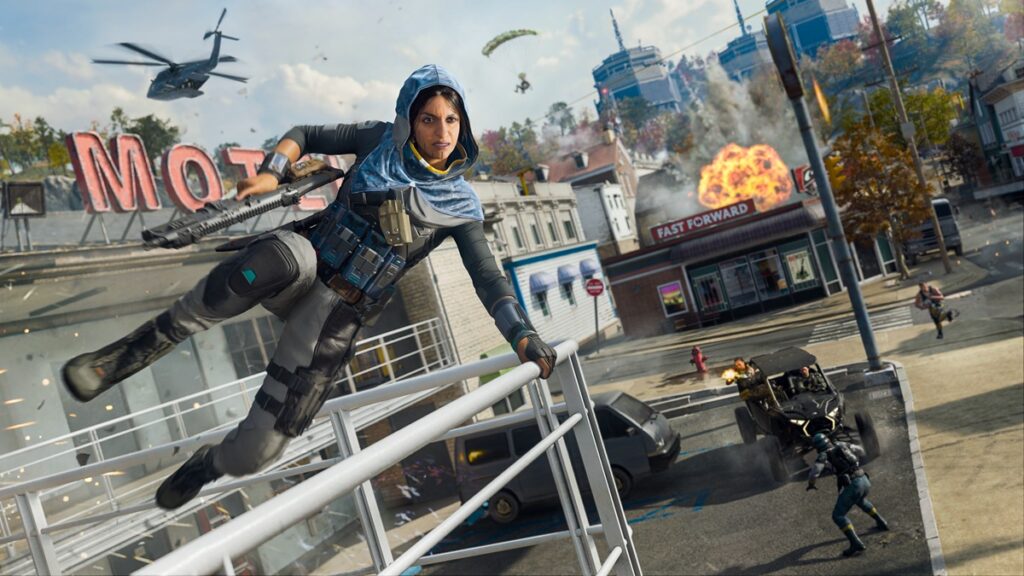
Leslie: We’re returning to a known era. We’re returning to Black Ops 2. In a sense it’s a sequel to that, because that was in 2025. We have a strong foundation of what a Black Ops-inspired fictional near future world would be. Obviously it’s not our world. It’s the Black Ops world. Returning to that allowed us to have the confidence to say, “It’s not science fiction.” No one said that about that game, and we’re 10 years in the future.
We have a foundation of technology and conflict and the stories that we left, that we’re returning to. 2035 allows us to lean into that even more without ever feeling like we’ve gone too far. We’re making sure it feels rounded, that it feels believable and plausible within the Black Ops universe. I think we’ve executed that across all parts of the game. Whenever we play it, it never feels like any of it feels off. It always just sits right in the pocket. That’s Black Ops 7 in 2035.
GamesBeat: I tried the sniper rifle in Warzone, the one that shoots four times at once. That was pretty cool.
Leslie: If you look at what we’ve always done in Black Ops, because we’re in black operations, things that no one hears about, it gives us the permission to play into things like prototype weapons that the government might be making, experimental weapons. That allows us to ground it. The public would never know that the military is working on a sniper rifle that can fire like that, or a different piece of equipment like an echo unit that can create a holographic image of yourself. That’s where we can ground it and play with it and have fun. It gives us permission. I think players, ever since the first Black Ops, have allowed us that permission and leaned into it. Black Ops gives you that flavor without pushing it too far.
Disclosure: Activision paid my way to Las Vegas for Call of Duty Next.