
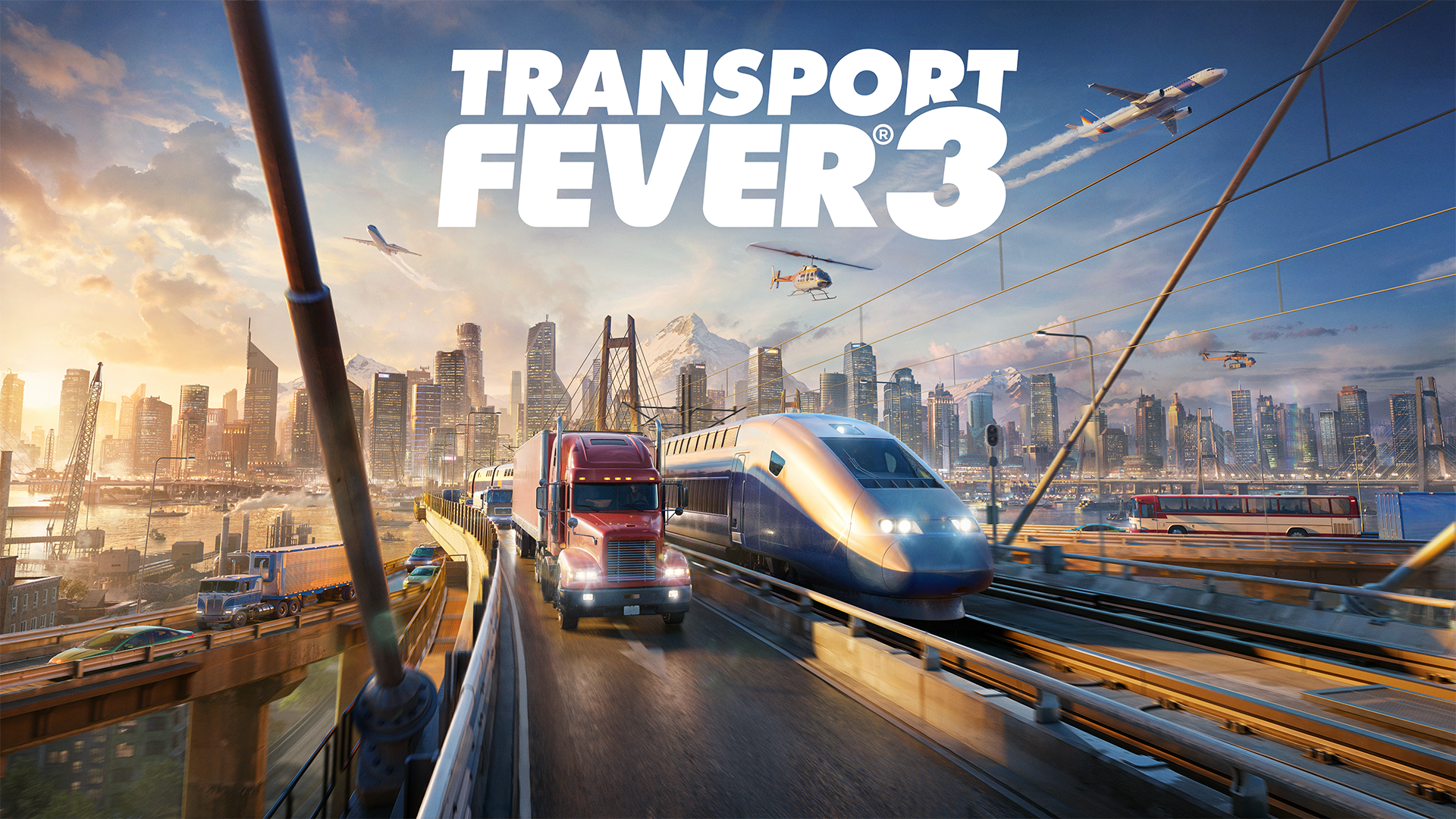
“Transport Fever 3” is Urban Games’ most ambitious release yet.
Announced in May 2025, “Transport Fever 3” is the third iteration of Urban Games’ popular “Transport Fever” series, following the PC release of “Transport Fever 2” in 2019. Developed over six years, the upcoming new edition of “Transport Fever 3” will feature over 300 vehicles, including new categories like helicopters and cargo trams, across 35 industries. Unlike the last iteration of the series, “Transport Fever 3” will be released simultaneously for both console and PC, although Urban Games representatives declined to share more specific details about the game’s planned release date in 2026.
“The budget is fivefold the budget of ‘Transport Fever 2’ — so, obviously, there are also financial targets that are behind it,” said Urban Games publishing manager Nicolas Heini, who noted that “Transport Fever 2” has sold over 2 million copies thus far in an interview with GamesBeat.
On February 13, GamesBeat attended Urban Games’ first-ever in-person showcase of “Transport Fever 3” in New York City. In addition to a playable demo of the game, the event featured conversations with Heini and other Urban Games staffers involved in the project, including lead programmer Filippo Leonardi, producer Małgorzata Bogatko and community manager Sam Bennett, which revealed how the game evolved and expanded throughout its six-year development process. Here are some of the key takeaways.
Campaign mode is a core element of “Transport Fever 3”
“Transport Fever 3” features a significantly expanded campaign mode compared to previous iterations in the series, with five more missions than the three included in “Transport Fever 2.” The upcoming title’s campaign, which includes scenarios spanning between the years 1900 and 2033, features a more detailed story than past titles in the series, with a character named Andrew (or his granddaughter, Andrea) accompanying the player across missions as they march through time, although Heini made it clear that “Transport Fever 3’s” campaign mode does not represent a cohesive story mode.
Players are pleased with “Transport Fever 3”
During the preview event on February 13, Heini teased that the final campaign mission of “Transport Fever 3,” which takes place in 2033, involves space travel. The addition of spacecraft, helicopters, cargo trams and expanded features for vehicle types like ships are among a wide range of updates and expansions added to the title’s gameplay features during its six-year development process.
In addition to members of the press, Urban Games invited some creators and influencers within the simulation gaming space to attend the preview event — and their feedback was generally positive. City building simulator YouTuber Tacticat was at the event to compare “Transport Fever 3” gameplay with “Transport Fever 2,” finding that the new title was significantly easier to pick up and understand, with more intuitive, user-friendly systems.
“On top of that, the graphical fidelity is noticeably improved in 3,” Tacticat said in an interview with GamesBeat. “The added detail really enhances the overall presentation and immersion. I’m especially excited about the expanded selection of late-game vehicles, and of course the new day-night cycle.”
Urban Games is going to great lengths to avoid using AI in “Transport Fever 3”
During an introductory talk at the February 13 preview event, Heini described Urban Games as a “non-AI studio,” making it clear that the company does not use AI tools at any stage of its development process. However, he noted that early beta testers of “Transport Fever 3” had flagged characters in the game’s campaign mode as looking AI-generated, and that his team was in the process of re-drawing all characters to help give them a more natural look.
Urban Games’ experience with AI false-positives represent a growing concern within the game development ecosystem. As platforms like Steam start to require developers and publishers to flag AI-generated work, developers are also finding it increasingly necessary to move their art styles away from the semi-realistic aesthetic that has become pervasive in AI-generated art.
“If you’re trying to be realistic without being too realistic, that’s where AI is quite present; I would say it’s a bit of this,” Heini said. “When we started working on this game, generative AI was not even in the conversation — you knew AI from ‘I, Robot,’ or something. So, things have just changed, and because it’s a very sensitive topic, we are very serious about it.”
“Transport Fever 3” is socially conscious — but not political
The first campaign mission of “Transport Fever 3” takes place in New Orleans, Louisiana, in 1900. The narrative of the mission leans heavily into the racial tensions in play in the location during this time period, featuring friendly banter between the city’s white mayor and a Black jazz musician that touches on their disagreements about food, music and other elements of Louisiana culture.
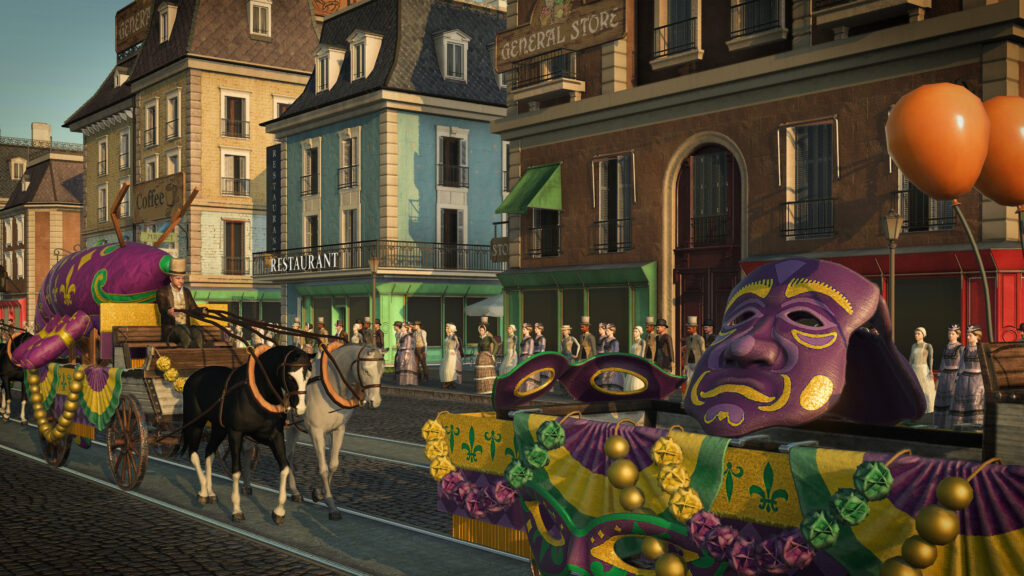
In recent years, some corners of the gaming industry have pushed back against what they perceive as socially conscious or “woke” content. Although “Transport Fever 3” is explicitly not a political game, per Heini, the Urban Games publishing manager told GamesBeat that the game is meant to showcase the reality of the historical moments included in its campaign mode, including the good and the bad.
“Our game is also absolutely not political — it’s very important for us — but we are telling stories, and it’s also important that there’s just certain things you cannot ignore,” he said. “It wouldn’t be okay to just rewrite history completely, right? So, what we did is we tried not to leave anything out — but we’re not glorifying anything.”