
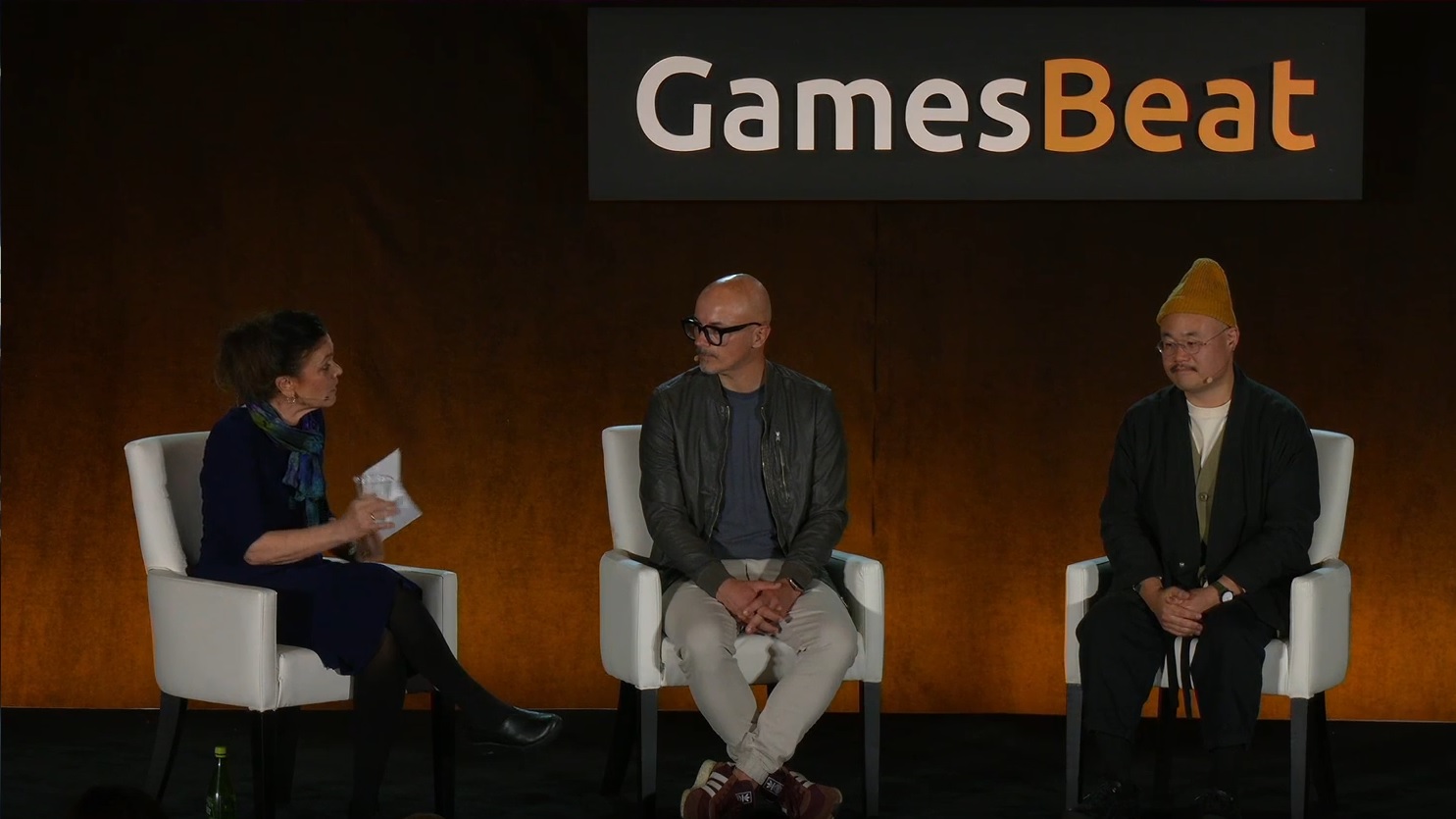
Scopely’s Massimo Maietti and Howard Shin joined Game Thinking’s Amy Jo Kim at the GamesBeat Summit to talk about how to reimagine IPs as successful games. The big secret? It’s almost not about the game at all.
That’s not entirely true, but it isn’t inaccurate, either. Maietti and Shin both work on Scopely’s Monopoly Go. Monopoly is an established thing. It’s been around in board game form for almost a hundred years. Monopoly is, if anything is, an institution.
So the problem isn’t in making a good game. The problem is how to, basically, translate that game. Monopoly the board game works … as a board game. Does Monopoly work as an app? Well, it already exists as a digital game. So the answer isn’t no. How, then, to make it unique? How to make it stand out, without losing its mass appeal?
“If you wanna make a game for a very sort of universal audience, as we’re finding today that the Monopoly audience is,” began Maietti. “Maybe making a game that has a high skill ceiling and is very complicated is not the right way to go.”
Maietti explains the path from beginning to end. Adding luck as an element to make the game more fun. Making the game asynchronous to let everyone play at their own pace. Adding social elements into the world so players can connect with each other, even when not directly playing together.
The most important, and most difficult lesson, according to Maietti, is in figuring out the thing people love and expanding on it.
“It’s about the multiplication of capital,” said Maietti. “You are rich, and you get richer. And it’s somewhat effortless, right? I’m rich enough to buy a hotel, people stop there and I get richer.”
Figuring out the look
So that’s part of the design solved. But how do you make the game look right? It’s a board game. It’s simple shapes, solid colors, text and a few iconic pieces.
“Monopoly doesn’t have the deepest lore, or narrative,” said Shin. “That didn’t feel like the right path to go. More importantly, we started from the ‘why’, like why are we building this? From there, everything started to come into place.”
Shin and the rest of the artists ultimately decided to bank towards the inherent comedy of Monopoly. The board game itself is something of a scathing indictment of capitalism. That’s maybe not the best direction here. Instead, they drove towards humor.
“Everything was over the top,” said Shin. “Nothing really needed to be spoken, or written out, because the action should do most of the talking.”
With the direction decided, and the look established, and after some playtesting and problem solving the Scopely team had a game on its hands. How did they get it right?
The answer seems to be that they designed for their audience. They weren’t just making a game. They were making a game for people.