
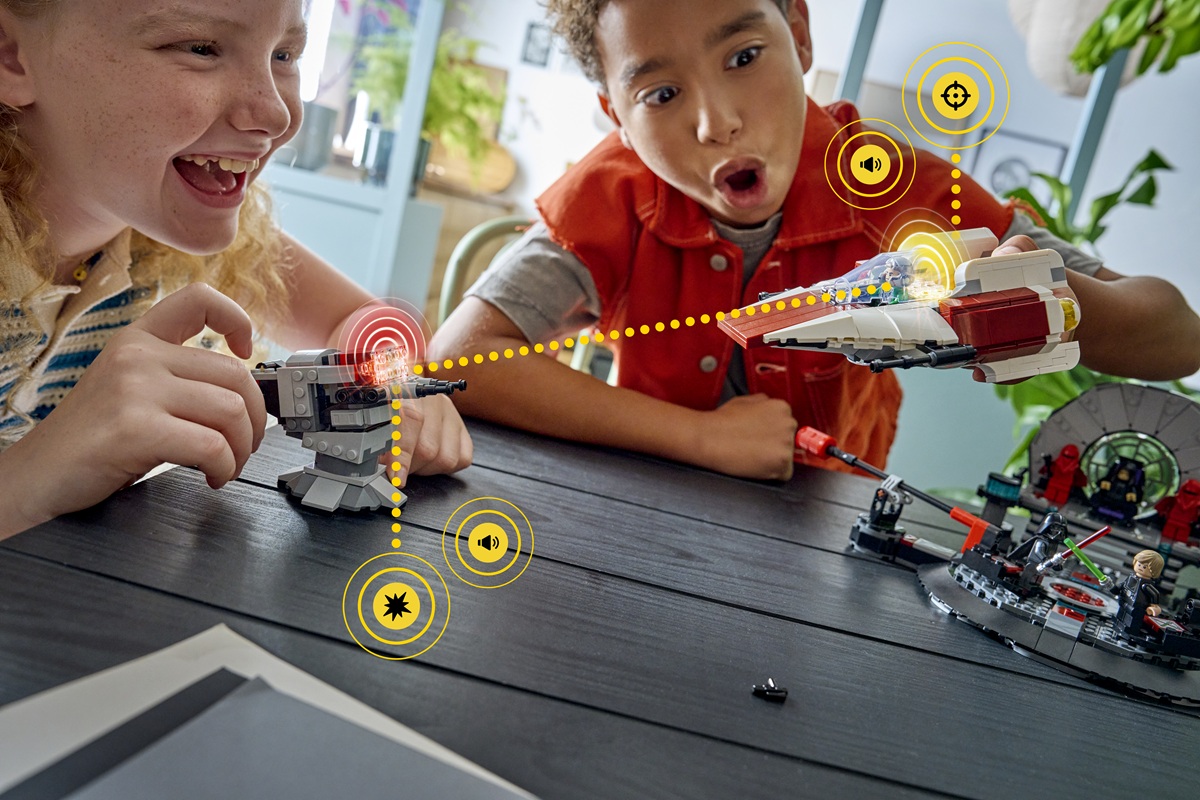
Lego Group introduced its innovative Lego Smart Play, which brings electronics to its plastic bricks, in January at CES 2026. And its main partner on stage was Disney, which led the way with its Lego Star Wars. But this was far more than a brand slap.
The project was in the works for eight years at Lego, as the entertainment company sees Smart Play as the biggest evolution of its play system since the introduction of the Lego Minifigure in 1978 and the launch of Lego toy bricks in 1958. In other words, this is the biggest thing that Lego has done in recent history, and it chose to ally with Disney first.
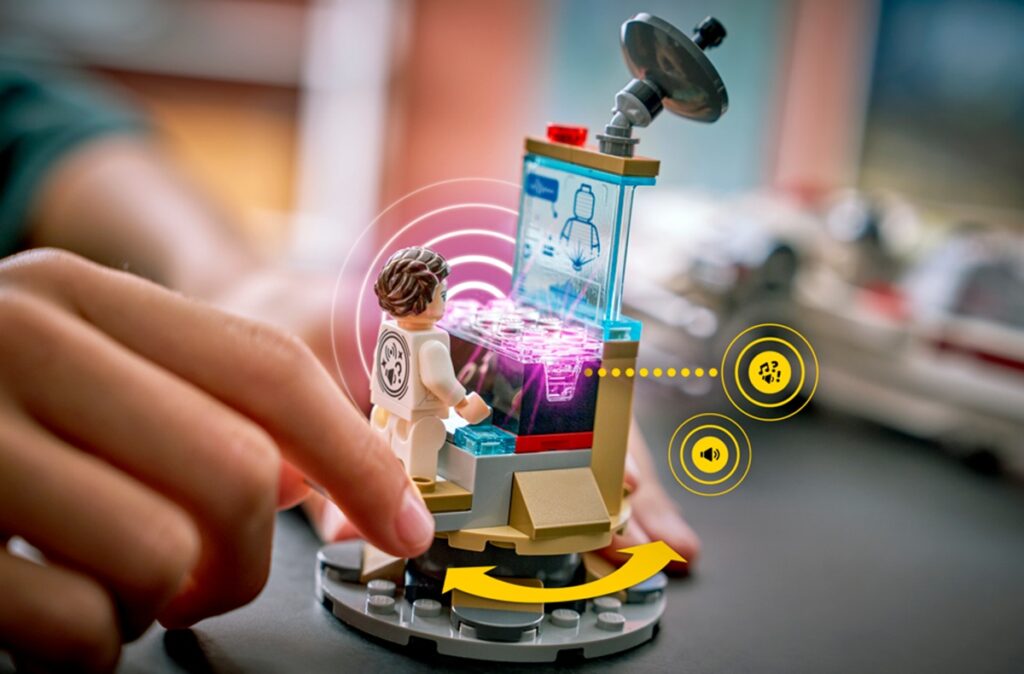
Lego Smart Play combines different platform elements — the Lego Smart Brick, Lego Smart Tags and Lego Smart Minifigures – so they toys can react in real time to bring an interactive play experience to kids that is full of exploration and imaginative storytelling.
Yet the toys are nothing without the worldbuilding, content and storytelling of Star Wars that fire the imaginations of children — and adults. The Lego Smart Play sets are launching this month in select markets, and I interviewed Divya Dalal, vice president of global hardlines at Disney Consumer Products, about why Disney got so closely involved.
A way for Disney to hang onto kids

Dalal said consumers are evolving in today’s world.
“There was a reality that we’re starting to lose kids (as Disney fans) earlier on in life, and we want to make sure that we keep them relevant and engaged in ways that we can. We’ve had a longstanding partnership with the Lego Group over 25 years,” Dalal said. “Tons of people love to buy the Lego store sets. But how could we be more relevant focusing on kids six to nine? To try and think about how they’re moving into social play. They’re going into video games. They like interactivity.”
Dalal added, “We don’t want to be competing with that. We want to take knowledge about why they like those areas of play, and then we push ourselves to just try something differently and really push new ways to play.”
Kids toys like construction and building sets are safe and known.
“Lego came to us in Denmark about two plus years ago, and said, ‘Hey, we have an idea. It’s tech. So it’s going to change. It’s going to evolve. We’re still kind of studying it out, but we think that Star Wars would be the greatest IP to put torwards it because you have endless amounts of storytelling and play starters.'”
There were endless ways to tell new stories in the Star Wars universe using a creativity systems for the kids to start with. Lego has been working on the project for eight years.
“It’s about being able to find new ways to engage our fans. They see these great, epic stories on film and on screen, and they want to engage with more creativity, taking that adventure with a little personalization and bring it to your home.”
The bricks have lights and sounds and different combinations of play.
“You don’t know how kids are going to react because part of it is discovery. We want them to keep playing with it, not just to play it one time, and then you know exactly what happens — it’s like Woody being abandoned by his kid in Toy Story.
The play is open ended.
“You can have a battle. You can fill up the gas tank of vehicle. We have those story starting elements that encourage kids to play a little bit longer and really engage with our stories,” Dalal said.
You have to win every generation
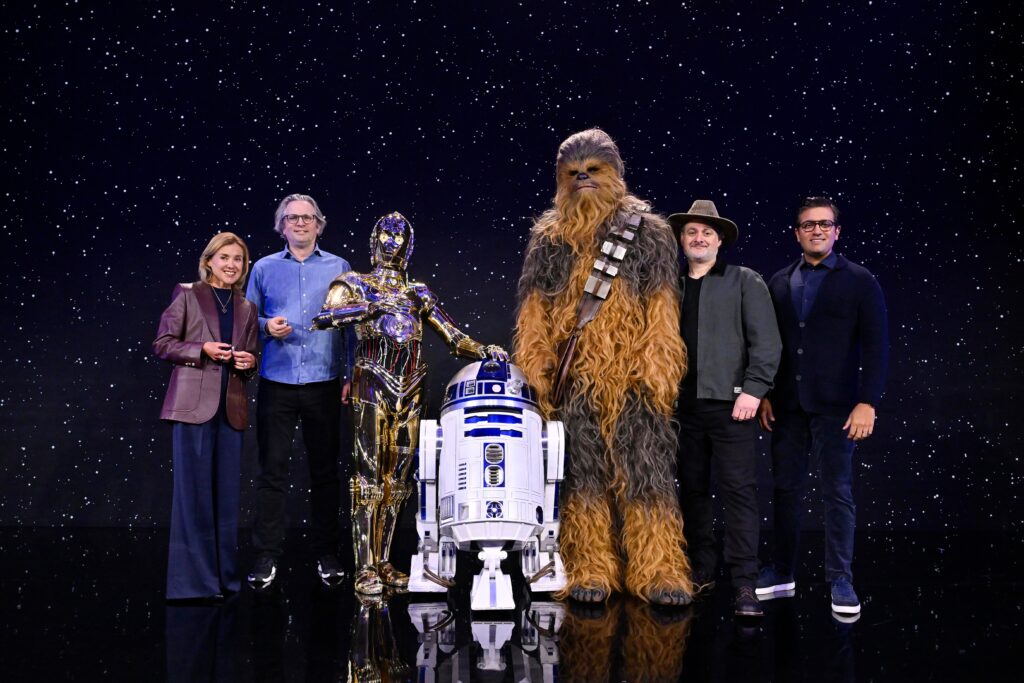
I told Dalal it reminded me of what Disney CEO Bob Iger said when he invested $1.5 billion in Epic Games and Disney partnered with Fortnite. Asked why, Iger said that Sean Shoptaw in the games division showed him demographics that showed that Disney was missing the kids who were turning to games like Fortnite and Roblox. If Disney couldn’t reach those kids through traditional play, in a generation, its brand would be gone.
“We have to be something for everyone, for the preschooler who’s the fan of tomorrow, for the adult who’s grown up with us with 30 or 40, years of history and excitement of storytelling. That consumer evolves and what they’re doing, and how do we show up? We’re always a theme park. We’re always theaters. We’re also consumer products, and consumer products has the flexibility to show up, whether that’s through beauty or toys or gaming, and so that’s making sure that fans can stay connected to the brand for ages and stages.”
I noted that Nintendo has introduced a new line of toys at its store in San Francisco. And Nintendo has a similar problem. Analysts at Magid Games pointed out that kids are engaging with games at younger ages — but mainly through smartphones and not Nintendo products. Nintendo has the same urgency to win kids over with its brand.
The key, Dalal said, is “just thinking how we can engage them, because if they’re doing different things, they can still love our stories, and they can still love our characters, but how do we just behave relevant for them?”
Bridging generations
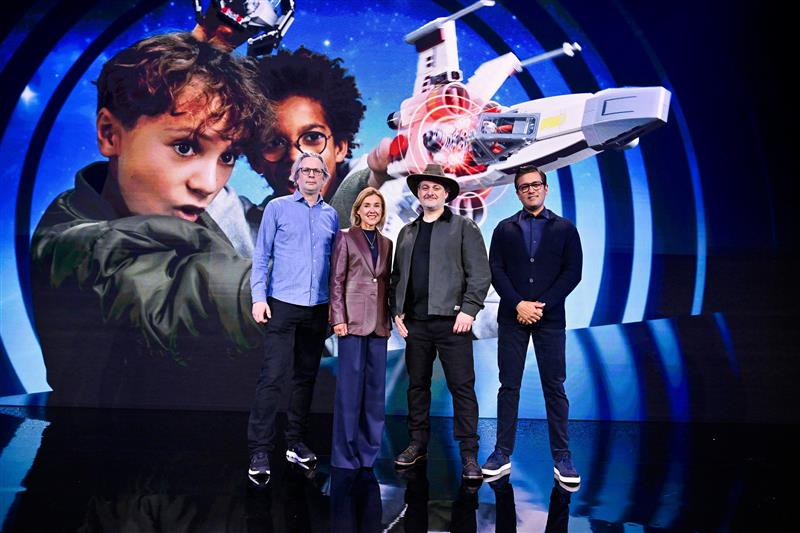
One of the cool things about Star Wars is that the fandom crosses generations.
“We have a legacy of core fans of all ages. Young adults and adults just love finding ways to build and connect and create those stories. Whereas there’s a fan who wants to build and display, this Lego Smart Play is for a fan that wants to interact and tell stories and have a little bit more interaction with their playset and maybe build it in different ways,” Dalal said.
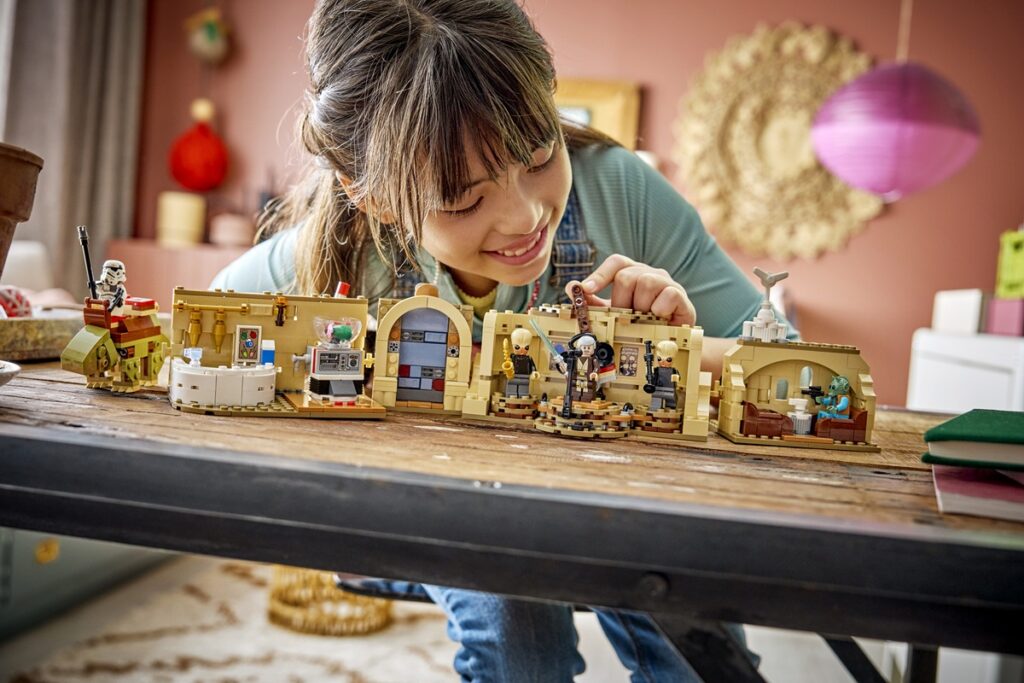
With Lego Smart Play bricks, kids can take tags and move them to different spots. As long as you have a Smart Brick, “you can brings those sets to life,” Dalal said. “You can move them into the place that you already have at home. I think that’s a whole new way to play for all ages. And then it’s about staying longer and connected into the brand, so you don’t forget about it on your shelf.”
Dalal said both Lego and Disney did a lot of testing around the world with focus groups and more kinds of research.
“Everyone can engage with this product and everyone can love it. But if you want to be for everyone, you kind of lose yourself a little bit. So we really want to be successful for kids six to nine. And so we did a lot of playtesting to say, ‘What would keep them wanting to play with this longer? When would they come back and play with it? How would they play with it?'”
She added, “If a friend was over, if it gave them that social engagement? Did that help? We thought about video games and how they have open-ended play. We also tried closed ended play to say, if we prescriptively told them what to do, was that good or was that bad? And we learned a lot about self-discovery, and we actually didn’t want to know exactly how to play.”
There are Easter Eggs that hardcore fans can appreciate.
For the younger kids, it had to be simple to play and know what to do with it when you got it out of the box. Simplicity.
Dalal said, “How did they play with it? How long? Would they come back within a week or after 20 minutes? Would they forget about it and come back in three months? So all that testing helped us to figure out there are simple color sensors. There are simple ways to react. It’s interactive and engaging play that’s really what we want to try and achieve through that testing.”
I asked about emergent play, or unplanned play and surprising paths for play.
“That’s how consumers play, and that’s something we want to be mindful of,” Dalaly said. “That’s something we want to be mindful of. Are they ten feet away from each other, or three feet? It’s about the discovery of play. That’s really what we’re focusing on here for the Lego Group and Star Wars in this particular initiative.”
Dalal said Disney wants people to still play with their traditional Lego Star Wars play sets.
“We just want to create a better experience. If someone wants to have a more engaging, interactive system of play, we still have our traditional work stuff out there. But this is now just one level up if you want a different, deeper engagement. The fun of being a kid is not being told what to do and having the freedom to play and discover things.”
Why Disney poured so much energy into Lego Smart Play
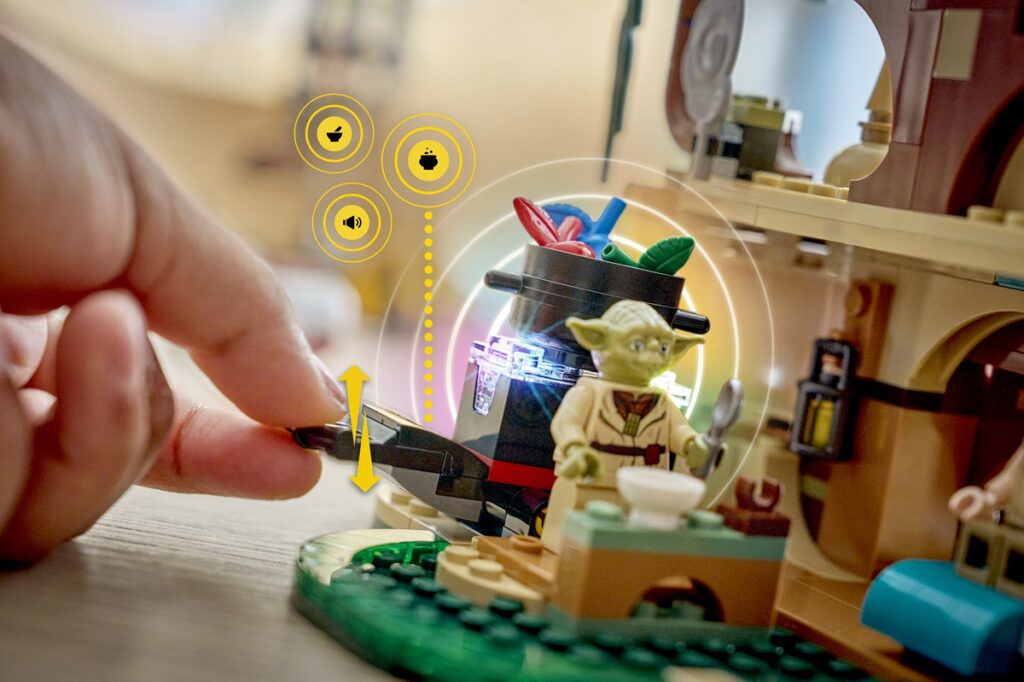
Part of the mission was to create something simple.
“I’ve got three kids. If I give them a gift under the tree, I want them to be able to have fun with it. I don’t want to have to read a manual for six hours. There are demo videos, obviously, to make enhanced experiences. Kids love that. But you could also just take it out of the box,” Dalal said. “We’ve done everything on testing.”
Dalal said the coordination with the Lego Group across all of Disney is vast.
“We keep trying to create really powerful stories that can come to life in new ways, and Lego is a company that wants to pride themselves on innovation and reach and growth to the global world today. You will continue to see us show up in different ways across the two companies,” Dalal said.
“We see this as a digital toy. I think it’s more of an interactive toy. And to your point, I think the gamification of that is a little bit more focused than the digital aspect of it. There is no need to be on a screen. Specifically, what we wanted them to do is have a reason to keep playing it, and if you play it differently, then you have a reason because the outcome is different, and then it doesn’t get boring for a child at this age. And so that was really more the focus,” Dalal said.
As far as watching kids play with it, Dalal said, “For me, the greatest delight is when you actually see two people play with it and it comes to life. That could be a father and a son, that could be a brother and a sister, but each person sees Star Wars through their own lens, and that’s what we wanted to do. You might see a TIE Fighter and want to play it out in a certain way, and then you bring your dad in, or you bring in your younger brother, or mother — whomever it might be, and then the story changes.”
She added, “It’s still in the Star Wars setting, and it’s still vehicles that you know, and still the main characters that you know, but how you play out that story is your choice. Because that’s the fan, and that’s the kid, in you. That’s what we wanted to offer, and I think that’s what we’ve seen at its best. You can certainly play with it on your own, and you can use your own imagination. Kids today need a little bit of story starting their imagination. But I think when you actually get that interactivity with two people, it’s just
really special.”
The future?
Dalal said the technology of the smart brick has a lot of capacity, and the team continues to investigate the engineering and the future of it.
“Collectively with Lego, I think we always want to push the boundaries, and we certainly collaborate today on what could happen in the next two, three or four years. I think the use of AI in physical toy products is often discussed in terms of how do you do it in a safe way. How else we show up with tech, with Lego certainly, there is a lot of discussion and lots of ideas on the table,” Dalal said.
As to why we still play with toys, Dalal said, “There’s a physical element. Sometimes my kids are just tired of looking at the screen. We can see it in their faces. They need a break because they want to do something else. And the joy of a toy hasn’t gone away.”
Older kids and adults still buy toys, whetherto play with them or collect them.
“They give you a memory of hopefully something that we created with our stories,” Dalal said. ” You can create that memory and play out that memory, or you can just create it and look at it. And you can remember it however you want to in the collectible form of it. But I think that offering adventure and storytelling and humor and fun — that’s what our stories do. And I think every every human around the world wants that.”
I noted that Disney’s worst fear is like the story of Toy Story, where a kid gets a toy, plays with it for a while, and then puts it on a shelf and never plays with it again.
“I’m so excited for the upcoming film this summer. But yeah, I mean, that’s the essence of our job. We want to make sure that kids want to keep playing with toys at the end of the day. I think it gives fundamental values for how people grow up.”
The lessons of Disney Infinity
I noted that Disney tried to fuse games and toys with Disney Infinity. It started out well, but over time it fizzled as Disney had the same problem that Skylanders and other “toys-to-life” products had. There was too much inventory for retailers to stock, since there were so many characters for the toys. But no one knew in advance which ones would sell. It was a clever idea, but it didn’t work and Disney shut the years-long project in 2017.
“Disney Infinity had a lot of your learnings, to your point. As we think about gaming and the infusing of storytelling and the world and the creativity, that’s what people loved about that initiative for us,” Dalal said. “To your point, what was the role of the physical product? How much were people going to buy? And then why did you use it or need it after you made that purchase? Those were the learnings that we constantly think about.”
She added, “There has to be a reason. It’s not just that I want to sell something, but what does the consumer want to have? And why? Then, how does that unlock a better experience for what you’re trying to create? I think for us, most people already could be buying Lego Star Wars brick sets. And so what we want to do is say, ‘if you’re already going to buy it, then here’s a better experience that will keep you engaged and wanting to buy more sets. Because the more you set buy, the more tags you have, the more smart works you have, the more you can unlock and play with.'”
As for educational value, Dalal said she didn’t want to overstep and reveal too much. But she said that tech is a part of all of our lives today. Amazing storytellers bring the tech and the toys to life, and the experience can sometimes be educational.
“For us, it’s really just about innovating. That’s just part of the heart of the Walt Disney Company,” Dalal said. “It doesn’t matter what you do and what division that you work for, as you’ve heard, speaking with other folks around the company. We want to innovate and keep ourselves relevant, and we have the starting of that with these great stories. And now, how do you infuse technology, creativity, experiences to then bring to life the department that you’re in? And so for me, that’s toys. I couldn’t have asked for a better job. It brings joy to people around the world every day, and I feel very fortunate to work with companies like the Lego Group to bring that to life, to consumers.”
Hopefully, Dalal said the Lego Smart Play bricks will serves as a recruitment tool for people who also want more engaging Star Wars storytelling, not just building something and displaying it.
“There’s certain consumers who love that, and there’s other consumers who want a little more interactivity and a lot more playfulness. And so you could decide, even on the screen, if two characters don’t appear in the same scene, you in your own playroom at home, can make that happen, and you can make them interact, and you can play out your imagination and storytelling, which to us, was so critical,” Dalal said.
She said, “It’s that creativity and imagination that sits in a consumer’s mind that you want to help, encourage. We know what they want to do. How do we create it for them with an easier to access system?”