
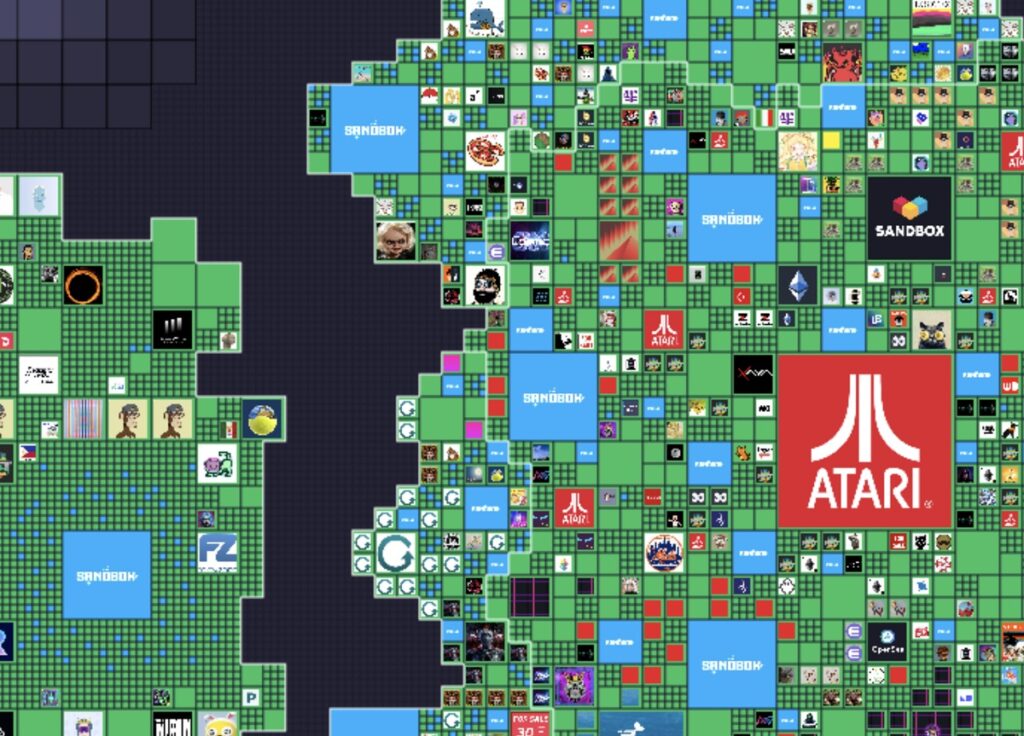
Back when Wade Rosen’s Irata investment company acquired control of Atari in the fall of 2022 at a $72 million valuation, Atari had just 20 employees and had made licensing bets across hotels, casinos, crypto and blockchain tokens, lifestyle branding and licensing.
Since that time, Rosen as CEO has shifted Atari’s focus back to gaming, with a focus on retro titles and acquisitions of studios with game libraries. Now it has more than 200 employees, Rosen said in an interview with GamesBeat.
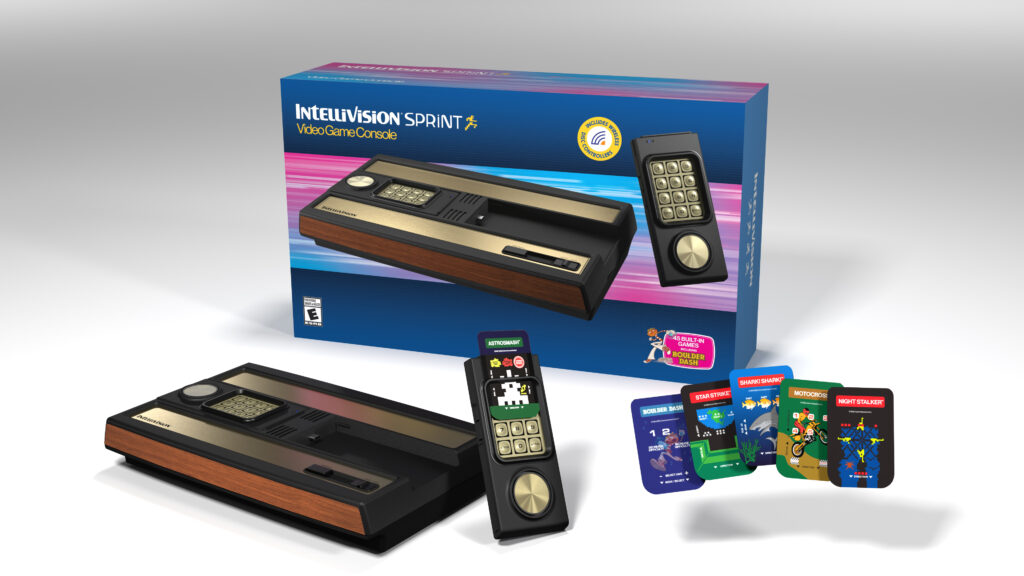
On the retro front, Atari acquired Nightdive Studios (System Shock 2 remake, Doom 64, Quake), Digital Eclipse (Atari 50 collection) and Implicit Conversions (classic game emulations). Atari picked up more than 200 classic Intellivision games with its purchase of Intellivision. It also bought rights to five games from Ubisoft (Cold Fear, I Am Alive, Child of Eden, Grow Home and Grow Up). And it is acquiring game publisher Thunderful.
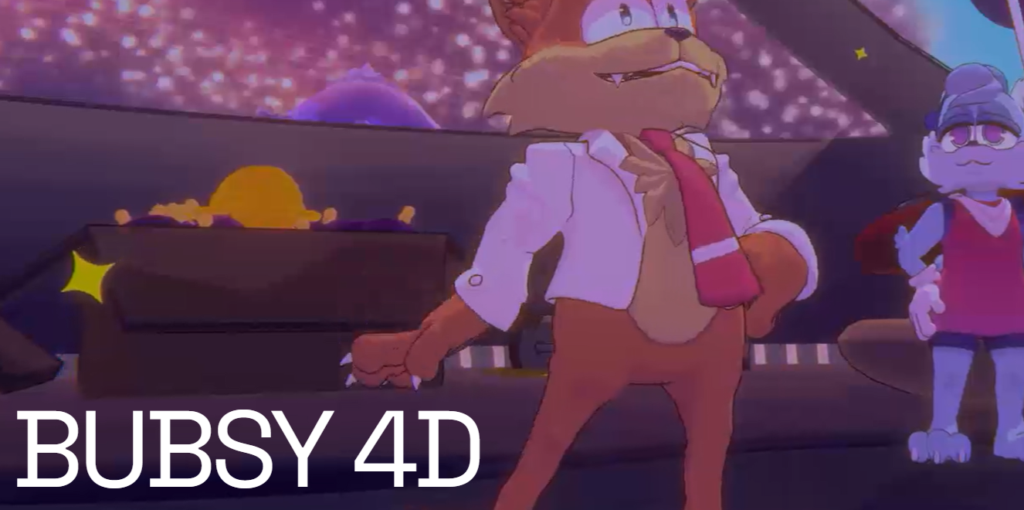
Rather than license Atari’s name out to all comers like previous management did, Rosen is interested in making good games, like Bubsy 4D. He’s also less interested in hunting for star developers like other indie game publishers.
There are still challenges, but Atari has demonstrably grown revenues and created jobs at a time when many other game companies have retrenched. Atari is still publicly traded (out of Luxembourg now). Atari hasn’t yet reported complete audited results for the year ended March 31, 2026, but it said preliminary numbers are in the $50 million to $60 million range, including results from Thunderful, with revenues up at least 40% from a year earlier.
In the past few years, Atari raised around $12.5 million through public markets and it has taken on debt through Rosen’s investment company to help fuel its acquisitions. In the six months ended September 30, 2025, Atari had a net loss of 6.1 million euros, but its loss was narrower than in the past. Atari’s cash and debt can cover the losses, but the aim of course is to make the company profitable over time.
One profitable area has been the Atari 2600+ hardware. But Rosen isn’t “overcommitting” on any one thing. He knows how tough it is for game companies out there, especially small ones, amid the “attention war” with other addictive entertainment. Rosen is always encouraged by the inexorable growth of gaming and how it is winning the culture war to become the world’s mass culture. Atari is a big part of that.
“It’s the best part of the job. It’s my favorite part of the job,” he said.
Here’s an edited transcript of our interview.

GamesBeat: How are things going?
Wade Rosen: It’s been a busy period of time for me. This time of the year is always pretty busy. Our year-end is March 31. We’re closing out our financials. But I feel like it’s been more busy than usual. Atari’s doing well. We put out our numbers, our high-level numbers, for the year, and gave some guidance on that. Another big growth year for us. If you include Thunderful, revenue has increased about six and a half times over the last three years, from where we were in fiscal 2023 versus where we are in fiscal 2026. We went from about $10 million to $65 million. If you exclude Thunderful it’s lower than that, but it’s still a 5X increase.
Everybody says we’re playing on hard mode right now. I only know hard mode. I never got to play in the industry on easy mode. But we find ways to survive and advance and grow. We’re kinda like cockroaches over here.
GamesBeat: When you’re at the size where you guys are, who do you see as your peers? Who else is in your category of $50-60 million companies?
Rosen: I don’t know that we look at other game companies that are our size as our peers, so much as other game companies that are doing similar things. We’ve tried to own the niche we’re in, which is retro gaming. That includes retro hardware, retro collections and remasters and remakes, but also new titles, like the new Bubsy we have coming out. We have our legacy IP. The companies that are of similar size, like Frontier or Microids–Focus is probably a bit bigger than us. But they’re all around $100 million, maybe a bit more. They’re larger scale, but they also do very different things.
If I were to say who our peers are, SNK comes to mind. They’re doing some retro hardware now. A lot of their games are bringing back retro IP. Parts of Sega are very similar, what Sega aspires to. They’re an amazing company. There’s a lot of things we admire in what they’re doing. But in some ways we’ve got our own thing. I think that’s why we’re able to grow and find success in this environment. We’re not trying to compete with Focus or Devolver or Raw Fury. That’s a tough space to be in. It’s very competitive. They’re very good. I don’t think we have any reason to try to win or be better than them, if we were trying to do what they’re doing.
GamesBeat: It’s still a very gaming-first strategy.
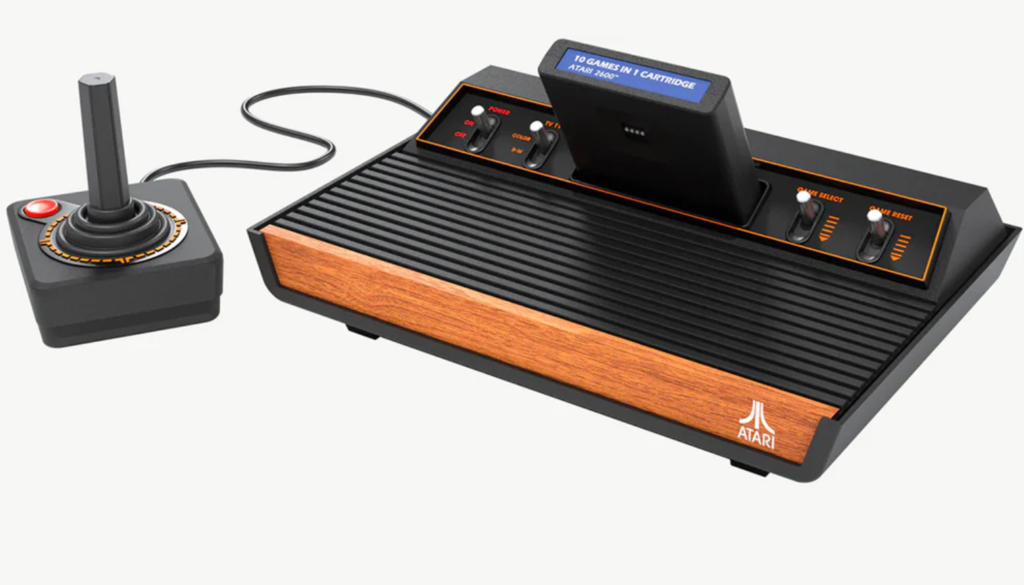
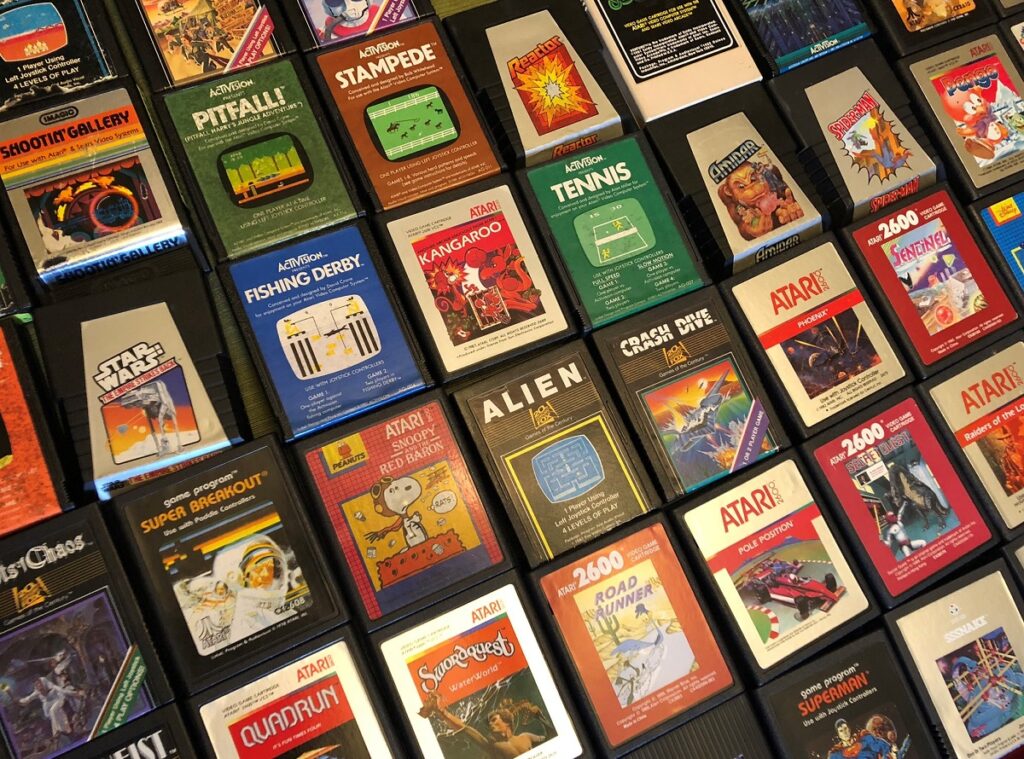
Rosen: Even more so than in prior years. We tried a number of things, but really, the thing that’s been successful, that has worked consistently, is focusing on gaming. The only nuance I would add to that is hardware has become an important part for us. That’s a very different model than when I took over. Focusing on retro hardware–we did a yellow Pac-Man edition last year. That was really successful. Re-releasing 2600 and 7800 games. Doing new 2600 and 7800 games. Not competing at all with PlayStation or Xbox or Switch or PC, but really trying to breathe some life into these historic consoles. Making it very easy to play with them on modern televisions, or really any HDMI display. That’s the other big part of it.
GamesBeat: [How many games a year are you publishing?]
Rosen: We haven’t announced everything for this year, but no, it’s much more than that now. Between Nightdive, Digital Eclipse, Atari, and Infogrames, we’ll be up over 20 this year. The final number, there’s a couple in the last few months that might fall into this calendar year or might slip into the next. But it’ll be north of 20 for this year.
GamesBeat: What comes from the different areas, games and hardware and licensing? Hardware seems like a smaller niche. Is there a particular strategy for investment in that area?
Rosen: It’s certainly a niche area. But it basically started at zero. We’ll be able to give some more numbers in the next couple of months. But it’s been a good growth vector for us, and it’s been profitable. It’s worth the time and energy we put into it. There’s also some peripheral marketing that comes with hardware. When you have 2600+ in the world, there’s also this opportunity to say, “Hey, Atari still exists. This is what we do. In addition to the games we make, here’s what’s out there.”
It’s more of a pop culture piece as well. A lot of what happens in games, outside of massive releases that break through into pop culture like Grand Theft Auto, it’s pretty isolated to video games and people that play a lot of games. Atari as a brand is bigger than that and does exist in pop culture. Hardware allows us to get people engaged who wouldn’t otherwise necessarily buy video games. A lot of people who buy our hardware products don’t play modern games. They played Atari as a kid and so they know what to do when they plug it in and go. It’s not intimidating. It’s easy to jump in.
GamesBeat: I wonder if you fare slightly better than the folks who are having a hard time because of memory prices. I doubt there’s as much memory in your machines.
Rosen: I’d be lying if I said it doesn’t hurt. There’s still a lot of chips and things like that. But the overall cost per unit is significantly smaller. We’ve been able to roll through that. Also, a lot of chips we’re using are not the kind of performance chips that go into data centers. A lot of the cost issues are weighted toward the high end of the spectrum. We’re moving through that.
The most challenging thing with hardware, it’s this rolling uncertainty between–first it was tariffs. Then there were chip shortages. Now it’s shipping and logistics and fuel charges. There’s always a lot of uncertainty in it. That’s the thing that makes it difficult. But it’s also fun. There’s not a lot of people that do hardware anymore. We’re just not trying to get out over our skis, not overcommitting. We do things we feel confident in.
Also, the way most of the distribution is happening on atari.com–that’s become a major distribution point for us. It’s gone from literally nothing three years ago to doing a lot of our distribution of physical games, physical hardware, merchandise, the classic Atari shirts and stuff. Having a brand that can have its own direct to consumer distribution side is also very important.
GamesBeat: Is that more on mobile or other platforms for you?
Rosen: I’m guessing most people access it through PCs. It’s not an app. It’s just a dedicated website. But it’s really well-designed and well-managed. It’s become a bit of a differentiator for us.
GamesBeat: Do some of the regulatory changes because of the court cases against Apple and Google help at all? Or are you really outside the mobile space?
Rosen: For us, not yet. Mobile has not, to this point, been a huge part of our strategy. It’s not to say that that will always be the case. I think it’s absolutely a step in the right direction. I’m happy to see that opening up. I also wonder what that’s going to mean in the long term for PC and console. Probably more specifically PC. Maybe similar changes will come to that ecosystem. But time will tell.
GamesBeat: Are you continuing to look for acquisitions, or are you more in the digestion stage?
Rosen: We were really active there for a number of years. Nightdive, Digital Eclipse, Intellivision, Thunderful. Not to say that we are done. We’re always looking and seeing if there are strategic opportunities, things that are really a one plus one equals three situation, but I think we have the engine now. Especially with Digital Eclipse and Nightdive. With Thunderful we also brought in a lot of co-dev. We have a tremendous amount of co-dev support now for those teams. They needed help and support, because they had so much opportunity. I feel like we have the engine. We have a solid plan.
While I can’t say that we’re not going to be active in M&A, I do think we’ll probably slow down to some degree. What we set out to do, we now have it running. Our core teams are releasing a number of critical titles every year, like the Mortal Kombat collection from Digital Eclipse last year. Nightdive had the System Shock 2 remaster. They have big games coming out this year, some of which have been announced and some of which haven’t.
We feel good about the future. We like where we’re going. We’ll lean into what we have and look to see if there are some incremental acquisitions that can improve or accelerate that. Not as much in the long term. But who knows? That could change. This industry is constantly changing and shifting.
GamesBeat: Where are you at on headcount now?
Rosen: We’ve grown dramatically with the addition of Thunderful, Digital Eclipse, and Nightdive. We also have a pretty large contingent in India as well. I think we are probably up around 200. But I’m not entirely positive on that, because it’s changing all the time. We’re still actively hiring. We’re one of the few teams that has quite a bit of active hiring going on in the space right now. It’s nice to be able to hire right now. 200 people isn’t a lot, but we were only 20 a couple of years back. We have to be smart, because money is tight, but we get to work with great people.
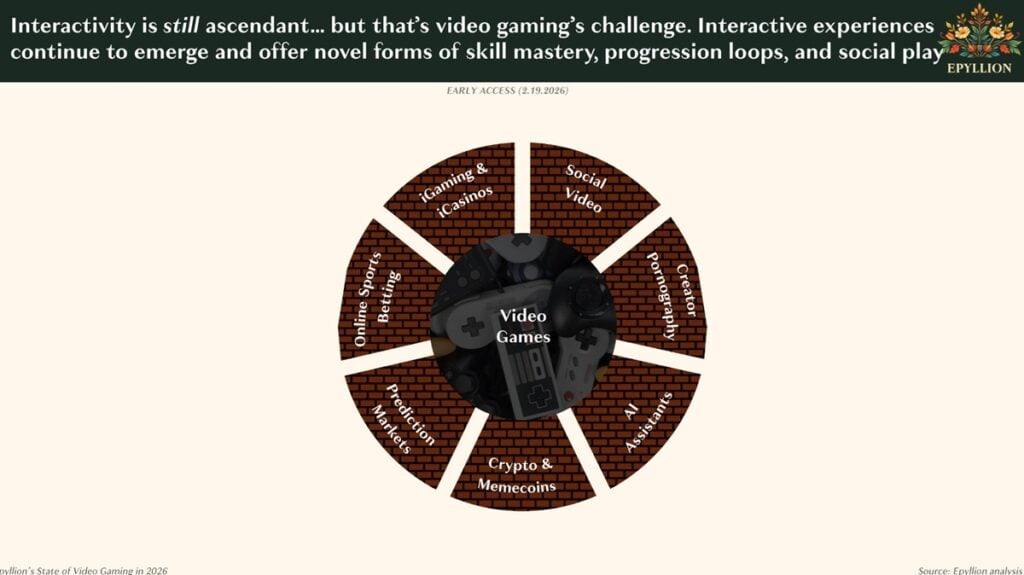
GamesBeat: The industry has had a hard time with more than three years of layoffs and all that. Matthew Ball’s slide deck this year painted a pessimistic picture about the state of the attention war. Gaming as a whole maybe is not winning as much as it has in the past, except in areas like Roblox and China. How do you develop a strategy in that kind of environment?
Rosen: The Matthew Ball report has certainly been a lightning rod in the industry. I read all those reports cover to cover. I’ve heard a lot of people argue against it. One thing that we, as an industry, do a poor job of taking into consideration–we talk about growth in nominal terms. “The industry is up over last year.” That’s in nominal dollars. We almost never look at real dollars spent. I would even say the reality is a bit darker than that report makes clear.
We wonder, “If revenues are up, why are profits down?” The answer is because–you mentioned China and Roblox. But also, you back out and costs are going to increase every year. These last few years have not been low inflation years. There have been material levers of cost inflation throughout the economy. That’s one of the critical issues here. Revenue needs to grow at a certain level just to stand still in this industry. It’s not good enough for the industry to grow a little bit. The reality is, if you factor in those real rates, it’s down even more than we think. That’s why profitability continues to erode.
As far as the opportunity, or how to survive in the industry, I’ve said this for a long time. Companies need to focus on what they do best. For a long time the thought was that you could scale by doing more. Let’s do more. The companies that have survived are the ones that were the quickest to scale down, look at what they were the best in the world at, look at where they have a natural advantage, and anchor into those. Focus on those things and do them really well.
I do think there is room to grow. I do think the market will come back. There is momentum with these things. I don’t know what will happen with Polymarket and Kalshi. There’s a lot of pushback happening on those fronts. I don’t know if that level of growth and that amount of eyeballs will stay there forever, or if that will shift back. I also think there’s a bit of–people in this industry, they make content that’s more interesting to people. Maybe we’re just not making things that enough people want. That’s not the only thing, but there’s probably a bit of that.
What are the best-selling games? Outside of the major breakthroughs that we know about, but the largest-selling indie games. Silksong. Hades 2. Slay the Spire 2. If you didn’t have a hit 10 to 15 years ago, it’s hard to come back and put out another one and break through. It happens. It does happen. But they’re few and far between. If anything, the Matthew Ball report maybe underestimates what’s happening in the industry. That’s evident in the amount of layoffs. What is it, a quarter or a third of the industry has been laid off now? You don’t go through something like that if you’re just flat. If you stack it all up, what the industry is going through is dire. I think it will get better eventually, but I don’t know there are easy answers, outside of each of us focusing on what we do best.
GamesBeat: It seems like the retro strategy does benefit from that trend where gamers look for familiar things. They’re sticking with their favorite games. New versions of those favorite games.
Rosen: We have two tailwinds there. First, we’re really good at it. We have a brand that supports it. If you see Atari and you see retro games, it makes sense. The brand fits. It makes sense that we would put out retro titles. It nestles comfortably under that. We have an advantage in that space as a result. And then we do a good job. Between Digital Eclipse and Nightdive, our teams are truly the best in the world at that.
And then number two, retro has–like, Mortal Kombat has fans already. You don’t have to go reintroduce those fans, find those fans. They know the brand. They see you coming back with a notable property that people like. Even something like Bubsy. We’re excited about that one. That’s gotten a lot of traction for us. Granted, fingers crossed, if we make a great Bubsy game we’ll be the first to pull that off. But it’s still a known IP. There is some advantage to that. Specializing, being really good at it, and getting to work with great IP has helped us ride through it a bit more smoothly.
GamesBeat: Are there things that you double down on because of what you see in the macro environment? I don’t know if AI is tempting in some way. Maybe it could help reset costs for the company, but it has all these issues right now as well. How much trust can you put in that direction?
Rosen: AI is a hot button topic. I think the challenge with AI is, yes, it could help with costs, but as that helps bring down costs, there’s going to be more content. Any advantage that someone gets from AI is probably transient. It’s a temporary advantage, because it will become normalized. If you’re developing in China or Korea, you’re using it. That’s something that, in the west, we’re not really looking at closely. A lot of games coming out are selling a lot of units, and do consumers care? They do, but that’s why dev budgets are so much lower in those areas.
This is not me advocating for AI. But I am saying that they’re going to put out a lot of content very quickly at high quality and low cost. At a certain point this isn’t even an advantage. It’s going to be a question of how you survive the onslaught. I don’t know that AI is a savior for the industry, because if everyone is doing it, the amount of content in the industry continues to rise, and until demand increases, increasing supply in the industry just divides the pie even further.

The solution is increased demand. The solution is making products that people want. Maybe tailoring to specific genres or niches. Looking at segments of the population that have not historically played games or have not been served as well. That’s partially what we do with retro. There were retro projects out there, often from small companies. The idea of bringing that back was to serve a part of the market that has, up until now, not been provided with as much content. That’s allowed for demand to increase in a segment that probably didn’t have as much as it could before.
Until we get demand to increase, AI might become table stakes. I’m not saying that’s right or wrong. It just might be what companies are going to need to do to survive a world where there’s a lot more content coming. It’s like using Unity or Unreal. Those were already low-code environments that allowed for development costs to drop dramatically. You didn’t see a lot of general-purpose engines being made after those came out. They were very expensive, and they were used by triple-A teams because the dev could absorb that. Either you had engines that were very tailored, proprietary tech – we have those and we use those in a lot of our work – or there were super high-end engines from companies that needed to separate themselves from Unreal and Unity. Then everything else congealed into that in order to reduce dev budgets and compete in the space.
It expanded the supply dramatically. More than digital distribution, low-code environments expanded supply. This is just going to be the next wave of that.
GamesBeat: I have a bit of a positive spin on the Matthew Ball data, and I wonder if this triggers anything in your thinking. As long as gaming stays fun and doesn’t stray over the line into addiction, it will be treated differently than gambling and things like that.
Rosen: Yeah, 100%. That’s kind of what I was alluding to. We look at things like Polymarket and Kalshi and say, “they’ve taken that.” People project that into the future, like they’re going to continue to take market share. Maybe? But we don’t know what’s going to happen in the future. Will they maintain their momentum? Will they continue to be regulated in the same way? The future is very uncertain around a lot of those points.
I will agree that the scariest part of all that is we’ve sort of normalized gambling addiction, people getting into these addictive gambling patterns. Sports betting is just something we’re going to do in our early 20s now? Things like MMOs came out in games that had some really addictive aspects to them. Laws and rules adapted. I think people will, in maybe five years, look at this very differently than they do now, and probably treat it in a different way.
GamesBeat: The amount of attention gaming requires–there are other things that you can do while you’re multitasking. You’re not necessarily completely focused on your sports betting. You’re watching TV while you do it. Gaming commands attention. It’s a stronger engagement. For short attention spans there’s a lot of competition from things like YouTube and TikTok, but that’s also what mobile games offer. I also feel like if gaming wins the culture war, then revenues follow. Gaming content as a percentage of YouTube or TikTok or movies and TV, that’s all a win for gaming. It takes audiences away from some games, but it also brings in audiences from other directions. If gaming becomes mass culture, then you’d think revenues would follow.
Rosen: Well, it has. What I would say is, I’m not sure gaming has ever, at least for 40 years, been through a period of time where it’s been in retreat. It’s been an unstoppable march to the top. That, I think, is a bit of what we’re seeing right now. Some other compelling things have entered the scene. They’ve been chipping away at the margins. Now it’s a bit more than just the margins. It’s not one thing. It’s a bunch of different things. It’s a continuum.
What are we going to do about it? We can hunker down and keep doing the same thing and accept what we can get. Or does gaming use this as a catalyst to innovate, to drive compelling experiences? You look at a company like Nex. They’re finding a lot of success right now. You asked me at the beginning about companies we compete with–not that we compete with Nex. We don’t. We really admire them. But there’s a company I look at and think, “That’s a missed opportunity.” They looked and saw that Nintendo abandoned the Wii space. The Switch is not the Wii. It has the motion controls, kind of, but it’s a very different experience. Why not move into that space? There’s still an audience that wants to be served.
As we look at game growth, if we look at the fact that they just sold a million-plus units–I don’t know what they’re up to now. But for an entirely new platform–that’s innovative. That’s new. That’s pushing the edges here.
GamesBeat: At $300 it’s still in the sweet spot of what consumers will pay. It’s not a $1,000 console.
Rosen: Exactly. They know who they’re targeting. The other side of that is they really push–as each generation goes by, each platform becomes more and more ubiquitous. They were all very differentiated at one point in time. Now, with the exception of the Switch, but even that’s starting to fade into the others a bit–what’s really the difference between Xbox and PlayStation and Steam, the games released on these platforms? If you want something, it’s really just whatever your preference is to play it on at this point. That was not always the case. Each platform was a unique experience.
I look at something like Nex and I see that as a positive. It’s not taking away revenue from another part of the industry. It’s expanding the industry. It’s finding an underserved part of the market and addressing it. If we want to go back on the march toward the top, we probably need to stop being so homogenous and find ways we can break out from the pack.
GamesBeat: Is there something like an emerging markets strategy for Atari? Going where the growth is?
Rosen: Absolutely. Our commercialization team has an emerging markets strategy across a couple of key markets. We usually have local marketing partners. We’re translating our games. Every year we do and more translations. It’s a lot more than just EFIGS now. We make sure it’s in localized languages, wherever they’re going to need to appeal to a local demographic. We find local partners if there’s local physical distribution. That’s a big part of it.
If you’re on mobile that’s a huge part of the strategy. Console and PC, it’s still a big part. That’s primarily where we play, and we do quite a bit. No surprises there. LATAM, MENA, Southeast Asia, China, India. We’re in all those spots. We’re trying to grow market share as best we can within the limits of what’s possible in each market. Those are some green shoots and bright spots for sure.
GamesBeat: Finding hits, finding the IP you want, when you’re going out as more of a publisher or trying to be more imaginative within the company, how does that happen? Like Hello Neighbor for TinyBuild. There’s luck to it, but is there more than luck?
Rosen: I don’t know if we’ll ever have a Hello Neighbor moment. We have not built the company to assume that there will ever be a Hello Neighbor. TinyBuild, I’m very close to those guys. We have a large minority stake in TinyBuild. They’re just great at making games, breakout games. They’re one of those companies that can do that, that’s really good at that. We try to hit singles and doubles. I say that all the time. We’re not trying to pick the next Hello Neighbor. We’re trying to pick the next Bubsy. We know that’s going to do well. It’s not going to be Hello Neighbor, but we know it’s going to be a single or a double. We’re trying to pick the next System Shock. Mortal Kombat has done well. Disney Afternoon Collection.
The other thing, when we look at these projects we just try to be a great partner. Almost all of our partners, we’re not doing one project with them and we’re done. We tell them what we’re going to do and we try to over-deliver on that and make an even better product than they expected. Then we move on to the second and third and fourth. It’s not about viewing any one of these projects as a home run. It’s about the relationship we have with an IP holder like Disney or Warner Bros. or Universal, maintaining that over the long run, doing well on each title. Maybe that in total becomes the hit that you mentioned, the breakout, even if no individual game is necessarily that.
We’ll take a breakout if it comes, but we’ll never plan on it. That’s the rule. We plan for the singles and doubles, and then if we get one, we’ll take it. We’ll bank the money. It’s not going to be part of the plan. We’ll keep doing what we’re doing.
GamesBeat: Is there anything outside of gaming that still interests you? I don’t know if the Atari hotel thing–

Rosen: Atari Hotels is a license, and that’s still going. That team is still working on Atari Hotels. Fingers crossed, they can get what they need to build that. It’s a cool project. I’d love to see that. Things do come up outside of gaming from time to time. Film and TV and things like that, it would make a lot of sense. We have some great IP. We’re doing a lot in the game space. There’s no reason that couldn’t also be in film and TV. That would be an example where opportunities come up and we’re exploring those. We’d like to find great partners there.
Licensing in general, when you have a strong brand you can find some opportunities. But those are pretty situational. It might be an energy drink or shoes, things like that. Those are just fun. My favorite is wearing the shoes with Atari on the side. People will say, “Those shoes are great!”
GamesBeat: Every time you watch Blade Runner, it’s nice to see the Atari logo.
Rosen: Exactly. There will always be things like that. It’s not going to drive a large amount of growth, but it is meaningful. We care about it. We put time and energy towards it.
GamesBeat: I think back to that notion of winning the culture war. Having brands that penetrate into mass culture like Atari does, that has to translate into something good.

Rosen: It’s the best part of the job. It’s my favorite part of the job. There are lots of things in the game space where we’re making up for lost time. We’re trying to rewrite the narrative. In general culture, in pop culture, there’s nothing to rebuild. People love Atari. When I wear Atari shirts, people who don’t know me–every day someone will come up and comment on it. They’ll tell me how much they love Atari or some story about it, or just, “That’s a cool shirt!” The general love that people around the world have for it, that’s really special. That’s something that makes the job worthwhile. We want to be stewards for the business. Whenever that day comes, 10 or 20 years from now–we have no plan to leave any time soon, but I’d love to be able to look back and say that we left it in a lot better place than when we stepped in.
GamesBeat: You have to make Nolan Bushnell proud.
Rosen: That’s right.