
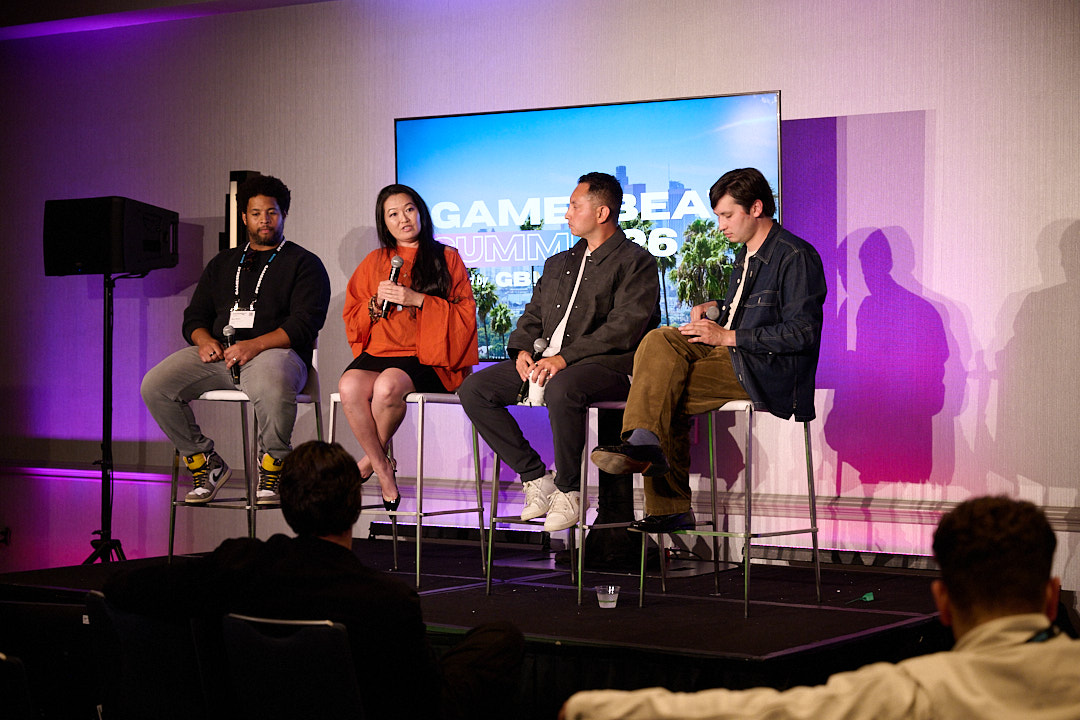
Advertisers are using gaming to tie together their cross-platform advertising campaigns.
Last week’s GamesBeat Summit in Los Angeles featured the annual conference’s first-ever dedicated track covering the role of brands, advertising, and marketing within the broader gaming ecosystem. The track’s focal session was a day-one panel of gaming advertising experts featuring Publicis Media head of gaming Samantha Lim, Gale vice president of emerging connections Max Bass, and Justin Miclat, the chief growth officer of Click Media.
The topic of the May 18 panel was the increasingly cross-platform nature of advertising in and around games. All of the experts gathered on stage agreeing that gaming complements other forms of media, acting as more of a connective force between different communities and forms of advertising inventory rather than a niche area of culture or entertainment, as was once the widespread perception.
“We’re starting to actually push our brands to look at gaming as more of an intuitive approach, rather than like a one-off silo — so that way, we can actually move gaming from being experiential or experimental to essential,” Lim said during the panel discussion.
As gaming advertising campaigns go cross-platform — and become a standard part of brands’ media mix rather than a nice-to-have — each partner is coming up against the other’s unique time constraints. Development of elements of triple-A games can often occur months or years in advance, making it difficult or impossible for advertisers to spend their marketing budgets, which often have shorter timelines, on in-game inventory.
“In some cases for brands and game publishers, I will say, when there’s a will there’s a way — so, we found a way to make it work, in terms of temporary assets or something generic enough to hold us for those marketing and production timelines,” Lim said. “But, what we’re also seeing is a lot of game publishers are trying to figure out how to bring more ad serving into games.”
As game makers continue to search for more revenue streams to bolster sagging profit numbers, advertising represents an untapped community for many developers and publishers. This was on the top of my mind as I moderated the panel, and I asked the speakers whether they believed game makers were getting a fair amount of revenue from brand integrations — and whether simply giving game makers more money was a way to get them to buy into in-game advertising more.
“In a world where we’re not dealing with clients who are trying to put that budget in a million other places, possibly,” Bass said during the panel. “Is that a realistic solution for the kind of negotiation point that we’re in, where we’re talking to client teams and brands, and then the publishers and everything? I don’t necessarily think that’s something that we could realistically offer, though money is a great fix-all.”
For brands interested in connecting with a gaming audience without having to navigate game makers’ extended timelines, Miclat — an experienced talent manager and dealmaker who announced his new role at Click only a few days before GamesBeat Summit — suggested working with creators.
“Recently, we’ve gotten a lot more flexibility and opportunity to really build and mold campnaigns alongside brands or brands’ agencies,” Miclat said during the panel. “It’s not a must-have — creators don’t necessarily want to be creative directors for a brand, especially if it’s just a one-off activation — but they do need sufficient runway to really know and understand the goal.”