
BOSS Mode: Women Driving the Future is a groundbreaking new series by GamesBeat, led by Rachel Kaser, that finally puts the spotlight where it belongs—on the women transforming the business of games, entertainment, and tech, and the industries it touches. It’s the B2B POV, where women leaders will provide critical business insights you need to make more informed decisions, and an inside look into how women leaders driving the future are navigating their business strategy.
From tech to healthcare, entertainment to retail, gaming is no longer a silo—it’s the connective tissue of the modern economy. And women are driving that evolution. In this ongoing series, we go beyond titles to showcase women whose influence is shaping the future of gaming and the industries orbiting it.
This isn’t a moment. This is a movement.
New chapter. New era. Welcome to BOSS Mode.
The crossover between video games and charity goes back decades: From raffles and LAN parties to massive livestreaming events, gaming has been used as a tool to raise funds and awareness for myriad noble causes. And for many, the first name that comes to mind when it comes to this particular cultural intersection is Games Done Quick.
Games Done Quick (GDQ) is the name of the company behind two annual charity gaming marathons: Awesome Games Done Quick (AGDQ) and Summer Games Done Quick (SGDQ). These events feature determined and resourceful speedrunners, gamers attempting to complete games as fast as they can. Viewers donate to the event’s charity in exchange for various incentives. Since it was established in 2010, GDQ has raised over $62 million in donations according to its internal tracker.
I have been watching GDQ events for years, but this year was the first time I saw the company appear at Gamescom. While watching the event, I saw Ashley Farkas, GDQ’s business director, speaking on-stage. She spoke during Gamescom’s Opening Night Live event about the company’s first event in Europe. And two words immediately came to mind: BOSS Mode.
Instantly, I knew I had to meet this woman and get her insights on this unique crossover between gaming, community, charity and business. Shortly after Gamescom, I caught up with Farkas. Below is an edited transcript of our interview.
GamesBeat: One of the things that I’ve wanted to do with BOSS Mode is speak with women in all parts of gaming’s ecosystem. And GDQ is a major part of that ecosystem, and has been for a while. What does your average day look like at work?
Ashley Farkas: Most of my days, I’m on calls for four or five hours, and it can be a myriad of things. Some of it is business conversations with sponsors or partners or charity partners, and then a lot of it is also our staff. I do a lot of support with our leads for our staff, but I also make myself available to anyone on our staff.
As I’ve climbed the ranks, I’ve always appreciated the open-door policy, so our staff are welcomed and encouraged to schedule time with me whenever they need it. I love making people feel safe and comfortable to talk with me about whatever I can help with.
I feel like that’s such a non-answer to say that I’m always in meetings, but they are very meaningful and important to me, and I prioritize that a lot. The rest of the day, I’m usually in some kind of spreadsheet or answering Slack DMs.
GamesBeat: Can you give me a little bit of background on how you came to work in the games industry? Was GDQ your first job in the industry or have you worked in the business for a while?
Farkas: It’s adjacent. Very long story kinda short, I was in D.C. in the contracting game. I worked as a business analyst and a project manager for different companies. I used gaming as my outlet, and I was very into charity gaming. I did Extra Life starting in 2014, back when we were rocking the TVs, and that was my hook into taking my gaming beyond just something I like to do at home.
I followed Extra Life for about five years, then I saw that it was hiring. I had a very cushy job working in D.C., doing the D.C. rat race, when I saw that Extra Life was hiring for a coordinator. It was about a third of the pay that I was making in D.C.
On paper, it was foolish for me to do, but I wanted to do it. I talked to my husband and asked if we could make it work financially, for me to work with this charity gaming company. We did the math and the math mathed out for us. I was fortunate enough to be able to pick up my life and literally move across the country to Utah, of all places, to start helping out Extra Life.
When I was at Extra Life, GDQ was the goal. Every GDQ event, my team at Extra Life would sit in a conference room all week and watch it while we worked. We wanted to do what they were doing. Having that as my experience and my first step into philanthropy and gaming was definitely the hook that got me into everything that I’m doing.
I took some time off to have my babies, and I stayed at home to be a mom for a bit. But eventually my brain needed the challenges of work, so I started looking. By happenstance, I saw a GDQ job posting on Twitter, of all places, and they were hiring for a hot fix manager. I thought, “There’s no way they’re going to hire me, but I’ll just see. I’ll throw my name in and see what they think.”
Then I got an interview, and then I got another manager, and then I got an email from Mike Uyama that said, “We want to offer you the position of hot fix manager.” I cried because I thought, “There’s no way I went from being a contractor in D.D. to working for this company that I have admired for years in an industry I’ve long wanted to be a part of.
So all of the stars aligned, and I joined GDQ in 2023 for the hot fix position. Then, within a year, Mike had stepped down, and [Matt Merkle, GDQ’s director of operations] had seen the work I had put in and asked me to join the upper management team for GDQ. That brought me into the role that I am today.
GamesBeat: What impact do you think you’ve made both within your company and in the games industry as a whole? I’ve asked this question to women who are on the business side of things, and I think their viewpoints are important. But I think what makes your insights unique is that you are riding the line between business and philanthropy.
Farkas: Internally at the company, we’re shifting the way we organize ourselves. One of the things I’ve brought: I was basically a systems accountant in one of my old positions, and so I brought a lot of accounting experience and financial reporting expertise with me. I also brought a lot experience in contract negotiation, especially with charity relationship management. I think that’s part of the bigger impact felt from me joining the team.
Then, for the community, one of the things that I have heard and witnessed was at this past SGDQ. We made a more tangible effort to integrate the charity into the event in a natural and organic way.
I love working with Médecins Sans Frontières (MSF). I love working with [Greta Doucette, MSF’s senior marketing associate for peer-to-peer and streaming events]. They are fantastic, and building that relationship again, with the charity management part internally, translated to the community.
They noted that we were talking about the charity more, but not in a pushy, aggressive, “Donate now to unlock this thing” conversation. It’s more like, “Hey, did you know that when you donate this much, the impact is this?”
For example, having the relationship with Greta that we do, we were able to talk about the Gaza documentary that we showed. That video game to us the Tuesday of the event, while it was happening. So we worked internally to figure out is it appropriate for us to share? Is the charity okay with us sharing it? Do we have a place in our schedule that makes sense to show it?
Ultimately, everybody came together and said, “Yes, we want to do this.” [Speedrunner SpikeVegeta] did a fantastic job being incredibly vulnerable on that stage, and we saw a lot of conversation about the approach to that show, specifically, and how we talked about the charity, how we talked about how to get involved, how we talked about how the show works.
That was a conscious effort that we made before the event even started to integrate more of the charity aspect into the show without making it feel like we’re guilting anybody into anything. We still wanted it to be a fun speedrunning event, but we also wanted to make sure people really understood the gravity of why we’re there. I think that show did a really fantastic job of doing that.
GamesBeat: How do you measure success as part of GDQ? Is it related to the charity work?
Farkas: We’re very unique. We’re still a for-profit business, an LLC. A lot of people confuse GDQ as the charity, which we are not. But our measure of success… looking at what GDQ does and what the goals are, our goal is always charity events and charity first, and making sure that what we’re doing puts the good back into the world that we all want to see.
When we look at what measuring success is, it is: Are we supporting charity? I could write novels about how Twitch viewership is going down, and charity-giving is also in its own unique place as far as what that economy and industry looks like. Peer-to-peer fundraising has its own trends going on, where there are less donors but they are giving more. We’re feeling a lot of different things at the same time.
In my eyes, especially with this past event, I’m not the only person who would notice that the Twitch viewership has been down year-over-year for GDQ. But when I look at our fundraising, it was within 1% of last year, which I think is a huge success because we are still fundraising millions of dollars every year for the world and people in the world that have different needs and supports through different charities.
I think that’s something that we will always continue to prioritize over GDQ making fistfuls of money year-over-year. That’s probably not a good thing to say in an interview, but it’s true because GDQ genuinely prioritizes charity funding first and foremost.
GamesBeat: In the context of this interview, I don’t think that’s a bad thing to say.
Farkas: Out of context, it would be one of those things. But yes, my long-winded answer is that we do prioritize charity fundraising first, for the community and also for the organization.
GamesBeat: What do you consider to be a successful partnership for GDQ? After an event, what makes you say, “That went really well.” What does a good collaboration look like?
Farkas: We have different partnerships, but for charity specifically, a good partnership for me is that we are not only working together before the event, but we are in step working together at the event, which is exactly what happened at SGDQ. We were meeting twice a month or every other week with MSF. We were talking about the content plan. We were talking about fundraising strategies.
When I see and measure success, I think about it in a couple of different ways. One is obviously the amount raised. I’m not going to gloss over that. We always want to raise as much as we are able to, given the circumstances of the world. We know that the economy is tough. We know that peer-to-peer giving and fundraising in general is in its own particular spot.
If someone doesn’t have disposable income, I would rather they buy food for their family than donate. We all have to survive. But we’re still grateful for when people are able to donate.
The other side of that coin is that, yes, we focus on the amount raised because that’s the number. But also, what was the experience for the charity? For the community? Did we do a good job explaining, so the community understands where their donation goes, or how it affects another person’s life, or the impact that it makes for someone across the world?
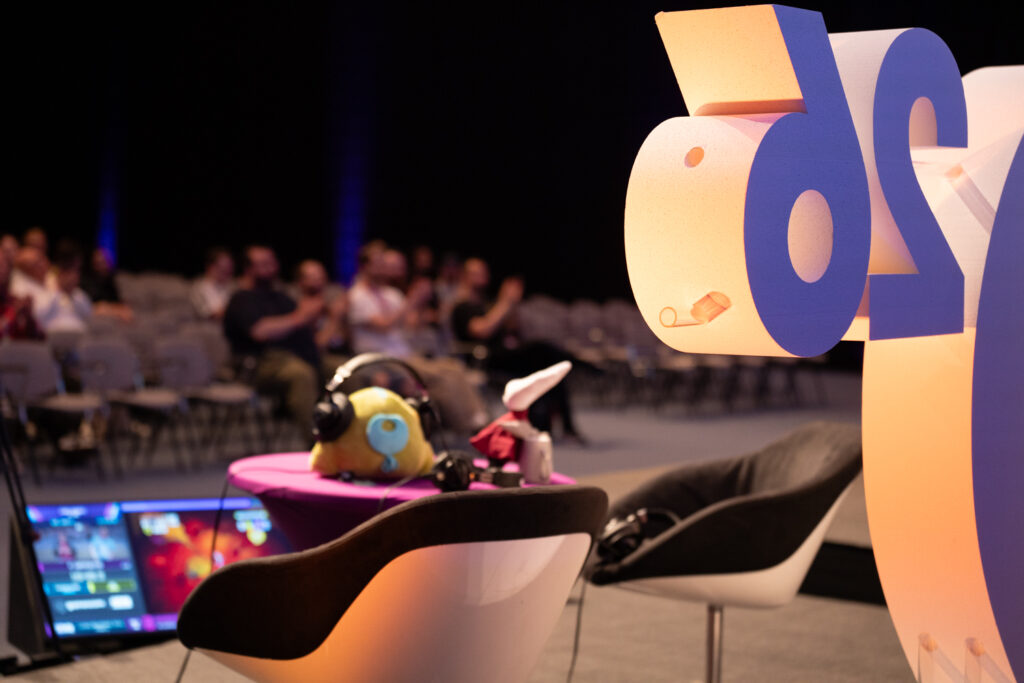
Credit: Richard “ogNdrahciR” Ngo
For us to make extra steps and genuinely hear and see that feedback this year has been really wonderful, to feel like we are doing a good job. I think people always want to know, especially in the philanthropy space, where their money goes. That’s always at the forefront of my mind.
GamesBeat: Is there something about gaming that makes it especially suited for the kind of philanthropic work that GDQ’s partners do?
Farkas: Gaming and philanthropy have one very strong thing in common, and that’s community. Whether you are a publisher, developer, what have you, you have a community based around that franchise or content. The same thing goes for creators and streamers. You have community built around people, and philanthropy is rooted in people helping people.
Back in 2014, those two things kind of collided, and no one really knew what to do with it. Then it’s just kind of exploded in the gaming space and the philanthropic space. But there’s still so much work that we can do in gaming that brings in philanthropy and causes that people care about.
It’s also a great way for people, who may not have the ability to get directly involved on the ground with a nonprofit that they care about, to still be part of it and support it. Like with the wildfires in California a couple of years ago, everybody was streaming and fundraising because they cared about people who were displaced or needed to rebuild. These types of things give people tools and opportunity to support the causes they care about the most.
GamesBeat: What would you say is your Boss Move, the decision or career move that defined everything that came after?
Farkas: Moving across the country to basically clean closets at a nonprofit — that’s what happened! I went from a cozy PM job in D.C. to giving it all up to clean out closets of old PS2s at a nonprofit, and the rest is history. I feel so grateful for that to be what my story is. It feels a little bit like a fairy tale.
I remember specifically leaving D.C., and one of my old bosses told me it was a mistake, and I shouldn’t do it. I said that I felt really strongly about it, and that this was what I wanted to do with my life. Now, it’s very funny, that person pretty consistently checks in on my LinkedIn, which I find very interesting!
That’s my Boss Move: Literally demoting myself to start over and then start into the career that I care about a lot.
GamesBeat: And what is your boss music? What’s your hype-up song?
Farkas: Hype for me? It’s “Paradox” by The Pretty Wild. That band goes so freaking hard! The first time I heard their music, I saw them live. I had genuinely never heard of them. They jumped on stage and were immediately screaming at me. I said, “Ma’am, you have my attention. I’m here for the ride!”