
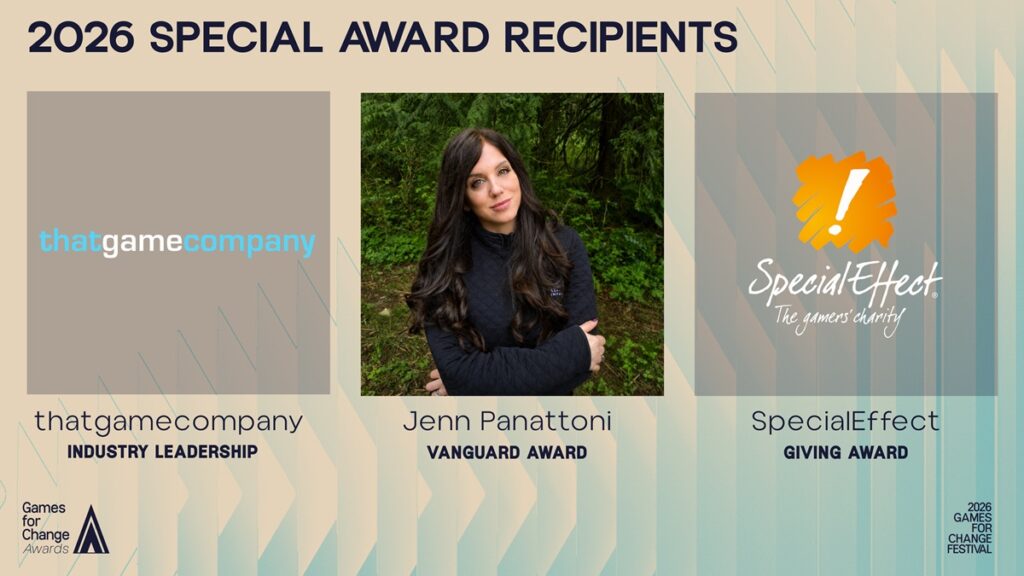
Games for Change (G4C), the nonprofit dedicated to harnessing games and immersive media for social impact, announced Jenn Panattoni is getting the Vanguard Award at the 2026 Games for Change Awards.
These awards recognize the exceptional contributions of individuals and organizations in the gaming industry that have made significant strides in driving positive change. Panattoni started the social impact effort at Microsoft’s Xbox division and is being honored for helping to change who games are for, according to G4C President Susanna Pollack.
The G4C Vanguard Award is given each year to an individual who has made notable contributions to the gaming community.
“Jenn Pannatoni has demonstrated that the most meaningful innovation happens when creativity, purpose, and business strategy come together,” Pollack said in an email to GamesBeat. “Through bold partnerships and creative collaboration, she has shown that social impact isn’t separate from business success – it can strengthen communities, deepen player engagement, and create lasting value. We are proud to recognize Jenn with the 2026 Games for Change Vanguard Award.”
G4C recognized Panattoni as a pioneer of social impact work inside the games industry. She founded the Xbox Social Impact team in 2018, where she spearheaded campaigns that generated more than $250 million in value for nonprofits worldwide.
She now leads her own agency, Aizle Impact, which builds cause partnerships across gaming and entertainment.
Regular-priced tickets for Games for Change (July 21-22 in New York) are available until July 5, 2026, with discounts offered for nonprofits, educators, and students. View the full Festival lineup and register at festival.gamesforchange.org. Games for Change has empowered game creators and innovators to drive real-world change since 2004.
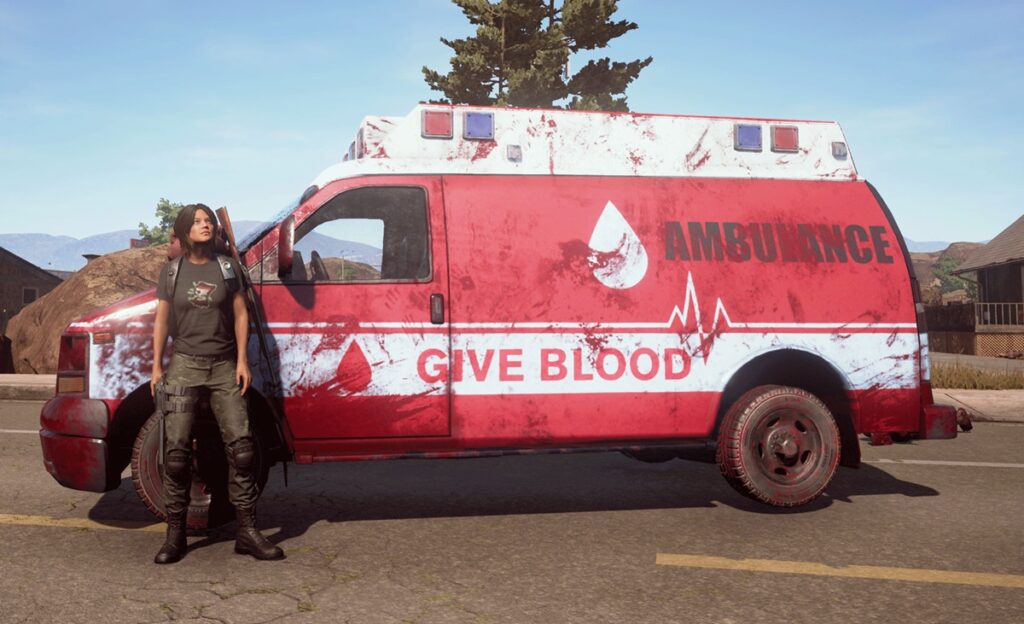
I interviewed Panattoni about receiving the award, her career, and some impactful campaigns. Some of you may remember her for putting an ambulance for a blood drive inside the Xbox game State of Decay. It was a bold thing to do inside a bloody zombie game, but it resonated with gamers and resulted in 250,000 donations for the Red Cross. Globally, Panattoni’s work has helped generate more than $250 million in value for nonprofits.
Here’s an edited transcript of our interview.
GamesBeat: Congratulations on the award from Games for Change. Did that come out of the blue for you?
Jenn Panattoni: It did. I was pleasantly surprised. I was about to go grab lunch and got the email. It was a huge joy to see my work getting recognized.
GamesBeat: I wanted to hear a bit more about your career. Your interest in social impact, how far back does that go for you?
Panattoni: As long as I can remember, honestly. There are hilarious photos of me trying to plant a tree branch in the middle of a sandy beach when I was probably two. Which, of course, isn’t going to work. On the weekends I’m a hobby forester. We have about 20 acres of forest that I steward, mainly for wildlife habitat restoration. It’s in almost every aspect of my life.
GamesBeat: You’re in the Seattle area?
Panattoni: Outside Seattle, yeah.
GamesBeat: When did it become a focus in your work? When did you get professionally interested in social impact?
Panattoni: My degree in college was actually in linguistics. I speak four languages. But it started early in my career at Microsoft. At Microsoft they have this event called the Give Campaign, where everyone is encouraged to volunteer for a month in October in various different ways. I helped one of the campaigns initially, and then the following year–I think I had been at the company for about two years. Phil asked me to head up the campaign for him. That’s when gaming became its own branch within Microsoft.
At the time I was on the policy and enforcement team. I’d always wanted to do this work, so I saw this as an opportunity to leverage that skill I was developing, that love I had for making the world a better place. That’s really where it kicked off. After that I was given the opportunity to create the social impact team at Xbox from the ground up. That’s where I led that work, led that team, led the different programming across the business until I founded Aizle.
GamesBeat: Was there a job you had in the space at all before Microsoft? Or was that really the beginning?
Panattoni: That was the beginning. I had volunteered here and there. I volunteered at Seattle Children’s Hospital and for various animal rescues. But professionally it was Microsoft.
GamesBeat: What was it like getting into this line of work through Microsoft? I imagine they had a lot of resources at the beginning.
Panattoni: A lot of resources and a lot of passion. There were a lot of people who aligned with my ethos, where doing good is good business. You can run a business and make the world a better place. These aren’t mutually exclusive concepts. It was a great opportunity to test out what’s possible. Social impact in gaming is particularly fascinating, because traditional social impact, if you will, deals with what’s there. Whereas I have called up at game studios and said, “I have a good idea, but you need to add this to the lore of your game. Can you do that?” And they say, “Sure, we’ll totally do that.” It’s just a lot of fun, finding those unique opportunities to create impact.
GamesBeat: Did you have a mentor that passed this on to you? Where do you think it comes from?
Panattoni: I think it was instilled by my family. We’ve always been big into giving back. But also, I have been very lucky in having a lot of mentors in this space, in various sectors. Either in the corporate sector, in the Microsoft philanthropy team, or the cause partner space. I have mentors over there. I value the amount of mentorship I get in the various industries, because it gives me unique perspectives. I enjoy branching out to get the level of mentorship I get.
GamesBeat: How did you start small and go bigger at Microsoft? How did you turn this into something that had the most impact?
Panattoni: Often it kind of felt like we were building the plane as we were flying it. That’s sometimes how these campaigns go. You never really know how the reach is going to be. But for example, State of Decay, we had a partnership with them and the American Red Cross where we put a bloodmobile in the game. It was the bloodiest bloodmobile I’ve ever seen. There was blood in the tire treads. In its first year alone it encouraged 169,000 people to sign up and donate blood. For perspective, that’s a full two weeks worth of donations across the United States, pre-pandemic. That was in its fourth year last year.
You never know where these partnerships are going to go, how they’re going to grow. That’s always the goal. You always want to create those surprise and delight moments that the community clearly really enjoys and feels are authentic to their fandom and the IP. And then they also get to see their impact being part of a collective, something bigger than themselves.
GamesBeat: The bloodmobile was just in the game, right? You didn’t actually build one.
Panattoni: The way I look at partnerships, I often do the analysis of–is this money I’m spending on this campaign going to get the cause partner more reach? More of whatever their goal is, whether it be fundraising, donations, and so on. Or am I better off just giving them the money? I couldn’t come up with a justification to create, say, a real-life bloodmobile. But the virtual one got the point across.
GamesBeat: Was this early in your 10 years at Microsoft?
Panattoni: That was in 2021.
GamesBeat: What were some other successes you had?
Panattoni: Success, I think, is defined differently depending on how you look at it. For example, was that the most successful for blood donations? Yes. I think over the years we’ve gotten about 250,000 people to donate through that campaign. Then there are campaigns we had where–you probably saw Pink Mercy come back a couple of summers ago. That blew our expectations out of the water in terms of the community coming back and donating. Now Overwatch actually has the number one and number two private donations to breast cancer research foundations, totaling $25 million. That’s not just Overwatch. It’s the Overwatch community. Seeing them all want to come together to make that impact, and the advancements they’ve made in breast cancer early detection–they’ve funded AI algorithms with that.
But then you also may have seen Diablo’s Earth Day campaign, where they raised 666 buckets of maggots for a wildlife rehabber over in the United Kingdom, to feed their birds. For every campaign success is defined in a different way.
GamesBeat: Your philosophy about how doing good is good business, how did that develop over time? Did you have to argue for that case a lot?
Panattoni: The numbers reflect that. It depends on which studios you look at, either through the NYU Stearns School of Business or through Edelman, but we find time and time again that consumers will change their purchase behaviors and buying decisions based on the values espoused by companies. The best way you do that is through social impact campaigns, because you’re saying it with your whole chest.
GamesBeat: How do different campaigns take hold and become stronger over the years? I’ve been writing about the Call of Duty endowment for a long time. There are all kinds of causes, but that one always generates a lot of impact. What makes something like that successful, as opposed to ones that don’t get as much attention?
Panattoni: Taking the Call of Duty Endowment as an example, it has a high amount of authenticity to their IP, to their audience, and to the ethos of the company. It’s that authenticity. Players can tell when a company is chasing a moment. The work that lasts is the work that has an authentic reason to exist. It fits the game. It fits the partner. It gives the community a clear way to participate. It’s the difference between using impact as more of a trend and building something that people believe in.
GamesBeat: What were some other successful campaigns you had?
Panattoni: Another one was on a smaller scale, but it dovetails into a bigger campaign we did. I developed a friendship with the Nebraska Humane Society, because their marketing is hilarious. They also do great work to support animals in the Omaha area. When I was at Xbox we would do a few different blanket-making events for them. This was in the days of working from home. To get people to come in, I hired a therapy miniature horse. We were able to not only benefit the Nebraska Humane Society, but the foundation that she was a part of. “If you want to help animals and you want to pet the horse, you gotta make a blanket.” We did that for a couple of years. She would come in costume. I can’t underscore enough how funny it is to see a miniature horse dressed up as a devil in the elevator of your building.
But that dovetailed later with one of my favorite campaigns–it’s really hard. People ask me about my favorite campaigns, and there’s something I have about every one of them that I love dearly. We came out with Doom: The Dark Ages last year. Bethesda and id let me run with Doom: The Bark Ages. “Raise hell for a good cause.” The Slayer is arguably killing a bunch of demons in hell because they killed his bunny Daisy. That’s my truth. The mecha-dragon was new, so we worked with a creator from Bethesda’s community to draw the most adorable-looking corgi riding the mecha-dragon in Slayer armor with a morning star, a flail. We sold that T-shirt, and the proceeds benefited three local Humane Societies. One close to Microsoft in Seattle, one close to Bethesda, and one close to id. Seeing the community get so excited about that–that was one of the most successful T-shirt campaigns we had while I was there.
GamesBeat: How do you communicate with folks in non-profits and other outside organizations that games can help them? You had the violence in something like State of Decay, and the same for Doom. How do you convince partners that this can be good for their brand?
Panattoni: These are all conversations that we have. I always want people to go in with eyes wide open. We don’t hide that mature titles are the ones where we want to do social impact. I’m clear about what that rating means. It’s a conversation about trust and the brand lift that comes with it. The gaming community being one of the most passionate communities, who will love to see this be supported. Just communicating the benefits. Take the American Red Cross. They now get access to a bunch of people, potential donors, who will save lives. They weren’t reaching those people with their traditional marketing channels.
Those, I will say, are my favorite conversations. I remember specifically with that campaign, I was giving Matt Booty a download on the conversation. In the email I said–I think this might be a direct quote. “I had to ask them at first what their stance on zombies was. Their answer was, unexpectedly, ‘We haven’t had to think about that before.’”
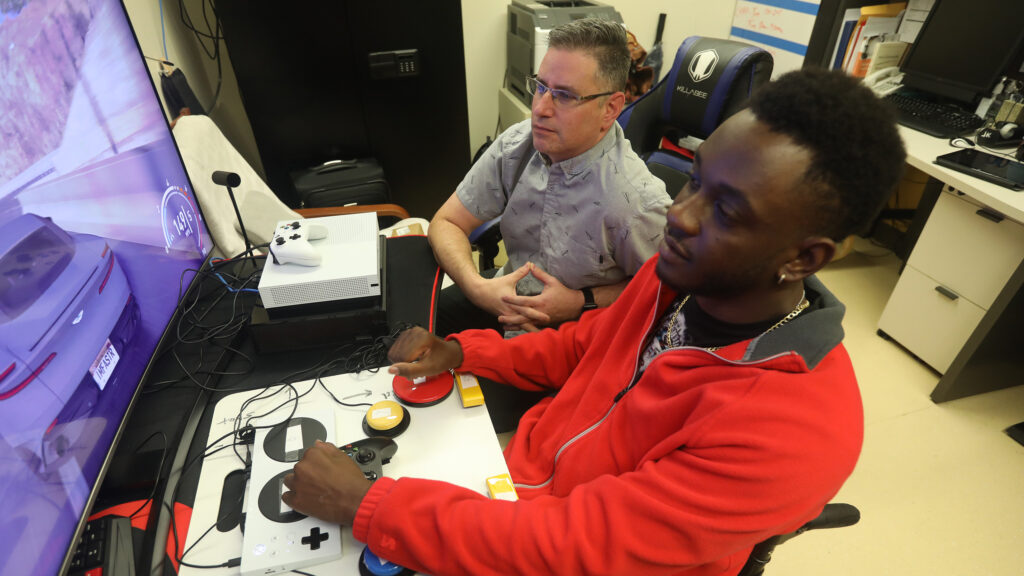
GamesBeat: The Xbox adaptive controller, was there some connection you had to that? That’s a pretty famous project.
Panattoni: Not necessarily the controller itself. I’m not going to say I was a founder, but I was in early conversations about it. The accessibility that I’m super proud of that we drove was–if you ever saw the Special Olympics esports campaigns, those were campaigns that we drove. Actually that was my first official–once I started social impact at Xbox, it was the 2018 USA Games at the University of Washington. That was the first campaign I did. You know how long esports tournaments take to plan. I started in March for a July start date. We had to move very quickly. It was great.
The Special Olympics was very motivated, because their athletes want to play games. Having conversations with the various state-level CEOs. We had national prelims. We flew out the winners. We had this beautiful esports arena in the middle of my alma mater at UW. Not something I thought I’d ever seen. But the social sentiment around that, the joy people got, seeing the smiles and the happy faces. That also became an annual campaign.
We had a similar moment when the world shut down with COVID. Everyone went home. The Special Olympics reached out again and said, “Hey, we want to do another esports tournament.” I remember saying, “I’m here for it. What’s your timeline?” They said, “Six weeks.” Okay, we’ll do it live. We’ll figure it out. That actually ended up winning the ESPN corporate citizenship humanitarian award. There were so many people–people were in flux. They didn’t know what their roles looked like from home. I came out and said, “We have an opportunity. We have to move quick. If you want to do it, jump on board.” It was amazing. It was a virtual tournament.
The biggest thing for Special Olympics is actually the awards ceremony, because it’s really about being brave in the attempt. Everyone gets a medal. We couldn’t have a real-life awards ceremony because of COVID, of course, and so the store team made the most beautiful in-Minecraft arena, like a stadium. They had each state represented. They made each state’s flag. They had a lounge for the athletes to wait in that was the Olympic torch. They built a podium that had cars from Forza in it. There were in-game fireworks. It brought a smile to so many people’s faces.
GamesBeat: I think about the Super Bowl commercial, the adaptive controller commercial. They talked about how, when everybody plays, we all win. It was very inspiring language. Is that some of where your philosophy comes from?
Panattoni: It’s definitely something that we embodied on the team. That was something I wanted to make sure–video gaming has brought so much to me in my life. I had an older brother. He needed a player two for Turtles in Time. If someone brought me a Barbie, that ended up on the roof of my house. It wasn’t me. He threw it. He needed someone to help him out. We love him, don’t worry. We’re still good friends.
When we’re doing these campaigns, we also embody “nothing about us without us.” We want to make sure people feel like they’re welcome, included, and belong in gaming. This is an interesting way not only for people to grow their business, but also a way to build community for your game.
GamesBeat: It seems like a unifier. There’s enough out there that’s pretty divisive when it comes to gaming. These causes have the opposite effect.
Panattoni: We definitely see people come together in moments. It can be something–I also oversaw humanitarian relief. Russia invading Ukraine or wildfires in Maui. Seeing people recognize that we put things in place for them to either donate their rewards points, if they didn’t have a game that was participating, or having the infrastructure to build campaigns quickly so that people could support in the moment–that was important to me, to make sure people had those opportunities.
GamesBeat: How did you get connected with Games for Change?
Panattoni: Goodness, a long time ago. They’re one of my favorite organizations. But don’t tell anyone. I’m not allowed to have favorites. Susanna is such a champion, as you know. I really admire the work they’re doing. We’ve always stayed in contact and wanted to find ways to support what they’re doing. I’m a great admirer of the impact they’ve had.
The award is a huge honor. I don’t know if I’m supposed to tell anyone, but I may have called my mom. She of course said, “What’s Games for Change? But I’m really proud of you!”
GamesBeat: You don’t necessarily go into this expecting rewards [or awards].
Panattoni: For me it’s not about that. If I’ve made someone’s life easier, if I’ve been able to influence someone’s life and make it better, easier, help them get access to resources that they didn’t have, that’s what all this is about. I’ve been the recipient of–take this example. I had a cat who needed a blood donation or she was going to die. At 11 p.m. somebody brought in their cat. His name was Pickles. He was a blood donor, on the list, and so they brought him in at 11PM and saved her life. I also have a nephew who’s a Wish kid. Seeing the direct translation and the joy that this stuff brings, that’s really why I’m into this.
I believe gaming is one of the most passionate communities. It has the power to move mountains and make the world a better place. It’s a joy to be able to help the community and work with the community to create that impact.
GamesBeat: How do you convince people, or just encourage people, to do the same, to do good?
Panattoni: It’s a question I get a lot. There aren’t that many roles around social impact in gaming, officially. You and I can name the teams that exist. What I tell people is that social impact doesn’t have to be your full-time job. You can take a stretch project. You can do a small thing. Even small things have huge impact.
We’re part of an incredible community that has told us, time and time again, that they want to partake in this stuff. I love the puzzle of finding–what’s a game that I can partner a cause with? You can gamify it, if you will. What cause and what game can come together and create something where people will say, “That’s incredible, I want to do this”? I absolutely love that.