
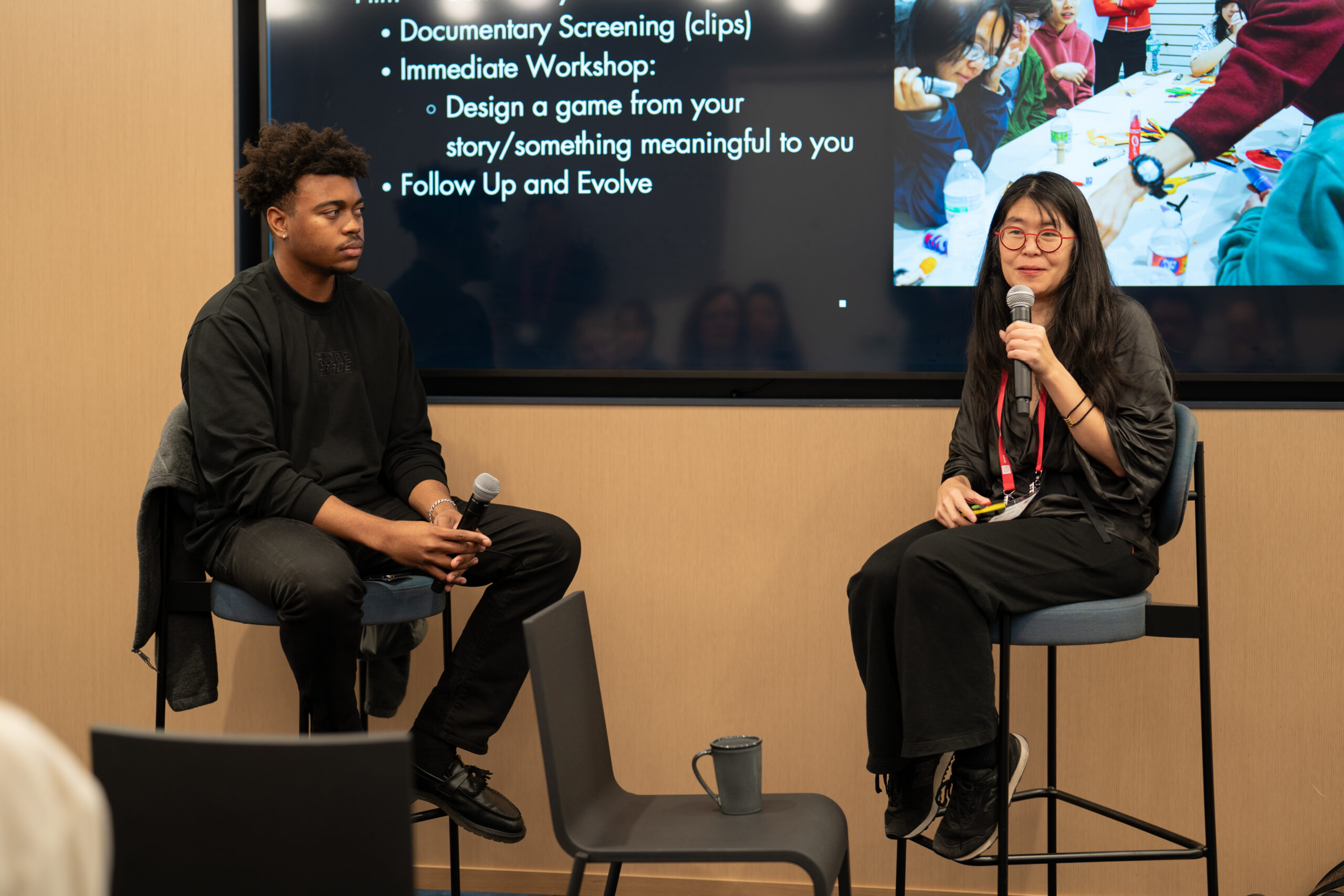
At GamesBeat Next, a panel on “Surfacing Ideas and Talent from Underexplored Places” brought together two creators taking radically different approaches to the same problem: how to give voice and opportunity to overlooked talent in gaming. During the panel, Khaalid Booker, the founder of ScoreSpace, and Theresa Loong, an interactive media director and documentary producer, shared their journeys of building communities and creating pathways for underrepresented creators.
From bedroom coder to publisher
Booker’s path began at age 12, when a seventh-grade animation class introduced him to GameMaker Studio through a two-week trial period. What started as in-class game jams evolved into six years of competing in online events on platforms like itch.io. That experience revealed a crucial gap in the market that would become ScoreSpace’s foundation.
“When you make a game for a game jam, you’ll make it, submit it, and then generally there’s no incentive for people to play your game after the fact,” Booker explained. His solution was elegant: have streamers play the top three games for high scores, providing built-in playtesting and visibility. More importantly, it created a talent pipeline for developers who lacked publishing opportunities despite their skills.
The strategy paid off dramatically. ScoreSpace recently published a blackjack game on Discord Activities that reached 1.2 million monthly active users within four months. The game emerged from their jam process. Originally, it was a Plinko-blackjack hybrid that Booker recognized could be simplified when he noticed Discord lacked a basic blackjack offering. “It’s a gap in the market,” he noted. “There wasn’t a blackjack game on Discord, so we made it.”
After closing a funding round roughly a month ago, ScoreSpace now plans to scale publishing across Discord, Reddit and broader web platforms, all fueled by their monthly game jam talent pipeline.
The “what” and “where” of finding your edge
Central to Booker’s philosophy is the concept of finding specific edges within broader markets. He advocates going deeper — identifying specific genres, mechanics, or underserved communities within a niche.
“Just indie games isn’t enough,” he emphasized. “It’s not something you could build a real company or community off of.”
For ScoreSpace, the “what” is indie games, but the “where” is game jams. This combination creates what Booker calls a “talent arbitrage,” or developers overlooked due to age or lack of production experience who nonetheless possess significant skills. By spending time in communities and observing what’s not being serviced, founders can discover edges that avoid direct competition with established players and their massive budgets.
“Without edge, you end up playing a timing and resources game, and you’re competing with everyone,” Booker warned. In an algorithm-driven world, finding something unique yet validated at a smaller level provides the foundation for sustainable growth.
Intergenerational storytelling and community building
Loong approaches underexplored talent from a different angle: documenting pioneering women game developers while simultaneously teaching the next generation. Her current documentary profiles Brenda Romero, examining the creative process and intergenerational aspects of game development. But the project extends beyond film.
Loong conducts workshops with diverse audiences, from Title One students in New York City to intergenerational groups, where participants create board games about topics meaningful to them.
“What kind of board game would you do? What would you make about something that speaks to you?” she asks participants. The approach meets audiences where they are, recognizing that every workshop produces surprising results.
Her broader work spans interactive museum installations, iPad learning games and community-focused media projects, including teaching senior citizens in New York City’s Chinatown to document their cooking knowledge through film. This multidisciplinary background informs her gaming outreach, emphasizing physical and digital experiences that make game creation accessible.
Looking ahead, Loong plans to launch a Kickstarter campaign for the Romero documentary while expanding game workshops and seeking partnerships to reach broader audiences. Her distribution strategy acknowledges that gaming audiences extend beyond traditional public broadcasting, requiring creative approaches to sharing these stories.
Culture as cornerstone
Both creators emphasized that authentic community culture, not fabricated engagement tactics, drives sustainable growth. Booker’s regularly scheduled monthly events maintain community engagement without forcing participation.
“There’s no amount of optimization you can do on a game that’s not built for sharing or retention,” he observed. “Designing your game, your product from the jump to be something that is naturally retentive is obviously the better play.”
As ScoreSpace expands, Booker envisions increasingly focused jams targeting specific genres on specific platforms, like Tycoon games on Roblox to build domain expertise while maintaining their core community culture. Meanwhile, Loong continues prototyping workshop formats that organically engage participants in game creation.
Their shared message: Underexplored places contain extraordinary talent. The key is building genuine communities and pathways that allow that talent to flourish on its own terms.