
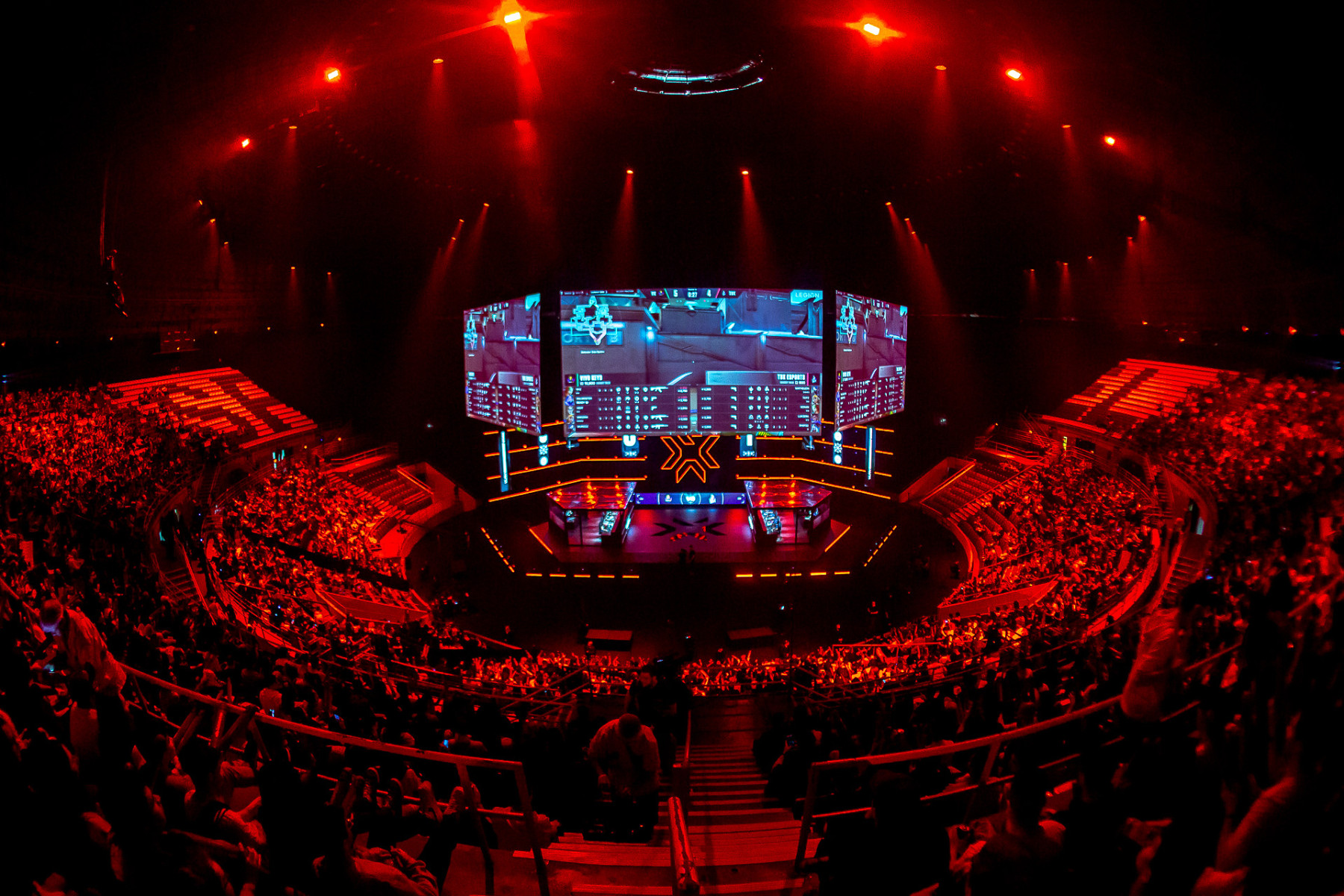
Riot Games views esports as its core connective tissue. Over the past two years, the company has significantly overhauled its internal structure to better align with this view.
At GamesBeat Summit in Los Angeles earlier this week, Riot Games president of publishing and esports John Needham joined GamesBeat lead news writer Alexander Lee — that’s me — for a 30-minute discussion about his company’s internal reorganization and what it means about the future of esports and competitive gaming at Riot.
The core of the talk was the evolution of Needham’s role at the company. Between 2020 and 2024, Needham served as the head of Riot’s esports division; in August 2024, he transitioned to a role as the president of a combined publishing and esports division known internally as “PubSports.”
Needham’s new role reflected more than just a promotion for the nine-year Riot Games veteran. It was a facet of a much more significant shift at Riot, with the company shifting from a “pillar” model — with distinct and largely independent internal departments focusing on publishing, games, entertainment, enterprise, and esports — to a more closely merged structure in which all departments work in tandem to achieve Riot’s business goals.
“We do not say the P-word anymore,” Needham joked during the onstage discussion.
Four years ago — during the pillar era — I spoke to Needham about Riot’s plans to make its esports division profitable as a distinct unit. When I referenced that conversation on stage during our talk at GamesBeat Summit, he told me that the company is less focused on esports profitability under its new structure, framing esports as a “nice-to-have” that adds to the value of Riot’s core game products, both as a marketing channel and by driving purchases of in-game digital items. He flagged that across Riot’s global events, depending on the title and scale of the event, the company typically sees a 15- to 25-percent post-event lift in game hours among trackable viewers in the period immediately following the event, with a long-tail engagement lift of about 10 percent continuing beyond that initial period.
“Almost 40 percent of League [of Legends] players and half of our Valorant players weren’t intending to buy a digital item until they saw it was esports-themed, and then they bought it, and I think a lot of that motivation is they want to support the sport they love, the game that they love, the teams that they love,” Needham said. “So, esports has been a great driver, and if I don’t get to break even with esports — which I will — but if I don’t get there, it’s still a great investment for the games, and we have proven that out time and time again.”
Riot’s decreased focus on the profitability of its esports products does not mean the company hasn’t taken steps to keep other stakeholders in its competitive ecosystem satisfied. During the fireside chat, Needham highlighted that Riot had doled out over $100 million in digital item sale revenue with esports teams in its Valorant ecosystem last year.
“Sponsorships have come back, by the way,” Needham said. “We’ve grown the past two years in a substantial way with sponsorships. We have a very young, engaged audience that’s super hard to reach in normal channels. Esports is a great, efficient way for non-endemic brands to market themselves, so that business is coming back.”