
Triple-A game makers are finding success by taking cues from the rise of user-generated content.
Although platforms like Roblox and Fortnite have brought in-game creator economies into the mainstream, a significant amount of UGC activity is occurring inside triple-A games like Battlefield 6, whose Portal feature allows players to build and share their own multiplayer experiences using an expansive sandbox mode. During a panel at GamesBeat Summit in Los Angeles last month, Battlefield global head of influencer strategy Mitchel Inkrott joined Creators Corp director of gaming strategy Henry Coxall and Loaded evp of talent Yoni Ginsberg for a discussion about how Battlefield’s creator-made experiences act as a marketing flywheel for core game, moderated by Luminate Intelligence media analyst Kaare Eriksen.
“We’ve been working to spend as much time as we can understanding how we reach new players that are maybe coming to Battlefield for the first time, or coming back to Battlefield for the first time in a number of years,” Inkrott said during the panel discussion. “What we worked on together was one of the biggest activations that we did to start appealing to the modern content creator, the modern player, and the creators’ communities.”
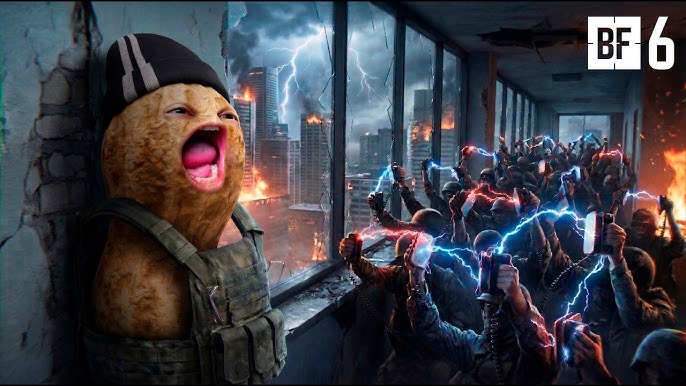
In March 2026, Battlefield teamed up with the gaming content creator TheBurntPeanut to launch Battlefield Portal’s first-ever custom creator experience, Shell Shocked. Although the experience resulted from an official partnership between Battlefield and TheBurntPeanut, there are no brand partnership guidelines preventing creators from similarly building and monetizing Battlefield Portal experiences without the game makers’ official involvement.
“How do we build the game to be a better marketing vehicle from day one? That’s by inserting UGC systems in so people like Peanut can go ahead and build his stuff that he wants to do, even maybe potentially without Mitch in the loop this time,” Coxall said said during the panel discussion. “Some games are building these things and getting ready for the future, but right now, Mitch’s team are the ones that are running forward at the triple-A level.”
Battlefield Portal is not yet a full-fledged UGC platform that allows creators to build businesses and monetize their content full-time. However, there are significant benefits to the platform for traditional digital content creators interested in dipping their toes into UGC, per Ginsberg.
“The creators who I work with had an amazing time. Everybody loved it, and the content was very fucking good — they just laughed and won,” Ginsberg said during the panel discussion. “In the end, it was very well-balanced, which is the hardest thing to do.”
A hallmark of UGC gaming platforms in recent years has been the relatively common presence of brand and entertainment IP integrations into creator-made experiences. During the panel discussion, Inkrott declined to comment on his company’s plan to allow brand or IP integrations inside creator-made Battlefield Portal experiences, but said that integrations in the game would have to fit closely with the DNA of the Battlefield series.
“It has to really capture that sense of urgency, and almost anxiety, to some degree, when you’re playing the game,” Inkrott said. “I think that feeling has to shine through on anything that’s created around the Battlefield universe.”