
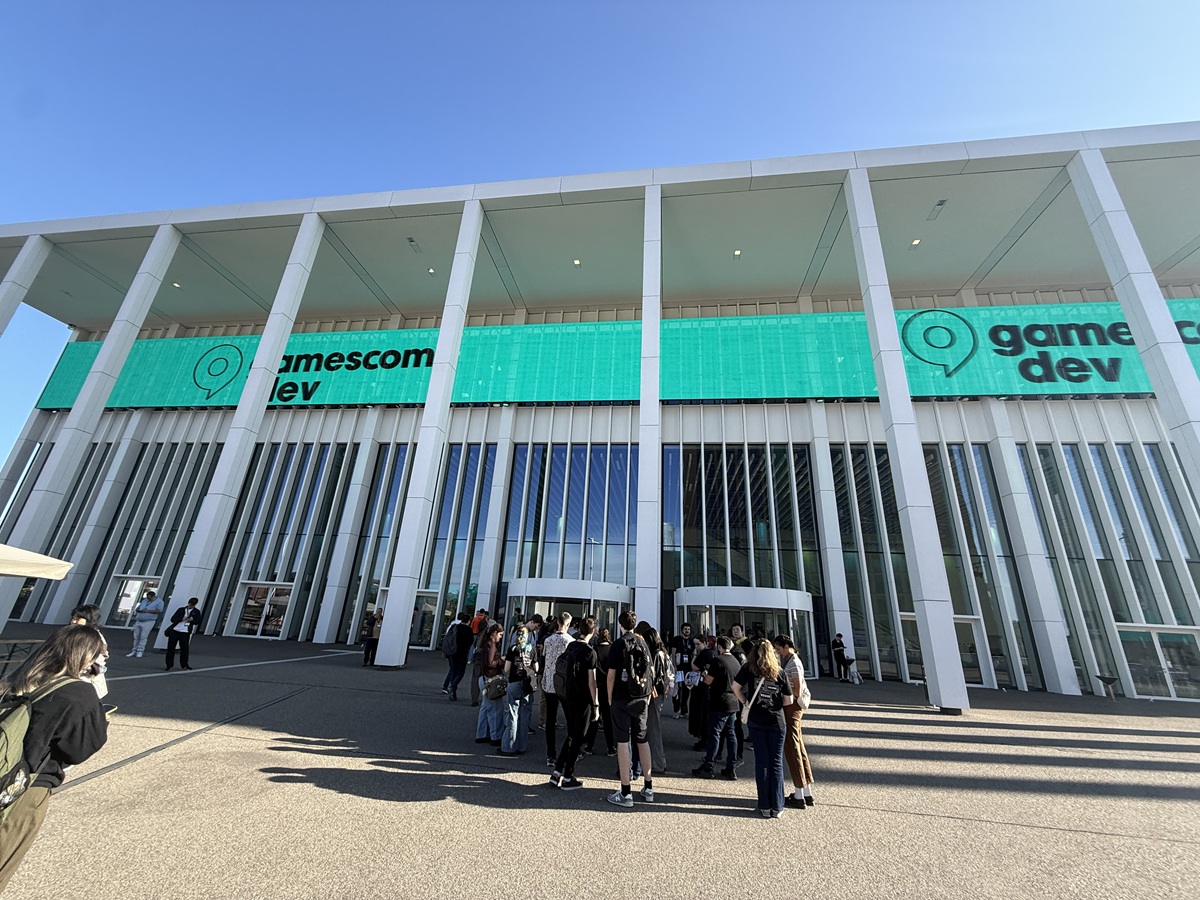
This year was the first time that Gamescom assumed control of its game developer conference, formerly known as Devcom and now renamed Gamescom Dev.
And that name change came with greater recognition, enabling Gamescom Dev to wrap up its 2026 event last week with more than 6,200 participants, up 15% from a year earlier, according to organizer Game Events GmbH.
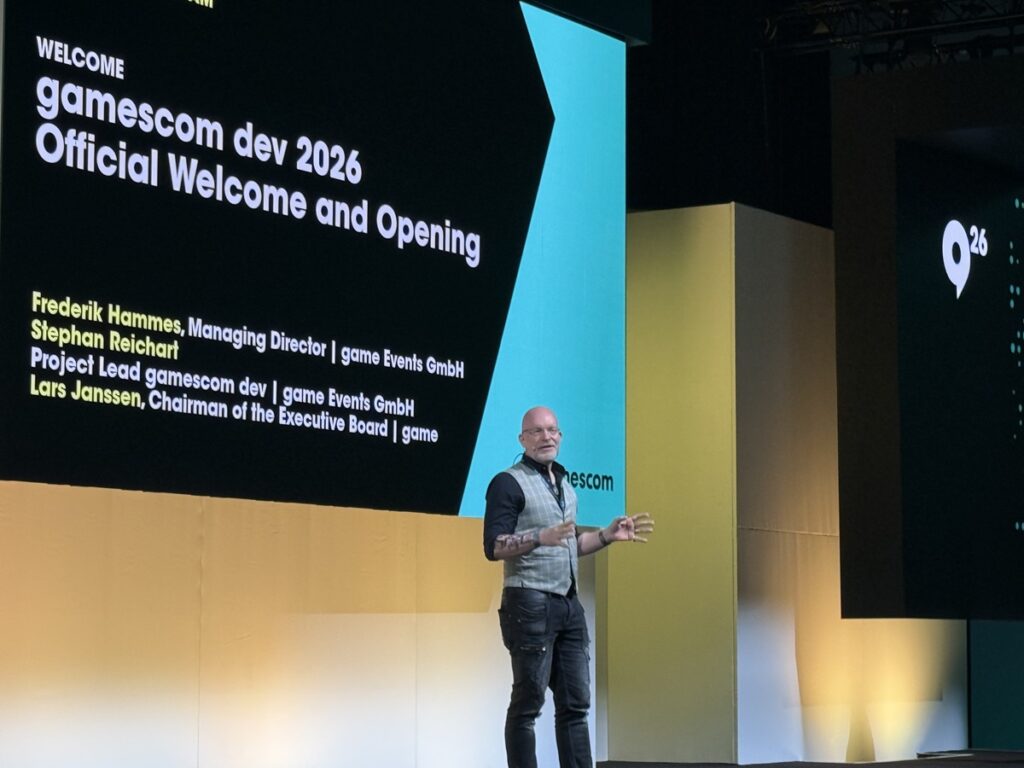
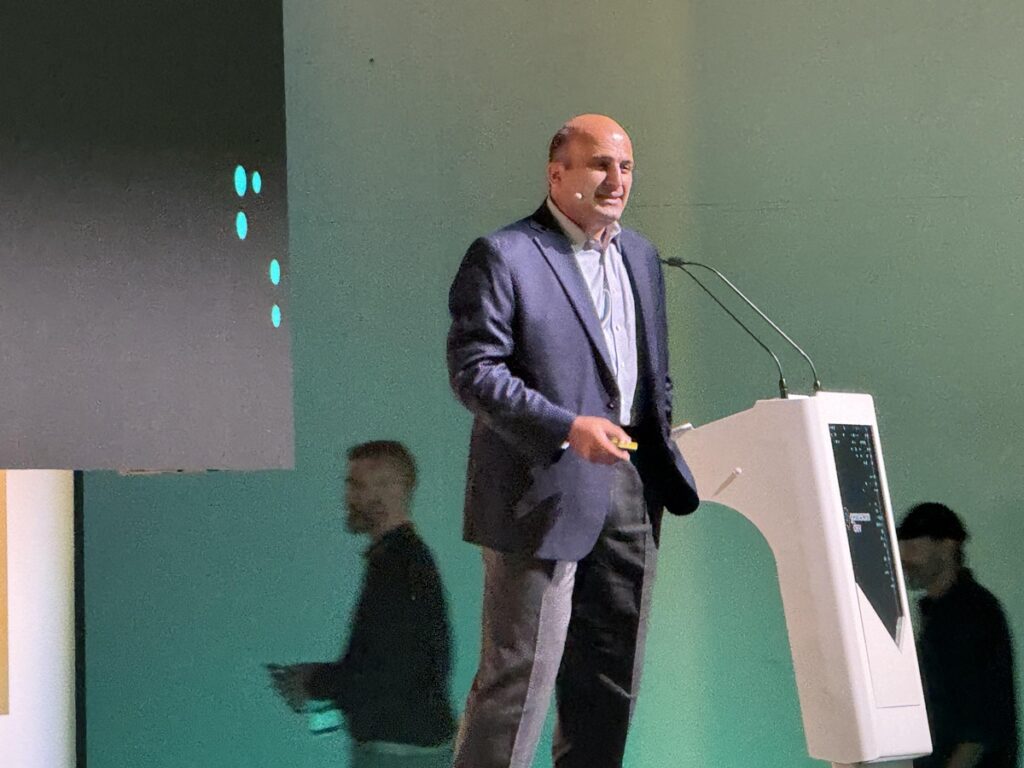
This year was also the first time that the conference for thousands of game developers operated with a new commander. Stephan Reichart, former head of Devcom, stepped down at the event and became an adviser. He was replaced by Frederik Hammes, managing director of Game Events GmbH.
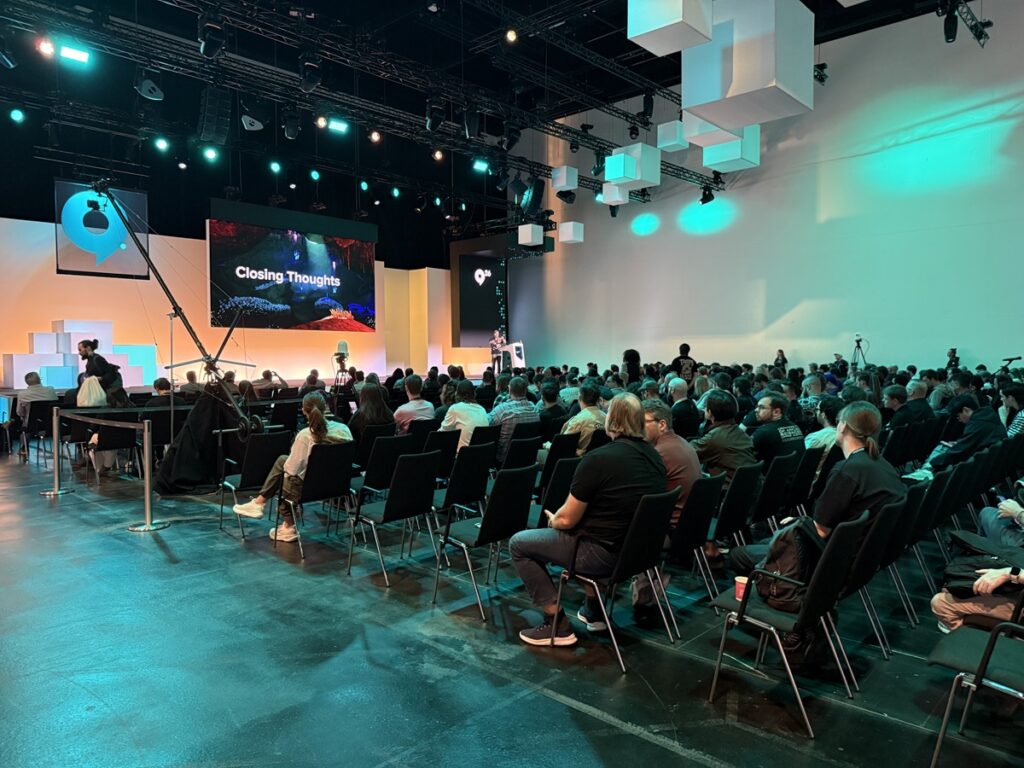
Gamescom Dev ran August 23 to August 25 in Cologne as the official opening to Gamescom Business Week. Overall, Gamescom drew more than 368,000 people from more than 1,700 companies. Gamescom Dev’s event program featured 397 speakers across 238 sessions spread over 18 stages, covering development, production, design, technology, leadership, and business topics.
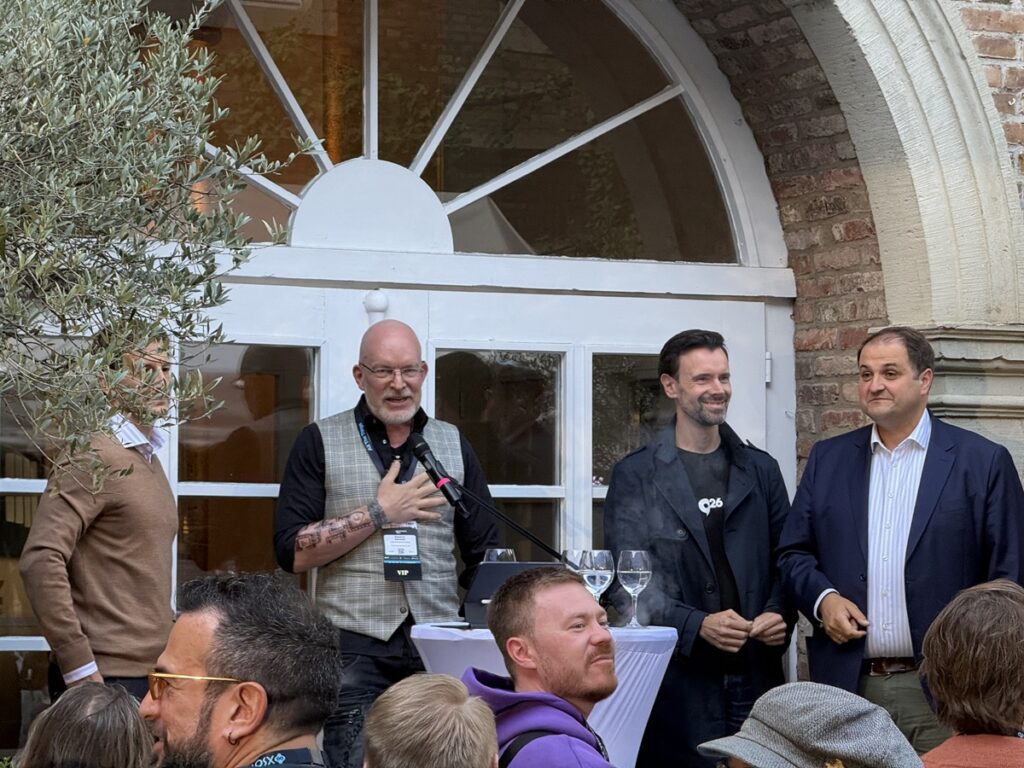
“This combination of strong content, critical discourse and business opportunities upstream of Gamescom is what defines Gamescom Dev as a conference,” said Hammes, who took over this year after a decade of Reichart’s leadership. Reichart had a couple of chances to say goodbye to his team and thank them publicly on stage, and then Hammes took over.
During Gamescom Dev, the event’s opening keynote speaker Amir Satvat addressed the state of the industry following several years of layoffs, while Unknown Worlds creative director Anthony Gallegos talked about the development challenges behind Subnautica 2.
The event’s best-attended regular session, according to its organizers, was a talk on generative AI’s use across the industry, presented by Amara Eden Doshi and Ena So, which the organizers described as offering a balanced look at both the new technology’s potential and its limits.
The AI session’s popularity tracked with the results of Gamescom Dev’s annual speaker survey, which polled 100 speakers ahead of the conference. Nearly half, 47%, named AI-assisted development as the industry shift likely to have the biggest impact over the next three years.
Gamescom Dev is organized by Game Events GmbH, a subsidiary of the German Games Industry Association, and bills itself as Europe’s leading game developer event. Its next scheduled gathering is a leadership summit in Lisbon from March 23-25, 2027, ahead of Gamescom Dev’s return to Cologne on August 23 to August 24, 2027.
We had a nice conversation, though at his request, he asked me to share a lot of my views with him about the state of gaming. Still, I enjoyed the insights we came across during our conversation.
Here’s an edited transcript of our interview. (Jolie Feld contributed to this report).
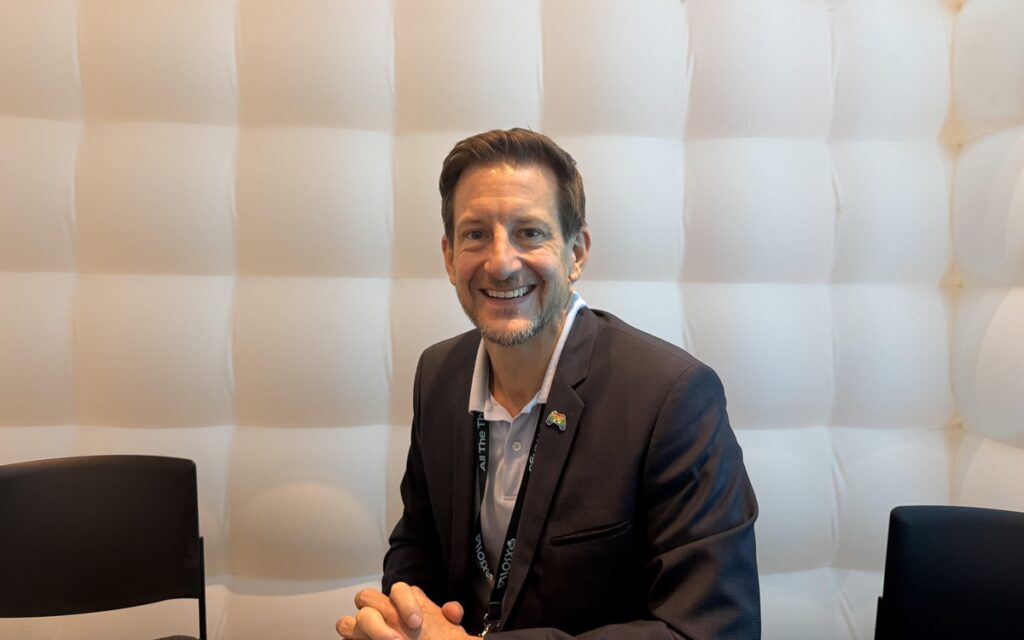
Frederik Hammes: The net positive will reveal itself tonight or tomorrow morning when we have the final numbers (the numbers were up 15% from a year ago). Obviously we’re an event for the global development community, but we’re also a company that measures its success in revenue and profit. That’s one of the dimensions. That dimension will reveal itself soonish. I can say it will be pretty positive. We’re not at the level of Gamescom where we’re sold out and we don’t know where to go anymore. We still have room for growth. The development we’re seeing is a more fragmented exhibition situation. More booths, but smaller. Way more attendees, way more ticket sales.
GamesBeat: Is there greater awareness because it’s called Gamescom Dev now?
Hammes: Absolutely. The awareness factor, the fact that we can use the ticket shop of Gamescom. People go there and see all the options. They don’t have to know there’s a Devcom and go to another site to buy a ticket. We call it the Gamescom business week now. Monday through Friday you can do business. Every ticket you get here has “5-Day Business” written on it. You can stay here today and go over there for three days. One of the caveats is the other way around doesn’t work. If you have an exhibitor ticket here, you can’t automatically come here. We need to improve that. There are some friction points, some points to improve for next year.
GamesBeat: Is it a base of about 5,000 usually?
Hammes: Yeah. We should be [above that — the results came in at 6,200]. We had 390 speakers, 230 or 240 sessions. We have these conversations a lot with people reminiscing about Devcom. “Oh, I liked that name better.” I understand that. It had its own vibe, its own legacy. But the world is changing. You have to get along with it.
GamesBeat: I’m trying to remember the history. Stephan (Reichart), in Berlin, was doing Devcom [in its prior form Respawn].
Hammes: It was Respawn at some point. Then it was Devcom. That was the first event in the new conference thing here. Now it’s the first year of Gamescom Dev, getting a bit more corporate. Which is also–we did a survey with the speakers, and that’s one of the outcomes. They have to get business literacy earlier, even as a small studio. They’re much more powerful now with the tools they have. They can make way more content, way more games, much quicker. But it doesn’t take away the business side. You still need to do the business side.
GamesBeat: What is your background that’s helped you get ready for this role?
Hammes: I started as a journalist. I did some B2B, reporting on games. I studied business before that and got a master’s degree in media. I started with a German B2B publication, which was amazing. I was a younger guy and I got to travel around the world, going to E3. Some days I’d do little pieces, visiting a store and writing about it, and the next day I’d interview Yves Guillemot for two hours. I got to know loads of people. It was a fascinating, stressful start.
Those events were always the highlight of my year. We did a daily magazine over at Gamescom. We’d do interviews during the day, and then at night we were mingling, networking, getting info. Later at the hotel you’d write for not the next day, but the day after that, because it had to be printed and delivered. It was stressful as hell, but I have fond memories of that time.
Then I transitioned over into the industry. I worked for a very traditional German web games company called Travian Games. From time to time you meet people who still play Travian, which is a hardcore game. It was a persistent world. You could get attacked at 3AM. You had to set your alarm. The game dictated your rhythm of life. There were people who loved that. The game’s still running. I was on the product side, and I advanced to become general manager for five years.
I was well-connected in the industry through the games association. The opportunity arose–I knew Stefan for a long time. I knew Felix for a long time. The opportunity presented itself, and we got to talking. We agreed that this was a good next step. I like it because I feel like I’m more in the middle. As a journalist you’re in the middle. You’re kind of a facilitator. You exchange information. I do that here in a different way, from a different perspective. I want to provide a service to the industry, to the community, to get topics like AI on the table and help them make up their minds. I don’t want to tell anyone what to do. But I’ve kind of come around to where I started, in a sense.
GamesBeat: Before you started doing this new job, what were your main responsibilities?
Hammes: I was at a company called RCP in between, Remote Control Productions. I was a liaison for the studios. They have shares in a bunch of studios around the world. I was liaison to be able–again, providing them with information. Giving them access to centralized services like business intelligence and so forth. That was a lot of the kind of co-development you mentioned earlier, and the pitfalls the come with co-development. But there I could see the trend toward more fragmented development. Using smaller teams and putting more of the development work outside, just keeping the creative core in the core team.
GamesBeat: Can you tell me more about some of the interesting points of the survey?
Hammes: We asked the developers what they think about discoverability. They named it, obviously, as one of the biggest problems. About 75% of them want the platforms to fix it. Storefront recommendations, editorials, whatever. Later on, we asked them, how do you as an individual discover new games? They were just saying, “Well, our friends and our community.” It doesn’t quite add up. My take is that developers should never underestimate their community. Don’t trust the algorithm. It can change in a heartbeat. There’s still no way around building that community, however and wherever you do that.
Another one was that premium games were named as the dominant future business model. If you look at the market reality, that doesn’t make sense. Something like 75% of revenue is made in mobile games with in-game transactions. That leaves a question mark. You think about what that means. We only asked our speakers, so maybe it’s skewed by our selection. Mobile games are not as prevalent in those conferences as they should be to mirror the market situation. I want to fix that, of course. There’s a lot of cool stuff going on in triple-A games, but we’re serving the gaming community and the gaming market. A lot of that is mobile games. We have to put more focus on that in Europe. In Asia it’s completely different. But here, mobile games are underreported.
GamesBeat: I realized something about audience targeting now. You don’t really comment on mobile games that much. If you look at something like a YouTube video, you comment, and all of a sudden everyone knows who you are. All they have to do to understand you, without invading your privacy, is just look up the comments you’ve made. Then they have a profile of you, and they can target things at you. I think that’s going to be the path, because AI can do that at scale. It can find all the people who love, say, Helldivers 2, everyone who’s ever said anything about it on YouTube or Twitter or any other public social media. From there they get a very targeted list of people who will say yes to a wishlist. “Do you like this? You’ll probably like this too. You want to wishlist this.” You can get that action out of people.
I almost think that what mobile has to do is make that possible. When Apple decided to stop all of the targeted ads in favor of privacy, that ended, because there was no public commenting system geared toward mobile.
Hammes: It was a debatable move. I understand why it was done, but it left a huge gap in how you can market, especially on mobile.
GamesBeat: It feels solvable. These things can be done again.
Hammes: Being a developer means thinking about AI not only in terms of your code and your bugs, but in your marketing and your PR strategy, being creative about that. You won’t always have an art team and a marketing team. You need to get creative and use your opportunities. Maybe it’s a bit more fenced-in here in Europe, because we’re so big on privacy and what you can and can’t do. Normally when companies start using AI, they start with guidelines – you can’t do this, this, or this – before anybody ever uses anything. We’re lagging behind Asia.
In the study there was one question about AI specifically. Where do you see the biggest fields for applying it? About 40% said coding and production, but another 40% said they wouldn’t touch AI with a 10-foot pole. It’s completely divided. We have conversations with the Asian development community and they don’t even understand why there’s an issue. That’s going to be a problem. I was talking with one of the bigger platform holders, and they said that their main thing now is communicating to consumers about AI. Explaining why it’s not a bad thing. Explaining how they use it. It’s not just taking stuff from Midjourney and putting it into a game. It’s a huge, controversial topic.
For me, as a conference organizer, how do I deal with that? How do I position myself? How do I not burn my fingers? Of course I have a private opinion, which doesn’t matter. I want to facilitate communication. My theory–I stole this from Daniel Kahneman in his book, Thinking Fast and Slow. If you only have a few data points in the story you tell yourself, then it’s a strong story, but it’s usually not the right one. “Midjourney makes images and then artists get fired, so Midjourney is the reason why artists get fired.”
GamesBeat: Really, there was poor decision-making sometime in the past–
Hammes: Yes. There are many factors. If you get more data points–you need a nuanced opinion. You need to get that conversation going. That’s what I want to facilitate at the conference. I want people to exchange data points and see a more nuanced picture. Then they can tell that to the consumer. The longer we take as an industry to form an opinion about this, it will hurt us, because we’re at a standstill. There are lots of areas that are not wasting time.
GamesBeat: Jack Buser at Google said that he thinks the conversation is getting a bit more granular. It’s okay to use generative AI if you’re just doing it for prototypes, and then in the end you strip it out of the game. Handcrafted work replaces it. On the programming side, tools that can enhance the ability of programmers to get more work done, that’s good. In general, when you’re required to disclose things, you don’t really need to disclose that you used AI in programming. What people care more about is using generative AI in games and leaving it in.
Hammes: Right, final art. That seems to be the main point. If you can get rid of that you might be good.
GamesBeat: Under all these conditions, this is when it’s acceptable. Is that a big enough opportunity to target tools into? I think so.
Hammes: Definitely. I was talking to a tech lead from one of the biggest studios in Germany. They said that they only allow their senior developers to use AI. I found that interesting. The juniors don’t get to use AI because they still have to learn how to code. If they use AI, they won’t become seniors. They’ll just execute. They’ll have good output, but they won’t grow. The seniors, their output and their effectiveness grows time 10 if they use it.
GamesBeat: Even worse, possibly, is that internal game development teams get to use AI as an experiment. The legal department will sign off on it if they contain it inside the company. But so many companies are using multiple external developers to finish games now. Those guys don’t get to use the AI tools from inside the company because of the fear that they’ll create a copyright problem. They can’t trust the external developers. This kind of ruins the whole efficiency argument. You’re bringing those guys on in the first place because they cost less, but if you handicap them–
Hammes: It’s interesting. I hadn’t thought about that. You need some kind of agreement or solution.
GamesBeat: Some flexibility on the part of the legal department. This is the new way of business, so you have to figure out how to write a contract that fits this.
Hammes: Maybe we need flexibility on the part of the law. Just being clear on what’s good to go and what’s not. When I started in the industry, I wanted to be able to talk to a lawyer and get a straight answer. “Do this, you go to jail. This is okay.” But what I found out is you can never get a clear answer. It’s a probability thing. “Do this and there’s about a 70% chance it goes wrong.”
GamesBeat: We’ve seen some of the same experiences that you have. The shows are growing. More people come to them. But the industry seems to be in more and more difficulty. It’s not going through a whole year without lots of layoffs. That’s happening almost continuously. Why do we have a sick game industry and a healthy events business around it?
Hammes: I can only hypothesize. One thing is delayed effects. Nothing happens instantly. That’s why I want to figure out things very quickly before it turns out there’s something not right going on in the background. If you look behind the numbers, the market seems stagnant, but there’s a lot of stuff happening behind that stagnation. The shift toward mobile that we saw, that’s still happening. At the opening night live we’re going to see more Asian influence growing.
GamesBeat: I’m waiting for the day when there’s three Roblox games in Geoff Keighley’s show.
Hammes: Then everyone will know the world has changed. One theory is that with all the technology and all the automation, people still need to see each other face to face. I know that the platforms anticipate issues, because there’s so much more content. They need to filter that content better. Part of that, you need to make a pre-selection. They used to get 100 pitches and now they get 1,000, so they have more work to do in front. But they also can’t do this without human contact. Everyone I talk to says that. “I won’t sign a game just based on a pitch. I have to meet the people involved.” That’s one theory about why events stay full. It helps with filtering content.
GamesBeat: The industry is still full of interesting stories. Meccha Chameleon, who would have thought that game would take off and get 20 million people at a $5 price? And then ARC Raiders reached close to 16 million with a $40 price. Call of Duty had a bad year, but Clair Obscur was a hit. There were so many interesting changes. The middle of the industry that everyone used to worry about seems like it’s getting filled in by things like Palworld, Helldivers, Clair Obscur. The companies associated with that, like Kepler, are doing well.

Hammes: I definitely see that worry about the middle of the industry. There’s a lot happening at the top and the bottom, but the middle of the industry–it will always be there.
One other thing from our survey. Our speakers see that AI will be the biggest force, they say. It’s a neutral term. It will have the biggest impact in the next three years, but who knows in which direction? They also say that as a skill, AI literacy is not valued very highly. While 47% say AI will be big, only 11% say AI literacy will become an important skill. That’s an interesting gap. When we ask what will be the most important skill, they say it’s leadership. I wonder what that means. It could mean, “We don’t know what’s going on. Please show us.” It could be they’re looking for someone else to deal with responsibility. It could be insecurity. It comes back to the human factor. They don’t want to solve our problems with technology. They want to solve it with someone telling them what the hell is going on and how to survive this.
That’s why we have the leadership summit, to talk about these issues. I know that leaders have candid questions about this. Nobody knows. A lot of people pretend, I think. How do you deal with that, when people look to you and you can’t be insecure? You can’t say, “I don’t know.” But if you don’t know, what do you do? Again, getting more data, getting more information, exchanging with peers, coming to conventions, forming an opinion. It’s the only way through.
GamesBeat: It seems like what leaders need out of events is the combination of something that amplifies their voice and makes them better known to the right community, but also a chance to talk openly without going viral. Being in conversations that are more private, that are experimental. Talking about future opportunities in a way that’s safer.
Hammes: Test your opinion with your peers before you go out into the world or to your company with it. You need to do that. You can check with AI about AI and try to form an opinion there, but that feels like going in a circle. Doing that with peers, especially from outside your company, is valuable. Inside the company, you don’t have enough new information coming in to get anywhere.
GamesBeat: We’re in a time now where some AI geniuses are having a great time creating custom solutions for their own personal productivity. Amir Satvat is the leading edge of that kind of person. He’s figured out how to aggregate a lot of information to do what he does collecting jobs information. Then there are people like me who are just going to wait until we get an easy tool for our email platforms and calendars and things that make us more productive. I was originally one of the people who didn’t mind doing things like making DOS boot disks to play games, even if it was a pain. Now I just want to click an icon and start it up. I don’t want to wait for too long, but I’m waiting until I don’t have to learn some arcane things that I never need to know again. The day will come when the easy platforms arrive for AI.
Hammes: It’s what Lovable is trying to do. If you haven’t tried it, this is the level where I’m at. I’m not at Claude Code level. I’m at the Lovable level. But I know what you mean. I was working a lot with automation before AI came along. I’m knowledgeable about that. And now all that is lost. The time I spent on that is lost. The knowledge is worthless.
GamesBeat: The other thing that’s interesting to me is where the next source of capital for the industry is coming from, and what level that should be at. We went from a period of time where all the venture capital funds for games formed around 2019. They’ve gone through seven years now without much to show for it. A lot of them, dozens of them, are not getting to their second or third fund. The investors didn’t see results. A handful made it through and they’re still able to fund a lot of the industry, but not on the scale that the industry is operating at. We had times when whole countries came in, like Saudi Arabia, China, and South Korea, with private equity sources. But none of these things has given the game industry the right level of capital and independence that it needs to grow to higher and higher levels. The averages are all suffering. It’s the outliers that succeed. I fully expect Grand Theft Auto VI to do great. But I want $200 million or less companies to do great as well. I worry about where the capital is coming from.
Hammes: Right now it’s going elsewhere. We know where it’s going.
GamesBeat: Look at Nvidia’s market cap.
Hammes: And then they’re going to jack up their prices at some point because they need to make back what they spend. We’ll go back to square one and the money will look for where to go again. From crypto to gaming to AI.
GamesBeat: There are small things that matter, too. California doesn’t have tax subsidies. It’s losing jobs by the thousands now in games. The state of California is doing nothing to stop this. They’re helping Hollywood, but not helping games. Canada is been helping its companies for decades. There’s that kind of discussion that’s interesting.
Hammes: In Germany, just as in the states, movies were getting so much money. There was big federal funding. We’re still not at the level of movies and films. There’s about $150 million a year, which is substantial, but companies have to match that. It’s not free money. It’s tax breaks and so on. Now, the market is what it is, and companies struggle to use that money, to use their available capital. Now we’re ready. Now we have the politics on our side. But that means we have to come through. That’s something of a German issue at the moment. We have to use that money and show–we were asking for that money for 10 years, and now that you give it to us we have to use it.

GamesBeat: There are places like Brazil where they have some history of taxing the money that came in to developers. A lot of investors would say, “What do you mean? You’re taking a percentage of my investment and giving it to the government?” It’s fascinating to see that there are places in the world where all of this is coordinated. You have informed, intelligent government officials that pay attention to the right industries, including games.
Hammes: The games industry, from my personal perspective, has to see and acknowledge that it’s important to get involved in politics. Yes, it’s dry and it’s boring. But it’s necessary. If you want to be recognized as a medium, as a cultural medium, and you want to get tax breaks and everything else, that’s the way. You have to talk to people – not only within your community, but also in politics – to make it work.
GamesBeat: Maybe you can bring those people together here.
Hammes: We have a political opening happening. We have the president speaking on Thursday. Politically, speaking for Gamescom as a whole, this is our best year. We have the vice-chancellor here, the president here. The EU executive vice-president. We’re getting politicians here. That’s a good sign for the community.
Disclosure: Gamescom paid my way to Germany for the event. The content of this story is solely the responsibility of GamesBeat.