
Epic Games wants more mobile gamers to play Fortnite, and it’s leveraging the platform’s creator talent to help make it happen.
In 2025, an increasing amount of user activity and engagement inside Fortnite takes place in creator-built islands, with “Steal the Brainrot” becoming Fortnite’s first creator-made experience to exceed one million concurrent users on December 15. Amid this growth, Epic is recognizing creators’ key role in shaping their audiences’ preferences and user behaviors — including their interest in mobile gaming.
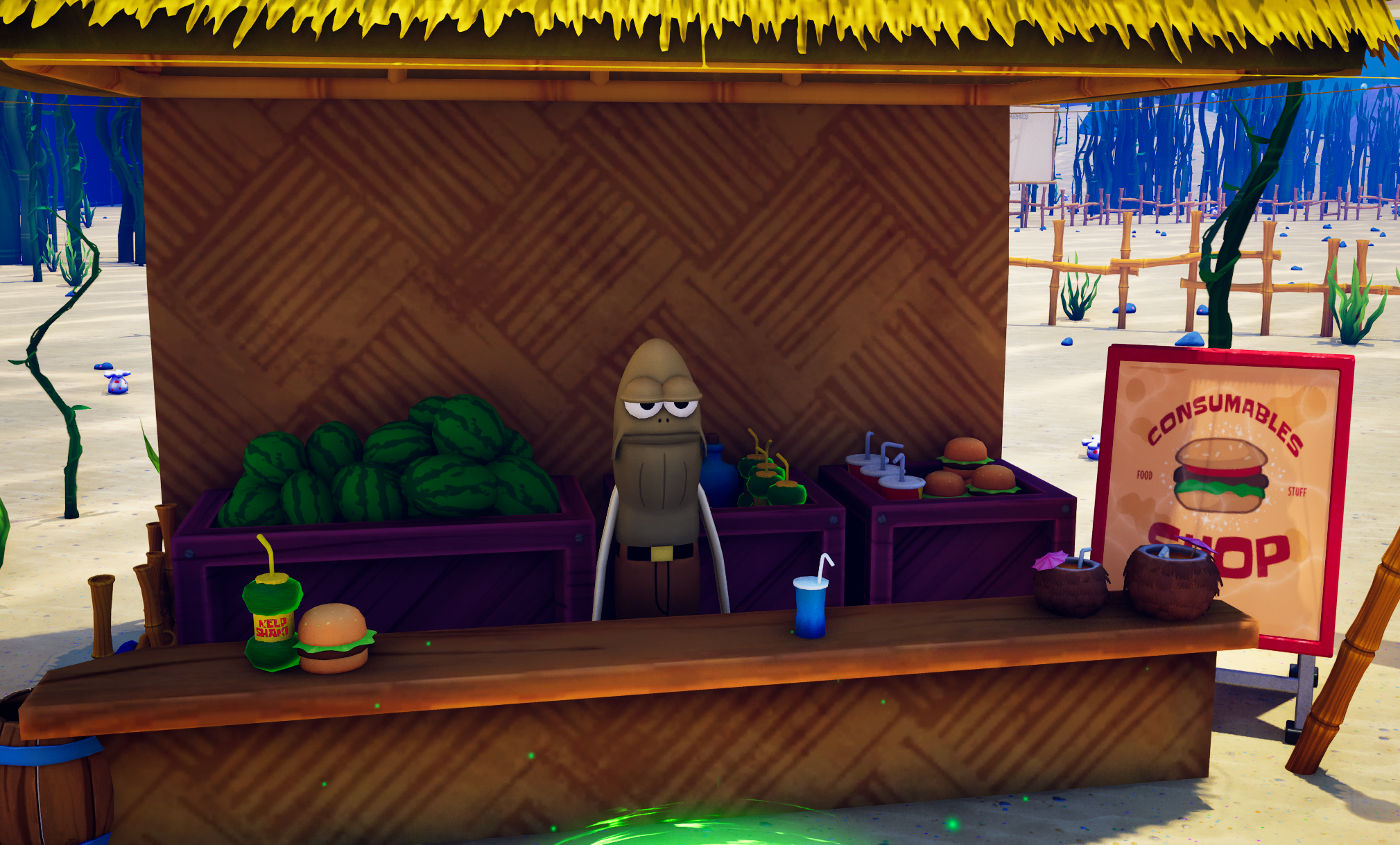
On December 14 and 15, Epic Games heavily promoted the release of two creator-built islands, “SpongeBob Party” and “Drive Bikini Bottom.” These experiences were the result of an official request-for-proposal process that began in September and wrapped up this week. In addition to connecting a select group of Fortnite creators with the SpongeBob IP, a core focus of the RFP process was to prompt participating creators to build mobile-first games, as well as to gather insights from the creators about how to improve Fortnite’s mobile developer tools.
“I’m excited to repeat this process again, as the tools mature on mobile and the platform generally matures on mobile,” said Epic Games senior director of ecosystem growth Andre Balta in an interview with GamesBeat. “Good lessons learned on technical gaps, and things like that — but also how creators approach designing on mobile.”
Fortnite creator Damian Sotelo, whose studio Puzzler Creations was selected for the SpongeBob RFP process, said that the process had helped him learn valuable lessons about mobile Fortnite development, including the importance of using larger in-game buttons for mobile users and the need to design for one-handed play. Sotelo’s SpongeBob-inspired experience, preliminarily titled “SpongeBob Roguelike,” is slated to come out in January 2026.
“If you’ve ever played an FPS on mobile, it’s like you need a degree in rocket science to control that thing,” Sotelo said in an interview with GamesBeat. “So, definitely, a simplification of controls is a big reason we needed to change the gameplay.”
Mixed results
Thus far, Epic’s creator-powered mobile push has resulted in a mixed bag. After experiencing an all-time peak of 5,554 players following an Epic Games social push on December 14, the player base of “SpongeBob Party” decreased relatively quickly, with the island drawing an average of 33 players per hour between 9 a.m. EST on December 17 and 9 a.m. EST on December 18, according to the Fortnite data tracking platform Fortnite.GG. During the same period, “Drive Bikini Bottom” experienced an average of 207 players per hour, down from a peak of 15,051 following its December 15 release. Fortnite creators’ platform payout scales based on their traffic and engagement, and they typically view 1,000 concurrent players as the benchmark of success for PC- and console-based islands.
For now, Fortnite creators are still finding it difficult to build large and consistent audiences for mobile-first experiences on the platform. In part because Fortnite was absent from major app stores for the majority of 2024 and 2025, the platform is still in the middle of the long and arduous process of rebuilding its mobile audience, making it risky for creators to invest in developing experiences for this smaller player pool.
Although the RFP process was meant to help circumvent creators’ financial qualms by paying them up front to build mobile experiences, participating creators still had to contend with relatively limited developer tooling compared to the tools available for PC and console, with very little control over the native buttons onscreen and long load times to test the UX changes that they were permitted to make. Furthermore, Fortnite’s algorithm currently promotes islands with long average play times — very different from the pick-up-and-drop sessions desired by most mobile gamers.
“We have no way of knowing if a player is even on mobile, so we can’t swap the UI to the appropriate settings. We have to either set up a system of whether they are on mobile or just attempt to make UI that works for both,” said a Fortnite creator familiar with the platform’s mobile developer issues, who spoke to GamesBeat on condition of anonymity to avoid damaging business relationships. “We just recently got mobile preview as of two weeks ago, which is a huge leap for testing for sure. But that’s about it when it comes to actual mobile tooling.”
Epic Games is well aware of creators’ concerns over its mobile developer tools, and is continuing to push updates and new features intended to address them. During a livestream hosted by the company yesterday, December 17, Epic executive vice president of development Marcus Wassmer acknowledged the mobile load time issue, indicating that the company was working on further mobile load time improvements for 2026.
“We’ve cut Fortnite boot times on mobile in half over the course of this year, because we made a concerted effort to do so,” Wassmer said during the livestream. “We set a goal for ourselves to at least make a 2x improvement in those iteration times by the middle of the year, on our internal test cases and projects that we’re working with.”
With mobile devices accounting for the majority of global gaming activity in 2025, the mobile audience presents a fruitful opportunity for Fortnite. As Epic leans further into mobile — and continues to tap creators to support the push — the company will have to balance its desire to build Fortnite’s mobile player base with the reality that organic mobile user growth simply takes time. Regardless of the eventual timeline, Epic certainly plans to continue improving its mobile developer tools going into 2026, according to Balta.
“We’ve shipped some meaningful features in the last few weeks, including enhancements to mobile preview and new options for customizing on-screen controls.” he said in a statement emailed to GamesBeat, “But there’s still plenty of work to do.”