
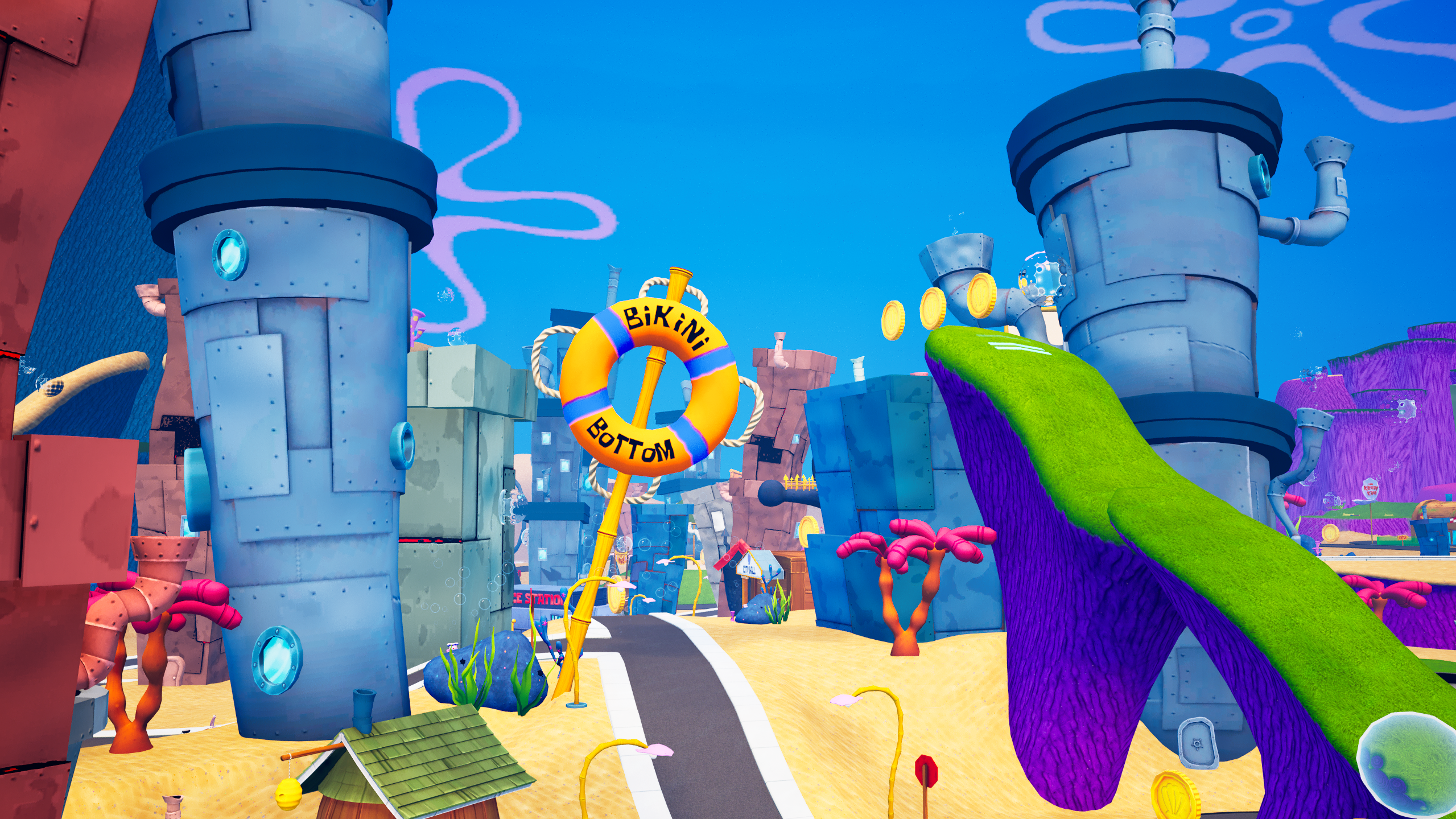
A group of Fortnite creators is launching officially licensed SpongeBob experiences, and Epic Games is footing the bill.
Today, December 15, marks the official rollout of two SpongeBob-licensed Fortnite experiences intended to help promote the December 19 release of “The SpongeBob Movie: Search for SquarePants,” with a third SpongeBob experience to follow in early 2026. The release is the culmination of a months-long request-for-proposal (RFP) process organized in collaboration between Epic, Paramount and the agency Zoned.
The RFP process
Epic’s SpongeBob RFP process had multiple goals. By requiring creators to develop their title with a mobile user experience in mind, it was intended to help grow Fortnite’s library of mobile-oriented experiences. And as more intellectual properties flow into the Fortnite universe, it was meant to encourage more creators to dip their toes into IP-licensed experiences.
“We love RFPs, because it gives us that freedom to present an idea and have a partner on it — as opposed to the other path, where, if you go with ‘The Walking Dead’ or something, there’s dozens and dozens and dozens of maps, and it’s maybe hard to stand out,” said Jim Welch, the founder and CEO of DevHouse, a participating Fortnite studio, in an interview with GamesBeat. “Something like this, it’s a much more curated, select group, and so any partnerships that we get, it really lets us have that proper back-and-forth relationship.”
Over 250 creators and creator studios submitted ideas in response to the RFP, including many first-time creators who had never shipped an island before, according to Epic Games senior director of ecosystem growth Andre Balta.
“Even though some of them weren’t selected, we’ve established relationships for future projects,” Balta said in an interview with GamesBeat. “So, in reality, the public RFP was really a call to action — more than just for islands itself, but a call to action that we’re building this community, and we want everyone to have a shot on goal.”
The RFP was primarily managed by Zoned, which worked directly with the selected creator studios and acted as creators’ primary point of contact during the public submission phase in September. Zoned has worked with Paramount to launch Fortnite experiences for both SpongeBob and Teenage Mutant Ninja Turtles since 2023.
“Epic had a huge appetite for being able to do something larger, and so they reached out collaboratively to see if everyone would be up for it, especially with their mobile update and what they’re trying to do,” said Zoned president Carlos Tovar in an interview with GamesBeat. “They just had this vision, and they were looking for an IP partner for it — and they liked the traction and the success that SpongeBob was starting to get already.”
After selecting three studios to move forward — DevHouse, Big Moxi Games and Puzzler Creations — Zoned, Epic Games and Paramount invited representatives of the studios to New York City for a workshop to help give them tips for both mobile development and using the SpongeBob IP. Representatives of all three organizers were in attendance, including Balta, Tovar and Paramount vice president of growth and marketing for games and emerging media Sarah Dannenbaum.
“The launch of new SpongeBob experiences within the Fortnite ecosystem reflects our ongoing focus on expanding access to our stories and characters for the creator community,” said Paramount head of gaming Dan Prigg in an emailed statement. “This release reflects our commitment to meeting fans on the platforms they engage with most and delivering experiences that feel fresh, fun and instantly accessible.”
The three experiences selected during the RFP process are Big Moxi Games’ “Drive Bikini Bottom,” DevHouse’s “SpongeBob Party” and Puzzler’s game, which has the work-in-progress title “SpongeBob Roguelike.” “SpongeBob Party” came out yesterday, December 14, and “Drive Bikini Bottom” published today, December 15, with plans for Puzzler’s island to arrive at some point next month. Epic is helping promote the experience through social posts and featured placement on a banner on Fortnite’s discover page.
A learning experience
Encouraging experienced Fortnite creators to dip their toes into mobile development was a key focus of the SpongeBob RFP process, with participating creators telling GamesBeat that the experience required them to develop their games in ways that might otherwise feel counter-intuitive. Puzzler’s “SpongeBob Roguelike,” for example, uses intentionally oversized buttons that Puzzler co-founder Damian Sotelo said “look a bit crazy on console and on PC.”
“On mobile, if you’re playing on your tiny phone, it’s really hard to hit those buttons,” he said. “So we made them as big as they could be without looking too ridiculous on PC and console, but also being very visible on mobile.”
Participating Fortnite creators also told GamesBeat that the RFP process had helped them learn about the technical limitations of mobile play, as well as how to get around them by lowering the graphic requirements of their islands.
“We probably sacrificed on lighting, we sacrificed on VFX and we didn’t fill the world as much as we wanted with civilians and pedestrians walking around, just because the AI becomes performance heavy,” said Big Moxi Games director of UGC products Benjamin Walsh.
Last week, Epic Games pushed a number of Fortnite updates intended to improve the experience of both playing on and developing for mobile, including the introduction of a previewing tool that makes it easier for mobile developers to iterate on different versions of their projects, as well as hiding mobile gameplay inputs while players interact with pop-ups.
As Epic Games continues to welcome IP holders into its growing metaverse, the company is experimenting with different ways to bridge the gap between creators and IP, both through closed processes like the SpongeBob RFP and open asset licenses like this year’s “K-Pop Demon Hunters” release. Balta made it clear that Epic is not yet settling into a standard model for its creator IP license deals — but said that he viewed the SpongeBob RFP as a success, and that Epic plans to create many more opportunities for creators to build around licensed properties in 2026.
“In this case, we get three experiences with SpongeBob. When we do an IP licensing activation with “[Avatar: The Last] Airbender” in the future, it’ll be hundreds of experiences that go live on that day,” Balta said. “So, a totally different scale — but both awesome, in their own way.”