
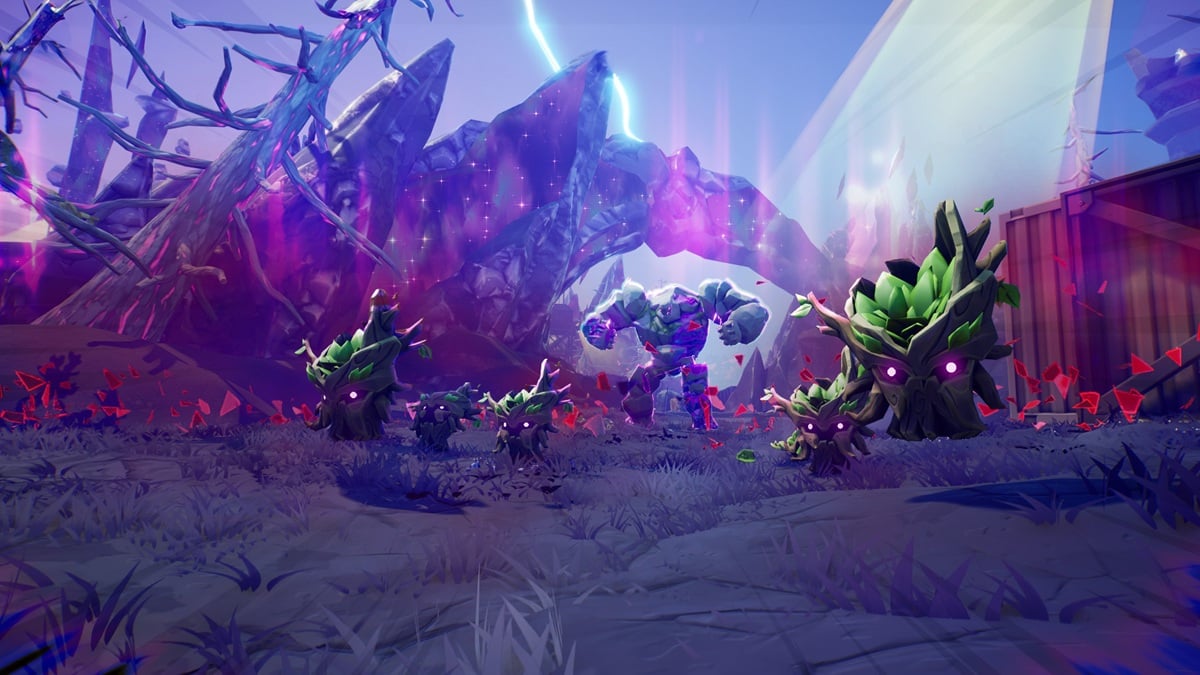
Manticore launched its Out of Time fast-action multiplayer roguelike game as an exclusive early access version for the Epic Games Store on September 25. And now the co-op shooter game is available on Valve’s Steam as well.
With the launch on Steam as well, Manticore executed a pivot that will take players from its Core metaverse, where players design their own games, into more traditional game platforms like Epic and Steam. The effort took about three years of experimentation and about a year and a half of actual development on the game itself.
Out of Time is a third-person action roguelike where past, present, and future have shattered, leaving the world in a tangled, yet beautifully chaotic, mess. It’s a co-op game with an endless supply of gear and weapon combinations to choose from to build your own unique group of survivors. Based on all of the action that happens, it’s a highly kinetic game that players have nicknamed a “Multiplayer Megabonk,” built on Core, which was released four years ago as a metaverse for user-generated content (UGC). Core drew millions of players, who serve as the core target for Out of Time.
“As you know, you can think of Core as a Roblox for double-A/triple-A,” said Frederic Descamps, CEO of Manticore. “We’ve done it with a core team of just 55 people.”
So far, the engagement has been good. The game was a top five seller on the Epic Games Store during its first week. Players hit 130,000+ total runs played shortly after launch. More than 161 million monsters have been defeated—a strong indicator of high player activity and replayability. And players have seen a 75% win rate, suggesting a broad player base engaging with the roguelike loop.
Out of Time is available for $25. The game is built in Unreal Engine 5, though it was really built in Manticore Games’ custom platform, Core, which is the foundation for its metaverse world.
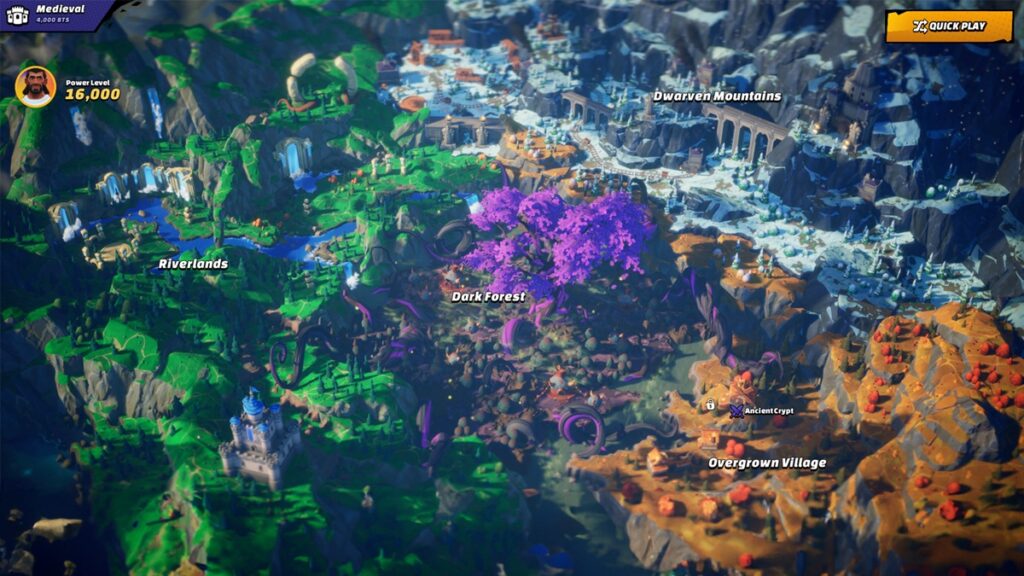
Out of Time is part of a very large universe, with beautiful terrain and different eras. The game will launch with a few eras — antiquity, medieval and modern — with more launching later. The company is working on a PvP mode as well.
The storyline of Infinitopia
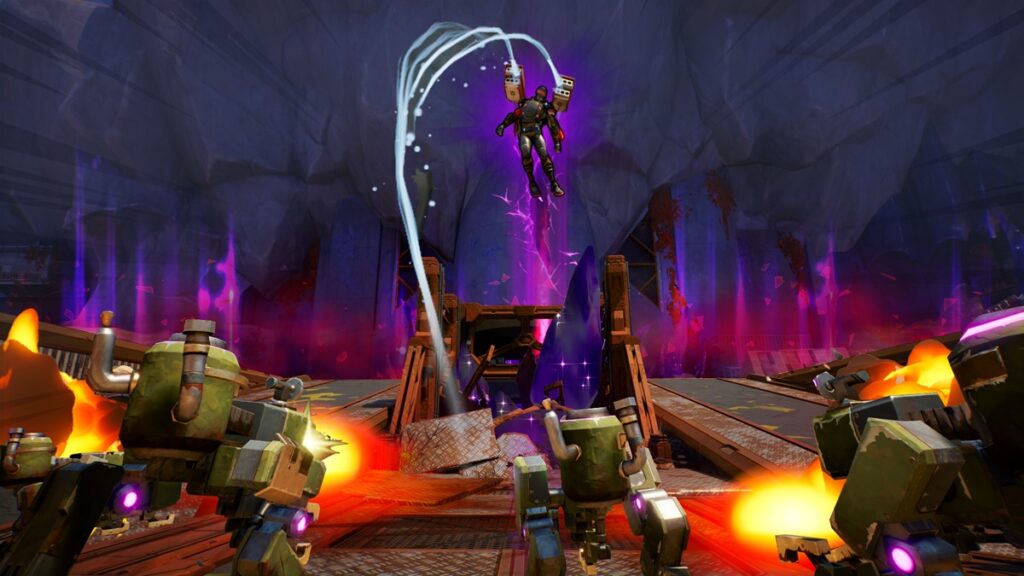
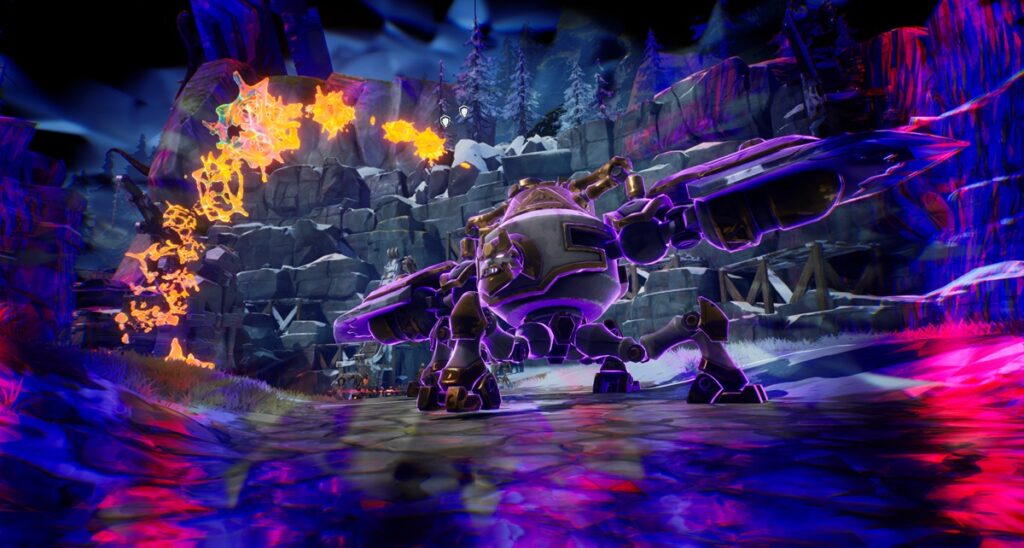
All of mankind is trapped and needs to be saved from a gauntlet of dragons, mutant crabs, evil humanoids, warped beasts, killer robots, and everything in between – often all at once. Not to mention the biggest threat of them all – time.
In Out of Time, the catalyst to the chaos came from an event known as The Shattering, fusing the past, present, and future together into an unpredictable, ever-changing dynamic battleground.
I played a demo with Jordan Maynard, chief creative officer and Frederic Descamps, CEO of Manticore Games. They talked about how they came up with the plan to expand beyond the metaverse-like world of user-generated content that they started with.
Now they have a stand-alone game that they’re hoping will grow in popularity over time and enable them to add endless scenarios based on the time travel theme.
Maynard said, “Infinitopia is the last bastion of humanity in this world, where time and space are shattered, and time in past, present and future have collided. And you can actually see that as you look around Infinitopia, especially at the outskirts and edges. You can see different things from different eras and timelines. We have prehistoric over there. We have a medieval fantasy, modern this way, and future wasteland and solar punk over there.”
The inspiration
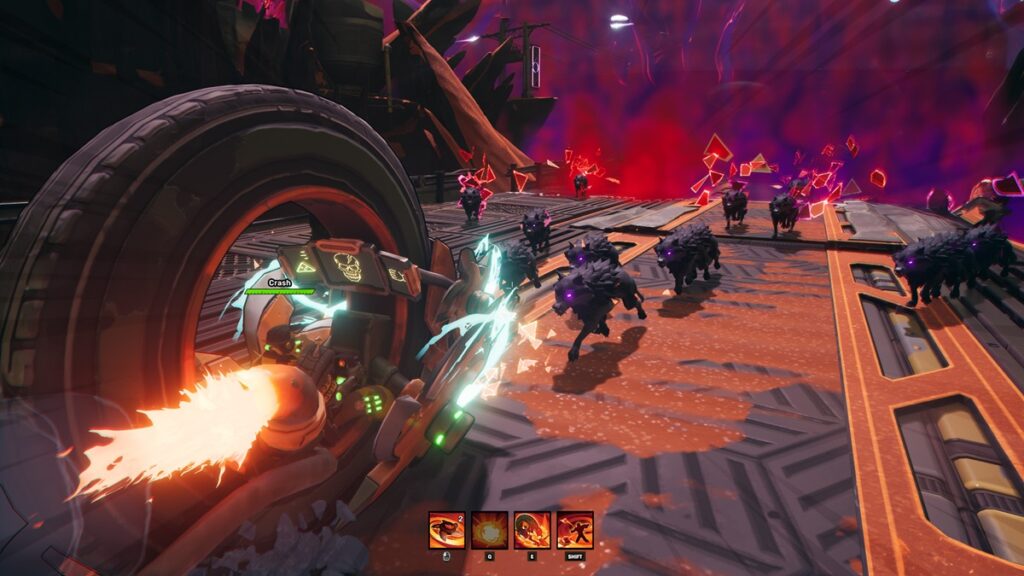
You can get a taste of the action in the announcement trailer for Out of Timee. The central gathering place of the game is a social hub dubbed Infinitopia, where humanity can plan its raids, upgrade its gear and strategize.
Survivors from all eras gather in a place called Infinitopia, the last bastion of civilization, venturing into dangerous, corrupted regions in fast-paced solo or co-op missions in a fight to reclaim reality. This part of the game makes it feel like a massively multiplayer online (MMO) game. It’s a persistent, shared world that isn’t sharded, Maynard said in an interview with GamesBeat.
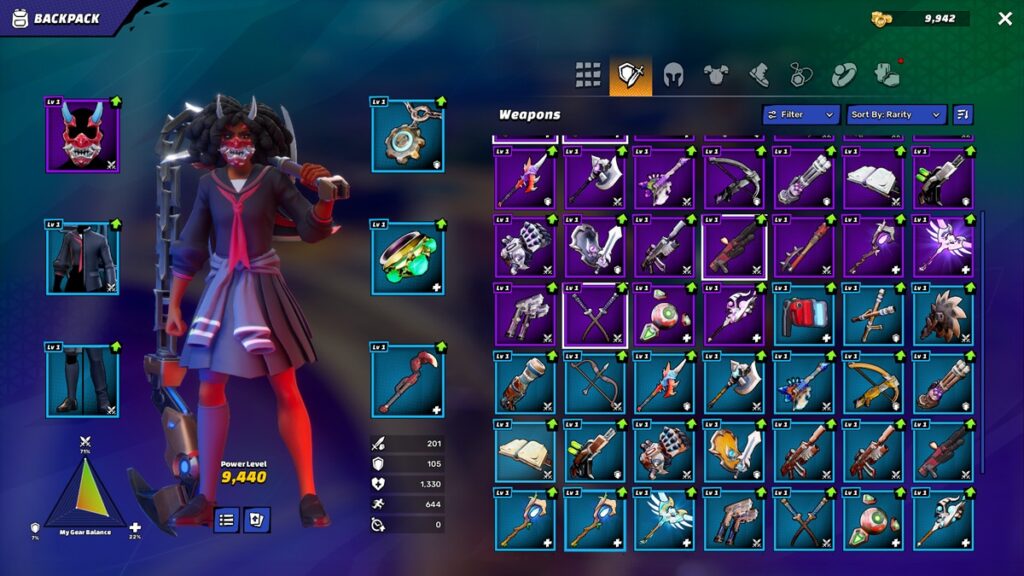
There is a cool thing about this. Armed with gear and weaponry from the medieval times to futuristic cyberpunk utopias to prehistoric antediluvian times to post-apocalyptic wastelands and beyond, players will have over 190 million gear combinations to choose from, allowing them to truly create their own custom loadouts for each run, said Frederic Descamps, CEO of Manticore Games, in an interview with GamesBeat.
Maynard said, “The great thing about the setting of Out of Time — where past, present and future have collided — is that it means, from a game design and content design standpoint, we’re free to do anything we like. You can’t come up with a era or a scenario that doesn’t fit into past, present or future. We can do ancient Egyptian, but we can do Three Kingdoms, and we can do Cyberpunk.”
They did much of the playtesting inside the world of Manticore Games’ Core metaverse. Once it felt ready, they expanded to the eventual launch on the Epic Games Store.
As for the inspirations, Maynard said that World of Warcraft was a big one. But as a roguelike game, you’re expected to die and upgrade and then go back into the fight.
“The activities are mostly gathering your team together, figuring out where you want to go, upgrading your abilities, changing your avatar, your mounts and” more, Maynard said. “The art style and design influences built on top of Core,” Maynard said.
It has a kind of Fortnite look, but it’s played from a different perspective. It’s a welcoming art style that is cartoon-like and realistic at the same time.
A big pivot
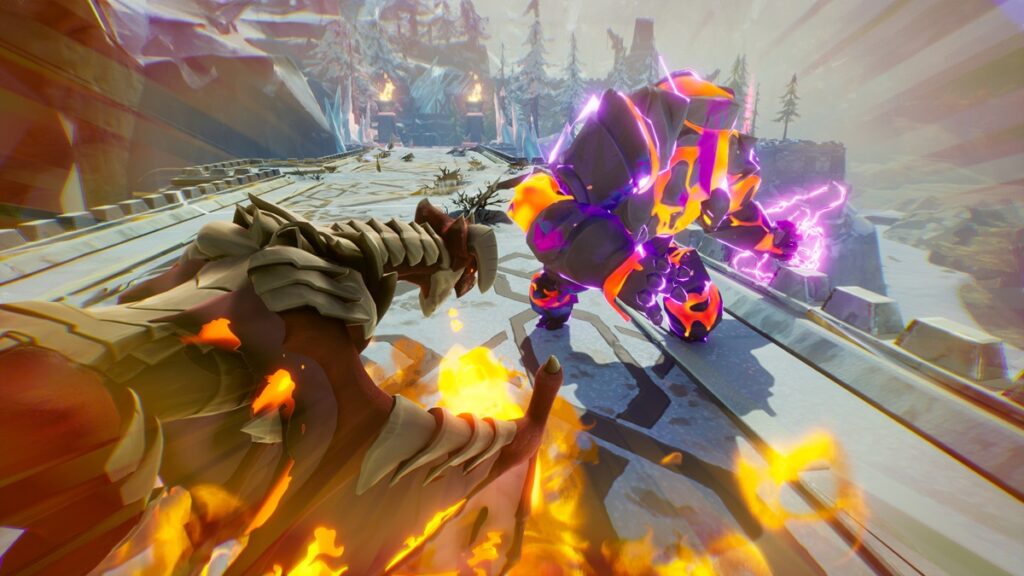
The team always wanted to work on its own UGC sandbox MMO. So it began the work on it. About a year and a half ago, it pivoted. Fans were saying the game was beautiful and the storyline of time travel and saving mankind was cool.
“But they wanted more combat, more combat and more combat,” Descamps said.
The team was building out features of the MMO like the economy, player habitat, the plots of land that people could buy and build upon, and yet the feedback focused on combat, Descamps said.
Then the idea emerged for a multiplayer, roguelike combat game about 18 months ago. The team decided to test the combat, and players swarmed to the game during testing and played it a lot. The team created a vertical slice for the holidays in 2024.
“We said let’s park all of these extra systems that are more like an MMO, and let’s just focus on multiplayer combat,” Descamps said. “The team was able to deliver a convincing vertical slice.”
The company isn’t raising money, Descamps said. Rather, it was very successful with that in the past and now it is focused on launching the game. Over time, Core has had a few million players, and Manticore Games hopes that a lot of them will try Out of Time as a standalone game. The goal is to use Out of Time to break through to the masses.
As for the metaverse angle, the company added modding, then it added publishing, and it created monetization for creators. It became a platform. But rather than go completely in that direction, the team decided instead to work on a wide variety of game prototypes and then focus on making one of them as its own game.
That started as an MMO and then morphed into the roguelike — not unlike the evolution of Fortnite, which really took off when it became a battle royale.
“We thought PvP was the next big phase,” Descamps said.
When Core launched, it was a collection of player-generated worlds, built by creators with varying degrees of skill, partly as something to do during the pandemic. The worlds could be joined together through a central hub and accessed via portals, like a metaverse. The game resonaed with superplayers who were more like creators with followings.
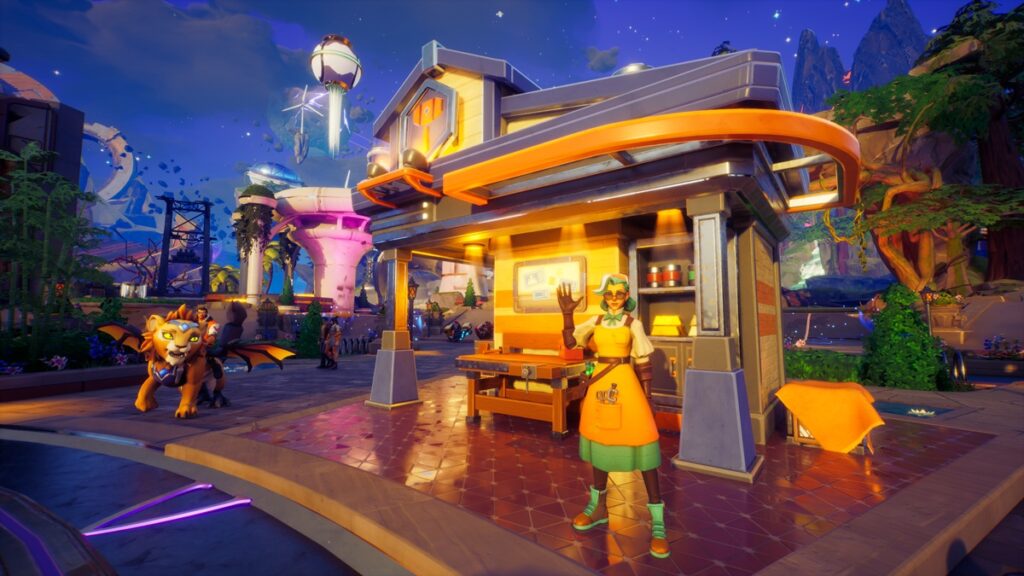
Over time, Manticore Games started to explore what else it could do, and it settled on the idea of making a game using Unreal/Core itself.
“It didn’t start as a roguelike combat game. It started more like an MMO. We’re building a very big MMO sandbox, an MMO with UGC with a crazy economy like Eve Online,” said Descamps. “And what was transpiring from that was that one, it was very, very ambitious. And it was a long-term goal to have like this World of Warcraft meets Eve, with the deep economy and a very big world.”
“But it was going to take much longer, even using Core. And also, the feedback we were getting from people is it they just loved the combat. Everything is great. The world is beautiful. We love this kind of time travel, exploring this new universe after this continuum It’s a new universe. Mankind is trapped in this big, beautiful world,” Descamps said. “But they wanted combat and more combat.”
So that was when the team leaned toward making a multiplayer roguelike game.
Making the game
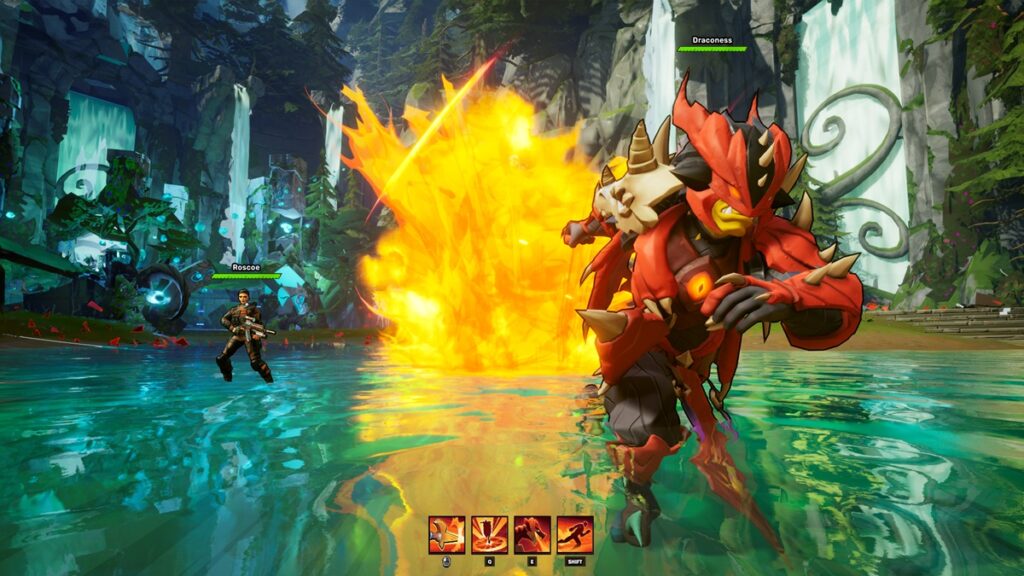
Because the team used the existing Core platform and Unreal Engine 5, the prototyping took a lot less time. The team squashed bugs, added matchmaking and more content, and developed new environments like the Solar Punk content. That enabled the launch on the Epic Games Store two months ago and have new content ready soon for players. There are more than 20 points of interest on the map where enemies swarm or you can save a historical figure or there are timed events. And there will be four big zones for combat.
“Nothing beats putting the game in the wild because you get quality testing as well as feedback,” Descamps said.
He added, “The fans really resonate with the combat, with the different classes and the different gear sets. The one thing I think is really unique that we have is our group and aura system.”
And Descamps said, “When you play with other players, you all share each other’s stats, and so you can make some really interesting party combinations where one person is providing ‘tankiness’ to the entire team rather than just taking all the damage himself. That player allows the entire team to take damage because he’s sharing his stats.”
It took about three years to get to this point, given that there was a big pivot from MMO to roguelike.
“The last year has been just absolutely insane, because we’re launching with so much gear,” Descamps said.
Players are also getting tools to make their own maps so they can race ahead of the Manticore Games team and create their own battlegrounds. The team has about 50 people. So it couldn’t do things like work on its platform, work on the metaverse expansion, and work on a game all at once. So it focused on the game.
“Most of the focus is on the game. We got Core in a really good spot. We’re actually using Core for the development,” Descamps said.
Maynard noted that Core was originally written on top of Unreal Engine 4, and it has since moved to Unreal Engine 5. The complexity of the game and its design led to the multiyear project. The team made the decision to make a standalone multiplayer game, rather than something that was inside the world of Core, Maynard said.
“The inherent nature of making these games is very complex,” Maynard said.
Some of the gameplay came together in discussions with advisers Bing Gordon and Mitch Lasky.
The gameplay
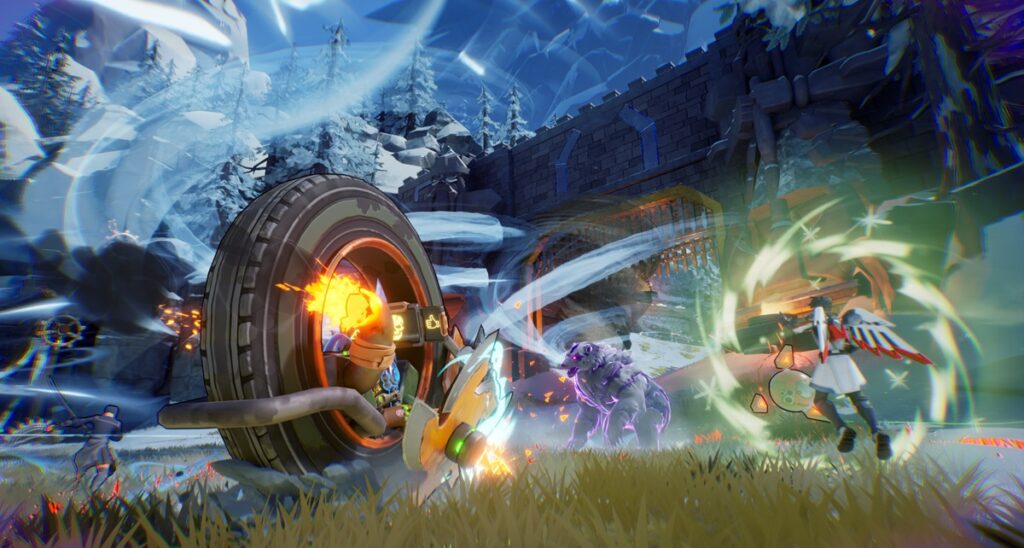
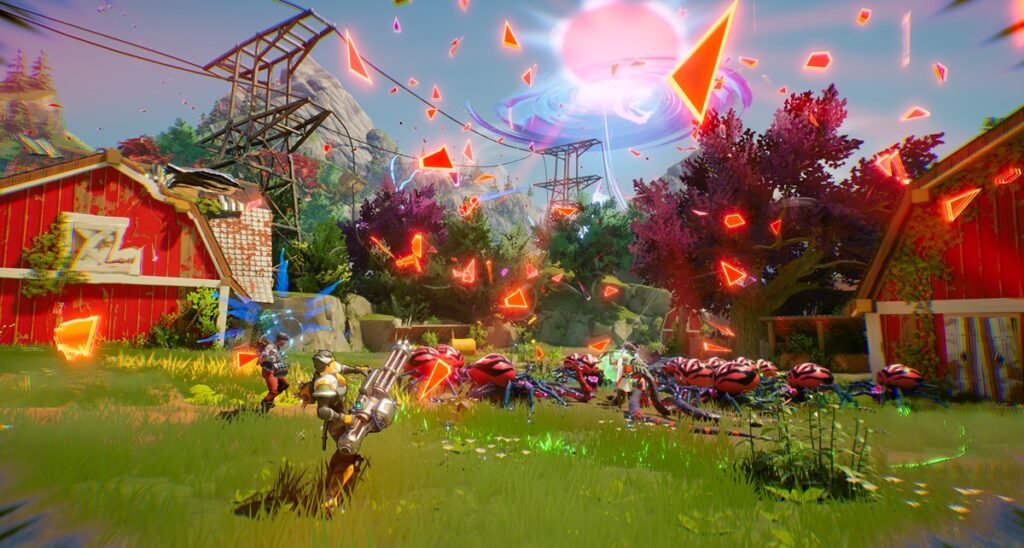
The job of each team of survivors is to push back the tangle and its never ending waves of corrupted time echo creatures. The more you work together, the smoother this whole thing goes, mostly. Every time survivors venture forth, they have a chance to grab cool gear.
There are no classes. Every player chooses the gear set that best suits the play style they want to embark on every run. If you want to stack a rocket launcher on top of healing powers and tank armor – you can do that.
You can select your gear by going through your deck of available cards. You can play as druid with magical gear, but you can add an assault rifle from the modern era if you wish. You can add a shield or a saw blade. You’ll also have superpowers you can as you power up with enemy kills. Sadly, these powers cool down until they’re recharged.
You can add a lot of features that might make you look like a tank class. If so, you probably want to balance that out with other features in other players like healing. You can ride mounts in the game. Each run may last around 15 minutes or so before you run out of time to clear the level, with two to four players.
When you get enough XP, you can get better stuff. Generally, you want to level up your characters and figure out what kinds of runs are best-suited for your level. If you go up against mobs of enemies who are too strong, you will pay for that. The longer it takes to level up and clear enemies, the more powerful the mob can get. During a match, you can swap out a weapon and bring in something else that can do the job, like a chain gun.
Eventually, if you clear enough tangle, you summon the boss and have to get ready for a really big part of the fight. If you win, you collect resources and use those to upgrade your gear when you get back to Infinitopia.
The action has a lot going on at once, with multiple characters fighting in the same space. You can see from the various colors who is taking damage and who needs to press the advantage or get out of the fray.
“It’s like a mix between the Monty Python and esports,” Maynard said.
One of the themes that ties the players together is an actual tether system, which gets stronger the closer the players are when they’re fighting. If they spread too far apart, the tether weakens and they can no longer support each other in combat. But if they’re close, they can protect each other with shields or heal each other automatically. You can literally see the tether, and its color and strength will tell you how strong the bonds are.
More than just a game?
The company hasn’t totally backed down from the metaverse idea or the MMO.
“We had already all the pieces together. We said, “We keep the world, we keep the lore, we keep the avatars, we keep exploration, the resources. But what about we focus almost all our efforts on making, like crazy roguelike combat experience? And we did a prototype on top of the game. It was already called Out of Time.”
And the team concluded that this form of the game was a lot more fun. But it didn’t toss the MMO stuff. Rather, it will keep a lot of it for the post-launch times. Players will eventually be able to buy land and create their own habitats.
“Manticore’s mission is to create complex immersive multiplayer experiences. We’ve built Out of Time as a massively expandable dynamic universe using the Core UGC platform and Unreal,” said Descamps. “We’re already planning more eras and PvP modes, plus additional platforms.”
The core audience
As for the audience for Out of Time, it’s for fans of roguelite games and third-person over the shoulder co-op gameplay.
“So I really think it’s anyone who would like an MMO and anyone who would like that sort of survival gameplay. We’re the first and only multiplayer co-op survival game like this,” he said.
The roadmap
For the roadmap, Manticore is preparing more content. That includes more time eras, like a futuristic cyberspace, for the spring.
Descamps said the company will focus on the game for now and it will work on Core for the long term. But because it already put more than six years into Core, the game tools were ready to build the game.
“Core has paid off in our ability to move much faster in building in Core instead of in Unreal,” Descamps said.
Soon, the company will add a new Solar Punk era for players to explore. It was created in a few weeks thanks to the power of Core and the UGC gaming platform.
“We can achieve this speed and flexibility by using Core, our own UGC platform and tools,” Descamps said.
“Each era launches with new gear sets that you can combine and recombine. That’s one thing. The other thing is that we see launching on new platforms,” Descamps said. . So we’re going to start work on either Xbox or PS 5. We don’t know yet. That has reactivated conversations about what if we had our own Roblox.”
Some team members may consider using Core as an internal tool for Manticore’s own next game.
“We’ve been thinking about doing an MMO with some UGC or we’ve been thinking about doing a kind of UGC hub,” Descamps said.
Everybody wants to be on Roblox or Fortnite, but those platforms take their own percentage from developers for hosting games. The problem is you don’t own the users your find on those platforms.
“That’s when the big companies come to us. They see we have Out of Time and we have Core, and maybe we can do something together,” Descamps said. “Now there is an opportunity to revive the conversations.”
Manticore has said before that Core makes developing games 10 times easier.
“If you give core to a professional team of creators at your studio, your existing studio, it would enable the team to 10X their development speed and be natively multiplayer,” Descamps said. “I can see a big media company or a large gaming company looking at Core and say, ‘We’ve been thinking about UGC wrong. We’ve been thinking about UGC as actual users creating it. But if we actually gave it to our teams, they could create games and experiences with our IP 10x faster than we could otherwise internally.”
While Manticore’s team of 55 people is based in the Bay Area in California, which is a high cost region, that team can operate at higher speeds than others.
“We can go very, very fast, because we’re very flat as an organization,” he said. “Some of these people are looking at us and they talk about streamlining, rationalizing their internal game development tools and pipelines, but also doing something like UGC, whether it’s something a la Roblox. Some say they are going to compete with us. Then several hundred million dollars later, they have nothing to show. They look at us as a way to de-risk the project as we have something that works and we already have eight years of R&D.”