

CES 2027 is expected to be biggest edition of the tech industry’s annual gathering in Las Vegas since the pandemic.
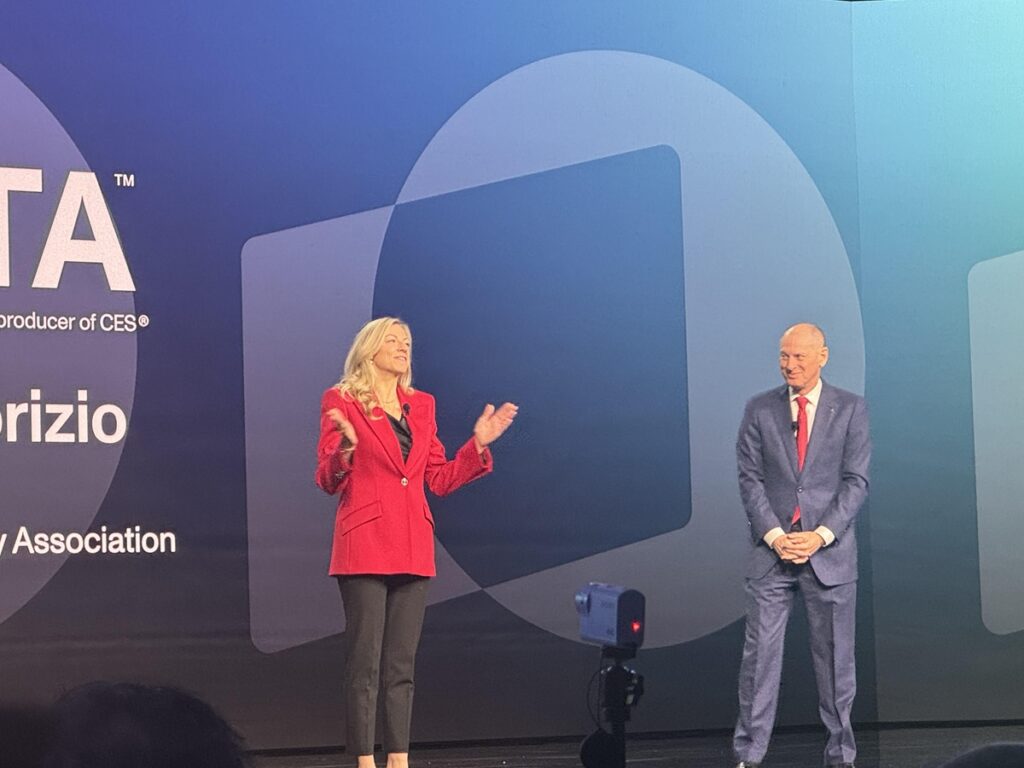
Kinsey Fabrizio, CEO of the Consumer Technology Association, said in an exclusive interview with GamesBeat that the Las Vegas show’s attendee registrations, exhibitors, expo space used, sponsors and media participation are all running ahead of last year’s event.
That optimism for the January event comes as AI moves from a standalone technology trend with a lot of hype into a foundational infrastructure layer across virtually every product category.
Thanks to better AI models, new tech products are getting more practical, including autonomous vehicles, robotics, smart glasses and next-generation health technologies. Fabrizio said those categories are maturing into businesses with growing real-world adoption.
“The show is looking great,” Fabrizio said. “Everything is tracking significantly ahead of where we were this time last year. Even attendee registration is up so much. The number of exhibitors and companies wanting to be at CES is up significantly.”
At the same time, consumer tech is taking a backseat in many ways to AI for the enterprise and infrastructure, driving the big AI companies to spend billions to deploy gigantic data centers. That’s making AI components more expensive, and it’s driving up the costs for consumer tech. As an example, gaming PCs are getting extremely pricey. Add to that concerns around continuing inflation, and the exhibitors showing up at CES could be fairly nervous.
This year’s CES is expected to feature more exhibit space than last year and more exhibitors than the 4,100-plus companies that participated in CES 2026, Fabrizio said. Mobility will be one of the show’s biggest stories, with Ford and Stellantis returning alongside autonomous vehicle leaders such as Waymo, Zoox and Uber.
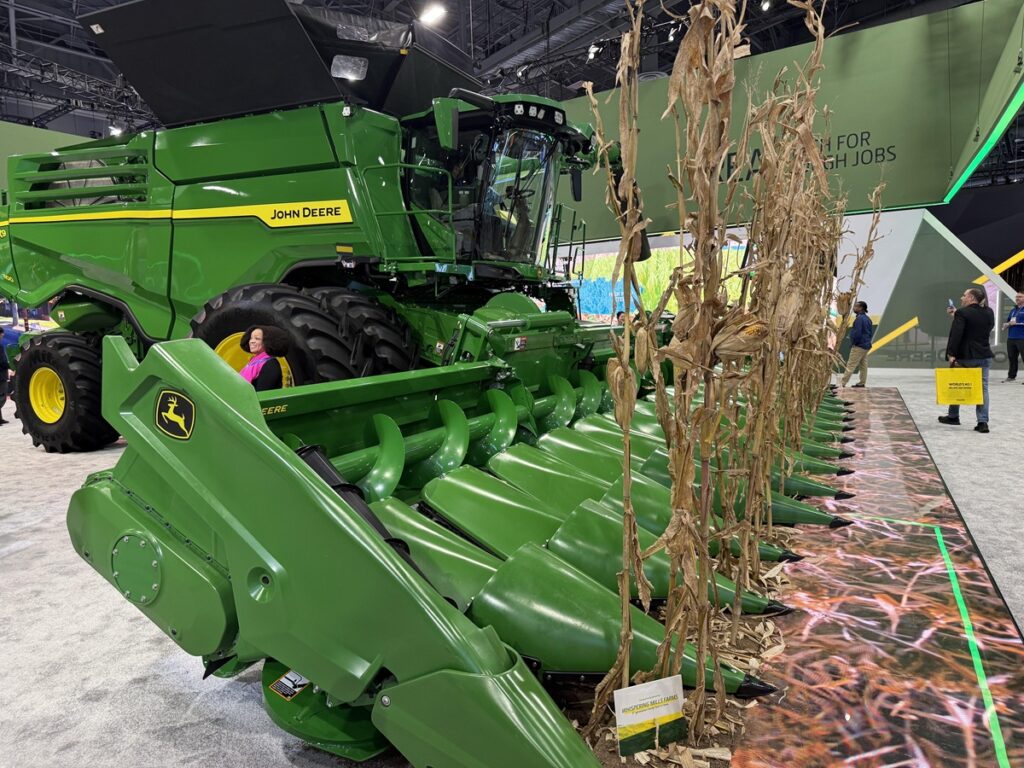
Mobility’s footprint has grown to more than 350,000 square feet, making it the largest transportation presence in CES history. But the category is no longer defined solely by cars. Agricultural giant John Deere, construction equipment maker Caterpillar and industrial vehicle specialist Oshkosh are showcasing how AI, automation and connectivity are transforming their industries. Sony won’t be there after canceling its Afeela electric car, but Sony Pictures will show up to talk about the latest in entertainment. That’s a reflection of its shift in strategy.
As for the holiday shopping themes, 87% of U.S. consumers expect to buy technology gifts for the holidays. About 31% plan to spend $300 or more on tech gifts. But those spending less say that technology is too expensive.
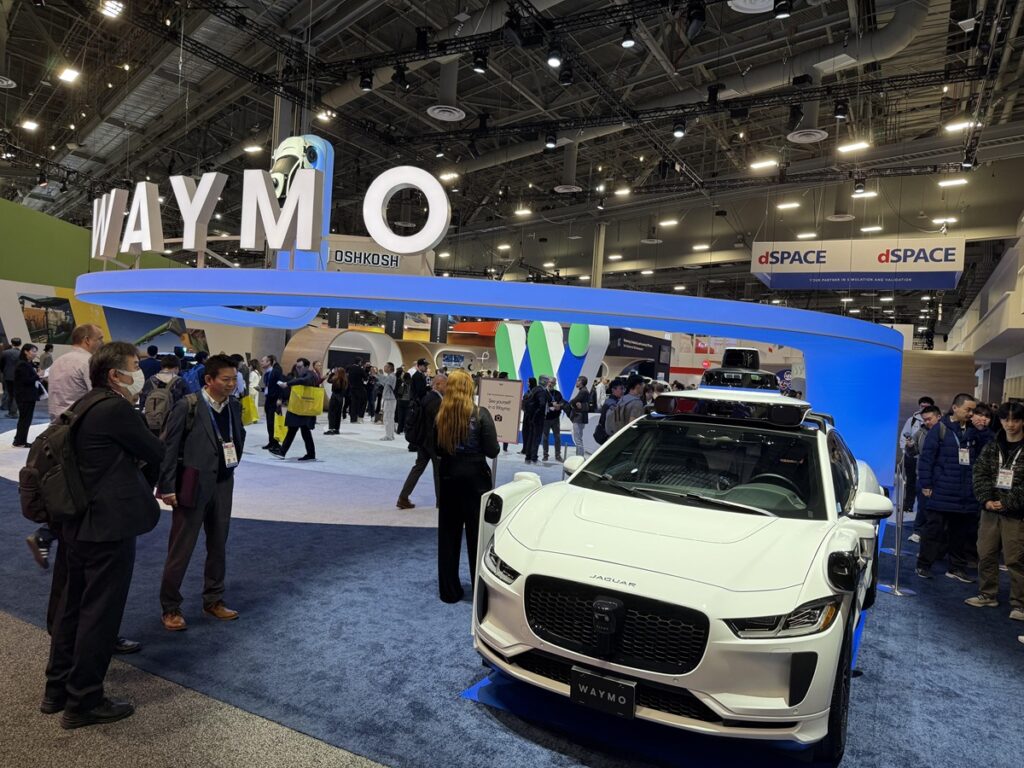
Fabrizio said AI is the dominant theme for CES 2027, but the conversation is changing. Rather than focusing only on AI models, exhibitors are increasingly demonstrating how AI is being integrated into health care, entertainment, smart homes, transportation and enterprise systems. Autonomous ride-share vehicles from Waymo are now operating in multiple cities. Smart glasses are gaining traction. Glucose monitoring devices are becoming mainstream. And advanced exoskeletons and assistive devices are enabling people to participate in everyday life better.
“AI is fun because it’s really in every single vertical, every category across the entire show,” she said.
At the same time, CES 2027, which takes place in January in Las Vegas, will arrive amid a changing political and financial landscape. Jensen Huang, the leading AI advocate and CEO of Nvidia, has had a fall from grace as his board investigates his relationship with a woman alleged to be a Chinese spy. Democrats swept to victories in the midterm elections on anti-data-center stances, and AI stocks have taken a big hit. Nvidia, worth $4 trillion, is no longer the most valuable company on earth, as Apple has overtaken it thanks to the selloff.
Fabrizio said CTA’s priorities remain unchanged despite a new Congress and administration. The organization plans to continue advocating for a federal AI framework, privacy legislation and trade policies that encourage innovation while providing regulatory certainty for technology companies. Reshoring manufacturing remains a big economic and political issue.
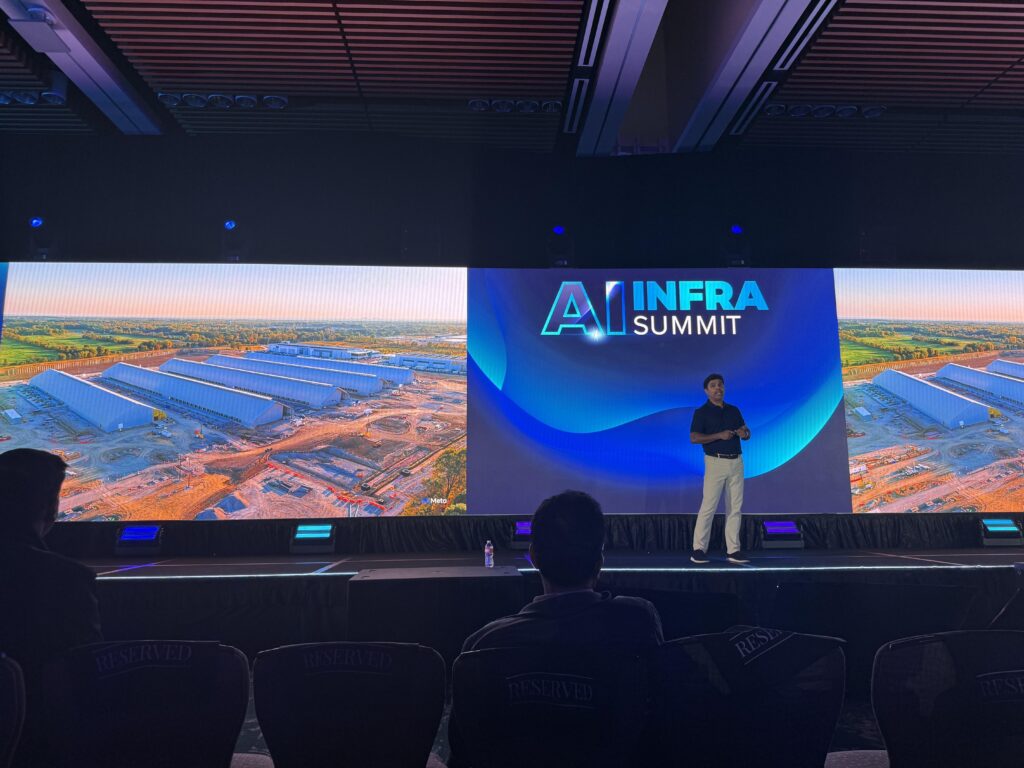
Those debates are closely linked to another major CES theme: infrastructure. As AI workloads expand, concerns around data centers, electricity demand and power generation are becoming more urgent. Fabrizio said the industry needs both expanded energy production and public support for the infrastructure required to maintain U.S. leadership in AI.
“We need data centers,” she said. “We also need communities to feel good and to understand the value.”
That intersection of technology, policy and business is the central challenge of CES, and the CTA needs to find path to solutions that allow the tech industry to grow while addressing the concerns of consumers.
With international participation growing, particularly from South Korea, Europe and startup ecosystems around the world, CES 2027 will reflect both the opportunities and challenges facing an industry entering its next phase of AI-driven growth. A year ago, CES 2026 drew 148,000 people, but the CTA doesn’t forecast exactly how many expects for CES 2027, which runs from January 6 to January 9 for authorized attendees, and an additional two days on January 4 and January 5 for the press.
For Fabrizio, who is leading CTA after longtime chief executive Gary Shapiro’s retirement in February, that mix of promise and uncertainty comes with the job.
“I’m optimistic and worried about everything, all the time,” she said. “Welcome to being the new CEO.”
Here’s an edited transcript of our interview. (Here’s my usual CES tips and my favorites from CES 2026). Note: We did the interview before the news about Huang at Nvidia broke.
GamesBeat: What were some of the highlights of your preview session?
Kinsey Fabrizio: The show is looking great. Everything is tracking significantly ahead of where we were this time last year. Even attendee registration is up so much. The number of exhibitors and companies wanting to be at CES is up significantly. We’re looking forward to it.
There are some key growth areas. Mobility is huge this year at CES. Ford is back in the show. Stellantis is back in the show. We have Waymo, Uber, Zoox, so many of the big auto companies. Kia. And then of course the non-car mobility companies like Brunswick and Caterpillar and John Deere. Mobility is a big story. It’s the biggest footprint we’ve ever had at CES, more than 350,000 square feet. That’s exciting in West Hall.
Of course the AI and robotics story continues to grow. AI is fun because it’s really in every single vertical, every category across the entire show. Health and smart home and mobility and entertainment. But also, the new part of the show that we made to focus on AI, the Foundry, is doing exceptionally well. So well that we added a third day for the Foundry event at CES so we could add more participants to that part of the show.
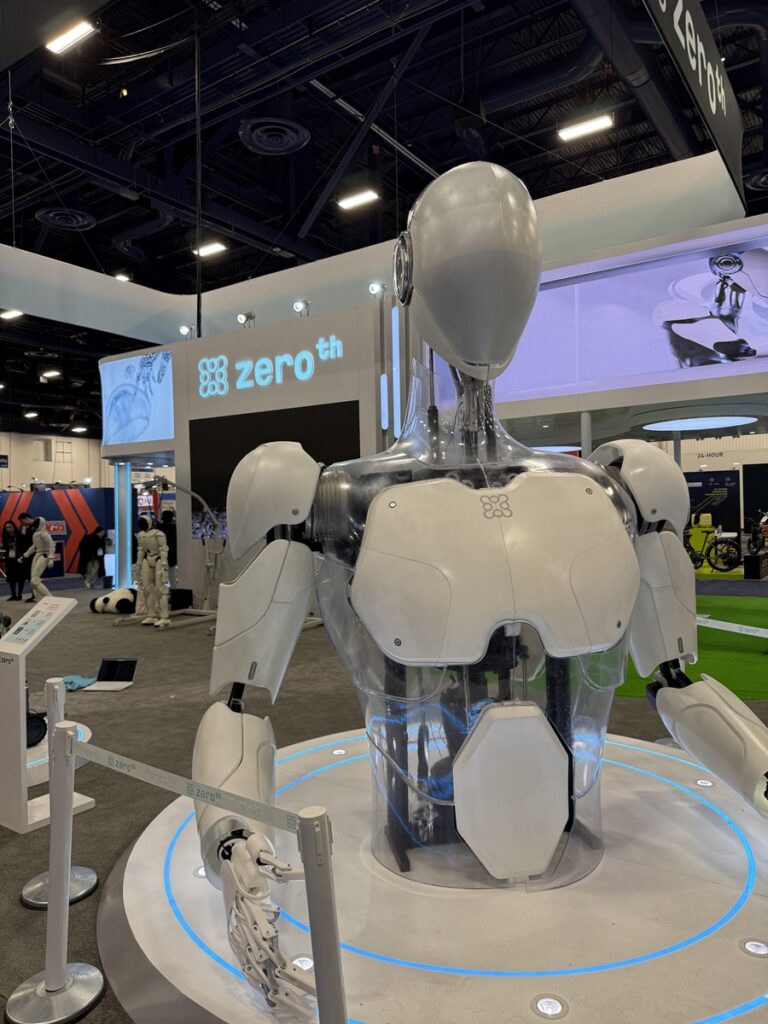
Robotics is another great story. Just showing up across the show floor. I think you’ll see a lot of mobility exhibitors with robotics in their booth. Maybe showcasing how robotics is used in manufacturing, on the enterprise side of their business, but also robotics for consumers. More humanoid robotics, more robots that are focused on the smart home and doing everyday tasks, in addition to the enterprise focus and manufacturing robotics.
Robotics will be in two parts of the show where you can see the physical robotics applications. North Hall, as it was at CES 2026, but then also in South Hall, really showcasing the design of the components, how these robotics are built. That’s a new part of CES, the advanced manufacturing component to robotics. We’re seeing a lot of interest there.
We’re doing a lot of new things. We’re giving free wi-fi to all CES attendees in the convention center and the Venetian. That’s something we’ve heard a lot of complaints about, so we’re giving wi-fi to everyone. I’ll be interested to see if the survey feedback is better if they have wi-fi they can use all the time. We have a new health hub in the Venetian. This is going to be a stage and some kiosk activations right in the center where all the big health exhibitors are. Really excited about that. We’re using the entire Las Vegas Convention Center this show.
Our innovations awards, we’re going to announce them on Monday. I don’t know if you look at these or not, but you should. They’re awesome. The companies that are winning best-of this year, it’s phenomenal innovations. Very exciting to see a lot of solutions for accessibility, for health, for AI, robotics, smart home. Very exciting companies this year. We have a new category of innovation awards this year in partnership with Christie’s. The category is focused on art tech and AI in creative art and design.
GamesBeat: Are you targeting more than 4,100 exhibitors? I think that was the number last year.

Fabrizio: Yeah, we’ll definitely have more than that. I have no idea how many more, but we’ll have more than that. We’ll publish all of our numbers again in our audit like we always do. Attendee registration is up. Exhibitors are up. Sponsors are up. Media registration is up.
GamesBeat: I think last year was 148,000 attendees?
Fabrizio: Yeah, last year was 148,000. I’m hoping we’ll beat that. I get nervous the closer we get to 150,000, because our CES operations team, the team focused on safety and logistical operations of the show–they say when you get bigger than 150,000, it’s harder to have a smooth logistical operation and a good experience. They really like that number. In the past, before COVID, we capped attendance at 175,000, I want to say. I don’t think we’ll hit anything like that yet. We want people to have a great experience when they’re coming. The thing that’s awesome about our attendees is 60% of them are senior-level executives. We get really high-quality attendees.
Gaming will of course be a focus at CES. We have some good exhibitors in the gaming area. We have conference sessions. We can follow up and send a list of companies to you. But they span games, live experiences, merchandise, hardware, haptics, XR and creator tools, displays, chips, PCs, all of those categories. We’ll have conference sessions. We’re going to announce a very exciting gaming keynote soon.
GamesBeat: When Sony pulled out I started to worry. That could be interpreted as a bad sign for the show. But it also seems to mean there’s always a changing of the guard that happens.
Fabrizio: Companies make decisions for different reasons. Sony did leave their big space on the show floor, but Sony Pictures is participating in CES with some meetings over at C Space. It’s the first time they’ve done that in many years. It shows the strategy and direction of Sony as an organization. People from Sony still come to CES. They still have business meetings. They’re just looking at the show differently. I love Sony. They’re still a CTA member and on CTA’s executive board.
GamesBeat: For them, too, the transformation–there’s no more TVs and there’s no car.
Fabrizio: That’s the thing. There are companies going through transformations, exciting times for them. That changes how companies want to show up at CES. It happens. I find that a lot of times–we see this in the mobility space. When a company says they’re not going to exhibit this year, it’s maybe because they don’t have a new concept or prototype to show. They want to wait until they do. They still come to CES and have meeting space, but maybe they’re not in a big public exhibit booth. That’s okay, because they’re still a critical part of the ecosystem and what happens at CES. A lot of it is product launches and announcements, but a lot of it is business meetings and building relationships.
GamesBeat: I wanted to look at some of the issues related to the CTA agenda as well. The election just happened. There’s this gigantic blue wave. I wonder what that means for policy issues to focus on.

Fabrizio: The number one thing it means is that we’re going to be talking to a lot of different people than we have before. But we’re bipartisan. We focus on the same core issues we always have. It means the conversations will be with different leaders in Congress. We’ll spend a lot of time educating on who we are, who our members are, and why what we do is important. But the key areas we focus on will not change. We’ll always focus on innovation and developing good federal policies that balance innovation with safety and privacy. We’ll continue to focus on AI. We’ll continue to focus on good trade policies that create business certainty for our member companies.
We’ll still focus on all of these things. But it will be different. We’ll still invite all of these lawmakers to CES, as we have for the past dozens of years. We have a strong leaders in technology program. The whole goal is to get lawmakers and regulators to walk the show floor and have conversations with entrepreneurs and understand their business challenges, understand their opportunities, and understand how they as politicians and leaders in government can create the pro-business, pro-innovation environment these companies need. None of that changes. Just the people change.
GamesBeat: One of the interesting differences, it seems, with the Democrats is more scrutiny of data centers, how there are different issues related to data centers that have to be handled right. There are possible policy changes that they’d like to see happen. On that, does CTA have a directional guidance as far as what you’d like to see?
Fabrizio: I’ll say a couple of things. I don’t know if data centers–everyone is blaming Texas going Democrat on data centers. There’s a lot of reasons Texas voters voted the way they did. Deportations were a part of that. A lot of critical industries like construction and oil lost work force in those areas. There are many reasons why voters voted the way they did.
We’ll see how our politicians show up now that the elections have happened, but I do think data centers are important. They power more AI. They run technology that society relies on. It’s also important that communities feel that they have a say and that data centers are placed in locations that will benefit the population as well as the tech that everyone wants to be able to use in their daily lives. They would feel very disrupted in their daily lives if they couldn’t use it. It’s that balance. If you share photos, store files, send emails, if you Facetime, if you ask questions of ChatGPT, all of that runs on data centers. They are important.
That being said, how communities feel is important too. Lawmakers have their work cut out for them to make sure that we continue to be the leader in AI and the leader in innovation as a company. We need data centers. We also need communities to feel good and to understand the value. There’s probably some education that needs to happen, some awareness and some conversations that help us cement our leadership in AI and tech and innovation, but also take into consideration community feelings. It’s a tough issue.
GamesBeat: Alternative sources of energy, power supply, water supply are also issues.
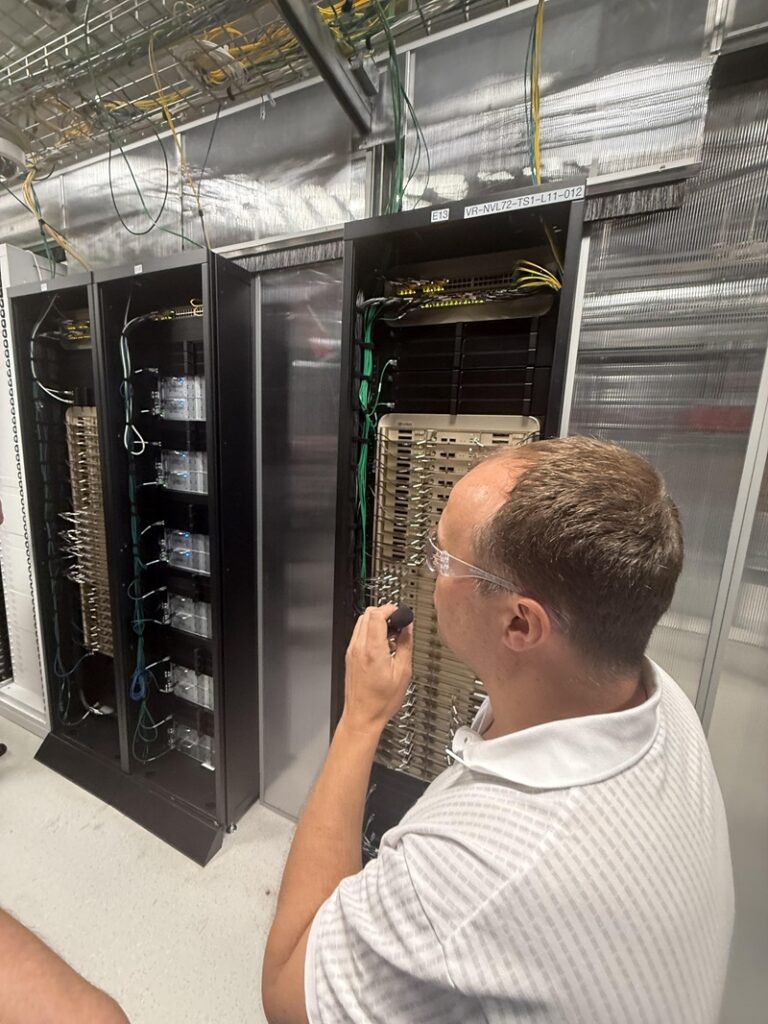
Fabrizio: All of the above, the energy strategy. All forms of power, of energy. We like them all and we need more of them. At CES we showcase a lot of different companies that have alternative power solutions. We’ll have a mini nuclear reactor on the show floor. Companies in batteries. How the grid can be modified. These are things that have to happen, have to be focused on. The great thing is that tech is a lot of the solution in these areas. A lot of these companies looking at things like modernizing the grid and developing ways to bring alternative power sources to the mass market are using tech to do so.
GamesBeat: For holiday sales the big worry is inflation. Does this year seem worse or better than a year ago?
Fabrizio: Affordability was on the ballot for certain. I think we heard from the American people how they feel about prices and inflation. There are some clear things that we’ve outlined, especially as it relates to tariffs and trade, that can help there. I hope that the new Congress pays attention to that and really looks to focus on affordability, as many of them have said that they want to.
In terms of holiday sales, we’re still seeing that intent to buy tech is strong. Consumers really like their tech products. Tech is fun. There’s entertainment, as you know from the gaming space and the mobile space. But it also really helps people have a more productive home life, a more productive work life. They can communicate better and faster and just have a more enjoyable life. We’re still feeling good.
GamesBeat: Does anything stand out this year as a hot product?
Fabrizio: Oh, yeah. We have a report that we can send that lays it out. We know from the report that 87% of U.S. adults plan to purchase technology gifts in categories like digital content services, wireless headphones, smartphones, tablets, smart home products, TVs, and more. We can send you the study and the specifics. I also think smart glasses are going to be big at CES. As they start to come to market more, people are going to be interested, especially as more people are using AI a lot. The smart glasses form factor – I’ve demo’d several of them – is nice. It’s a nice way to be able to quickly do tasks and work with something seamless. If you wear glasses already it’s even better.
GamesBeat: I’ve gotten a few pitches lately on voice-driven AI agent rings, finger rings. They allow you to give voice commands to the agents that work on your behalf.
Fabrizio: I’d be a fan of that too. I wear an Aura and I love it, but I love it more for the health data. I’d be interested in demoing some of those too.
GamesBeat: It sounds like memory chip shortage will be a hot topic of conversation still.

Fabrizio: I don’t think it’s going to be resolved this year or even next year. It’s really a supply and demand issue. Companies are working as hard as they can to meet the demand, but there’s a lot of factors and constraints around it. We saw this before during COVID. I think things will balance out, but it won’t be this year or next year. Hopefully by 2028.
GamesBeat: It seems to me like one of the solutions should be a very consumer-dedicated component supply chain. In this case, some of the companies like Nvidia, they’re trying to serve this fast-growing enterprise market, but they’re also responsible for consumer markets like gaming. If they’re pulled to focus more on enterprise solutions, the consumer solutions suffer. The thing you would usually expect to happen in the market is for people to break off the consumer piece and focus on that, sending supply into that. There would be parallel growth as opposed to AI just taking everything for itself. I haven’t seen that happen, and I wish it would. Almost everyone at CES is going to be starved for memory while the AI enterprise folks get the priority.
Fabrizio: It’s an interesting point you raise. There’s probably a lot of factors behind it. But it’s almost a chicken and egg thing. If the companies that need memory for AI development are somehow integrated into the end devices too–
GamesBeat: It’s almost like you have to spin it out into a different company. But it has to be a giant company that picks up this ball.
Fabrizio: It would be a good question for Samsung if you ever talk to them.
GamesBeat: On U.S.-based manufacturing, are you seeing things go in the right direction there?
Fabrizio: From the industry side there’s been a lot of commitments. Everybody shares a goal. Yes, more U.S. manufacturing and more U.S. jobs, of course. But the challenge has been, one, the speed and how you can get there, and then the process and the environment to get there. It’s a multi-decade strategy. In order to do that, companies need to be able to create plans and supply chains where their costs, input costs, aren’t constantly increasing. Then they need to be able to have a longer runway to shift manufacturing operations. It’s very tough.
We just released a very in-depth report on this that looks at onshoring and what’s needed. It lays out some timelines and some guidance. What’s easiest is assembly in the United States, versus full-on manufacturing. Assembly can happen earlier. You can achieve that while working with strong partners in ally countries around the world, with similar democratic beliefs and ideals. But to fully be all made in the United States would take a lot. We have great research on this we can send to you.
GamesBeat: I’m curious about where the exhibitors are coming from internationally. Does it seem like you’re getting a lot more from any particular country?
Fabrizio: Yeah, Korea. We have a ton of exhibitors from Korea. They’re focused on robotics and AI, innovation in those spaces. In Eureka Park we have pavilions from at least 25 different countries. The bigger ones–France always brings a lot. Korea brings a lot. The Netherlands. Italy has grown tremendously year over year. We did an event in Italy in October focusing on Italian tech. That industry is a leader in advanced manufacturing. Not a lot of people know that. This was a great opportunity to highlight companies there and see some really cool startups from Italy. Switzerland. Germany. Japan. Of course startups from China too. There’s a tremendous number of international exhibitors and a lot of excitement from that space.
A lot of great U.S. companies participate in Eureka Park too. It’s a fun area of the show with some exciting startups. We have some universities down there as well, which is always great to see.
GamesBeat: AI is going to be everywhere in the show. More things using AI are going to be maturing. But I wonder what categories seem like they’ve crossed from lots of potential into really great products. Something like universal translators, are they becoming something that’s a real mature market at this point? Are some things still in takeoff mode?
Fabrizio: Universal translators, that’s one where we see a lot of innovation. I would say that’s probably beyond kickoff mode. We talked about smart glasses and wearables like that. Those are definitely beyond kickoff mode. We saw a couple of early prototypes years ago, and now there are lots of companies doing cool things in that space. Snap will be on the show floor for the first time at CES, showing their specs. That’s exciting. Continuous glucose monitoring that’s direct to consumer, that’s a market that’s really evolved. Abbott, Dexcom, other companies with really unique devices in that space will be at CES. It’s a great product. There have been other advancements like that in health wearables that I think are exciting.
Autonomous driving. We probably have more autonomous driving exhibitors than ever at this show. That’s a reality. These companies are actually getting into markets and becoming a real option for consumers when it comes to mobility and transportation.
GamesBeat: The interesting thing about something like Waymo, they’re now developing the robotic maintenance workers to take care of their fleets. A case of one thing leading to another.
Fabrizio: I think we’ll see more of that. That’s also job creation. It is a robot that’s going and doing the maintenance work, but someone is programming it. Someone is responsible for the development and deployment of the robots themselves. When you look at the job shift AI will create, that’s a good example.
GamesBeat: Is there any more to your legislative agenda than we’ve already talked about?
Fabrizio: Definitely a federal AI bill. We’ve been asking for that for this entire administration, Trump’s entire presidency. We would love Congress to look at a federal AI bill. It’s extremely important. Other countries have it. We need it. We need something that can pre-empt–we have more than 1,000 state bills that are focused on AI, and they’re not helpful. They sometimes conflict with each other. It’s really challenging. We would love a federal AI bill. That’s first and foremost.
Congress looking at trade policy and taking back its authority there would be pretty important to the tech industry. Looking at privacy strategically. This is something we’ve talked about forever too. Can there be a good privacy policy in place? These are all things that we’ve advocated on for years.
GamesBeat: Back to things like exhibit space, will there actually be more space, or are you at the same level you were last year?
Fabrizio: There will be more exhibit space this year. The show square footage will be bigger. I don’t know how much bigger yet, but it’s tracking significantly bigger over this time last year.
GamesBeat: Is that because of the completion of some new construction projects? Or other reasons?
Fabrizio: Honestly, it’s demand. We had a lot of this space available to us last year too, but there’s been so much more demand. Companies that took a few years off from the show floor and now want to be back. Companies that were maybe in private meeting space and now want to be in an open space. AMD is going to have a big space in Central Plaza for the first time. Typically they’ve been behind closed doors. Nvidia has a big space at Fontainebleau that’s open to all CES attendees. Samsung came out of Central Hall, but they’re still in an official CES venue and space in the Wynn. They have a huge space. That opened up the opportunity for more exhibitors to come to the floor in Central Hall. That created the opportunity for Snap to have space there, and also MediaTek. In the mobility space, companies that had taken some time off from exhibiting have wanted to come back and be a part of CES 2027. It’s exciting.
GamesBeat: What about the presence of non-tech companies embracing tech in some way? The Goodyears or–
Fabrizio: Oshkosh is a great example. They’re embracing tech in a major way, whether it’s in their vehicles for electrification or automation, or the development of their vehicles, the connectivity of their vehicles. It’s really exciting. John Deere has such a great story about embracing tech in agriculture. Caterpillar, tech in the industrial and construction space. L’Oreal, tech in the beauty space, making beauty products more environmentally sustainable or accessible.
Another area of growth is a lot of tech for the accessibility community, for people who need vision assistance or hearing assistance or walking and mobility assistance. An area I’d say is no longer emerging is the exoskeleton. We’re seeing more sophisticated products in that space that are ready to go, changing people. Something new to look for is caps, hats that have technology in them. They’ll have the ability to read what you’re thinking and deliver actions on your behalf. That’s a new and emerging space. Just some really exciting things at the show. There’s a lot to cover.
GamesBeat: How do you net out things to be optimistic about and things you’re worried about?
Fabrizio: I’m optimistic and worried about everything, all the time. Welcome to being the new CEO following after the legend of Gary Shapiro. Working for an industry that’s loved or hated on any given day of the week, I’m optimistic and worried all the time.
But in terms of what we do as a trade association, I’m optimistic about the opportunities ahead, the opportunities to educate and work with a new Congress. I’m optimistic about people wanting to be in person and come to live events. We have the best and most exciting companies as our membership. Getting to work with them and represent them is exciting. They’re doing meaningful work. We just announced, with the FCC last week, that the commissioner trustee at the FCC is taking over the cyber trust program, which CTA worked closely with them to develop. That’s a cyber trust label to go on consumer devices that will let consumers understand that it’s safe, that it’s met a set of baseline specifications to be secure. I’m optimistic about all of those things.