
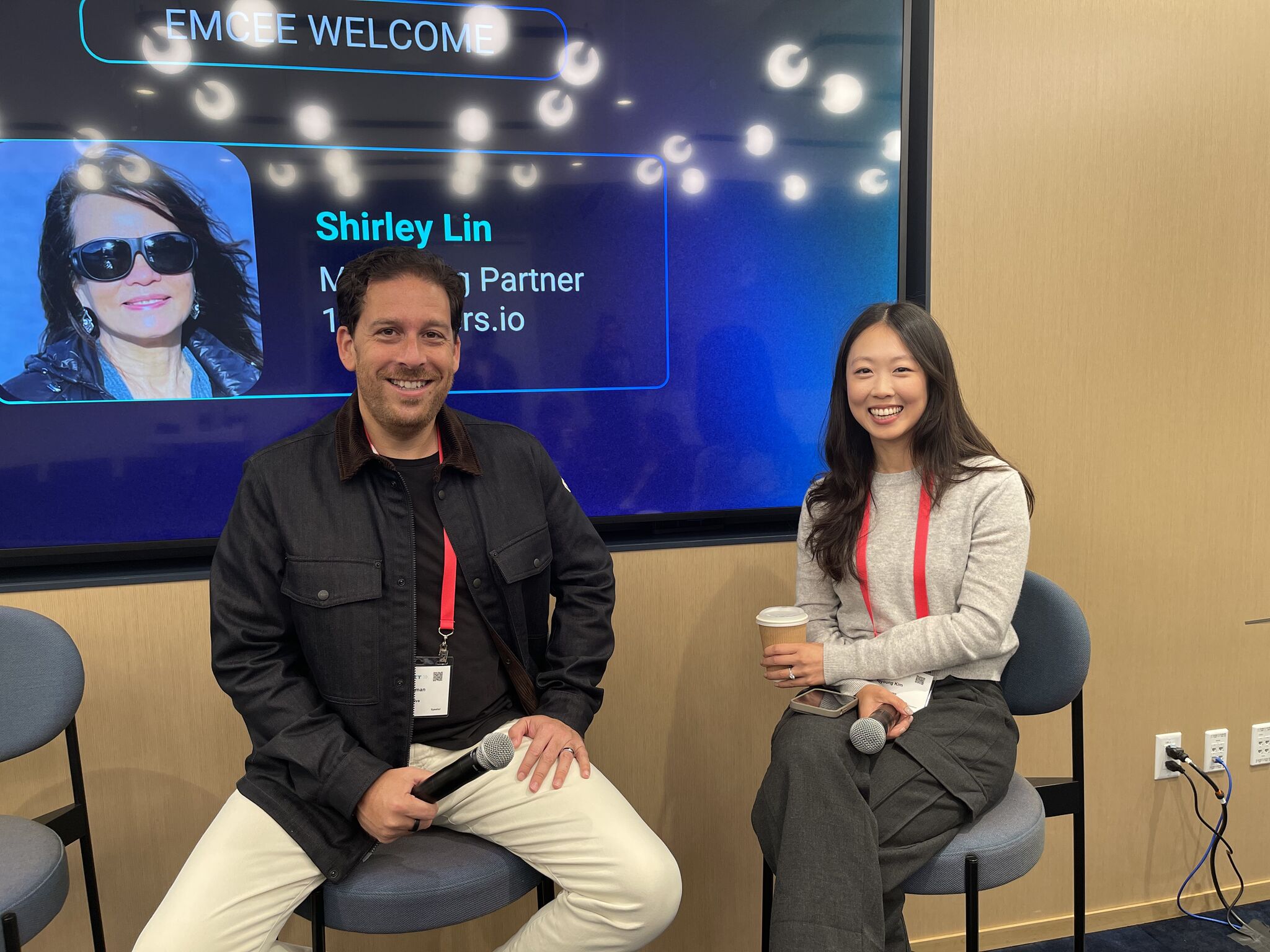
At GamesBeat Next, Andy Kleinman, the president of Delphi Interactive, shared how his company is reviving dormant iconic brands for triple-A gaming through a lean, efficient model that challenges traditional publishing assumptions. In conversation with Boyoung Kim, partner at Tsugu Ventures, Kleinman explained how lessons from mobile gaming’s IP licensing boom are now transforming big-budget game development.
From mobile success to triple-A innovation
Kleinman’s approach stems from his pioneering work at Scopely, where he helped establish mobile gaming’s IP licensing playbook. The watershed moment came with “The Walking Dead,” then the world’s biggest TV show. Rather than partnering with AMC’s television juggernaut, Scopely chose Skybound Interactive, which owned the comic book IP and commanded a smaller but more passionate community.
“Even though AMC had more eyeballs, Skybound actually had the most passionate and committed community, which were the comic book fans,” Kleinman explained. The decision proved prescient. Scopely’s game became massive, while AMC’s own title floundered despite greater brand awareness. The lesson was clear: Passionate communities and creative alignment matter more than raw audience size.
That philosophy now drives Delphi Interactive, which Kleinman describes as “Scopely for triple-A.” The company licenses major entertainment properties — like FIFA, with which the company recently announced a partnership to develop and publish a simulation game alongside next year’s World Cup — and partners with independent studios, avoiding the bloat and misalignment that plague traditional publishers. Instead of building everything in-house, Delphi identifies demand, finds expert developers, and structures deals that align incentives around success.
The James Bond resurrection
Delphi’s flagship project, “James Bond 007: First Light,” developed by IO Interactive, exemplifies this approach. Despite Bond’s cultural cachet, the franchise had gone dormant in gaming after decades of mediocre licensed titles that served primarily as movie marketing rather than standalone experiences.
The problem, Kleinman noted, was that big publishers treated Bond games as promotional vehicles tied to film releases. “They were not their own thing,” he said.
When games failed to match movie quality, the Broccoli family, which controlled the IP, imposed a gaming moratorium rather than continue disappointing fans.
IO Interactive, the Danish studio behind the acclaimed Hitman franchise, saw an opening. After over 20 years perfecting stealth-action gameplay, they pitched Bond as an independent franchise — no film tie-in, no marketing obligation, just a game standing on its own creative merits. The timing was fortuitous: the last Daniel Craig film was ending an era with no successor announced, freeing the IP from cinematic constraints.
The pitch worked because it promised what worked for Batman’s Arkham series and Insomniac’s Spider-Man: triple-A games that transcend their source material to become cultural touchstones. When announced, the teaser, which revealed virtually nothing about gameplay, generated millions of views purely on demand for a great Bond game finally being made.
The efficiency equation
Central to Delphi’s model is challenging the widespread industry assumption that big budgets are mandatory. “When people think of triple-A games, they automatically think you need $200-300-million-plus,” Kleinman observed. That perception makes launching new triple-A studios seem impossible, deterring entrepreneurship.
Delphi’s counter-approach starts small and validates ruthlessly. Rather than mobilizing hundreds of developers before knowing what the game is, they prototype with minimal teams, ensuring core gameplay is fun before scaling.
“If it’s not fun from the beginning, it’s really hard to fix that,” Kleinman emphasized, noting he’s seen years wasted trying to salvage un-fun games.
Technology accelerates this efficiency. Tools that didn’t exist five years ago enable smaller teams to produce triple-A-quality content, evidenced by “Black Myth: Wukong’s” fraction-of-typical-cost development or “Godzilla Minus One” winning an Academy Award for visual effects against films with significantly larger budgets. Every department benefits from new tools, though Kleinman stressed that there’s no “press button, replace everyone” AI solution yet.
Equally important is talent quality over quantity, with Kleinman arguing that “one extraordinary person can do the job of 20 people.” Delphi hires selectively, setting expectations that small teams will accomplish what traditionally requires armies, then provides cutting-edge tools and processes to make that possible.
Aligned incentives, shared risk
Perhaps most radical is Delphi’s compensation philosophy. Traditional models misalign incentives. Studios on cost-plus contracts profit by maximizing headcount and timelines, while salaried employees face identical outcomes whether projects ship on time or flounder.
Delphi structures deals so partners share meaningful upside through royalties, equity stakes, or milestone bonuses tied to commercial success.
“We as a partner will take care of paying for this entrepreneurially, but you’re not going to make huge profit upfront,” Kleinman explained. “You’re going to make that as we hit milestones together and start making money together.”
This flexibility extends to IP holders. Some deals involve traditional licensing with guaranteed payments and revenue shares. Others, like one major unannounced project, structure as joint ventures with decades-long partnership horizons, maximizing alignment by making everyone literal co-owners.
De-risking without guarantees
When Kim challenged Kleinman to defend triple-A licensed games’ failure history — “Suicide Squad,” “Marvel’s Avengers,” and so on — Kleinman acknowledged that IP isn’t always enough, saying games must be genuinely fun, and demand must be authentic. He noted “Avengers” had actually sold 5 million copies, and was considered a flop only because bloated budgets exceeded returns — exactly the inefficiency problem Delphi targets.
“We’re not doing anything that’s reinventing the wheel, but they’re just things that make a lot of sense that big companies can’t do because their structures are different by design,” he said.