
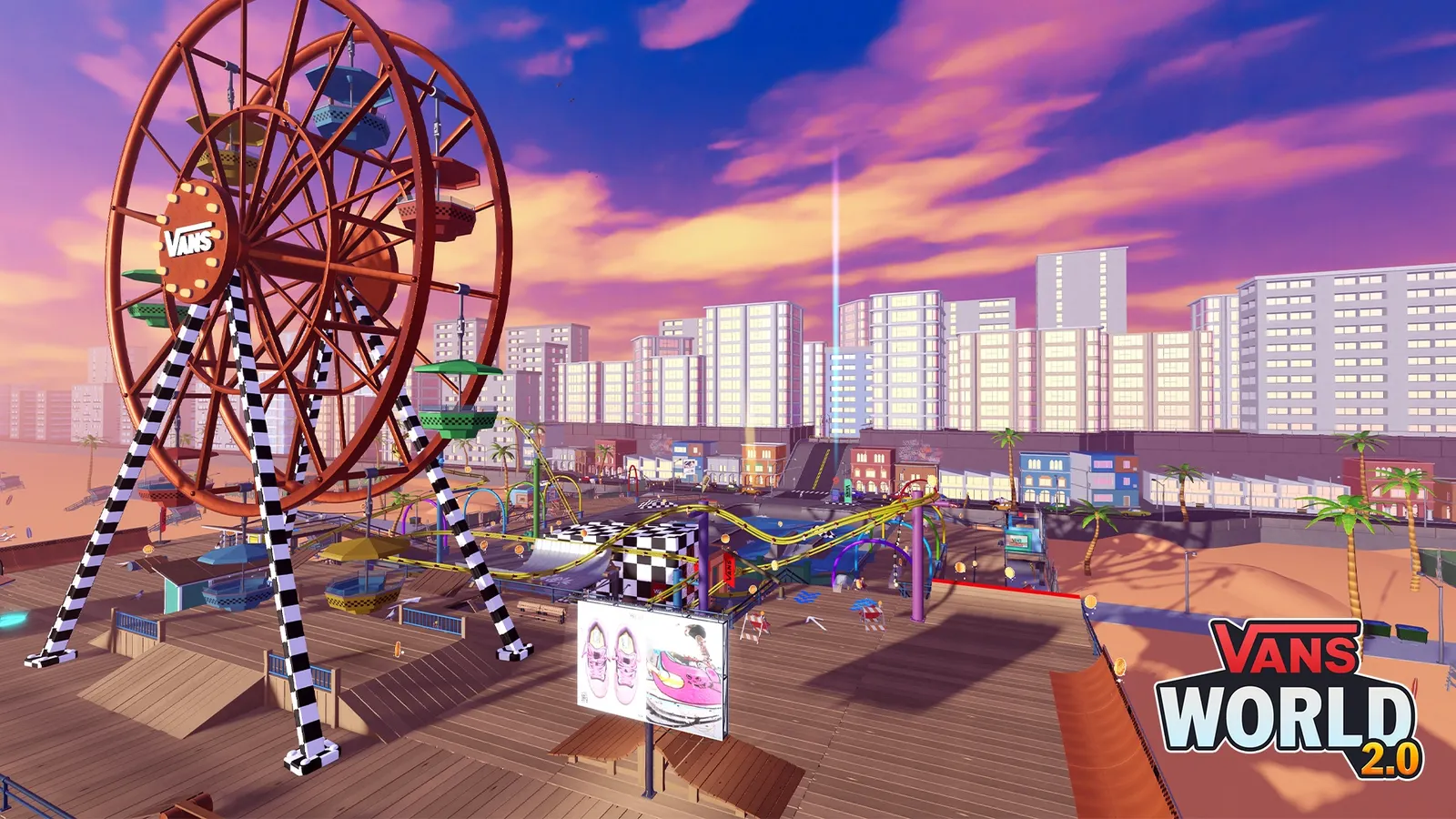
For advertisers on Roblox and Fortnite, brand integrations are in — and owned and operated worlds are out.
For the first time ever, the total number of brand integrations inside experiences on Roblox, Fortnite and other user-generated content platforms exceeded the number of active brand-owned worlds across platforms in 2025, according to data platform GEEIQ’s upcoming State of Brands in Virtual Worlds 2026 report. Between January and December of last year, brands launched 335 integrations and 252 owned worlds, per the report, marking a 57-percent year-over-year decrease in brand-owned worlds and a 14-percent increase in integrations during the same period.
“We’re seeing this as more of a structural change. Brands that entered virtual worlds 2-4 years ago went in for hype, and it was still novel to have branded worlds, regardless of how much it cost to build and maintain one,” said GEEIQ CEO Charles Hambro in an interview with GamesBeat. “Over time, the novelty wore off, it became harder to build an audience from the ground up without significant marketing budgets to amplify it, and ultimately, brands needed more tangible results they could measure to justify this investment.”
Since GEEIQ published its first report about advertiser activity inside virtual worlds in 2023, the company’s annual State of Brands in Virtual Worlds reports have been among the few sources of concrete numbers regarding the trajectory and nature of advertising spend inside metaverse platforms like Roblox and Fortnite.
This year’s State of Brands in Virtual Worlds report combined numbers from GEEIQ’s data platform with insights gleaned from a survey of over 50 leading developer studios and individual creators in the UGC space. GamesBeat has exclusive early access to the report — and here are some of the most interesting insights.
The total number of brand-owned worlds dropped precipitously in 2025
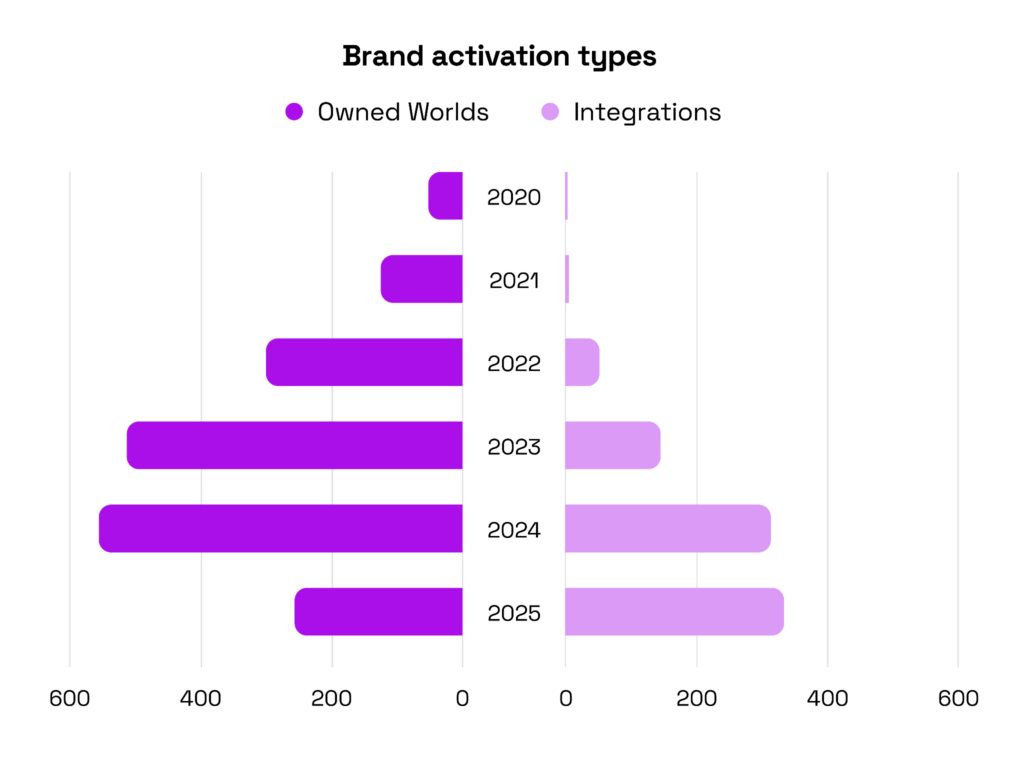
Data from GEEIQ’s upcoming report demonstrates how brand-owned worlds on UGC platforms peaked at nearly 600 owned worlds in 2024, following a major spike in growth between 2022 and 2023. In contrast, integrations into pre-existing worlds spiked between 2023 and 2024, with continued growth over the past year.
The decrease in brands’ owned worlds over the past year represents a marked shift in how advertisers are thinking about platforms like Roblox and Fortnite. In past years, advertisers have approached these platforms similarly to more traditional social media platforms, operating their own persistent worlds that they regularly refreshed with content, much like brand-operated X or Instagram accounts. Over the past year, brands have approached Roblox and Fortnite as more of an analog to YouTube, integrating into popular pre-existing experiences the way brands have traditionally partnered with popular video creators to post sponsored content on the creators’ channels.
“This isn’t to say that owned worlds are dead for all brands,” Hambro said. “Many are still seeing significant success, but they’re more limited to specific industries such as entertainment IP, where fandom plays a huge part in players wanting to be a part of the story.”
GEEIQ’s data backs up the idea that entertainment IP aligns well with owned worlds. Of all persistent branded virtual worlds in 2025, the one drew the most visits — by a margin of over 30 million — was Universal Pictures’ “How to Train Your Dragon” Roblox experience.
Brands are actively shifting their approach from owned worlds to integrations
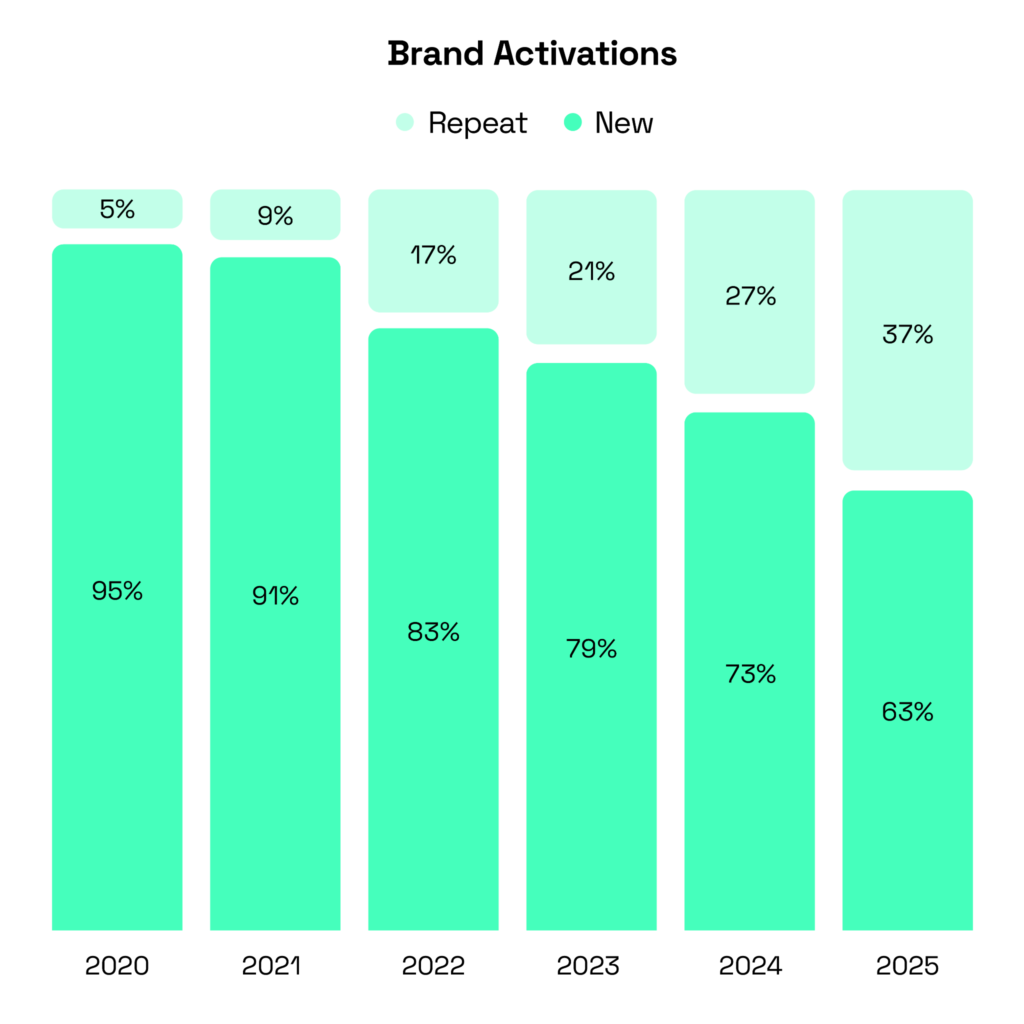
The rise of brand integrations on Roblox, Fortnite and other UGC platforms is not simply a matter of new advertisers adopting the integration approach as they dip their toes into the metaverse. It’s an active shift, with brands that previously experimented with owned worlds moving away from that strategy and toward integrations in 2025. GEEIQ’s report found that 31 percent of brands that launched an integration in 2025 had previously built a brand-owned experience, demonstrating that brands increasingly prioritize integrations as they gain experience advertising on metaverse platforms.
Hambro framed this shift as an overall positive for the UGC space, pointing out that brands that make the jump from owned worlds to integrations are applying their learnings from ownership to new formats rather than abandoning the space entirely.
“With integrations being the new standard, brands should try to work closely with creators or at least ensure they’re included in the conversations early on: they’re not just a distribution channel, but they need to be a core part of the infrastructure,” he said. “They are the experts on their own platforms, they know what their players like and what they don’t. Showing up authentically and in a way that adds to players’ experience really changes the game for all involved.”
GEEIQ’s State of Brands in Virtual Worlds 2026 report comes out next week. Head to the company’s website to reserve your copy — and keep an eye on GamesBeat for more exclusive data insights from the report in the meantime.