
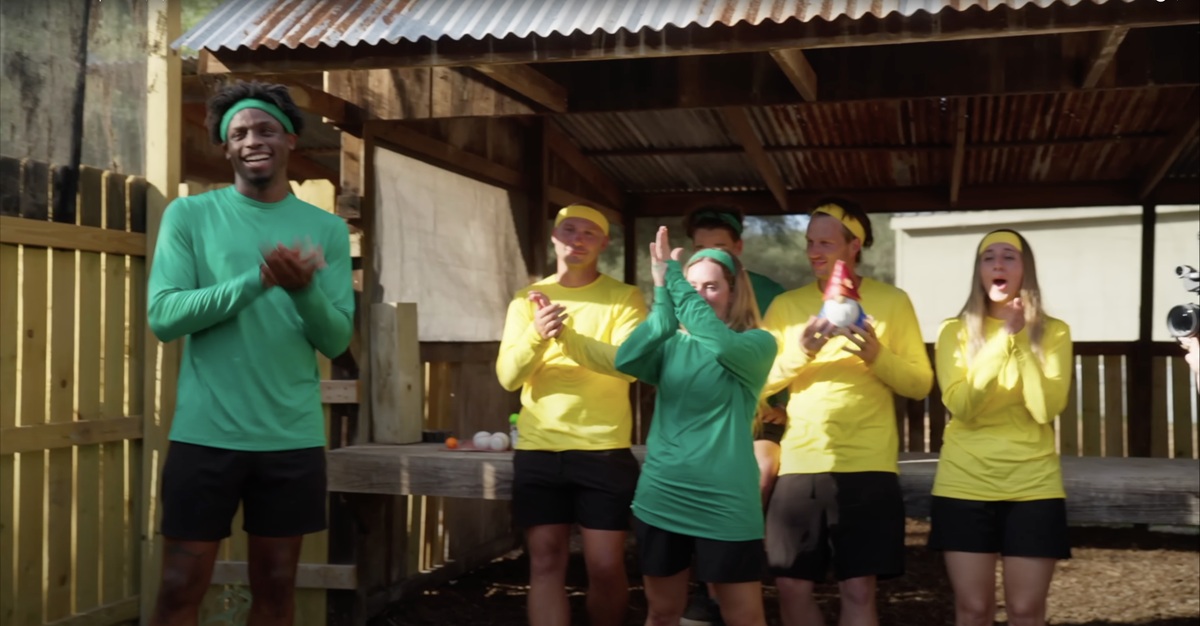
Atlas: Earth, the mobile rewards app making earning more fun, has launched The Atlas Games, a new monthly YouTube challenge series that brings the brand’s “earn while you play” philosophy into the real world.
It’s a new show with creators that could help boost the growth of Atlas: Earth, which has generated $100 million in revenue to date. (That’s a scoop, by the way). And its growth wasn’t based on a get-rich-quick crypto scam.
The first episode premiered recently and is now live on YouTube, kicking off a series that will drop new episodes monthly. Unlike traditional game shows, The Atlas Games doesn’t follow a set formula.
Each episode introduces fresh challenges, new locations, and new contestants. To compete, contestants must already be Atlas: Earth players and are selected from the city where each episode is filmed, bringing the excitement of the game back to its location-based roots. At stake in every competition: up to $20,000 in cash prizes.
“Atlas: Earth was founded on the idea that games can create economic opportunity, not just entertainment,” said Sami Khan, CEO of Atlas: Earth. “With The Atlas Games, we’re taking that mission further, and bringing our community into the spotlight and rewarding them in fun, shareable, real-world ways.”
While Atlas: Earth has generated $100 million in lifetime revenue, the company has given over $8 million back to the community.
With Atlas Games, the company is creating YouTube digital content. The goal is to build an in-house influencer system that will augment the Atlas: Earth brand, following in the footsteps of more successful creators like Mr. Beast.

“We figured that we could take the formula, since we are already known to be a game that gives cash back, and take that an extra step of bringing that entertainment to other facets of the internet, including YouTube,” Khan said in an interview with GamesBeat. “Atlas Games is basically where we are hosting a game show. Once a month, a new video will drop, and every month it’s actually a new game in a new type of video.”
Episode one was a paintball competition. In episode two, participants play games in a haunted location in New Orleans. The idea is to create a different game each time. About 1,000 people have applied to be on the show, and Atlas: Earth’s team is screening the applications.
“We hand-pick people who are going to be great for the episodes,” he said. “It creates this really cool community. Our vision is to continue to expand upon this idea that entertainment and cash back can be the same, done in a form factor that makes sense in multiple avenues, whether it’s a YouTube game show or a mobile app.”
Monthly Drops, Real Stakes
Up to $20,000 in cash prizes will be at stake in each episode. Contestants earn money based on the outcome of each challenge, with winnings accumulating throughout the competition.
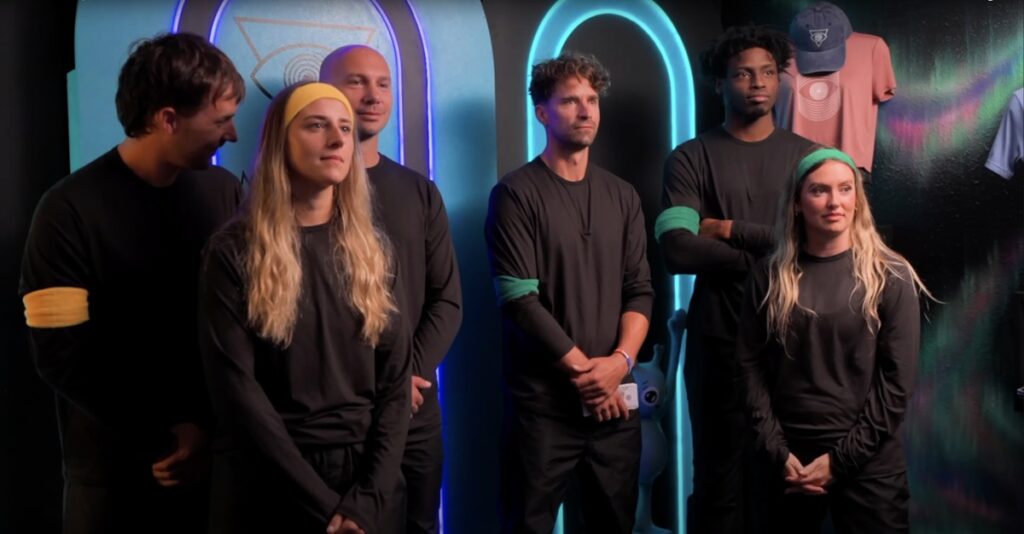
The premiere episode, filmed in Atlas:Earth’s hometown, Austin, features three local players facing off against three staff members in high-energy challenges, including hide & seek, paintball battles, and a life-size version of the app’s daily prize wheel.
“Gaming today is as much about community and shared experience as it is about gameplay,” said Khan. “The Atlas Games gives our players new ways to connect, compete, and be rewarded, just like in the app, but on a bigger stage, and it allows us to create content that’s as entertaining to watch as it is exciting to play.”
Apply to Compete
Atlas: Earth is now casting contestants for upcoming episodes. Players aged 18+ who are competitive, good-natured, and camera-ready can apply directly through the Atlas: Earth app. Download the app and look for the “Apply to be on an Episode of The Atlas Games ” button in the settings tab for a chance to join future Atlas Games challenges and win cash prizes.
Atlas: Earth has more than five million downloads to date and one million monthly active users. It’s a mobile rewards app that lets players purchase virtual land mapped to real-world locations and earn real cash through virtual rent.
To date, Atlas: Earth players across the U.S. have earned more than $8 million in cashback. Based in Austin, Texas, Atlas: Earth is redefining the intersection of gaming, community, and economic opportunity.
Origins
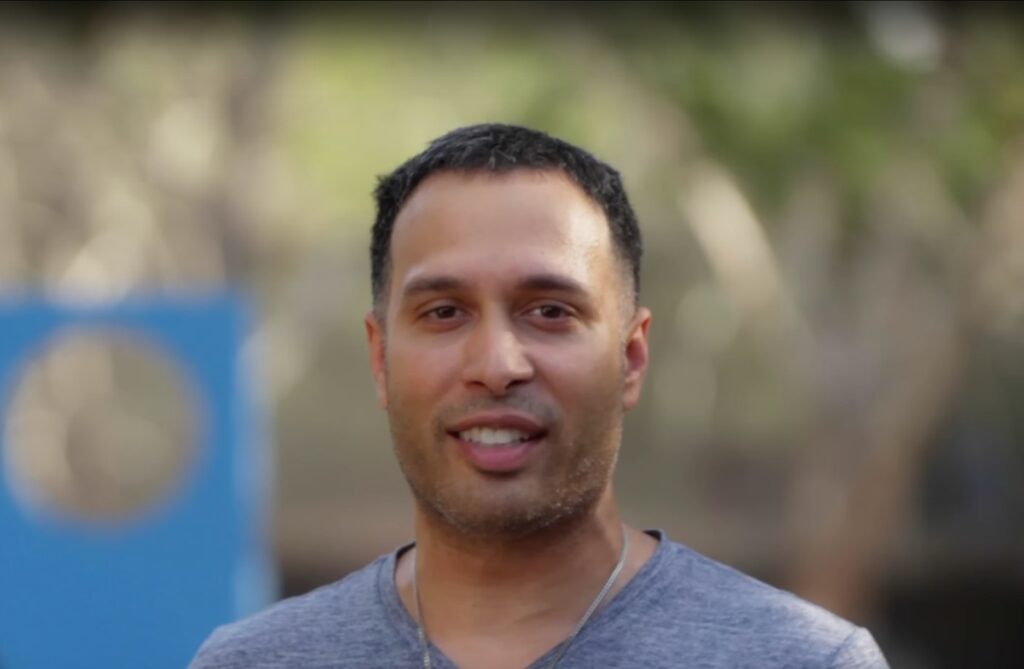
Atlas: Earth got started in 2018, without raising money.
The company has 30 employees, as the Khan believes in hiring only when the firm really needs it. And the company has never raised venture capital funding.
“We started this thing seven years ago. And it’s finally really gaining traction. I mean, 2025 is our best year ever,” he said. “Many other competitors can’t say that, given the macroeconomics of where the gaming is right now.”
Khan compared Atlas-Earth to a financial app, like Acorns, rather than Bitcoin. Khan was the former head of marketing at Acorns, which rounds up to the nearest dollar on purchases you make and then invests that money for you.
“It helps that I was the head of marketing at Acorns. The biggest thing we learned there was over 50% of Americans wouldn’t know what to do with a $500 expense if it came up unexpectedly. And I think that game companies and apps that respect where the majority of Americans are right now are really important,” Khan said. “Atlas: Earth just hits home for a lot of people. The idea of the ad saying, ‘Own your house in this app and earn cash back from it’ is just compelling. And it sounds clickbaity, but it exactly fulfills that promise.”
The aim is utilitarian, or the greatest good for the greatest number, with a mix of entertainment.
“People are much more willing to download a game than they are an app,” he said.
The money can add up, given that it’s invested on behalf of the player.
“It’s a slow and steady reward for staying in the ecosystems,” he said. “We didn’t have that crazy boom in 2021, but the flip side is that we built a really sustainable business. And that pays off in the long term. We are a good mix of Foursquare meets Monopoly meets Pokemon Go.”
He noted many people are familiar with the concept of owning the digital land right under your feet. You think about the idea of your neighborhood in itself is probably cool enough for some people. But then, when you add the fact that this land also pays you pennies a year, and the more you amass, the more you get, it just adds that extra dynamic.
“We like to say it’s not a singular use case. We have this digital passport,” he said.
Khan said more and more people are trying to be content creators and come up with side hustles. Atlas: Earth debuted back in 2021 as a virtual real estate game that pays cash back to players. To Khan, it wasn’t like all of the get-rich-quick blockchain scams out there. Rather, it was more like an app that pays you cash back, or universal basic income (UBI).
“We’re positioning it so more people understand it, as UBI centric. We believe that gaming has a part in the future of supplemental UBI,” he said. “Atlas: Earth has been a virtual real estate game that pays cash back. And now we’re learning more toward earn cash back by having fun.”
Outlasting the metaverse
The company launched during the “metaverse” era of the pandemic and the firm is now avoiding that label. But deep inside, Khan said he is still working to fulfill metaverse ambitions. He hints that the company has big plans. Other people saw it as a fad.
“For us, we never touched crypto. We never use the word crypto in any of our marketing, or coins or NFTs,” he said. “This was an early decision that was important to us. We’re not trying to sell this idea of get rich quick.”
The first episode of the show hit 70,000 views, which is respectable. The firm will release a new episode after the first one hits 100,000. One of the things the show will do is highlight small towns and people that no one has ever heard about.
By year end, Atlas: Earth will roll out its community feed, a video platform formatted like TikTok within the app that enables Community creators to earn in-game tips from their content.
“We believe that the winner is going to be the one who actually has captured user attention in the right method,” he said.
As for the future of Atlas: Earth, Khan believes it will be more like a Microverse. But that’s coming sometime in 2026.