
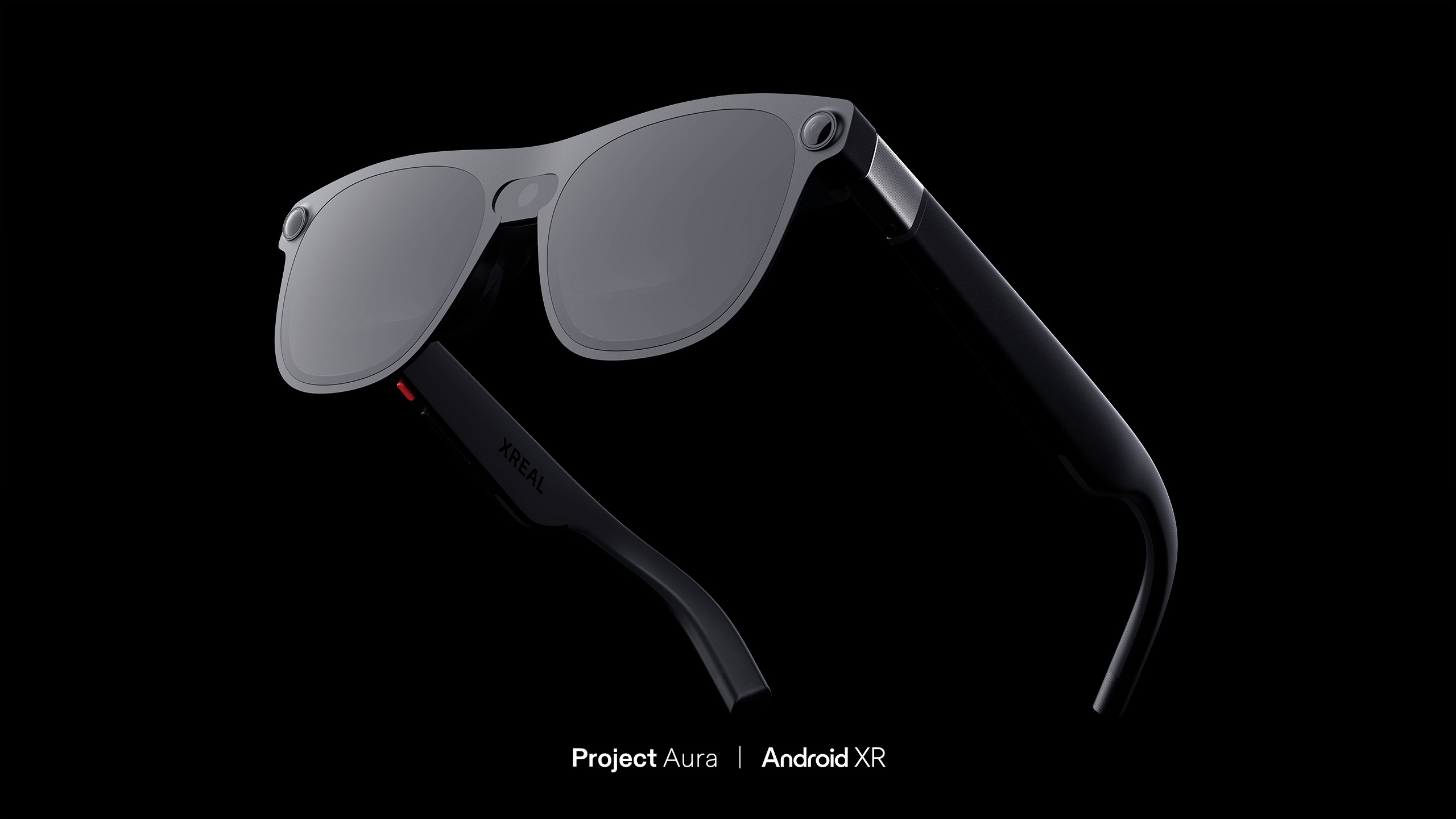
At Google I/O, Xreal formally unveiled live demonstrations of Project Aura, the wired XR glasses arriving globally in 2026.
After months of anticipation, developers, creators, and media attending Google I/O finally got their first hands-on look at what’s possible when lightweight XR hardware meets the power of Android XR and Gemini, and the response has been incredible.
Throughout Google I/O, attendees experienced a series of immersive Android XR demos running on Project Aura, showcasing the next wave of spatial computing experiences powered by Xreal, Google, and Qualcomm.
Highlights included:
- Immersive Google Maps, enabling users to explore places and navigate spatially in an entirely new way
- Dynamic video content with both massive screen viewing and a mini-screen experience fit for multitasking across Project Aura’s extended reality canvas
- Immersive YouTube 180 and 360-degree VR videos, including 2D and stunning 3D videos brought to life through Project Aura’s massive OLED and class-leading 70-degrees field of view
- An intuitive and fun WebXR three-dimensional painting app vibe coded with Gemini.
- Connecting Project Aura via DisplayPort-in with a laptop, extending the device’s multimodal AI capabilities onto the laptop in three-dimensional AR space, including integrated Gemini support and auto-spatialization
- Plus more next-generation AI-powered Android XR games and interactions designed specifically for wearable computing
Project Aura represents a major step forward in making XR experiences practical, lightweight, and accessible for everyday users and developers alike, the companies said.
Shipping Globally in 2026
Xreal and Google confirmed Project Aura will launch globally in 2026.
Built in close collaboration with Google and Qualcomm, Project Aura combines Xreal’s leadership in lightweight XR hardware with Google’s Android XR platform and AI capabilities, alongside Qualcomm’s class-leading Snapdragon processors. Together, the three companies are shaping the next generation of spatial computing experiences.
Today’s demonstrations offered an early glimpse into that future, one where AI, spatial interfaces, and immersive content seamlessly work together in a wearable form factor.
Android XR Developer Catalyst Program
To help developers begin building the next generation of XR experiences, XREAL and Google also announced the launch of the Android XR Developer Catalyst Program.
As part of the program, Project Aura developer kits will become available globally, giving select developers early access to hardware along with tools and resources designed specifically for Android XR development on Project Aura.
The goal is simple: empower developers to start building the XR apps and experiences they’ve always imagined, the companies said.
Developers interested in joining the program can apply today at g.co/dev/catalyst. XREAL and Google will review submissions and provide Project Aura developer kits in the coming weeks.