
Apple announced a bigger effort for trust and safety to protect children on its platforms.
During the WWDC keynote on Apple’s campus, Apple leader Craig Federighi announced the company has revamped tools for both parents and game developers to help them protect kids and reduce their exposure to inappropriate content on Apple devices.
In the past year or so, this has become a huge issue as parents — and lawyers — push back against social media platforms and gaming platforms like Roblox. Countries around the world are considering or enforcing regulations for social media and online games in the name of child safety.
Craig Federighi, Apple executive, said, “We build products that empower people and enrich their lives, while helping them stay safe. We provide end-to-end encryption to help protect your conversations, strong privacy protections in Safari app permissions that keep you in control of your location, photos, and more, and life-saving features like crash detection.”
He added, “Our longstanding commitment to safety is especially important when it comes to kids and teens who rely on our devices to stay in touch to explore creativity and enhance learning, and to build their independence as they grow, and as parents ourselves, we’re committed to building a safe and trusted platform for kids. So this year we’re taking a big step, expanding our child safety features with powerful and intuitive tools.”
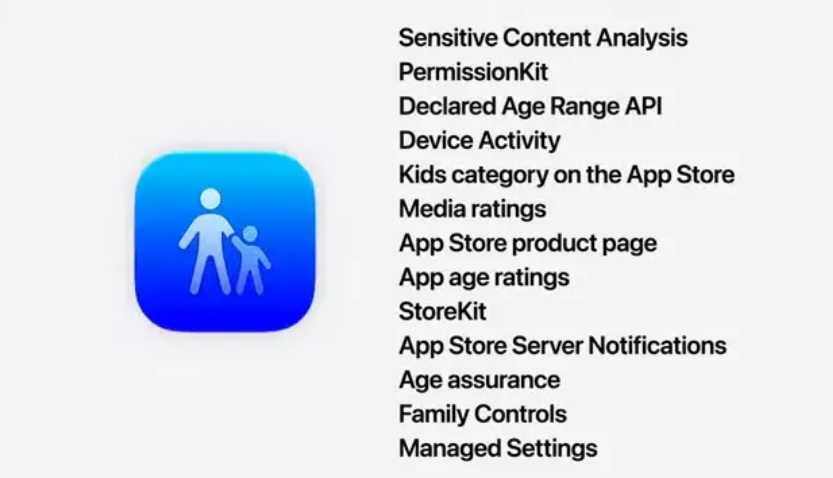
The company has teamed up with the American Academy of Pediatrics to come up with child safety guidelines. There are a number of software development kit (SDK) tools for developers of games and other apps to use to protect kids. (You can see the list in this image).
Parents can create child accounts that block adult websites and more, and they can convert existing accounts to bring them under more direct control.
The parent-controlled accounts govern what kids can see, who they can talk to, and what they have access to. It gives parents tools to control what their kids see over time. Start Focused is a tool that gives parents control, giving kids access only to what they need immediately, and the list of sites can be expanded over time.
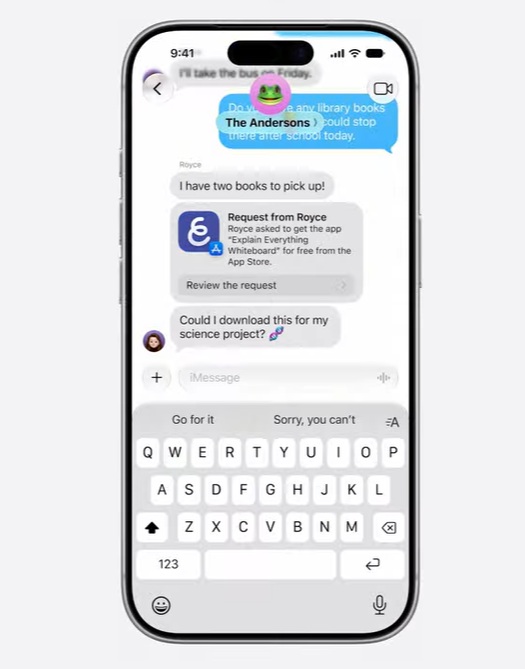
Parents are in control of who kids can talk to, and parents need to give permission before anyone can connect. Parents can also screen the content that kids can see in live interactions, such as chat or live FaceTime calls. It can block sexual content, gore, or violence in real time.
Parents can also set screen time. They can set Time Allowances. Each category has its own time allowance recommendation to begin with, with guidance from the American Academy of Pediatrics.
Apple said it can also control social media access, as experts say children under 13 should not use it. Parents can set up a schedule to show what apps can be available to kids during the day. They can fully customize the schedules and give more leeway for time for games, entertainment and social media on the weekends.
Apple redesigned Screentime, a tool for parents, to see at a glance how kids are using devices. Parents can see how their kids are using their devices and then use a tap to adjust the time for any given activity.
Developers can use a declared age-range API to tailor the app experience for kids. Kids can use a feature “Ask to Browse” to ask their parents if they can see a web site. It is automatically enabled for kids under 13. Parents can enable it for kids too.
Apple said it recognizes that every child is unique and parents are in the best position to decide what works for their family. Apple also believes in shaping its child safety features based on expert health research. The best available research from clinical and child development experts, as well as online safety experts, emphasizes the importance of balancing learning, creativity, and connection with establishing boundaries around technology use. This is critical in protecting adequate time for in-person social interaction, academics, physical activity, and sleep, all of which are essential for healthy child development, the company said.
The research also shows that kids under 18 using personal devices benefit from age-based protections guided by adult supervision, and for those under the age of 13, access to personal devices should be limited and expanded when a child is ready.
The most important step is to create a child account. It immediately enables safeguards across the system, tailored to their age, like blocking adult websites, only allowing age-appropriate media, and setting age-based restrictions in the app store. A child account also provides access to powerful parental controls. If your kids aren’t on a child account today, don’t worry, you can convert their existing account. Building off the child account this year, Apple focused on tackling the things parents are most concerned about, like what content her kids can see, who they’re allowed to talk to, when kids have access, and how parents can guide their kids’ digital journey, and we’re providing parents with recommendations based on expert guidance to help them decide what’s right for their kids.
“To sum it up, we’re giving parents powerful, easy to use tools to help manage what kids can see, who they can talk to, and when they have access,” Federighi said. “And for parents who want to learn more, we have a new website that highlights all of our child safety features and provides answers to common questions, including how to get started together. This makes for a big update, underscoring our ongoing commitment to building a safe and trusted platform for kids.”