
Amazon has invested in Fable, a company that wants to be the “Netflix of AI” through its Showrunner interactive streaming platform.
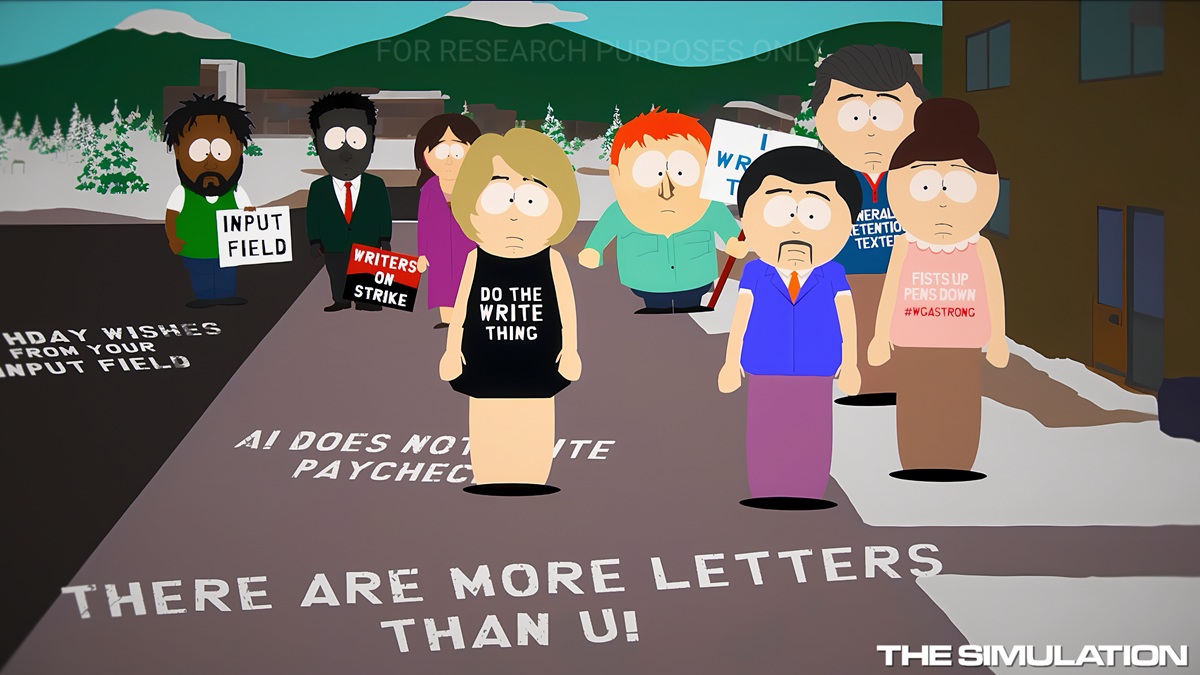
And Fable’s Showrunner is launching today with first original AI show Exit Valley, which comes from the two-time Primetime Emmy winning team at Fable. The ex-Pixar and Oculus team made the viral South Park AI episodes — and it caught Amazon’s attention.
“I’m really, finally happy about this. We’ve done rounds in the past, but this is so encouraging. We’re also announcing Exit Valley, which is the AI TV show,” said Fable CEO Edward Saatchi, in an interview with GamesBeat. “You can go in and start making scenes and episodes. It does kind of stick to what I’ve worked on my whole career, which is like that space in between games and movies.”
Showrunner received 80 million views for its South Park AI episodes. And so today it is launching its Netflix of AI streaming service today, Saatchi said.
“Showrunner is a Netflix of AI. The next big streaming services – Netflix, Disney+, Paramount+, Prime etc won’t be purely passive, you will be at home, describe the show you’d like to watch and within a minute or two start watching,” Saatchi said. “Finish a show that you enjoy and make new episodes, and even put yourself and your friends in episodes – fighting aliens, in your favorite sitcom and solving crimes.”
Showrunner director Philipp Maas, who built the initial version of Showrunner that powered the AI South Park episodes, said in a statement, “Soon everyone will be able to create their own hit show or become a showrunner for someone else’s show that they like.”
Showrunner is powered by Fable’s AI model SHOW-2: Fable released a research paper on how they built the SHOW-1 model and AI Showrunner Agents that can write, produce, direct, cast, edit, voice and animate episodes of TV.
“Our South Park episodes were a research project that took on a life of their own, seeing the huge desire of people to make their own episodes of TV, we’ve built Showrunner as a Netflix of AI to power original works of art that can stand the test of time, and to let people bring their stories to life,” said Saatchi.
The streaming platform’s first big show is the AI TV show, Exit Valley, which is a Family Guy-style TV comedy set in Sim Francisco. It satirizes the AI tech leaders Sam Altman, Elon Musk and others.
“AI is going to make a group of technologists into the richest humans to ever live, it’s only fair to give folks the ability to use AI against them through satire – satire is the age old tool of the powerless against the powerful,” Saatchi said.
Users can upload themselves and their friends as characters and make episodes satirizing the days news.
Exit Valley the show is targeting a deal with a major streamer by the end of the year including interactive features.
Saatchi said, “Everyone in AI talks about the Toy Story of AI as an exciting moment – but when you press all they really mean is a cheaper Toy Story – we can do so much more with AI. The Toy Story of AI isn’t some cheap animated movie that saves money, the Toy Story of AI is playable – you will go to the cinema on a Friday and by Sunday there will be millions of scenes thousands of new stories, you will be able to be a character – all monetizable by the IP holder – movies and shows are going to become playable with AI.”
Fable is talking with all the major studios, including Disney. In the future, Saatchi sees moving from a world of OpenAI, Runway etc releasing video models to, for example, a ‘Star Wars’ model, directed by a Dave Filoni (the holder of the lore at Star Wars) that would let people subscribe to generate within the storyworld of Star Wars – a whole new revenue stream for IP holders.
Users can sign up at SHOWRUNNER.XYZ.
“Instead of the idea that AI is going to disrupt Hollywood by making cheaper VFX or cheaper animated movies, we think it’s going to disrupt it by making movies and shows playable,” Saatchi said. “It will be almost as big a shift as the shift from cinema to television, from cinema to VHS, from cinema to DVD.”
He added, “AI is at the next stage where you can create the next episode. You can cast yourself in it. You can click a button and watch a scene. You put yourself in and it’ll generate a new scene with you and remix it.”
, create next episode. So something, you know, something that’s more two way between the audience and the filmmaker. So that’s kind of the that’s kind of the high level vision that that we are building is, you know, more money has been invested in disrupting the VFX industry, or the size of the VFX industry. And, you know, that doesn’t feel like the right place to go after. It’s, it should be more focused on this, AI movies and AI TV shows as a new medium, some innately interactive and remixable and multiplayer. And that’s sort of, that’s
what we’re going after. Are those like, is it like a distinction you would make between, like, human and AI made, or AI only made? I guess
it’s both. So you’re let’s say you’re at home. Let’s say you know, you’re watching, you’re watching an episode, you know, you click that plus button, and you might be, you might be describing what you’d like. You might go really deep and be like, Okay, this is what’s going to happen in this scene. This is what’s going to happen in the next scene. Like, you know, really detailed. Or you might just click the plus button. So, you know, we think both, both things work. And we sort of think, you know, the holodeck is a great example where, you know, you could just give a one sentence and it’s going to give you an incredible experience, or you could go into great detail and try to create a holodeck experience. So in great in really fine detail. So we think it’s both, but we also think it’s okay to, you know, we sort of be open that this isn’t just a tool in the toolbox of a great artist. This isn’t just a pencil, because pencils don’t write by themselves. AI, is creative by itself, and that’s okay, and it’s interesting, and something Andy Warhol would have found totally fascinating. And we, you know, we shouldn’t, we shouldn’t be thinking about it in purely defensive terms. So, you know, imagine, for example, that the future isn’t, you know, here are these model companies like runway, and they create these kind of neutral models. And you can imagine anything which are basically Pro Tool, pro VFX tools, ultimately, imagine instead that like you read, you read in the news that ILM has released the new Star Wars model, and it’s been directed by Dave Filoni. It’s created with incredible care. It comes out on the same day as the movie, and you can go in and immerse yourself. You can create new scenes. It’s going to understand all the characters, all the relationships, and you can create millions of scenes. Are 1000s of episodes, hundreds of movies with that model, and you’re paying for the privilege to do it, and all of us, going back to the original creator, you sign terms and say you don’t own, you know, anything made in the Star Wars model that’s all owned by Disney. A lot of people would find that super exciting, versus the kind of janky, like prompting a Stormtrooper, like,
yeah, did you happen to see that Roblox story on licensing in the last week? Roblox, it’s very interesting that they have a self service licensing program now with a lot of brands, and the those brands are granting permission on certain sub brands, like say, Sega. Sega says you can get a license for like a dragon, and instead of negotiating with them for months, it’s like a self serve thing, and within a number of hours, maybe you can get a license, and so it can help one of those. They can sort of license broadly, a bunch of games, and then try to catch one as it’s taking taking off, right? And sort of get the benefit of, like, you know, do you mean
sort of skin it, skin. It
doesn’t say, Yeah, coming like something like squid game, when they had all the knockoffs on Roblox, right? And people were just spreading it everywhere, these little red light, green light, sort of interesting, yeah. And so now Netflix itself could reap money from that, like, you know, in the 15% to 20% revenue for something like, that’s exactly what
I’m talking about, yeah, that’s exactly what I’m talking about. Yes, it’s not the direction anyone else is going in, right? Like, because, because this is kind of, because people have become convinced that that AI is good for memes, or AI video is good for memes. Or as an incredibly, I would say, niche Pro Tool or VFX artists, they’re missing the much bigger opportunity to consumers, where each model is worked on with the same care and love, creatively and the same narrow IP focus and story will focus as a movie. So we would imagine something that’s in between runway, let’s say, for the Star Wars model example, in between runway, Bioshock and Star Wars, right? Environmental storytelling. Dave deloney would be like, you know, putting in Easter eggs is a cheap term. Let me think, if I can, let’s say putting in environmental storytelling. So maybe you’re prompting. You know, on Coruscant, and Coruscant has actually been properly thought through. It’s not like, going to be a different, you know, Coruscant as a planet than Star Wars. Every single time it’s like static, it’s based on a simulated understanding of that world. And there’s little environmental stories, you know, maybe written on the walls or like things that can be discovered, you know, things that make you feel that you’re visiting a kind of real place. So our thought would be, let’s say, you know, let’s say that. Let’s say John Wick five comes out in the movie, comes out in the cinemas on a Friday, and by Sunday, there are all with the love of Lionsgate and the direction of the creative team. By Sunday, using the John Wick model, there are 30 million new John Wick scenes. There are 3000 new John Wick movies. None of them are like, you know, the John Wick movie is, John Wick five doesn’t exist anymore. John Wick five still exists, a static work of art that that is beautiful and wonderful. But, you know, people can actually be creative in that story world, and maybe they’re going to create amazing things that just drive more and more people to the cinema, because they’re like, holy shit. This is like everywhere. This is a world that I want to go back and revisit, because I’m seeing it everywhere. And all of that’s monetizable, and all of that is a big creative challenge. So I guess think about it as right now, everyone thinks, Okay, it takes, you know, 1000 people to make a Pixar movie with AI. It’s going to take 100 you know, it doesn’t take a genius to figure out that’s 900 people who are being unemployed, same as VFX. And you can say, well, we’re going to make 100 more movies, but there’s a limit. How many, how many movies are going to work, you know, that’s, that’s playing defense of, like cost cutting, we would say play offense. Of, you know, a grand creative challenge of making a model. You know, the Toy Story model is something that those 900 people go to work on. And. A very detailed, fine grain understanding.
Maybe you have a contest to surface. The best thing
could be a contest that surface. The best thing could just be social media that surfaces. The best thing, you know, in terms of, like, episodes and movies, obviously it would be ratings, you know, views and ratings, social media would be more suited to just scenes. But, you know, I think, I think in the game world of modding, the idea that Dota two surpassed Warcraft three is like, you know, not threatening to Warcraft three, particularly the monetization, as far as I understand, didn’t quite work out that the Blizzard made money from Dota. The idea of modding is is really entrenched in gaming and doesn’t really exist in in movies. And so I think this would be a big, a big and exciting shift, bringing more ideas from games into cinema. So instead of the everyone talks about the Toy Story of AI, and they mean a cheap Toy Story, instead of the toys 30 years on, all that we’ve achieved with the greatest technology in the last 100 years around media is cheap animation. Actually, oyster of AI isn’t cheap, it’s playable. So that’s kind of the that’s what we think would excite consumers. No consumer is going to be going desperately to the cinema to to because they’re excited that Disney saved money on the latest Toy Story. But they would be if it’s like, well, this is the first movie that’s playable, that’s insane, like I’ve never experienced that, like I get to be in the movie, like I get to be kind of creating my own scenes after I’ve gone to see the original, the canonical toy, stories, ticks, or whatever it is. So that’s kind of the concept. And with our shows that we’re doing it with original, we’re also buying up IP, but we’re doing it with original with exit Valley, which is a satire of tech, and then everything is fine, which is an animated, an animated movie. Here, I’ll show you a couple of the posters one second, and
I’ll do all this in the press. Back to this
is exit ballet, which is sort of the satire of tech. And you can kind of make your own episodes react to what happened in that day, that week, that month, and then this is, everything is fine, which is the sort of Pixar style movie that we’re targeting for next year, which is kind of about, about this couple going into a very strange, very strange land. And this one’s, everything is fine. So, you know, just trying to really reframe AI movies and AI video away from away from cheap to playable,
nice, like, what you track a lot of the stuff. What’s the timing here? Then, like, what happens starting next week, and then is there their day can
make exit Yes, Tuesday. I think it’s Tuesday morning. We might push it to Wednesday morning, but I’ll send you the press pack tonight or tomorrow morning with the embargo date. But
let’s see what day is Tuesday,
we’ll be able to make exit Valley. That’s the 29th That’s Tuesday, and the 30th is Wednesday. And okay,
I would, I would sort of note that, let’s see a bunch of game stuff is gonna drop on July 30, first. It’s the whole it’s kind of leaked out very dramatically already, but battlefield stuff is going to start dropping on the 31st they’re also just going to release, they said they’re going to release their trailer now on the 24th so I’m going to a battlefield event that really kind of gets going on the 30th. So I think you know, a lot of time that from there onward is going to be all battlefield focused. So before that is, you know your good window. I think so. Did you say 28th or 29th
No, 29th or the 30th, which is basically some technical stuff to make sure land sometime. But not not the 31st Yeah, definitely before that, what have you been what have you been playing? What do you what are you looking forward to? You looking forward to this, see where the Cronus got. Like Romanos is on the front page of edge, front cover of edge, the kind of dead space like game, yeah,
yeah, I got to play that, yeah. So yeah, their stuff is dropping soon as well. But yeah, it’s pretty good. I enjoyed. You know, it’s a very particular kind of survival gaming, like that. You You have to like Resident Evil a whole lot if you gonna like this one. Because, you know, like, you know, it’s, it’s like, they give you so few resources. It’s like, if you take six bullets to bring down one headshot on a probably two headshots on a slow moving, you know, zombie like thing, then you’ve wasted all your ammo, and then, like, the second and the third one come and they just eat you up, right? So you have to get like, you know, you have to get, you have to learn how to do these perfect headshots, two bullets, no more than two bullets for each, each zombie. And if you can do that, then you’re, you’ll survive, right? Or it’s like, you know, there’s so it’s not like dead space, yeah, they’re so stingy with the resources that you know, you, you, you can’t, you know, can’t unload a whole machine gun at one of these things. So,
yeah, did you play a Callisto protocol better than most people thought it was?
Yeah, no, I thought the dead space one much better. So I didn’t, I only played a little bit of Callisto, but I did play a whole lot of, I played the whole Dead Space one remake all the way through, yeah,
no, I did too. I thought that was, that was unbelievable, very beautiful, yeah. But Callisto, Callisto, once you got into it, I thought was, was excellent as well, kind of, I think everyone was a bit disappointed. But yeah, if it’s a jar you like, I would actually recommend it pretty highly. Well, yeah. I mean, I yeah, I think, I think, what are you seeing in AI and gaming, and what do you think of this overall kind of concept
and all that? Let’s see. You know, there’s certain things that I have liked, but kind of still waiting for really big stuff to land. That is interesting. Folks at the artificial agency had an interesting approach, and I wrote about them, what within the last couple weeks, and they they had the idea of a game director down pretty, pretty good, where, you know, the game director itself is a AI, and then it basically executes, like what snow would have ordered to happen in The Hunger Games, right? And so, you know, you know, she’s not feeling enough pressures to put some more pressure on Katniss, because, you know, she might, she might get out of this alive, or something, you know. And so then your job as a player is to go, you know, tell the director, oh, you know, make those donuts poison and see what happens to all the characters, right? And then, and then, you know, the AI generates all of the things necessary and then follows through on the consequences of that change for all of the game characters who are also AI characters, right? And so you’re not actually in the game or controlling any one character, but you’re giving direction to how the game goes or proceeds dynamically, right? So, yeah, so it’s, it’s different from creating AI and then letting them go in the game, right? Because you’re still, you’re basically the god figure that’s, uh, making their lives difficult, like throwing Thunderbolts down at them or something like that, right?
I’ve been surprised in world kind of pivoted out of games. Seems like,
yeah, I didn’t understand what they’re understand what they’re doing so much in the new version, but, but yeah, it didn’t sound like
it’s gone so broad that it’s like, it’s just like everything else now. So I think I had maybe heard of this one. Like, yeah, they caught it in the day, like, a year ago, and I haven’t tracked it, but that sounds really cool. Yeah,
artificial agent, agency. They, they came out of Deep Mind in, yeah. A lot of people out of the University of Alberta in Edmonton, and I think, you know, they’re they, they waited a bit longer to reveal all this stuff and sound like they, they have, like, a more unique approach than some of the other folks who were doing only NPCs. I think, yeah,
that makes sense. Well, yeah, I’ll, I’ll send you, I’ll send you stuff. I mean, I don’t know how much you’ve seen, and I’ll send you. I’ll send you some cool, some cool things in the in the one page. What do you think, Dean, do you think, Dean, do you think this is interesting?
Yeah, I think I like the whole concept. I think, I don’t know if, do you feel like you guys want to be like Netflix for AI creation? Yeah?
Well, yeah, I think I think, yeah, the Netflix, the Netflix of AI, is such that it’s not like a It’s not like a professional tool, it’s more of a creative experience. And also it’s maybe a shift in the relationship between audience and filmmaker. So that, you know, I do, obviously, I’m friends with a lot of the AI film studios and have invested some, and they did that great. But, you know, the philosophy is very much, they’re going to have a model to make a movie, and then the movie is going to go out, but they’re going to, like, play mom to the model and keep it internal as like a magical black box. And I think the opportunity is, is to give away the means of production alongside your movie and make it like a playable story. Well, I think that. I think, I think that will ultimately be the change that AI brings, rather than just cheaper VFX.
And, yeah, I think some flexibility in the model where, you know, people are using AI to help them finish a movie, or having AI create the movie. I think, you know, having both types of things is probably going to cover more interesting space. I think,
yeah, more weird stuff will come out of that approach. Yeah, see,
I think, let’s see, I guess. How, how do you try to aggregate like the large audience there? And then also, what do you do when Netflix itself goes, oh, you know, this is getting big. Let’s, let’s do this ourselves too. So like, what are some sort of strategy, things that can help you there? I guess,
well, I think, I think, I think a lot of, a lot of what we’re doing is very uncomfortable, because, you know, it’s comfortable to it’s people are just about okay with the idea that it’s a tool in the toolbox, but to say, No, it’s not just a tool in the toolbox. It’s creative too. I think that’s that’s too far for most people, and that by the time, by the time it’s it’s obvious that that’s both correct and desirable and interesting. You know, will already be, will already be quite far ahead. But, you know, they’re obviously an innovative company. They mix games in with movies and shows. But it doesn’t feel as though that’s like a clear vision as to like how they’re going to use AI outside of for VFX, and I certainly haven’t seen anything vision. I obviously invest in series entertainment to make like more of the games like episodes, but it’s still kind of Could you do the same, but cheaper and not, let’s fully embrace this as a as a new medium, or already even, I guess really it’s, it’s sort of embracing this new relationship with the audience that’s, that’s pretty That’s pretty radical, and, yeah, and it’s going to take a long time for that even, even we just think about, like, if you know, we’re buying up IP, but if they’re trying to get the permission, imagine, if you like, we’re purchasing not just the worldwide rights to a show or a movie, but the AI rights, the model rights, so that you can, like, let derivative. Content be made that’s going to take a while for them to, like, figure out how those deals would work, and it could be very controversial and slow them down. So that’s, I think that’s our best defense, that it’s still, it’s still quite, quite controversial. And you know, they are a tech company for distribution. Are they a tech company for AI, not so much. There isn’t any evidence of that. Yeah, that is a good question. I do. I do kind of worry about that, because it is true that they’re already changing the relationship between the audience and TV with their game stuff, right? Like, for sure, I don’t know how many people really play on the TV. It feels like a bit of a missed opportunity,
but yeah, it’d be interesting that to see if it’s possible to find some of those more enlightened, like licensors as well that could, yeah, well, that’s
what we’re doing Totally. I mean, the roadblock story is really interesting, because you’d have to be quite bold to be comfortable with that, for sure, I do think that’s cool,
yeah.
And you know, if it’s, I think it’s very important that it’s in the terms of service, the user owns nothing of what they make. Because if you’re doing it with an IP that already exists, you’re doing it just out of love for the story world that you read it for your own personal entertainment. But you know, if you’re in Roblox and you create a house, you don’t own that house. So I think that, I think that would give people more comfort that this isn’t about, this isn’t about like it is subversive, but it’s not so subversive as to try to chip away At ownership. Yeah, hopefully it’s done with luck. Yeah,
and let’s see. I guess are there some people who are already sort of getting famous in this space that you’re likely to sort of invite in? And
yeah, we’re working with mostly AI studios and filmmakers that we’re big fans of to make, make shows and movies, but then we’re also talking to a lot of traditional filmmakers, and what we find is that the filmmakers and showrunners that grew up playing video games are huge, you know, huge fans of this. So, you know, the ones who didn’t are like, Wait, this undermines me as a filmmaker. The ones who played games are like, okay, so I’m more like the level designer of the model, you know, that makes sense to them. And like, Oh, it is kind of delightful. As a designer of a world that the players or the users or the viewers have agency. Like that’s interesting. They can do unexpected things. So it really, really does, often come down to whether or not they grew up playing video games and whether that is an intuitive idea to them.
And see how much of an evolution is this for you guys, like, what, what kind of road did you have to go down before this, you know, materialize?
This all started with the South Park. This all started with the South Park AI, but that was kind of its print. It’s been 100% show runner since then. Obviously, Lucy was kind of our beginnings around AI characters, and as we moved more and more into, like, trying to simulate her life, AI little communities. And now, you know, with San Francisco, which powers exit Valley, and like, you know, the different little worlds that are there, we’re continuing that, that process. But really, I think the South Park AI is what kind of brought us that it was possible to tell stories with with artificial intelligence. And it was, it was a research paper that we’re, you know, still proud of.
And see how many zigzags Do you think that is for you?
It’s like, you know, going back all the way to Lucy to get to this point, like, how many, how much sort of flexibility Did you guys have to show before you you you got to this latest idea, but was it? Was this also maybe the idea that that helped you get all that funding, I guess,
yeah, sure. Runner, show runner, for sure. Did you know I think, I think from Lucy to today? Day. It’s always been about, can you make a character feel real? And you know, we felt that. We felt that Lucy by herself didn’t feel real because you need like the family and the world and building out her world and her simulation, we realized that she needed a way to see what was going on, a little bit like TV. So, you know, to me, is a straight line, but you know, if the goal is to create a truly real person, you know, that’s, that’s, that’s quite a big goal. So it takes, it takes a while to figure out the right way to the right way to approach them. Yeah, so when you’re using showrunner, we want you to feel these characters are kind of real and consistent and coherent. And that’s a big that’s a big quest.
Okay, see
I guess, for the usual sort of boundaries of what’s okay, what? What do you feel like? They’re like, you know, if, if the AI goes off the rails the way a human goes off the rails, and you, you wind up with inappropriate content that maybe you don’t want. How do you address some of that?
Yeah, we, you know, we do focus on on safety, so that people are, you know, not able to to kind of post things that are illegal, that are like, you know, outside the norms that that are important. Obviously, exit Valley is a comedy, so we have to be somewhat open there, but, you know, I think we have, we have the safety side, but then we also have, like, the guardrails of, like, coherence and story and like, you know, that story world, that’s another different kind of guardrail, but I think an important one to,
yeah, I let’s see.
And for this, like, where, where have you guys landed with the number of people now, and if you have funding and you’re able to add more people. Like, what? What do you what kind of place?
We’ve got 100,000 people in the wait list, and then we’ve got 10,000 people in the Alpha. We’re going to be letting more and more people in on Tuesday.
But also, how many people in the company? Yeah.
Sorry. Yeah, I’m not off the record. We’re at like, 16 now 17, but I’m not sure. I’ll put it in the one page. If we are
with I do wonder, with the funding, does that help change things, as far as, like, what you would
Yeah, so bringing on, we’re bringing on some folks from Deep Mind, from Google, Deep Mind, to push show three. So the show models of what we building. Show one was behind South Park AI. Show two is what we’re on now, which is trained on, only on our own data and our own shows. And show one was more research. And then show three is adding in, like a direct agent that can, kind of, you know, direct the stories. Okay.
Are you saying the panina map,
not in this one? Think we’re gonna do another
one. Are you say not referencing the funding at all in this one,
then we’re referencing Amazon, you know, as a funding from Amazon.
Like, okay, yeah, okay. All right. I think for now, that’s good, but take a look at the at the release, and then have more.
Yep, yeah, let’s do a movie group. Again. I haven’t done that in a while. Feel like I’ve gone I feel like I’m back to covid somehow. Like I really, I really need to get the office with this money, Dean, like, you work remote too, right? Yeah, kids don’t you? Like, I don’t have, I feel like I have, don’t have kids, because I sort of live the life has like five children.
Yeah, my kids are out of school, and they’re all, yeah, so we’re, we’re empty now. Masters, but we did just get a cute little cocker spaniel and King Charles mix, so we have a cute little dog. Now,