
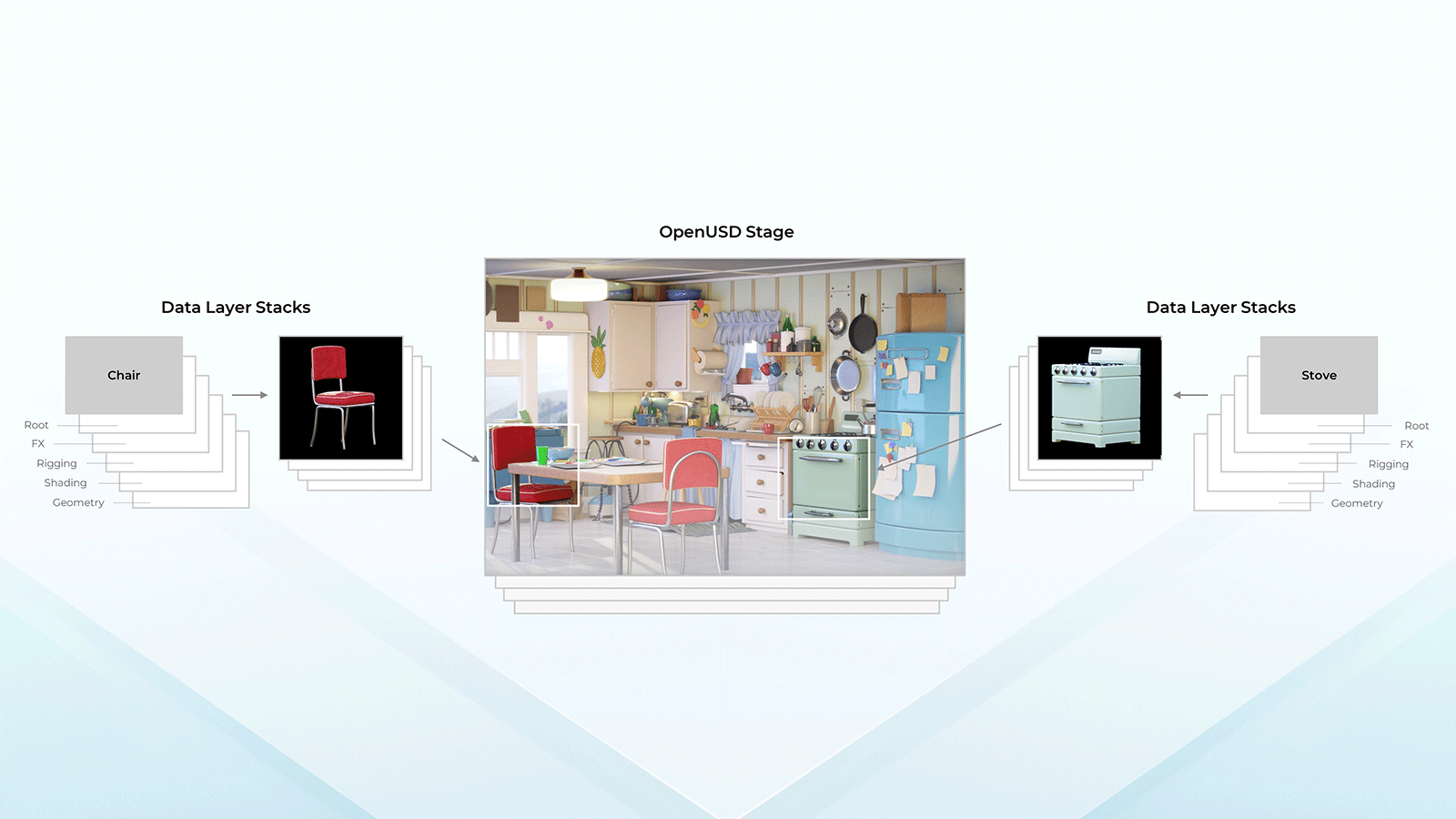
The Alliance for OpenUSD (AOUSD) unveiled its roadmap in a move to solidify its stance as the architect behind the OpenUSD (Universal Scene Description) standards for the future of 3D.
The goal is to make 3D objects, apps and games interoperable and to promote industry-wide collaboration.
OpenUSD, a 3D scene description technology originally created by Pixar, has catalyzed AOUSD’s mission to foster a standardized ecosystem, providing robust interoperability across varied tools, data, and workflows. With a strategic roadmap in place, AOUSD wants to spearhead an evolution that promises seamless integration and widespread adoption.
The two-year roadmap outlined by AOUSD charts the course to establish OpenUSD as an international, cross-industry standard for 3D scene and environment description. At the forefront of this trajectory is the Core Specification working group, tasked with laying the groundwork for OpenUSD. This foundation, meticulously designed to structure and interpret low-level data, guarantees unparalleled portability and interoperability across diverse software platforms and devices.
Steve May, CTO at Pixar and chairperson of AOUSD, said in a statement, “AOUSD’s mission is to empower developers and content creators to navigate large-scale 3D projects with ease. The roadmap unveiled today embodies our progress and paves the way for cohesive interoperability and collaboration.”
The alliance will continue refining the core specification’s groundwork, establishing guidelines for higher-level data types such as 3D meshes and materials. The goal is to secure final approval of the core specification by the end of 2025, ensuring a seamless 3D landscape.
In addition to the roadmap, AOUSD is bolstering its ranks with general members, including Cesium, Chaos, Epic Games, Foundry, Hexagon, IKEA, Lowe’s, Meta, OTOY, SideFX, Spatial, and Unity. This alliance expands AOUSD’s reach and expertise, fostering collaborations that fuel the evolution of 3D standards.
The alliance’s liaison relationship with the Khronos Group — another standards body dedicated to the metaverse — further cements AOUSD’s commitment to community support and idea exchange. Collaborative efforts between OpenUSD and Khronos’ glTF, an efficient 3D asset open standard, aim to maximize alignment and interoperability, offering a seamless transition between the technologies.
Key members expressed enthusiasm for the alliance’s mission, citing its potential to reshape industries:
Vladimir Koylazov, head of innovation at Chaos, said in a statement, “We’re eager to contribute our expertise to shape these standards, enabling broader applications across workflows.”
Mason Sheffield, senior director of creative technology at Lowe’s Innovation Labs, in a statement, “Interoperable standards can forge the open-source 3D web of the future.”
Amir Frenkel, vice president of XR tech at Meta, in a statement, “AOUSD drives the collaboration needed to shape a standardized metaverse, benefiting creators, developers, and companies.”
Jules Urbach, CEO of Otoy, said in a statement, “Open standards create a collaborative environment, and we’re keen on bolstering OpenUSD’s reach.”
Calin Pacurariu, CEO at Spatial, said in a statement, “Our OpenUSD native tools aim to accelerate the creative workflows of teams developing immersive experiences.”