
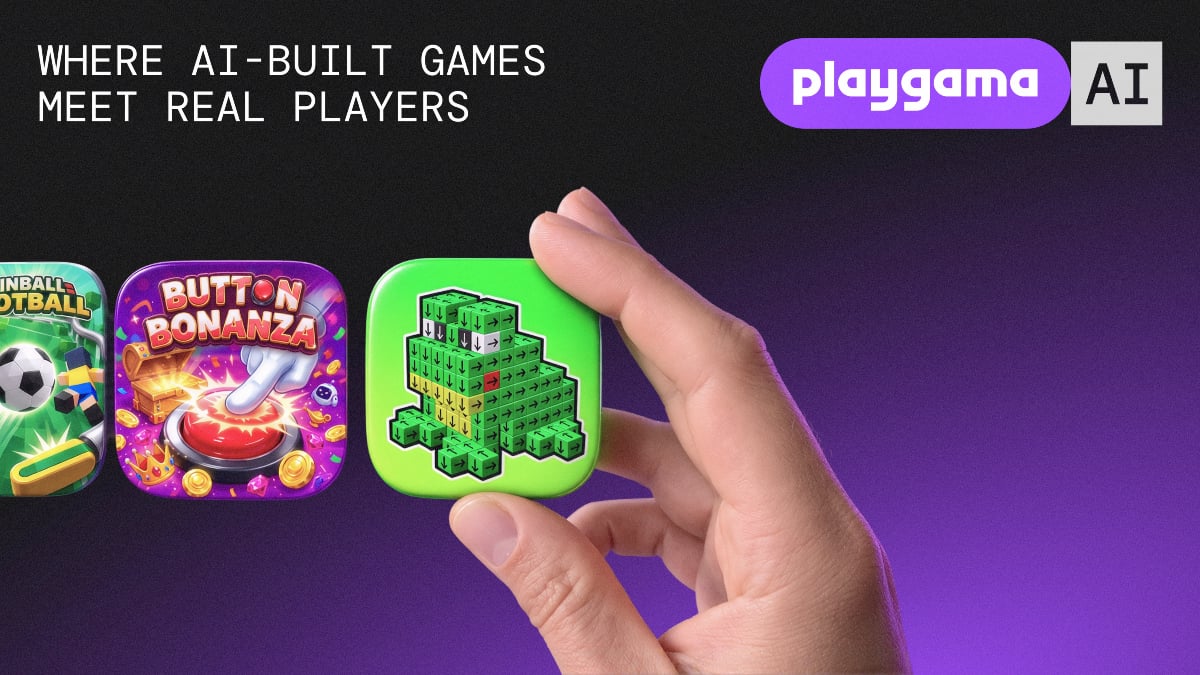
Playgama is launching a suite of tools that covers the full iteration cycle for games built with AI agents. The way it works is that a developer asks their agent to publish a game, and it goes straight to Playgama Sandbox, where people can start playing immediately. The game collects player data, the agent analyzes it and improves the game, then publishes an updated version. Players try the new build, more data comes in, and the cycle continues.
September has brought a run of frontier model releases, with OpenAI’s GPT-6 Astra and Anthropic’s Claude Opus 5.5. These releases have fueled a surge of AI-generated games, most of these demos, run in the browser. Web-based and HTML5 games have become the testing ground for agentic game development, since they’re lightweight, accessible, and built entirely from code, without the visual editors and binary formats that, for now, make major engines harder for AI agents to work with.
As AI models keep evolving, a growing number of enthusiasts are building games with their agents, and making full use of these technologies calls for a new ecosystem and new tooling. Playgama has built a set of tools to help this new generation of games grow.
According to a press release, the new ecosystem for AI-built games has three parts:
- Playgama MCP lets AI agents ship a game straight from Codex, Claude Code, or any other MCP-capable agent to Playgama Sandbox.
- Playgama Sandbox is a discovery channel for AI-built games that brings them organic audiences.
- Playgama Bridge SDK is a single integration for publishing HTML5 games across dozens of web gaming platforms. Its latest update adds event-level analytics, giving AI agents a clear view of how players interact with the game.
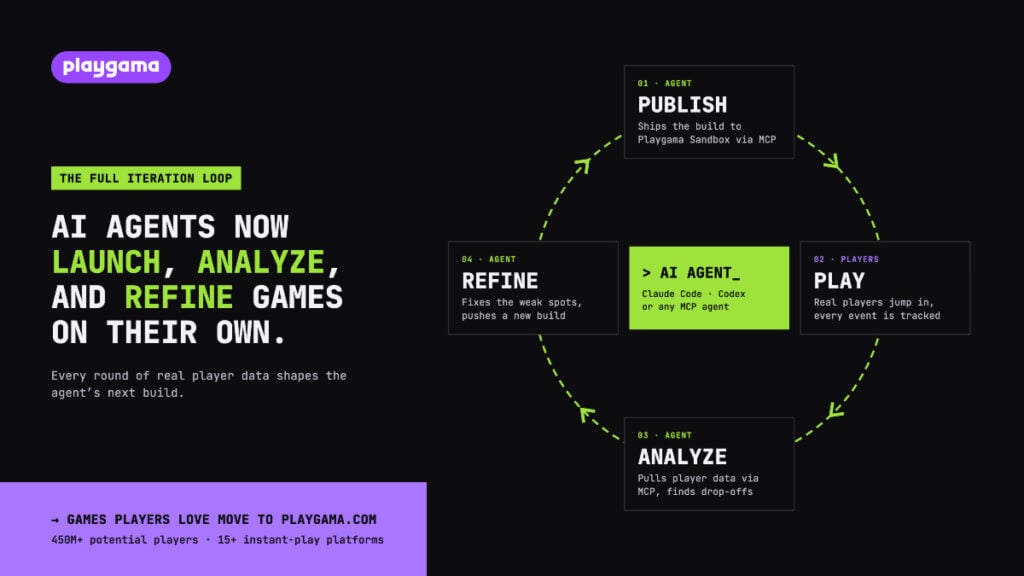
To publish a game, developers simply ask their AI agent, right inside Claude Code or Codex, to publish it on Playgama. The agent handles the upload in minutes and returns a live, shareable link, with no manual work required. From there, agents can also refine builds by pushing updates themselves. Learn more on the Playgama MCP page.
The game appears in the Sandbox and reaches its first players right away, as it’s surfaced to audiences across the Playgama network. Games that keep players engaged and coming back are recommended and highlighted to more people. On top of that, developers get built-in analytics, ad revenue from day one, and a path to paid growth through user acquisition.
As users play, the platform tracks playtime, performance, and retention. But developers can also add custom events to understand what happens at specific points in the game, such as when players start or finish a tutorial. At that point, the AI agent can pull those events through MCP, analyze them to identify where players drop off, make changes, and upload the new build. Data from the updated version then guides the next round of improvements.
Games that resonate with players on the Sandbox move to playgama.com (the main catalog) and gain access to its full external distribution network, with a potential audience of 450M+ players across 15+ instant-play platforms, including YouTube Playables.
“Building the first version of a game is becoming faster with every model release. The next opportunity is helping agents make better decisions about the second, third, and tenth versions. That requires real players and data about how they play. With Playgama, developers can give their agents that feedback and use it to keep improving the game after launch,” said Dmitry Kachmar, Founder of Playgama, in the press release.
The idea behind Playgama Sandbox and the new tooling for AI-built games is simple: to unlock the potential of agentic game development and help a new generation of games grow. At the same time, it is meant to surface the games players actually enjoy and open a path for them to millions of players.
HTML5 has become the frontier for games built by AI agents for many reasons, and one of the clearest signs is that the two leading AI labs point the same way. Ask GPT-6 Astra or Claude Opus 5.5 to build a game, and it will typically reach for a project that runs in the browser.
For now, OpenAI and Anthropic both treat the browser as the natural home for AI-built interactive creations. The fact that Cursor’s Vibe Jam, one of the largest game jams for AI-written games, requires every entry to run in the browser is more a consequence of this than a cause. And as each model release raises the bar, HTML5 is where AI-built games will first cross from experiments into real products.