
ARC Raiders is preparing to launch its biggest-ever update on October 8 with its Frozen Trail expansion, but it’s also trying to put a stop to cheating.
Cheating has been said to be a multi-billion-dollar industry, and it’s hard for game security experts across the entire industry and at much bigger companies to stay ahead of those dark forces, but doing nothing takes a toll on a user base and can deflate a game’s player base.
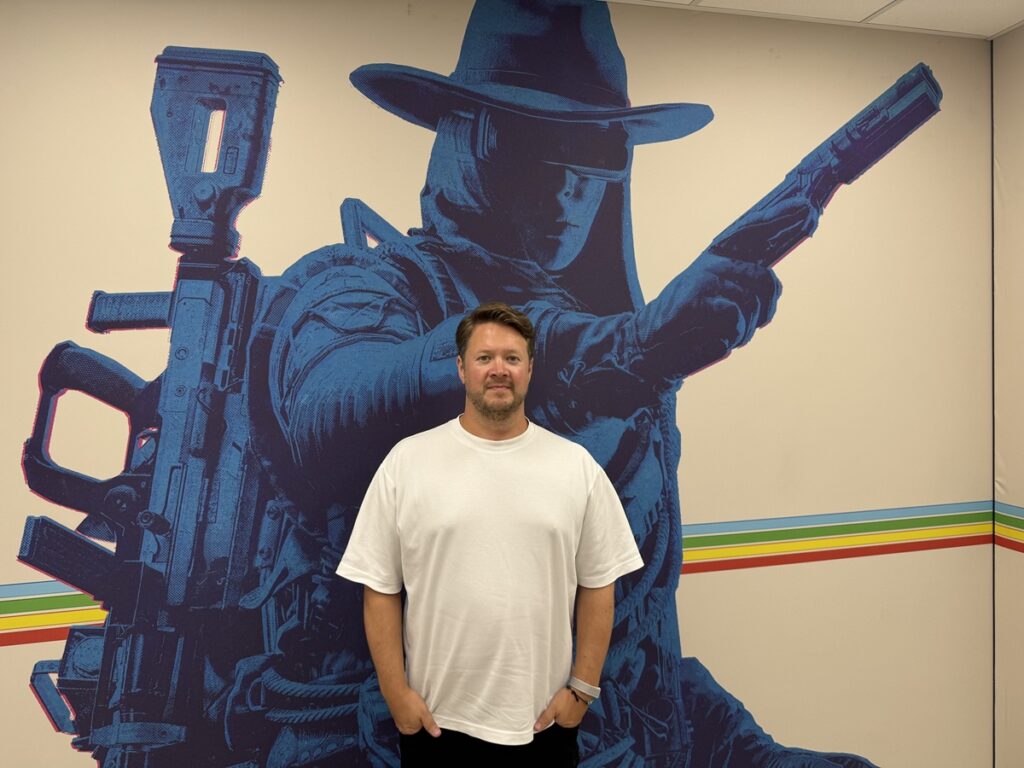
Aleksander Grøndal, executive producer of ARC Raiders at Embark Studios, said in a tweet today that he wanted to directly talk about the frustration in the community and the team around cheating.
“Cheating undermines what makes ARC Raiders challenging and fun, and disrupts the experience for everyone playing fairly. At Embark, we take it incredibly seriously, and spend a lot of time and money in the ongoing fight against unfair play,” Grøndal wrote.
He said the market for cheats is constantly evolving. Cheat makers profit from selling to players, often bundling malware with their software, and every time the team improve its defenses, they adapt and find new ways around them.
“We adapt too. Our growing anti-cheat team is continually working to detect and block new cheats, close the pathways they exploit, and add obstacles that make cheating harder and less worthwhile. It’s work we’re committed to for as long as our games are live,” Grøndal said.
Embark, which is a relatively small studio with perhaps 120 people working on ARC Raiders, has shared its efforts to stop cheating through occasional updates, but he said the team knows that simply saying it’s working on it isn’t enough.
“Some of this is intentional, as sharing too much about our anti-cheat systems can make it easier for cheaters to adapt. Other times we are working on things in the background and testing them before they get deployed,” he said. “Do know that our silence is not indifference to the issue. And today, we’re going to give you a better sense of where we’ve made progress and where we’re continuing to invest our efforts.”
Detection
He said the cheat detection systems are getting considerably stronger month by month. In addition to kernel-level protection from Denuvo and detections from Anybrain, Embark is using a growing set of in-house models built around machine-learning and other data.
“These systems work together to identify suspicious behavior and build confidence before action is taken,” he said. “While allowing us to continue improving detection as new cheats emerge. Anti-cheat systems don’t function completely autonomously, and there is always a human in the loop through the appeals process to ensure we are deploying sanctions fairly.”
Long-term, Embark looking to incorporate additional anti-cheat capabilities, including Elytra, which is currently being tested on a small scale in The Finals, Embark’s other online game. Early results indicate that this system has promise, and he said they are working toward a point where the team can test it in ARC Raiders as well.
Taking action
Grøndal said that when the team has enough evidence that a player is cheating, it takes action. In recent months, Embark has identified and sanctioned accounts using popular cheat software, as well as accounts involved in economy exploits.
“We’ve also continued working to make it harder for repeat offenders to simply create a new account and return to the game,” he said.
Early on, Embark was overly cautious about applying permanent bans to first-time cheaters.
“We’ve heard the frustration from the community, and we agree that we should have handled this differently,” he said. “Permanent bans are now standard for all known cheat programs and, as a matter of policy, any account caught using cheats is permanently banned. No warnings, no second chances.”
And Grøndal said Embark has also recently broadened our use of license restrictions. These prevent a specific copy of the game associated with a sanction from being used with another account.
“We’ve tightened our approach to linked accounts as well. If an account has ever been associated with a banned copy of the game, it will also receive a permanent ban,” Grøndal said.
Hardware bans
Hardware bans are another part of sanctions. When there is enough evidence that a single machine is being used for cheating, Embark can prevent the game from running on that system.
“We constantly harden our detection capabilities and we were recently able to lower the threshold at which these types of bans are applied,” Grøndal said. “We are also actively working on a solution to increase the number of systems that we can target with a hardware ban. This should reduce the number of repeat offenders returning on the same systems. We hope to implement this later in the year, and it should allow us to deploy sanctions to almost all systems caught running cheat software.”
It’s important to note that hardware bans are not a silver bullet, and cheat makers constantly find ways to circumvent our restrictions. The job, as always, is to deploy fixes as quickly as possible to ensure hardware bans are as reliable and effective as possible, he said.
Why some bans aren’t immediate
He also said they know it can be frustrating to watch hackers streaming or posting footage of themselves cheating without immediately being banned.
Anti-cheat systems can’t simply ban a player the moment something looks suspicious. Doing so would create the risk of incorrectly banning legitimate players. The system analyzes behavior over multiple instances to give Embark a high-degree of certainty that fair play is compromised. Once this is determined, a permanent ban is issued, he said.
“Our team also personally moderates videos and streams that clearly violate our policies,” Grøndal said. “We regularly review footage posted to YouTube and other platforms and take action when it provides clear evidence of cheating. So if you see a clip of someone cheating online, know that we may already be taking action behind the scenes.”
Tackling other forms of unfair play
Cheating isn’t the only way players can disrupt a fair raid.
Queue teaming, where players coordinate to land in the same solo lobby and attack Raiders who queued alone, has been another major frustration in the community. Grøndal said the team has spent months building detection capabilities to the point that it can reliably identify teaming groups.
A few days ago, Embark started keeping known teaming groups apart in matchmaking. Five days later, there were 85% fewer players engaging in this behavior. Spoiled raids dropped from around 1 in 50 to 1 in 300, with no meaningful impact to queue times, he said.
Teaming up with someone you meet during a raid through proximity chat is still fair game.
“What we’re targeting is coordinating with another player before the raid begins specifically to gain an unfair advantage in a solo lobby,” he said.
And Grøndal said, “We’re always investigating ways to reduce matchmaking abuse and use the information we gather to improve the experience for fair-playing Raiders. We’re making great progress with this so far and will fill you all in with further developments.”
An ongoing fight
Video game cheating is a multi-billion dollar industry, and it will never fully go away, he said.
“What we can do is make cheating as difficult, costly, and short-lived as possible,” Grøndal said.
He said the team built ARC Raiders with love and dedication to the craft, and seeing it exploited by cheaters makes them as angry as it makes you.
“We are making progress, and we’re continuing to work to identify cheating more effectively, act on it more quickly, make it harder for repeat offenders to return, and improve the experience for Raiders who are playing fairly,” he said. “The work continues, we’ve been seeing results, and we’ll keep you updated as we make further progress. Thanks for listening.”