
ARC Raiders has been a rare success in new gaming intellectual properties. Wedged in between the launches of Battlefield 6 last fall and Call of Duty: Black Ops 7, the game from Nexon’s Embark Studios launched on October 30, 2026, and it found its audience in joyful gamers like The Burnt Peanut, a creator with millions of followers.
[9/5/26: Updated with comment on cheating]
It offered unique extraction gameplay, where players in a post-apocalyptic world lived underground, hiding from killer AI-based robots (ARCs) who had nearly wiped out humankind. Scavengers known as raiders went to the surface to retrieve scrap. They found goods, killed some ARCs, and extracted back underground. Within a short few months, there were millions of players.
But ARC Raiders was made over six years with a small core team of 60 people, said Aleksander Grøndal, executive producer of ARC Raiders at Embark, in an interview with GamesBeat. When the game took off, players wanted more features and the team tried to provide them in the form of live services. But it was hard to keep up, as players had voracious appetites and progressed quickly in co-op play.
So Embark Studios, a division of gaming giant Nexon, bulked up to more than 120 people, but it also decided to slow down the live updates and work on a major installment instead. I was among the players who hit the level 75 cap, putting in nearly 200 hours into the game, which I’ve stopped playing multiple times an then returned to as an old favorite. I even played a couple of hours with Embark CEO Patrick Soderlund and former Nexon CEO Owen Mahoney, interviewing them inside the game while others tried to kill us.
While I stuck with it, many players who hit the level cap of 75 dropped out of the game because they ran out of things to do. Players like The Burnt Peanut moved on to other games (like Marathon, briefly). Other players lost patience with the matchmaking experimentation, which led to more player dropouts. While still small, the leaders want to keep operating with a small group. It’s enough for Embark to work on something new and to tackle bigger live services projects like Frozen Trail, which comes out on October 8 with a new icy map.
The Frozen Trail update is the company’s attempt to lure back lapsed players. In its earnings report, Nexon said that in the June quarter the company gained two million more players, bringing the total number sold at around $40 a copy to 16 million.
Grøndal and I talked about ARC Raiders’ meteoric rise, its slowdown, and its attempt at recovery. It was an enlightening chat about the choices that game developers face in making games in an affordable way while trying to please gamers.
Here’s an edited transcript of our interview.
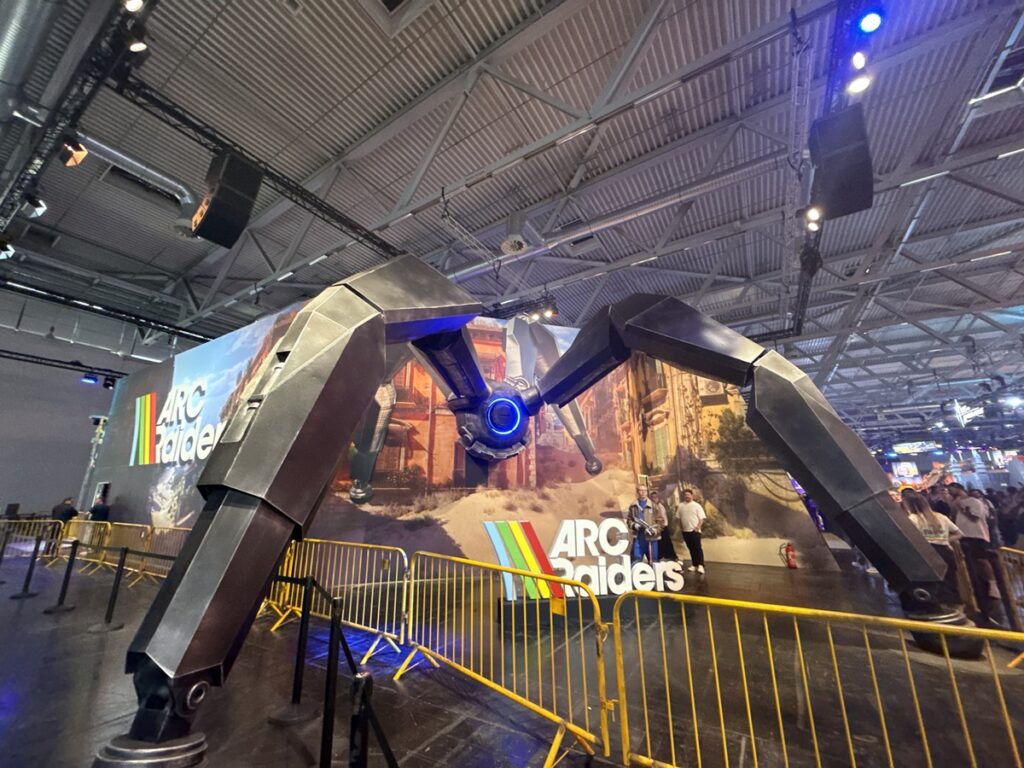
GamesBeat: You guys have a big booth. Did you come here with a purpose in mind?
Aleksander Grøndal: We’ve been planning this for a long time. We felt–this is the first time ARC Raiders has a physical presence. We were at Gamescom two years ago, but we just had a little meeting room. We tried to book meetings with people. We had some gameplay footage. We met in hotel lobbies to show the game to creators. “ARC Raiders is coming!” Going from what felt like a very small room with a laptop–this is a pretty big difference for us. But we felt like we wanted to do something to celebrate the community. Gamescom is such a good place for that.
We have a pretty cool experience where you can go in and loot some stuff. You can create some things and bring them back home if you want. Just fun things for the players.
GamesBeat: I passed 192 hours in the game. Played a lot from day one onward. I had a gameplay interview with Patrick Soderlund and Owen Mahoney. It was fun to learn things from Patrick. “This is where you go to get lemons.”
Grøndal: I’ve played quite a lot with Patrick as well. He’s a lot of fun.
GamesBeat: How do you look back on what the game has been able to do now?
Grøndal: It’s been a year. Thinking about it from my perspective and the team’s perspective, we didn’t really know–the plan was that we were going to test the game, and when it was ready, we would start thinking about when to launch. We had these tests we kept running. It got better and better. Eventually we had this open test. We started to see it. “Okay, people are really picking up on this.” That felt great.
GamesBeat: The Server Slam.
Grøndal: The launch was fantastic. It was a busy window. It was between two big games shipping. Battlefield 6, a great game, and then Call of Duty. But what I appreciate so much now, looking back at it, is the way the game exploded. It got into social media. A game that, from the beginning, I don’t think people really understood. I don’t think they understood what we were building when we changed it to an extraction game. People said, “Oh, you’re just chasing a trend.” Seeing that players really picked it up, the volume of players, was fantastic. Over Christmas, people looking at it and being so happy, that was great.
We didn’t really expect that amount of players to show up and play ARC Raiders. That surprised us. We were a bit unprepared. That’s one of the hard lessons we had to learn. When January came and some of the problems started with the game–
GamesBeat: In those early weeks, people came for the unique gameplay, these emergent elements. Players would challenge each other, “Friendly?”. Those moments in the game were so tense every time.
Grøndal: Exactly. That was the intention all along. We wanted the game to be social. We wanted there to be a question mark every time you found another player. Is that someone who can help me, or is that a danger? That tension was the underpinning of it all. That’s what we wanted to do. But what caught me by surprise is that people had these cool social moments. They’d set up shops. They’d have conversations with total strangers. “Hey, are you looking for something?” People would trade with each other. I felt like it struck a nerve. People were engaging with the game in ways we hadn’t foreseen. We wanted that, but it’s hard to create.
All of those moments felt really powerful for us as creators. That’s the dream, when players take your game to heart in that way.
GamesBeat: I had a rude awakening when my party of two teamed up with another party of two. We went and shot a bunch of ARCs together, and then they killed us when we were extracting. My friend said to them, “You guys are horrible human beings.”
Grøndal: That’s the thing you fear the most. There are lots of player stories. It can be funny in hindsight, but it’s frustrating in the moment. I feel like that tells a story about human nature, when you’re allowed to do these things. Now you remember that moment, perhaps with some anger, but still, it’s a player story. The fact that the game can be a story generator in that way, I really appreciate that part of it, that creative outcome.
GamesBeat: All those extremes made it so interesting. Especially in the early weeks when the game was blowing up.
Grøndal: We still see that today. We still have players coming in who haven’t played before. They get to experience it for the first time.
GamesBeat: What were the challenges that came from that rapid growth? I could see from the outside that players were hitting the level cap of 75 pretty early.
Grøndal: We have very dedicated people playing the game. We had some challenges around how much content there is in the game, how much progression there is in the game. We had some, but the players wanted more. We bet on trying to update it fast and giving players more things to do over time. That was our strategy, to try to meet those demands from players. The issue with that was the team just couldn’t keep pace with the players. The players grew frustrated, because some of the things we shipped were perhaps not as good or as meaningful as they were hoping. That was another awakening for us.
GamesBeat: Limitations like your stash of 200 objects, were there reasons you couldn’t expand that, or was it more that you didn’t want to?
Grøndal: There are some restrictions. That’s an ongoing thing. With inventory space, that’s going to become bigger in October.
GamesBeat: I could see you might want to constrain people in that way so they have to make tougher choices.
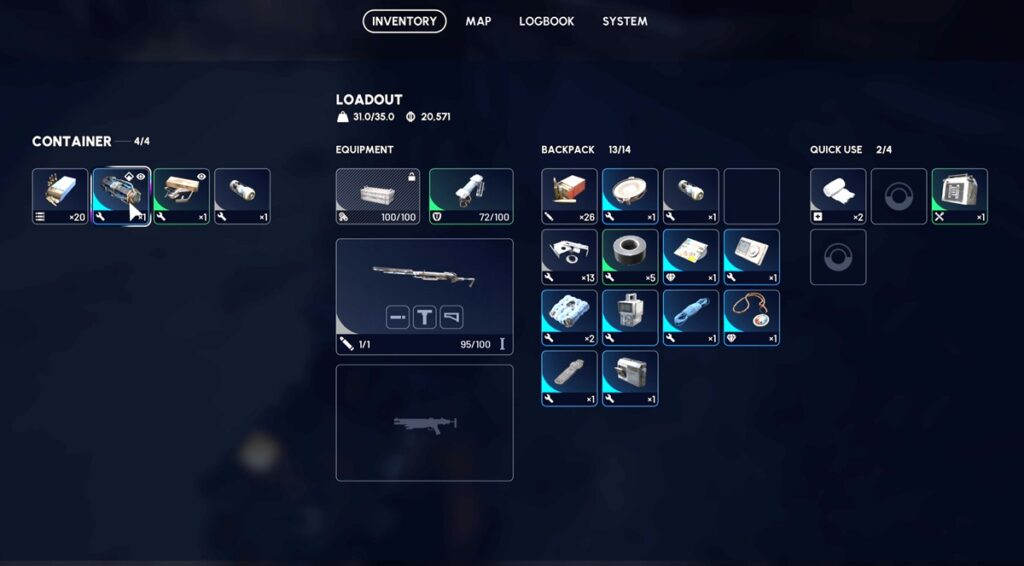
Grøndal: In the design of the game, you need to manage your economy to some degree. For some players, they can acquire a lot of resources. The thinking was, let’s make them put those resources to use and create new things. If there is no restriction, or if the restrictions are too loose, we were afraid players would just hoard and never actually craft anything, never meaningfully use them. For us it was important that every item has a purpose. We wanted players to have that flexibility to put that purpose to use through crafting or upgrading and things like that. That’s where we started. Of course there are ways to improve that.
Limitations like rank 75, that was more a limitation on the amount of skill points we wanted to give out to players. Of course we could increase the rank, but we can’t increase the amount of points that players can use to acquire their talents. We’re going to redesign that a bit. That’s something we’re working on for the Frozen Trail update, which is coming in October.
GamesBeat: Do you think of that as one of your first big opportunities to address whatever challenges people have pointed out?
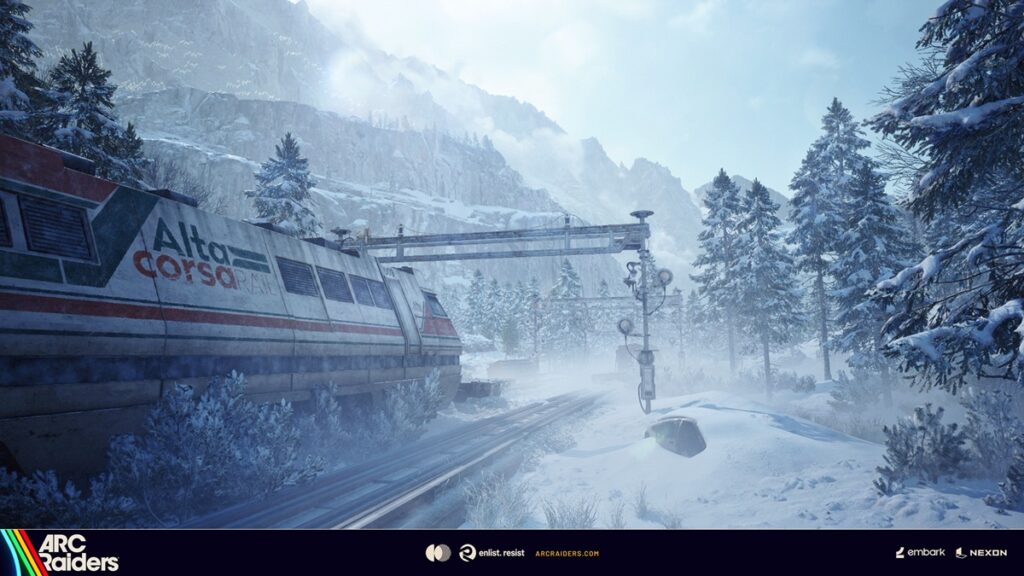
Grøndal: Frozen Trail is trying to answer a lot of those questions that have been posed to us from a mechanical and content perspective. We’ll bring in more ARCs, exciting ARCs, new weapons and gadgets and ways to move. It’s our largest update.
GamesBeat: There was always a plan to do post-launch content, I’m sure, but was your initial plan not enough for players?
Grøndal: This is the challenge with running a live service. We’re a small team. We’re about 120 people. We were down to as few as 24 people at the beginning, and 60 on average during the making of the game. We’re about 120 now, and we’ll grow a bit further. But the challenge–I don’t think we can beat anyone on quantity. That’s going to be very hard for Embark to do. We’re very fast. But what we want to do is spend more time building quality stuff. Stuff that has the Embark finesse to it.
That’s one reason why we changed the update cadence to make larger updates, rather than smaller, piecemeal updates. I believe that will yield higher quality. The world of ARC Raiders is this beautifully crafted world. We want to maintain that while giving you new places to explore and new things to find. Crafting a world like that takes a lot of iteration time, a lot of polish. We have to think about things. If we just mechanically produce something–speaking from experience, if you just say, “We’re going to do X in Y amount of time,” most of the time the quality isn’t there.
The reason why ARC Raiders exists in the first place is patience. We had a tremendous amount of patience from Nexon in terms of–we had this original concept that didn’t work. We reset it. We created this extraction game. Then we ran these tests. We needed to evaluate based on every test. We needed another six months, and another six months, and another six months. That patience is what yielded ARC Raiders. The reason why it exploded was because of some of the qualities that we could refine.
GamesBeat: The things that are good about it–it’s this set of connected systems that are so interesting. Things like the 3D sound that tells you which way an ARC is coming from. Even the sound of the birds, when that scares you a little and then it turns out to be just birds. All kinds of related things.
Grøndal: We want our games to be as immersive as we can. We would like to remove as many held objects as possible and let the world explain itself as much as possible. That’s our ambition. That sometimes requires things like removing hit indicators. We had those in the beginning. “You did 15 damage.” Eventually we said, “This feels like I’m playing Hunt now.” Stefan, our creative director, said, “We need to not do this. We need to remove all those things and try to make the game explain.” If a bullet hits here, we have an effect. It’s beautiful. We have beautiful audio. Why not let those things speak?
We try to do that as much as we can. That draws the player in, rather than having an overlay on top of the game. This immersion was important for us. We wanted to see how far we could take that.
GamesBeat: In something like Call of Duty, the single-player game is very focused. It shows me how to do everything that I’ll eventually need to know in multiplayer. Then, when I play multiplayer, I think back to the single-player game for inspiration to stay in the game world. The single-player side provides enough motivation to believe in the world. Your game goes straight into multiplayer, and you’re also not telling me right off about things like, “This is what happened to the world.” I guess the question I have about narrative design is, do you intend to answer anything? Or do you think this state of affairs is actually maybe the end state?
Grøndal: When we built ARC Raiders, we knew that we wanted narrative and world-building. You need to set the players in place, which is why we built–”Hey, you’re this raider coming into Speranza and trying to find your own place.” What are these ARCs about? Why are they there? We’re not saying what the bigger picture is, but the idea is to continue to evolve the narrative over time. With each major beat, something happens to the world that progresses the overall story about how these raiders in Speranza are living mostly underground, being suppressed by the surface. There’s a desire in humans to reclaim the surface to some degree. The raiders start exploring more, and we’ll reveal more about the origins of ARC and why they’re there and what they’re doing.
There is a plan for how this is supposed to evolve over time. We see ARC Raiders as a long journey. We said it before. We want ARC Raiders to become a 10-year journey. That means things need to happen in the game, much like what Destiny did really well with how their narrative progressed over time. We want to do that as well, but in a way that works for ARC Raiders of course.
When you have a game that’s so–it feels like it has a story to tell. We need to tell the story of what happened here and what’s going on and where it’s going. All these questions are in the players’ minds, and we owe them answers over time. So yes, that’s very much part of our overall long-term goals for the game.
GamesBeat: Are there particular things about Frozen Trail that you think players are going to like?
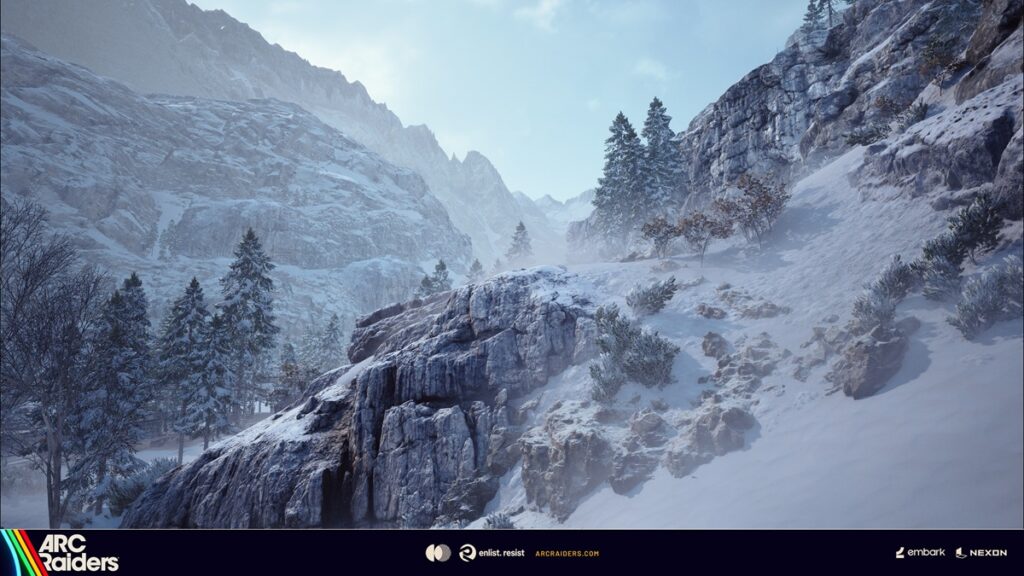
Grøndal: Frozen Trail is the largest update we’re producing, which I think will be great, because players want that. They want a lot of new things. It’s a big new map. There’s a new outpost system, which is where the raiders take over parts of the surface and establish some kind of semi-permanent residence. It allows players to customize and furnish and set up their crafting stations and really build things of their own. We want that player expression there.
We’re also reworking some things that players have been asking for, like the skill tree. We’re doing a rework of that. We’re of course adding new ARCs. Some of them are really exciting. Some of them are more terrifying than ever. We have a few surprises there that I’m looking forward to seeing. It’s pretty wild. It has a bit for everyone, I think.
We’re fully working on that right now. That’s our main focus. The team is back home hammering at it. It’s looking really promising. I think the players will like it. It refreshes the whole game, almost. It’s a fresh coat of paint, and it adds some things that are highly requested. It sets up the story for what’s going to happen next in a really cool way.
GamesBeat: I had two things I wanted to check. I think the Wolfpack (a powerful cluster grenade that seeks its target)–the ability to get Wolfpacks seemed to change over time.
Grøndal: Yep.
GamesBeat: I remember there was a point where I had something like five Wolfpacks. It felt like I was never going to run out. But then sometimes to get the Wolfpacks you need to use them. [It’s not easy to find] other good ways to take down a Rocketeer (the source of the Wolfpacks). Is it supposed to be this hard to replenish that particular item?
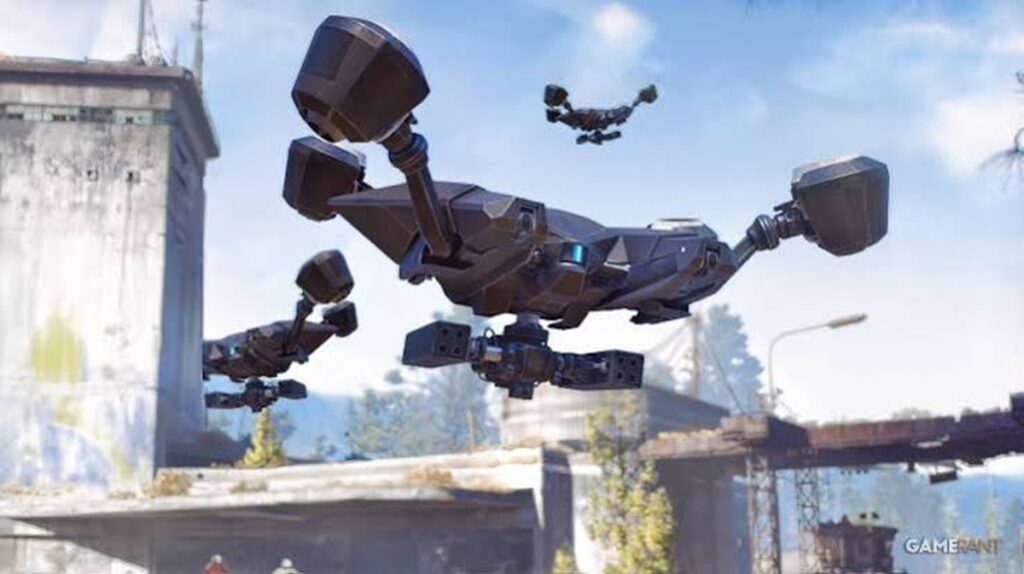
Grøndal: We saw that players with Wolfpacks specifically–they were a little bit too easy to acquire. It’s very powerful. It’s intended to be powerful, but in order for it to be powerful–we felt like it was a bit too easy to consistently acquire and use Wolfpacks. Wolfpacks weren’t supposed to be a consistent tool. It was a tool that you’d choose to use in specific situations to take down a Rocketeer or get out of trouble or something like that. We changed the cost for that and we changed how they dropped a bit. But that was purely intentional.
We don’t necessarily want you to just use one tool all the time. It’s in our interest for you to use other grenades and things like that. So that was the intent. I think they’re in a pretty good place now. They were a little bit too easy to use in the beginning.
GamesBeat: There was an interesting period of time where–in that interview I did with Patrick and Owen, Patrick talked about the aggression-based matchmaking. I went a long time without dying because I behaved well. I didn’t go and take down other people. But as the population in the game dropped, I don’t know if it became more difficult to keep players separated. There was a period of time where I got killed a lot by other players. Was it just too hard to maintain those separated worlds at some point? It felt like it recovered. Whatever happened stabilized and I stopped getting killed again.
Grøndal: With that system, which is a completely new way of thinking about matchmaking–I don’t know if any game has done it exactly like that. It came in quite late. We actually didn’t have that system in the last test. We finished it and then we said, “Let’s just ship with it and see what it does.”
The good news about matchmaking is it’s fairly easy to change and modify. During the last 12 months, the team has been experimenting a bit with it. We’ve done some changes around how to weigh different factors and what counts in the system. That’s changed quite a lot as we’ve iterated. Right now the separation is good. We can see that it’s healthy. We have a stable, social, low-PvP userbase on one side, and we have some high-PvP players on the other side. There’s some mixing in between. We’ve separated the ratings based on whether you’re solo or a squad. We’ve done quite a lot of experiments.
I think we’re not done yet. It’s an ongoing process. If it was purely skill-based matchmaking, we could look at other games, but since we’re kind of in uncharted territory here, we have to try and fail our way along.
GamesBeat: If it tilts one way all of a sudden as players cycle through the game, you might lose more of the peaceful players. If there’s nothing but aggressive players, you’re forced to mix them.
Grøndal: You know what’s interesting? When we ask people about how they prefer to play, even PvP players say that there’s a bit too much PvP sometimes. I think there’s an appetite to be able to do both. Some players might want to go out and do some PvP with their friends, and then they’ll go back to grind some missions and quests. There’s a world where both can coexist.
GamesBeat: There’s a subtle thing where even if you’re the one who shoots second, if you take out the other guy, you might still be considered an aggressive player.
Grøndal: That’s in the system now. If you’re defending yourself, it doesn’t count as much as if you were the one that initiated the combat.
GamesBeat: If you counterattack and kill the other person, you might think of that as overkill. You don’t have to kill someone who attacks you. You could just take them down and leave them crawling away.
Grøndal: Right, you don’t have to. Knocking out, I don’t think that counts anymore either. It doesn’t change anything. It’s such an interesting thing where we do these small tweaks and then look at the data. We can say, “Okay, this looks good. This looks wrong. We have some things to do here.” I believe it’s something that we’ll continue to develop for a long time as we figure out what to do.
GamesBeat: If I always know that I’m going to be in a peaceful world, it’s a little too easy. Too comfortable. You should be on edge in some ways. There’s a chance, even if it’s a low chance, that someone might want to take me out. I have to think about going in with the right gear to survive that.
Grøndal: It’s interesting. There are so many people asking for a PvE mode. So many people asking for it. I think you’re right. Some people like that there can be tension. But some people just don’t want to be bothered, and they’d still like to play ARC Raiders. That’s an interesting challenge that we have as we try to keep growing and keep people interested. There could be a world where some people are mostly interested in the PvE.
GamesBeat: Regarding cheating. said in a follow-up answer:
Grøndal: Keeping ARC Raiders fair for our community is really important to us. Anti-cheat is something we’re continuing to work on, adapting our approach as cheating and exploits evolve. We’ve built out our anti-cheat efforts with a combination of third-party solutions and our own detection capabilities, and we’re working with partners including Denuvo and Anybrain to strengthen those efforts. It’s an ongoing effort, and there’s no single solution to cheating, so we’re constantly looking at where we can improve and respond to what we’re seeing in the game.
For additional context on the team’s ongoing work, here are a few recent posts for you to reference:
Disclosure: Gamescom paid my way to Germany for the event. The content of this story is solely the responsibility of GamesBeat.