
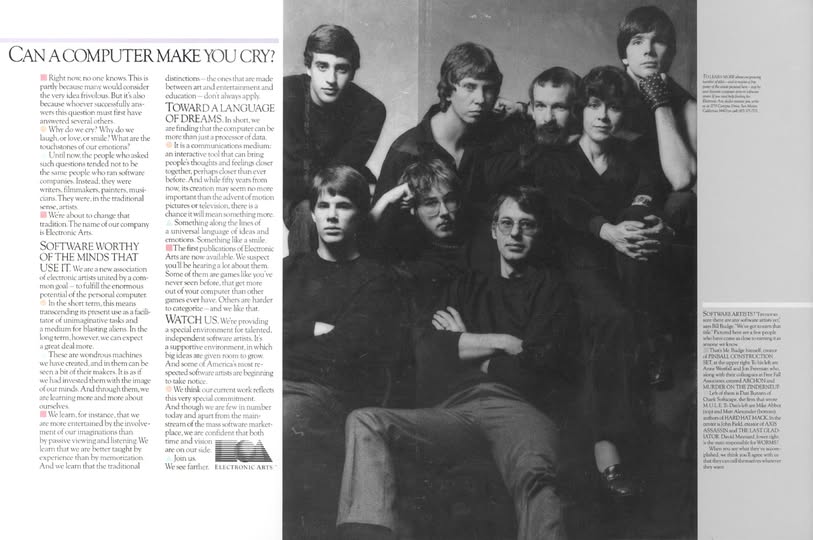
Bing Gordon has been in gaming for more than 40 years, starting in 1982 with the dawn of Electronic Arts.
He has been the designated consigliere for industry leaders from Jeff Bezos while he was running Amazon (where Gordon was a board member) to Mark Pincus, CEO of Zynga, ahead of when the company went public. Gordon invested in many game and tech companies while a partner at the Kleiner Perkins venture capital firm.
While he’s a numbers guy who loves quantified results and analytics, he’s also had a big creative hand in making some of the world’s most popular games. For instance, as the marketing guy at EA, he advised the Need for Speed time to double down on police chases, leading to titles like Hot Pursuit.
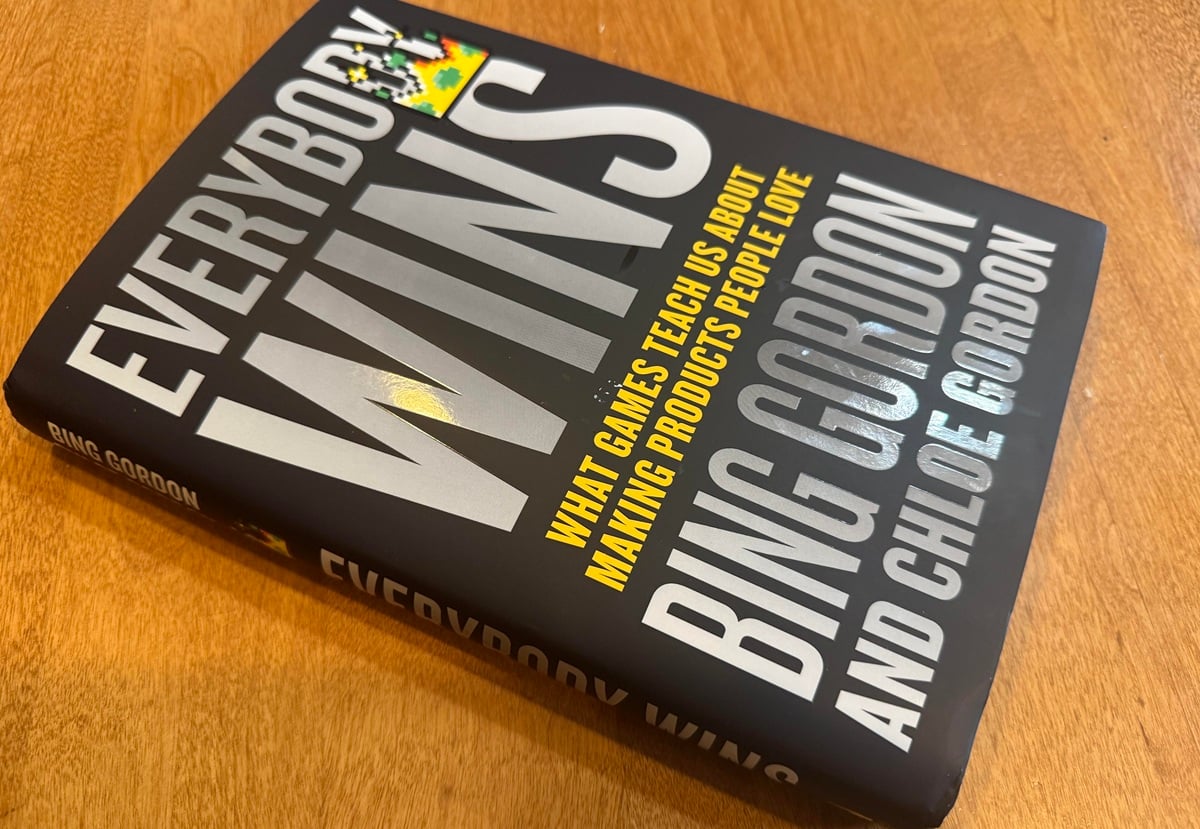
Across is career, Gordon has used his experience in games to expand to other product areas where a consumers desires and motivations are taken into account. Dubbed gamification, this led to ideas like Amazon’s rewards for frequent shoppers. Now he and his daughter, Chloe Gordon, have captured Gordon’s lessons and occasional memoirs in a new book, Everybody Wins, which Portfolio is publishing on October 27.

Chloe Gordon — a writer, social media manager, and creative strategist and producer — brought the discipline and writer’s sensibility to pull the stories out of Gordon and get them down on paper. They are co-authors of Everybody Wins.
The heart of the story comes from video games, which have become the biggest entertainment industry in the world for a reason. Games tap into human psychology and drives like nothing else. So how can we recreate the satisfaction we feel playing games in day-to-day life? How
can we harness that feeling to grow better businesses?
These are the questions Gordon has been trying to answer over his 40-year career. Known
as the man behind the scenes in the video game world, his influence and canonized “Gamification Checklist” have shaped the games and companies we engage with every day. This is about building lasting engagement, not manipulation, and turning customers into fans.
They include: EA Sports, Farmville, The Sims, Amazon Prime, Zynga, Spotify, Audible, Twitch, Duolingo, and Cameo, to name a few. The title starts out with Wow Moments, where, like in Need for Speed, a game should lead with unforgettable moments of exaltation.
- Other lessons:
- Everybody Wins: Engineer wins to be frequent, evident, and earned
- Invest and Express: Create opportunities for self-expression and recognition
- Session Economics: Make every session feel worth the time it took
- Social Integration: Prioritize integrating social connection, always
- Forever franchises: Building games that last forever
- Game Loops: Design satisfying repetition
- Quantify Everything: Measure achievements at the micro-level
I’ve encountered Gordon many times over the years, but it was interesting to see the dynamic between Bing and Chloe. Here’s an edited transcript of our interview.

GamesBeat: Let’s start with Chloe.
Bing Gordon: She was secretly, and proudly, not only a motivator to my belief in The Sims, but also then as a punishment I made her go to work with me one day. She proceeded to recommend about 10 Sims expansion packs, back when we didn’t really have themes to the expansion packs. She provided themes. We ended up doing them all, except she wanted to do The Sims: Survivor, where the Sims could get voted off the island. It’s still a good idea, but the team was afraid of IP issues.
Chloe Gordon: We did Hot Date. We did Pets. We did all those expansion packs. My dad had a terrible sense of discipline when I was a kid. He thought the best way to teach me what’s up was to make me go to work with him and sit in the office all day and do nothing but watch him work. But of course EA Kids was such a big thing, and then The Sims. I basically got to skip school to play video games. Which was not as punishing as I think my dad imagined it would be.
GamesBeat: There’s worse workplaces to go visit, I would say, than EA. One question to start, how did this book come together? How did you agree to do this collaboration and then decide to make it happen?
Bing Gordon: I’ll start with me. It’s a two-person answer. As an English major in college, my bucket list always included writing a book. Every time I started, I stopped, because it was so painful. I did a family-only book full of poetry. But doing long-form writing–I’d get into it and I’d have tens of pages of biography, because I have so much experience. People would ask me about my path, how I got here.
Finally I decided to take it seriously and got Chloe on board. We met Myrsini Stephanides. We went in and she said, “This is great. It’s so nice to meet you. What a cool father-daughter thing. But Bing, you’re not famous enough. A biography won’t sell. Why don’t you do a book about everything you’ve learned instead?” That’s the journey of the book. How we got started, we started on a documentary of the beginning of the video game business. Chloe has a bunch of unique artifacts. We worked on that for a while.
Chloe Gordon: That started during the pandemic, around 2020. I like to tell people that I think Bing is one of the only people that’s been at the forefront of gaming from 1982 to 2026. He has so much–understanding the way that Bing’s brain works helps illuminate, for me, how games work. He has so many people who he coaches one on one and teaches them. If the superpower of video games is that they’re really motivating and they really make you want to self-improve and get better, how do you export that into other walks of life? He’s so good at that, so good at articulating that. We were trying to think about how to scale 45 years of Bing wisdom. Wouldn’t a book be great?
The problem is that my dad is so wired in gaming that he can’t really think linearly. He’s too much of a circular, non-linear thinker to have the discipline to write a book. That’s where I came in. We took a lot of ideas that he and I have been talking about for six or seven years now. A lot of his old–he has a deck that he’s been using forever that had what he called his gamification checklist. It’s all of his personal toolkit when he’s working with a game, to go through and say, “I wonder if this particular item would help this game? Or this one?” He has this list. We went through and tried to build out an entire book based on this checklist that he’s been using himself for a lot of years.
It was a pretty fun process. The actual day-to-day of it was just Bing talking at me for hours at a time, and then us trying to figure out how to turn that into something that someone else could understand.
GamesBeat: I’ll bet you could put that deck out. There’s probably some group of people out there who would embrace something like a deck as much as they would a book.
Chloe Gordon: Absolutely. Dad, what was that deck even used for? Was it something specific?

Bing Gordon: I do have a talk about how things happen in games. It’s there. As Chloe says, the meta of–it’s a checklist. Let’s try this. Let’s try that. Let’s try this. Back in the early 2010s, when I would meet with Kleiner’s companies, I’d say, “What’s your problem? Is it conversion? Here’s a checklist of things to try. Is it retention? Here’s another checklist of things to try.” Then go one by one through it. My experience is, after a couple, humans would say, “Okay, don’t give me the whole list. Let’s just start doing some of them.” They’d want me to say, “Let’s try this first, and this, not that.” Working with Mark Pincus, for example, he would just say, “Let’s test 100 things this week.” Some of it is figuring out what to test.
Chloe Gordon: Then, because Bing has so much insider knowledge and industry gossip, we also tried to format the book by talking about where he originated all of these different ideas on the checklist. What specific game? What was the first place he saw it? How did that evolve over time? How he uses those ideas in other products, other companies, other walks of life. Applying things from video games into his own marriage and chore-doing and exercise regimes. Lots of broad applications from the stuff he was picking up in 1988 Madden on Apple II or the original Sims or any of the EA Sports stuff in the ‘90s. Figuring out how to apply it elsewhere.
Bing Gordon: I don’t know if you and I have ever talked about this, but I’ve been a fan of the education process for a long time. Partly because I wasn’t a particularly good student. I wasn’t a disciplined student, for sure. As a manager at EA, I realized that I wanted to be a manager more like a teacher and less like a boss. I started doing things like internal internship programs and internal creative leaders programs. I started my journey of figuring out how to teach, and ultimately I held the first ever endowed chair in game design. That was at the USC film school in the early 2000s. Danny Bilson now holds it.
I learned along the way that my strategy for teaching was to give people templates and benchmarks – solve a problem in this way – and to wrap up teaching in stories. Stories and templates, stories and templates. Then we found, with Chloe, that when she thinks of a story, she thinks of a movie script and whole scenes, while I think of a bullet point. I start with a bullet point and I embroider it a little bit. She, with the brain of a screenwriter, would hammer me to unpack, unpack, unpack. Basically rephrase a story, unpack it from a bullet point into a movie scene, and then make it readable.
I could tell it was frustrating for her. I could tell she wanted to lay out the cinematography, lay out the characters in the room, lay out the visuals, lay out the dialogue. I’d think, “I remember the bullet point.” That was a funny experience. I came to really appreciate how a screenwriter thinks about seeing the world, as opposed to how gamers think about seeing the world.
GamesBeat: I was just talking with my kids last night. They’re all adults now. We talked about how their memory works and how my memory works. Sometimes when I’m doing things on a daily basis, I feel like there’s some self-doubting Dean on my right shoulder and a confident Dean on my left shoulder. Writing at night, the doubting one goes to sleep for some reason. I always write better at night. But it’s interesting to see how some people think in a way where there is no internal virtual world inside their brain. Others, like artists, do think in terms of that world they’re in, that memory palace or whatever. They want to get that out into the world so that other people can experience what they feel like they’re experiencing in their head. Is that perhaps what you’re talking about? Something related to how you think about things.

Bing Gordon: I love the concept of the memory palace. I tend to think–I kind of work backwards from where I’m trying to get to. In the history of games, and even now in other apps, it’s to make it work, to make it engaging. In games it’s to make it high-quality. In mobile games it’s to get them to come back tomorrow. The gamification checklist, if you will, is kind of a series of things to try to accomplish a goal. I usually start with a goal. Even I, in the games business forever, or you now with GamesBeat, you’re trying to make it work. “I want to do a conference. Who can I learn from?” You try stuff.
Most of my process has been trying to get to success, to find what success would be like and try stuff. Even in the early days of EA, working backwards from what success would look like. We discovered that in other media businesses, in music and movies and TV, the dominant players all had a 7% market share. Below that they couldn’t afford a global sales force. Above that they had scale. Based on that, EA decided we had to get to 7% market share. When EA got to 7% market share in computer games, we realized, “Crap. The console game business is way bigger than this. How do we get to 7% there?” My thinking is, start with a benchmark and then solve for it.
The same thing with doing games. We had The Bard’s Tale. We wanted it to be as big as Wizardry. We worked backwards. What did we have to do? The same thing at Amazon. We had customers who shopped more often at Kroger than they did at Amazon. That’s a problem. Work backwards. I tend to think in terms of checklists and numbers, and I think in terms of people. Chloe thinks–I’ve seen her. When she was working on Saturday Night Live, I’d see her thinking about, “Will that make good TV?” In her mind’s eye she’d think about what it looked like on the small screen, what it looked like on stage. How could SNL promote a new artist? She lives in a world of storytelling, because so many of her friends are writers.
Chloe Gordon: I feel like I could explain this. My dad and I are both very–one thing we have in common is we’re very missionary about the social good and positive outcomes of gaming, how amazing it is that you can construct virtual worlds. Worlds where on average everybody is a winner, where the most important aspect of retention and good business in games is pure social connections. You can align all of these things that we want as humans really well.
My dad likes to say that all of the failures of the first half of his career came from not knowing what made good games and how to align these human values and intrinsic motivations with game mechanics. Then all of the failures of the second half of his career were being unable to convince people that all of these things were true. In the moments that he failed in the second half of his career, it was when he couldn’t convince people that cooperation is more important than competition in games. That on average you want to create virtual worlds where people are experiencing the emotion of winning way more than they experience the emotion of losing. You want to create worlds where people are bonding and creating true social capital and relationships instead of just bragging about their achievements.

Then it’s a question of how you go about communicating these big core ideas that my dad has had and experienced and seen other game designers develop successfully, that he’s seen work in other worlds. How do you communicate that not just to other games people and business people, but totally uninitiated parents who are trying to understand their kids’ love of Roblox and Minecraft? How do you go about communicating that? I’d say that between the two of us, I tend to try to wrap it in the easiest way possible, which is usually story-based. My dad, like we just saw, tends to go through 10 different examples. Here, here, here, and here. They’re all super interesting, but you have to already know what he’s talking about to understand what he’s talking about.
We’re workshopping the storytelling in a way that the big ideas of gaming and game mechanics become more palatable to the completely uninitiated. What is the easiest entry point for, say, my sister who’s not much of a gamer? It’s usually hearing the stories of the games that led to these big ideas, rather than hearing all of the analysis and the numbers. My dad’s a very analytical, mathematical person. Sometimes that’s super helpful. It’s definitely helpful in product thinking and benchmarking. But sometimes, when you’re trying to explain an idea, you have to back off the numbers for a minute.
GamesBeat: I thought it would be an interesting career in the way that–you have this problem-solving approach, but the stakes get higher and higher. Pretty soon you’re on the board at Amazon influencing billions of people.
Bing Gordon: When EA started out, we would die to sell 100,000 copies of a game. When you started thinking about games, the numbers were micro. We never imagined 800,000 installs, 2 billion monthly gamers, 130 million Fortnite players, 32 million daily FarmVille players. We imagined it might go in that direction, but–similarly, in business, nobody imagined trillion-dollar companies or trillion-dollar people. As recently as 2000, coming on to the internet, the thought was there would only be five tech companies valued at a billion dollars, these unicorns. That’s grown astronomically now. Celebrity reach has grown astronomically. Celebrity compensation has grown astronomically. In our careers we’ve seen scale on all fronts – in games, in media, in business – all explode.
There’s this parallel process of technology reducing entropy and allowing scale to explode. We’re in the games business. We’ve seen that exploding scale bring us all kinds of challenges. Now the world of AI brings other challenges. It’s one of the things, along your journey and mine–we’ve seen this scale explode in a way that was unimaginable two decades ago.
GamesBeat: It feels like the moment when the book is coming out is also very interesting in that the stakes have never been so high. AI is going to save us all or end the world. How do you approach that particular problem when you can see it in so many different ways? Do you get into the subject of what the future is going to be like?
Chloe Gordon: The ending note of the book–this is Bing wisdom that we have been talking about a lot together. It’s more or less useless to try to predict the specifics of what AI is going to mean in the near or medium or long-term future. But one thing that anyone can take away from this book, and from Bing’s general mental framework, is that you can use a lot of the same techniques you would use in exploring a new game world to explore new technology. What can you learn from game design that you can then bring into a totally unknown new tech? How can you become an explorer in a new world of technology?
Bing Gordon: Some examples–one discovery which ought to ring true for you is when you show a gamer a virtual world, and there’s a door. Gamers learn to try to open every closed door. If you can’t open it, it’s probably a puzzle, so keep trying. Explore the edges. In the unknown world of the AI future, try to open every closed door. The next thing is to be well-guilded, because guilds are more productive both socially and also output-wise. Create your own guild. Build your network of people to learn with and journey with. With a guild, try to build relationships where everybody wins. Remember that it’s possible to craft experiences that aren’t zero-sum. Look for ways that everybody wins.
Open every door, be well-guilded, build “everybody wins.” And then concentrate on leveling up. Typically that means short-term processes that lead to an experience of measurable self-improvement. We certainly see, in the world of Claude coding, that a ton of people are addicted, but also get this sense of constant improvement. Right now the Claude coders, the AI prompters, are wildly interested in trying out everything. They’re learning every new model. I liken that to growing up in Detroit, where in September every year we’d master learning every new car model that was coming out. Leveling up is a thing we built into games that’s deeply satisfying.
Chloe Gordon: And then also the notion of being an active participant in our technological future. An amazing thing about games is they’ve done such a good job at aligning what we value as humans with the experience of the virtual world. Can we as gamers be hyper-aware of when technology starts to veer off the path of alignment? When is the tech gamifying us against our own best interests? When is it something that makes our lives better? Can being gamers and understanding game design make us better consumers and advocates for ourselves? Whatever is coming for us in the next 10 years with the changing tech and AI landscapes, can we be better shapers of our own future to make sure that everything is going to be fine?
GamesBeat: I do wonder how you can convince people to think about something in a productive way or a different way. Gamers and game companies used to be the ones that embraced technology first. I’m starting to see that in the last few trends, rejecting new technology is more the starting point for a lot of people. If you think of the metaverse, blockchain, and now AI, they might put them all in the same bucket and say, “These are just the latest overhyped trends that we can ignore.” If you hear something like that, what’s your reaction? Are gamers in some way different than they used to be?

Bing Gordon: Companies probably are. In general, the innovator’s dilemma, the meta-idea is that success is the enemy of success. Once you become successful, you start defending and believing in the lessons that got you there. It’s very difficult to balance success with risk-talking. At some point successful people start optimizing for small success instead of trying something new.
The games business seems to have changed, and I think it has to do with what you said earlier. The stakes have gotten high. The rewards are high, but people underestimate the value of risk-taking. The people who take risks are usually the people with nothing to lose, or they’re people who just can’t help themselves. They’re disruptors. To some degree they don’t feel the burden of failure.

Anyway, the issue with the games industry not adopting technology–first and foremost it’s because success is the enemy of success. Second, we’ve learned that creativity matters. There’s some concern about AI slop and AI going in the wrong directions. But I think it’s primarily the first thing. People make a lot of money. They have big budgets. They command a lot of people. That’s worked. It feels really uncomfortable to throw that all away for something new.
Even at EA–when I left EA, EA could not imagine a gaming future that didn’t involve packaged goods sold at retail. That was comfortable. At EA I was saying, “I was there when the packaged goods sold at retail business got invented. It could be more ephemeral than you think.” Even the notion of–we care a lot about the console hardware business. Is that going to continue, or is it going to get obsoleted by cloud streaming? In general I think once you live in technology, you realize that human nature is forever, but technology trends tend to obsolete previous trends.
Even Moore’s Law, with Intel–I think Intel got in trouble by believing that optimizing for Moore’s Law would work forever. They never saw graphics coprocessing coming. As much as anything, that’s because you get successful and it’s hard to take the risk of trying something different. You lived through that in the world of media, going from paper magazines to the web. You’ve figured out that conferences matter a lot. The content that you create is no longer primarily on paper. We’ve gone from print to video. You still have the stories and the insights and the relationships with the audience, but you have to take risks in the presentation.
There must have been a time when someone told you that you’d be crazy to leave what you were doing, crazy to start a conference. You accepted that you might be crazy and you tried a little harder.
GamesBeat: There’s a lot of things about lessons and how to think, how to manage here. What about the personal stories that you picked up because you’re in the room with all of these people as they’re making big decisions? What strikes you personally so much that it’s something you think belongs in the book?

Bing Gordon: I wish I could put the reader, the listener in the room at the moment, even to a greater degree than we do. My fantasy would be to push a button and have the actual video of the hour I spent with Rich Hilleman talking about Madden football or Will Wright talking about The Sims or John Hanke talking about Pokemon Go. I would love nothing better. Maybe that’s what you’re talking about. Fiction writers like to transport themselves into a world they want to be in. In service of the book, there’s pieces of those stories, but every one of those could be a 90-minute documentary.
There’s a lot of homage to interesting people that I’ve worked with. I remember moments when everyone thought I was full of shit and I turned out to be right. I also remember the times when people thought I was full of shit and they were right. And I remember the times when geniuses like Sid Meier or Will Wright or Don Mattrick or John Hanke or Mark Pincus would have an idea that didn’t make sense to me at the time, and then it’s like, “Oh, this is really different.”
I like to say that in business, I only promoted people who disagreed with me at least once and turned out to be correct. When they’d make a “bet your job” decision and they were right and I was wrong, I remember that for a long time. That’s usually promotable. I hate to promote people who only do a good job at what I already know to be true. There are some of those stories as well. Mark Pincus, with FarmVille, said, “I think this is going to work.” I said, “Farming has never worked in the U.S.” He said, “Well, it’s working in Asia, so we’re gonna try it.” I came around in a hurry. I remember those. There are a lot of those stories.
For someone who is a gamer, many of your favorite games have anecdotes, creation anecdotes and learning anecdotes. Some apps. Not all gamers have tried Duolingo or My Fitness Pal or Betterworks. There are gamification stories from things outside the world of games per se. We hope that, reading the book, people can see the connective tissue from Madden to Amazon, from The Sims to Duolingo, and even from Need for Speed to My Fitness Pal.
GamesBeat: I read Mark Pincus’s book as well. How did you look at something like the idea of FarmVille? I recall that it was the second farming game on social media at the time. It was behind Farm Town. Someone could have looked at that and said, “You’re just trying to knock off the success of another game. You’re not making a real contribution that way.” That might stop some people from going forward. Given that kind of history, what was the point with something like FarmVille when you felt like it had turned the corner to become something special?

Bing Gordon: Fortnite is a better version of PUBG. FarmVille, in fact, wasn’t the second. I think there were 11 farming games already in Korea and China when Zynga started. In general, there’s nothing new under the sun. There’s just improvements. But Mark and I came up with–he copyrighted it, but this idea of “proven, better, new.” With a lot of discipline around, “Let’s try to take something where we know there’s a lane that’s happening, but let’s improve it and add some novelty to it.” It’s pretty disciplined, but start with something that’s familiar. If you work backwards from it, FarmVille ended up being the farming game in the U.S. that got 32 million DAUs. Maybe Farm Town got 100,000. When I met Mark I was trying to prosecute social games. I got to about a tenth of what Zynga was doing at the time. Then Zynga went on to do 1,000 more than what I was doing when I first met Mark.
Anyway, in general, too much innovation can often leave your customers behind. There’s a huge risk in no innovation, and there’s a risk in too much innovation. But the biggest risk of all is to be anti-risk. Measured risk is the right approach. Jeff Bezos says you want to be skeptical and optimistic at the same time. You don’t just want to be one or the other.
GamesBeat: How do you approach the personal experience of working with Trip Hawkins? It seems like that was a very complex relationship. You guys don’t always say the nicest things about each other. Writing the book, how did you approach that?
Bing Gordon: In the book I mentioned his vision, talked about it. My summary is that I’ve come to appreciate how important the contrarian, highly focused, entrepreneurial spirit is. The starters need to be willing to take crazy risks. Trip was that. He was the energy that started it. But the company got better after he left. Entrepreneurs, many times they start, and then someone else needs to get it to the next level. Trip learned, I’d say, at the feet of Steve Jobs, how to combine charisma with vision, and how motivating that can be for people around him.
Chloe Gordon: I wasn’t there, obviously, at the inception of EA. But when I hear my dad talk about the amazing audacity of Electronic Arts from about 1982 to 1988, so much of that was driven by Trip. When I hear my dad talk about the great ideas that broke open the early games, so many of those ideas came from Trip’s brain. Whether or not he was actually the one on the ground executing, or to what capacity he was following through on those ideas, I wasn’t there. I can’t speak to that. But going through it and reliving a lot of the early days of EA through the book, talking about stories for the book, has made both of us appreciate his point of view and his audacious, big ideas. That came at a time when there wasn’t a lot of belief in the game industry and the future of gaming. That’s pretty cool.
GamesBeat: It’s rare for people to see outside of their perspective sometimes. When you have big enough ideas or dreams – eventually this is going to become the biggest entertainment industry – people who don’t have that vision won’t see it.

Chloe Gordon: Maybe eight years ago, Andrew Wilson just gave me all of EA’s old video assets to look at. So much of what Trip has to say about the future of gaming in 1983 that’s caught on these old camcorder videos sounds so totally normal now. Saying with a straight face in 1983 that video games are going to be the new Hollywood. That took a lot of self-belief and a lot of courage. He was totally right in the end, but he had to sell a lot of people on that big idea.
Bing Gordon: I’ve been able to work closely with, I’d say, a lot of principals of change. Mark Pincus, Luis von Ahn, Will Wright, Sid Meier, Jeff Bezos, Daniel Ek. The list goes on. What they have in common is they all had this audacious start. They had a vision that compelled some people around them. But I’ve also seen, through venture, people who started that way and then stalled. A lot of companies stall after the initial vision. They can’t keep product-market fit. There’s this second act for companies which sometimes includes the founder and sometimes does not. Steve Jobs had a great first act. They threw him away. The second act for him was NeXT, and then the third act at Apple was beyond anybody’s wildest dreams.
I’ve seen a lot of these big names leading industries and leading technologies. Being successful in the first act does not necessarily mean being successful in the second and third acts. It’s amazing when people like Daniel Ek and Jeff Bezos and Luis von Ahn can grow the organization, grow the scope, and continue to live and learn. There are some ways to do it. It usually has to do with a management team and the ability to learn new skills. Keeping the beginner’s mind open. After seeing a lot of people, the patterns are first act, second act, third act, and knowing how to get from one to another. I find that wildly fascinating. There’s a kind of playbook for founders around how to prepare for a second act and a third. Some are willing and some are not.
GamesBeat: Do you see your role in a lot of this as being, I don’t know, the consigliere? The trusted advisor?
Bing Gordon: Advisor, schoolteacher. A teacher whose semesters are 10 years long. I like the 10-year relationship a lot more than the 10-week relationship. I’ve always thought of myself as a helper rather than a principal.
Chloe Gordon: I think my dad’s biggest points of career pride are the people that he’s exchanged ideas with and been able to participate in their trajectory from the background, rather than any specific game titles or company successes. It’s about the people that he gets to mentor along the way.
Bing Gordon: My bucket list continues to be helping great people get better faster, and then participating and contributing to world-class creative processes. Both of those light my fire. I did keep track–I used to keep a list of my favorite games. I think I got to a point where I actually worked on a day to day basis with about half of the people who created my favorite games of all time. The biggest exception for me is the whole Blizzard team. I’ve seen some of the junior people from there, but I’m a lifelong Blizzard fan, and I never got to work with those principals.
GamesBeat: You should go talk to Mike Morhaime. He’s a lot more accessible now.
Bing Gordon: We are sending Mike Morhaime a book. I admire him a lot. The magic in Blizzard, maybe you could write that story. There’s some magic there that’s a bit elusive. The thing about Blizzard, there’s very few people who left Blizzard and had big success elsewhere. There must be something in the leadership team that was pretty unique. We got the good story about id Software. There must be a definitive story possible about Blizzard. I don’t think Bobby Kotick is going to write it. At the Computer History Museum in San Jose they did a whole exhibit on Blizzard about 10 years ago. That’s the closest I’ve seen.
I met Morhaime a couple times and told him how much I admired the work. I’ve volunteered to take a look at what he’s doing now. Maybe that’d be a fun thing for you to do sometime, get me and Mike Morhaime on stage together talking about persistent excellence in games. I’d be curious–with Blizzard, I talked about “well-guilded” as an important way to plan your own personal life in the future. My sense is that there are guilds in World of Warcraft, but there’s not really a deep thought about social engineering of guilds. It was just kind of copied from MUDs. I’d be curious to talk to Mike about quest tuning and quest scale, early access beta testing, social design. There’s so much magic there, and I think a lot of it was intuition followed by extreme testing. And this internal commitment to not ship anything before its time, which is maybe one of the hardest things to do in the entertainment business.