
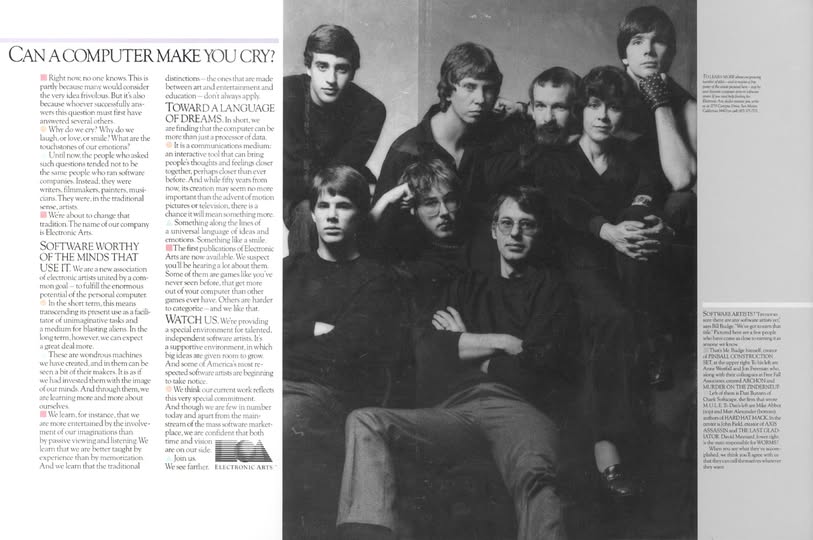
Bing Gordon joined Electronic Arts in 1982, after Trip Hawkins founded the company to turn games into an art form. Gordon served at the company for 26 years, and so I felt he was a good person to ask about the pending $55 billion deal to purchase Electronic Arts.
We talked across two exclusive interviews and covered a lot of topics, like what it will be like for EA to be owned by the Saudis, private equity firms and debt holder JP Morgan. Gordon didn’t hold back. In fact, he swore a lot more than he did when I interviewed him at various times at EA, Zynga and Kleiner Perkins. He remains an adviser at Kleiner Perkins, and he achieved his goal of being one of the most influential people in gaming. I respect his candid answers and how he didn’t shy away from the tough questions.
At first, Gordon was the sole marketer at the company, whose mission was to make computer games that could make players cry, thanks to the storytelling, characters and emotion behind the artistry of games. Gordon helped the company grow, even after Hawkins left to launch console maker 3DO in 1991. Under EA CEO Larry Probst, Gordon spent a decade as chief creative officer, counseling teams at EA to make better games.

Gordon left EA in 2008 and went on to have storied career at venture capital firm Kleiner Perkins. Among his investments was Mark Pincus’ Zynga, which he helped bankroll in 2010, ahead of its IPO in 2011. That same year, he received the Lifetime Achievement Award at the Interactive Achievement Awards and delivered a speech on the “golden age of gaming.” During that speech, he read a poem that started, “Can a computer make you cry? How many cool things can you ship before you die?”
Staying aboard through multiple CEOs, Gordon helped Zynga scale rapidly during the social gaming boom and then adapt to the rise of mobile games. Zynga was acquired by Take-Two Interactive in May 2022 for $12.7 billion.
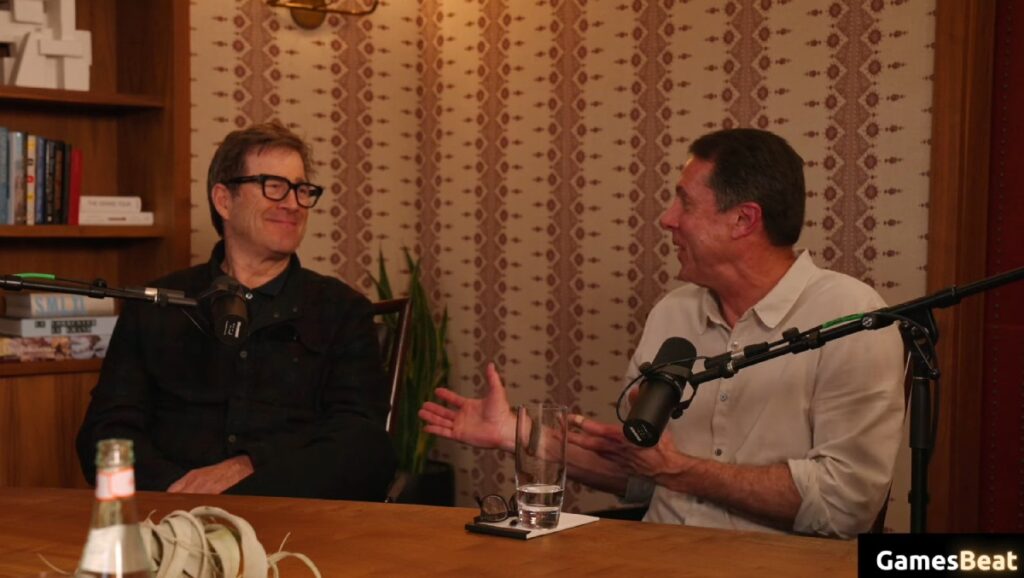
Gordon has a legacy of being able to spot the potential of creative professionals and nurture them. He once said that he didn’t need power. He would rather have influence. He served on the boards of Zynga, Amazon, Duolingo, Ngmoco, Audible, Truecaller, N3twork, Zazzle and others. And he remains an active adviser and mentor among Silicon Valley companies, lending his expertise to firms like Niantic, Dapper Labs and Manticore Games. Gordon said he sold his EA stock when he left the company, but he made out OK with Amazon’s big rise in market value.
I asked Gordon what he thought about the price, the debt, the ascendance of the Saudis in games, and where the games industry is going to go. I hope enjoy this interview, which is the longest one I’ve published in a while. Our interview is accessible through the GB Max membership program. (I’ve also asked Hawkins to talk about EA, but he hasn’t said yes yet). This is the intro to our long story. Gordon’s wise closing words, “It’s not necessarily healthy to look back too much. But it’s nice to know where you came from.”