
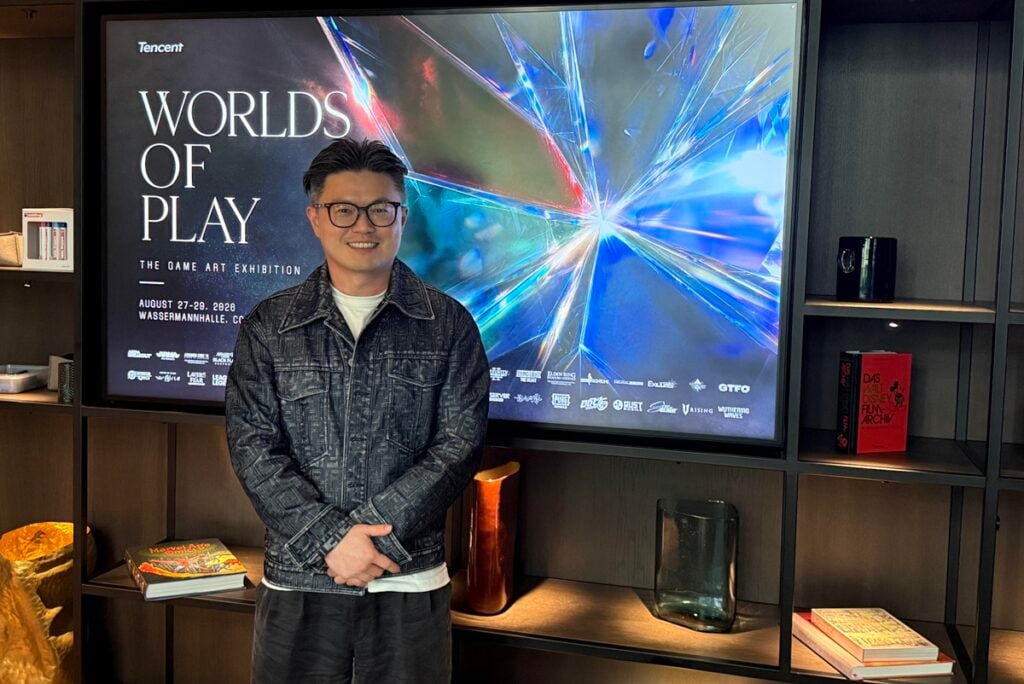
When you’re the biggest game company in the world, people want to know what you’re doing. With that in mind, I talked at Gamescom with Nachuan Li, head of global partnerships at Tencent Games.
Tencent Games showed off more than 20 titles in Germany — its largest lineup to date. Tencent Games, manages over 170 games across more than 200 markets for over 800 million active users globally while supporting hundreds of studios and developers. Recently, Tencent invested in W4 Games, the enterprise company behind the Godot open-source game engine.
The titles from partners included Animula Nook (LilliLandia Games) – a miniature community life sim inspired by the charm of modern animation, the game transforms everyday objects into fantastical landscapes.
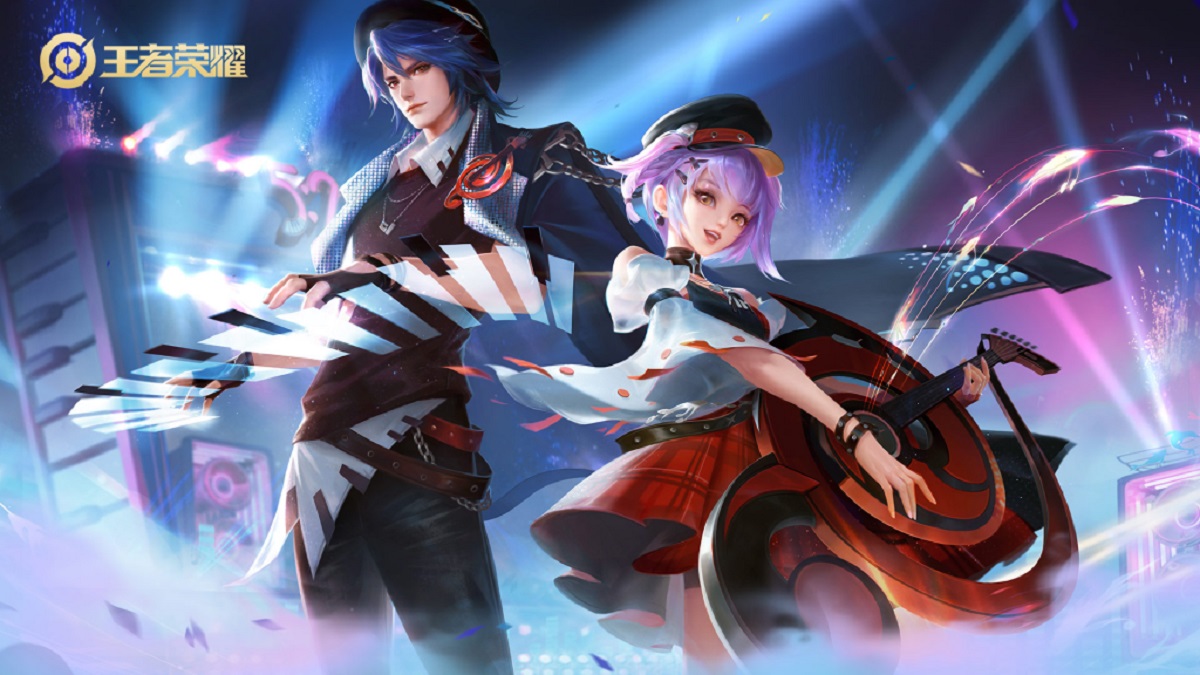
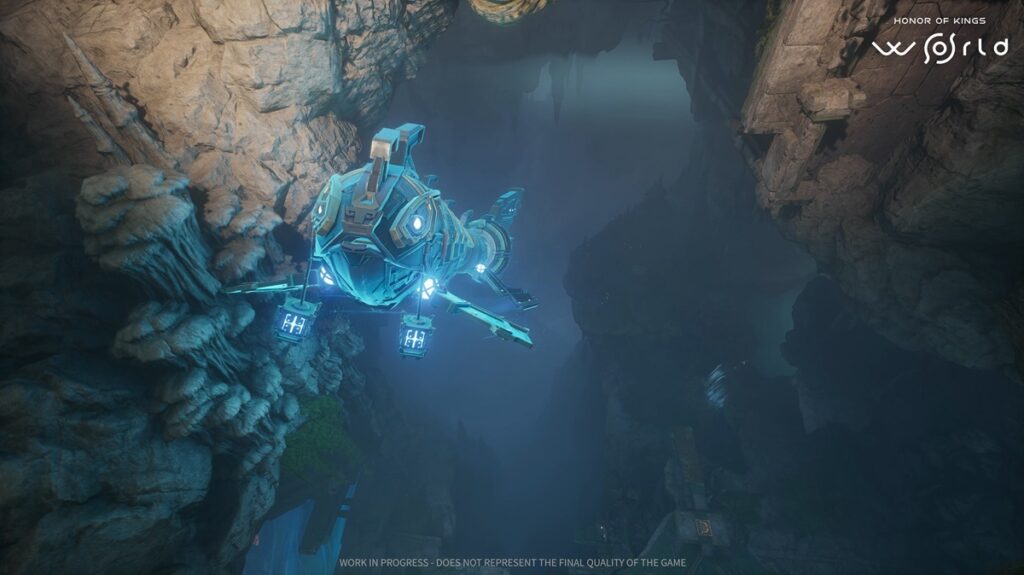
Tencent’s TiMi Studio Group will bring four titles from the Honor of Kings universe to Gamescom. Honor of Kings: ACE, a PC and mobile title; Honor of Kings: World returns with a new playable demo; and it showed off the latest in its giant successes Honor of Kings and Arena of Valor.
Those games generate so much cash that Tencent Games has been able to finance billions of dollars of investments overseas. Tencent Games, Bandai Namco and Gamescom support the Playing for the Planet Alliance, a UNEP-facilitated initiative that activates players globally to protect and restore our planet..
Tencent Games also showed Rust Mobile (officially licensed by Facepunch Studios, developed by Tencent Games) with various promotions. Tencent Games Central Tech also made its Gamescom debut with Motus AI, GIGA, Tencent Games Vox, MagicDawn, Anti-Cheat Expert (ACE), GVoice and WeTest.
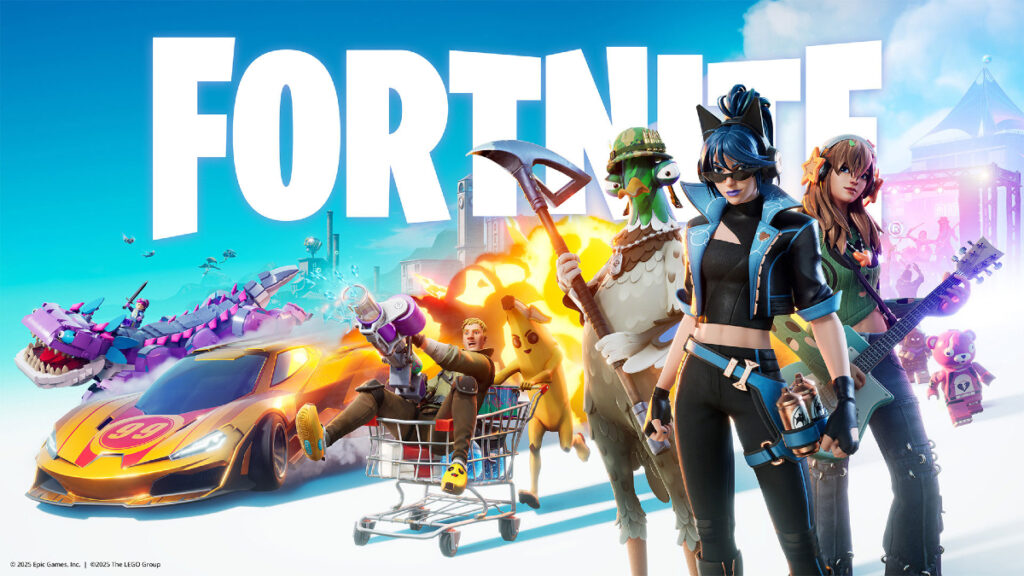
Tencent Games has a diverse global studios network including in-house game studios such as TiMi Studio Group, MoreFun Studios and Aurora Studios, independent subsidiary studios like Riot Games and Supercell, and second-party studios such as Miniclip and Sumo. Tencent also have deep partnerships across key markets with Epic Games, Ubisoft, Activision Blizzard and emerging game studios. Honor of Kings, PUBG MOBILE, Call of Duty: Mobile, League of Legends and Brawl Stars are some of its most popular titles around the world.
Li joined the company in 2013, and Li’s responsibilities include overseeing Tencent Games investments, portfolio management, and global partnerships. Since 2018, Li has focused on strengthening ties with key industry partners and driving strategic investment initiatives within the gaming sector.
Prior to his role at Tencent Games, Nachuan was the Investment Banking M&A Group Vice President at China Merchants Securities (HK) Co., Ltd. During his time at the business, Nachuan supported the establishment of the M&A Group. Tencent has helped prop up the game business around the world, but it has occasionally retreated from some gaming investments. We talked about a lot of important game industry issues and he didn’t steer away from any topics.
Here’s an edited transcript of our interview.
GamesBeat: Is there a particular mission you have in coming to Gamescom?
Nachuan Li: To me, it’s almost a routine. I come here every year. Every year is slightly different. There are new games, new offerings.
GamesBeat: What’s interesting about the lineup that’s coming soon from Tencent and the Tencent family?
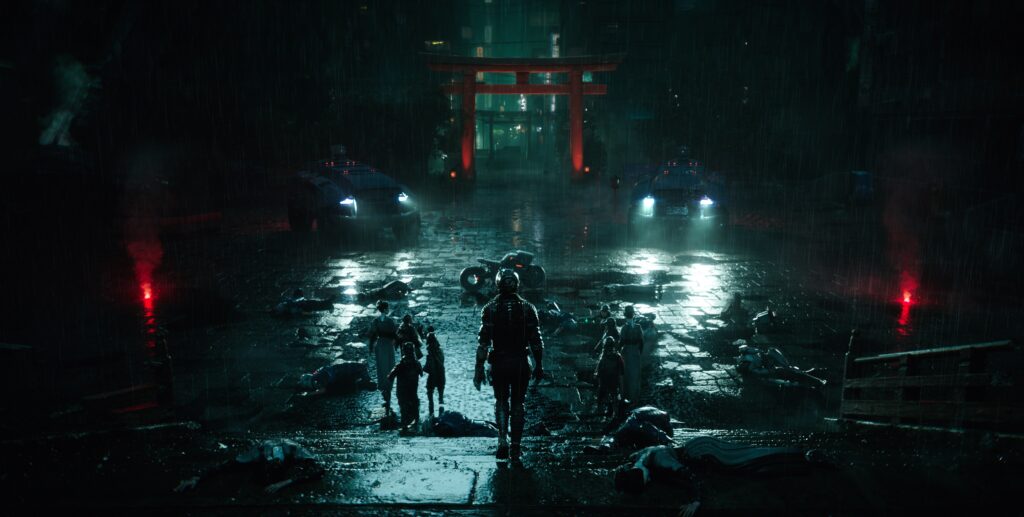
Li: The one that I’m looking forward to the most is Phantom Blade Zero. You saw the new trailer, right?
GamesBeat: Yeah, it looks pretty amazing.
Li: It’s a studio we invested in back when they were focusing on mobile action-RPG games. It was three or four years ago when the studio founder came to us and said, “I want to take on a different challenge. I want to make a triple-A game.” Action, fast combat, married with Chinese martial arts. He said, “If you think about Hollywood movies, back in the ‘70s and ‘80s, people enjoyed Chinese culture in the movies.” He wanted to bring that kind of experience to video games. He called it “kung fu punk.” It was a super exciting idea, but at the same time, they’d never done triple-A games before. He convinced us, and we helped them through the beginning stages, doing all the user testing, helping them build up the workflow.
GamesBeat: Had the concept started as a mobile game?
Li: No, no. It was always a console game from the start. Or not just console, but a high-definition game, console and PC. A premium single-player game. We helped them out from the beginning, doing the user research, and now it’s going to release in two months. That’s what I’m most excited about.
GamesBeat: I got to play it at the Tokyo Game Show a couple of years ago.
Li: Oh, yes. That was an old version.
GamesBeat: I liked it, partly because it wasn’t as hard as the Souls games, games like that. But it was the same kind of experience, with very cinematic fighting. Very dramatic. It felt like a significant struggle, that one-on-one struggle. It does remind me of playing an actual movie.
Li: What did you think of the aesthetic side of the game? It’s a pretty different flavor.
GamesBeat: That came out more in the trailer. Having so many cutscenes interspersed with the action–it seems difficult to pull off. Very ambitious.
Li: It’s a lot of boss fights, a lot of different weapon skills.
GamesBeat: The timing is interesting. It’s clear that not every triple-A game that goes into production is guaranteed to come out the other side now.
Li: Making games these days is super hard. On the one hand, we see the market is still growing in certain areas, like China. We also see that if you can provide a unique, fun experience for players, you can still capture a new market. It’s quite an abstract thing, when you think about it. If I were to break it down into two big elements, one is the player fantasy, and the other is fine-tuned gameplay. But when you see a new game, it needs something unique to convince you to play it and get engaged.
GamesBeat: It’s not a market or an industry for average games anymore. It’s the outliers.
Li: Right. You have to be the best, or you have to be something different.
GamesBeat: Does that make your work a lot harder?
Li: Not really. We don’t look at things over a short period of time. Making a game is a long process. If you look at games nowadays that stick with players, winning their engagement and spending, it’s the games that keep updating and keep providing top-notch experiences. We actually have a term for it, “evergreen.” For evergreen titles, the average annual gross revenue exceeds $500 million. If it’s a live service title, it’s 5 million DAU over a period of time for mobile games, or 2 million DAU for PC games. Of course for premium single-player games the metrics are different. But if you think about the top games that have IP that really sticks with fans, the long-tail sales can be a lot more significant than their peers.
Those evergreen franchise titles take the majority of the growth pie nowadays. In order to play in that league, it takes years of effort. It’s an iterative process. It can take two or three games to really reach that level. Studios like Larian and From Software are some of the best examples showcasing that. We invested in them, but they remained independent. We’ve observed along the way how they keep practicing and honing their craftsmanship. For every single game they make, they try to double down on what they’re really good at, while at the same time trying something super challenging. Making a Souls game in an open world, or making a more cinematic version of Baldur’s Gate.
Internally we talk about this all the time. If you want to make this kind of evergreen title, it can take hundreds of difficult decisions. For a studio like that, it takes years of them working together on different titles. Gradually they’re able to solve those hard decisions. It’s a rigorous process. An evergreen game is an outcome, not a target. My job, what we try to do, is to identify the teams that have the vision and commitment for the long term. We become their long-term partner to help them get that far.
We’re platform-agnostic. It’s not about a particular platform. It’s about the experience and the team, whether they’re ready and committed to keep serving their fans and evolving along the way.
GamesBeat: I think about how much times have changed. I remember an EA executive in the ‘90s telling me that you have to be careful about choosing the games you work on, because in the course of your career you might only work on 10 games. Three years each, 30 years. Now it could take 10 years to make a game.
Li: Or 10 years to build a franchise. It takes effort, commitment, and vision. That’s why my job, especially, is to identify those types of studios and projects and get involved with them over the long term. But that’s the fun part.
GamesBeat: Do you think there’s a danger in waiting for that second or third project to get to where you want to be? You have to succeed with that first shot.
Li: On the contrary, because it takes so long, there are always opportunities. There are ups and downs. We try to be neutral when it comes to those ups and downs. We’re less concerned about just one product. What we really care about is, along that 10-year period, whether the studio can progress. Whether the studio can build up their skill set to reach the potential of their vision. That’s the key.
Sometimes you’ll see in the news that we’re supporting or partnering with a studio that, on the surface, might be getting in trouble. But to us, they’re very committed. They still have the vision. We care less about short-term failures. It’s really about the long-term goal.
GamesBeat: There’s been reports around Last Sentinel that Tencent might pull back from the west to focus more on Chinese games. Is there any clarification you want to make about that?
Li: First, we’re very committed to investing consistently in the west and the entire global market. That’s a fact. When it comes to layoffs, different studios have their own decision-making processes. We as Tencent overall, regardless of whether it’s a first-party, second-party, or third-party studio–we try to leave operational autonomy to the studio so they can make those decisions. At the same time, we try to provide enough resources and long-term strategy to help them get through hard times. Those are the two key things. In short, we’re still very positive and optimistic about the game industry, and we’ll try to invest along the way for the long term.
GamesBeat: Tian Xiao spoke at our conference earlier this year. He talked about the attraction of different categories, like user-generated content, and games that weren’t the usual kind of investment. How do you look at the different opportunities that might be more emergent in the market?
Li: UGC is definitely one area where we see the potential for a lot of growth. If you take a step back and think about it from first principles, on the player side, it’s the next generation of players that tends to enjoy UGC. It’s a great way to engage with the next generation. On the other hand, you have creators who also tend to be from the next generation. We’re trying to work with the top UGC platforms and also figure out the best way to work with communities to support them and take advantage of the right opportunities to help them grow their dreams. We’re doing that in China as well. In the U.S., China, and many other parts of the world, we see UGC as a major trend.
GamesBeat: W4Games is receiving, I think, an $18 million investment?
Li: Right, the Godot engine.
GamesBeat: I know Tencent is one of the big backers there, among others.
Li: They do have angel investors. Some of the investors are participating in that round.
GamesBeat: Is that another category you find interesting, then?
Li: Yeah, 100%. Godot, first of all, it’s a fast-growing ecosystem. They have a great product, a great engine, and at the same time we see a fast-growing developer community. What we really find interesting is how the product and the open source community evolve along the way. We just try to be a supporter of the community and help the community grow better. Our partners can benefit and have more access to working with them.
GamesBeat: It seems like the regional opportunity is big in places like China. Is that more reason to be interested in this as well?
Li: I wouldn’t say the regional angle is the reason we invest, but we do help Godot talk to more Chinese developers. We always try to bridge western developers to the Chinese developer ecosystems and player communities. It’s a similar story there. But overall we just really respect what the W4 team is trying to achieve. I still believe that this is an early stage of the open source community. There’s a lot more room to grow.
GamesBeat: Does it get awkward to have an investment in Epic Games and Unreal at the same time?
Li: I don’t see it that way. Unreal is really for the professional, triple-A type of studios. Godot just opens the door for many indie studios and individual creators who have ambitions to make their own games. Maybe there’s some overlap, but overall they serve different types of studios and creators.
GamesBeat: Everyone has been talking about the attention war that Matthew Ball described in his deck earlier this year. Is there a Tencent view on how much competition there is not only within games, but also between games and other forms of entertainment?
Li: It is getting tougher and tougher, that’s for sure. But there are also opportunities, in my opinion. The competition comes from the ecosystem itself. There are too many games now, and there will be more games. I remember the number back in 2020 was 10,000 new releases in the year. Last year it was 20,000. This year, with AI and everything else, it’s around 16,000, something like that. A lot. It’s never about supply. Supply is never the issue. And you have TikTok, short-form video, short drama grabbing people’s attention. That’s one side of the story.
The other side of the story, though–when we look at top games and top creators, they’re able to create games that go beyond the game experience itself. In the past, esports was a good example. People would not only play games, but also watch them. Nowadays, game content is translated into other different forms. I can give you an example. Kuro Games, our second-party studio that makes Wuthering Waves, had a global concert tour. This is a story-driven game. They mixed two years of their story and character development and music with live offline events. I strongly recommend you go to one. There’s going to be one in Los Angeles. It’s been to Tokyo and Shanghai already, I think. Anyway, if you go there, you’ll see how much love and passion the players have.
Nowadays, games aren’t just games anymore. It’s a cohesive experience. It doesn’t necessarily matter what format it’s in. Maybe it’s a short drama. Maybe it’s a game. But it’s really about the quality of the experience. The top ones won’t be affected. In fact, I’d argue that in the long term, those top games, top experiences, top IP can create more different forms of experience for their players.
This is also part of the reason why we have the Worlds of Play exhibition. We want to bring different flavors, different aspects to players and give them a firsthand experience of the process of game-making – the artifacts, the sculptures, the stories behind making those games – so players can appreciate many different aspects of the games they like. It shows how broad our scope is, from very early stages to very late stages. Different genres, different platforms.
GamesBeat: Many of the biggest companies in the industry now are doubling down on their core franchises. They’re doing less experimentation. Surprise hits are coming from the indie space. Games like Meccha Chameleon.
Li: There’s that fishing game now. Have you played that one?
GamesBeat: A lot of the excitement in the industry is around those indie hits. Games like that presumably aren’t going to come from big companies. Are you happy with a situation like that, because you can invest in these indies? Is there a way that the biggest companies can still be innovative?
Li: It’s a very good question, and a very difficult one. We don’t think about ourselves as a big company. We think of ourselves more as–we’re a believer in the industry. We try to be in the best form to support the next generation of top games, regardless of whether they come from bigger or smaller studios. That’s also the reason why you see some of the new names here. They come from smaller studios.
There are different layers to what we do. One, we’re constantly investing in new studios, smaller studios. Meanwhile, we’re mindful that innovation is risky. Innovation has to happen under a certain discipline. People need to work within certain budgets, within a certain scope they’re familiar with and willing to tackle. They have to have a strong belief. There are certain rules. Vision needs to align with that.
We try to offer all the help we can so that those smaller studios and more innovative titles can reach their full potential and be ready for release. Investing in Godot is a good example. We can put more support behind Godot to support smaller studios. When developers try to tackle new genres and new platforms, we offer technological know-how and publishing know-how to help them. There’s an on-demand menu at their disposal. We try to offer capital to companies that have passion and innovation mixed with discipline, and we provide this menu to help them supplement the areas they’re not familiar with. Hopefully we can make the best game from their vision.
GamesBeat: Are you getting closer to figure out where AI is going to be productive for the game industry?
Li: That’s a question I ask myself every single day. As a technology company, Tencent is fully embracing AI. We’re building our own foundation models. We’re building our own tools for different types of usage. But when it comes to games, our thinking so far is, one, AI is going to empower creators, not displace them. Everything we think about around AI is really about how to help current games be better and more efficient. We try to make sure our partners understand where the technology is and leave them at liberty to decide what technology they want to pursue.
As a gamer myself, what I’m interested in and most excited about is not necessarily how AI is going to improve efficiency. It’s about bringing the experience to the next level. Open world games that one day you could really live in, where the NPCs really become your companion. It’s going to be fantastic. But obviously the technology isn’t there yet.
GamesBeat: What’s still interesting about the game industry when you have an AI division? If you look at Microsoft now, the AI revenues are way up here and Xbox is at the bottom of the pile. Any investor would look at that and say, “Let’s double the money going into AI and forget about games.”
Li: To be honest, I’m a little surprised you asked that, but when I think about it, it makes sense from a certain point of view. But we’re not a traditional, typical investor. We’re gamers. We believe in the game market. We believe there are a lot more things to do with AI. Even without AI, top creators will keep making top experiences that players will enjoy. In my personal ideal world, in the future people will have more time and more chances to experience different kinds of interactive games. That’s fantastic. To us, it’s really a long-term play. We see games differently from other strategics.
Disclosure: Gamescom paid my way to Germany for the event. The content of this story is solely the responsibility of GamesBeat.