The 2026 Games for Change tabletop finalists are in.
On July 1, Games for Change announced the three finalists for its 2026 Best Board or Tabletop Game for Impact award. The finalist lineup spans three countries and three very different subjects: a historical game about queer survival in 1720s London, a Brazilian public-health board game about menstrual cycles, and a Japanese disaster-triage simulation used in real medical training.
Games for Change’s tabletop games category, introduced in 2023, experienced a 42% jump in submissions this year from entries across eight countries, reflecting the emergence of tabletop design as its own lane within the “games for change” movement, distinct from the video game categories the nonprofit has recognized since 2004. G4C President Susanna Pollack said the event’s full slate of finalists across all categories this year reflects teams telling stories “rooted in their own context and communities, more than any year prior” in a June 11 press release.
The winner of Games for Change’s tabletop award will be announced live — and livestreamed on Twitch — at the G4C Awards Ceremony, which is scheduled to be held at 6:30 p.m. ET during the Games for Change Festival at The Glasshouse in New York on July 21 and 22.
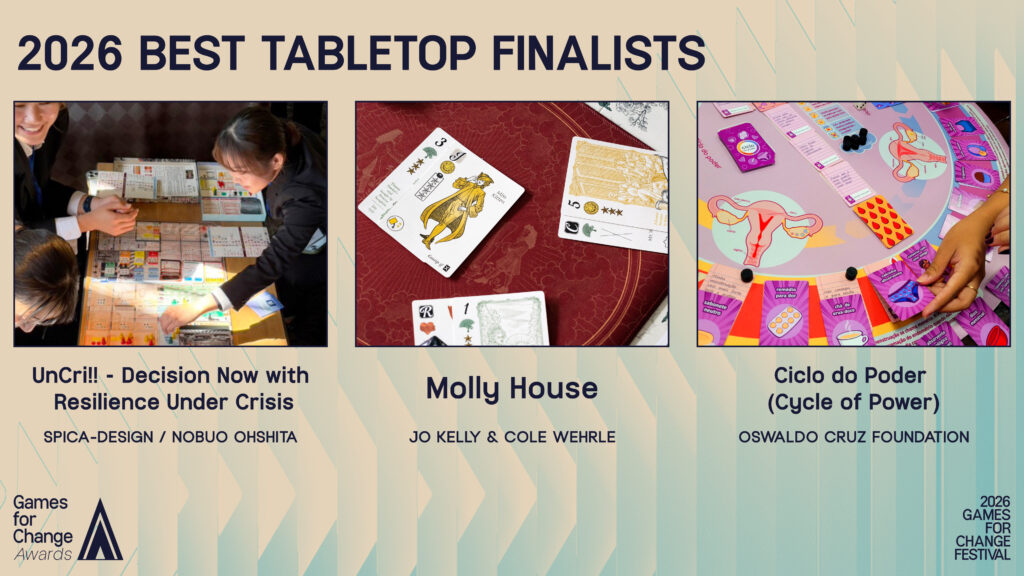
Here are the finalists for Games for Change’s Best Board or Tabletop Game for Impact award:
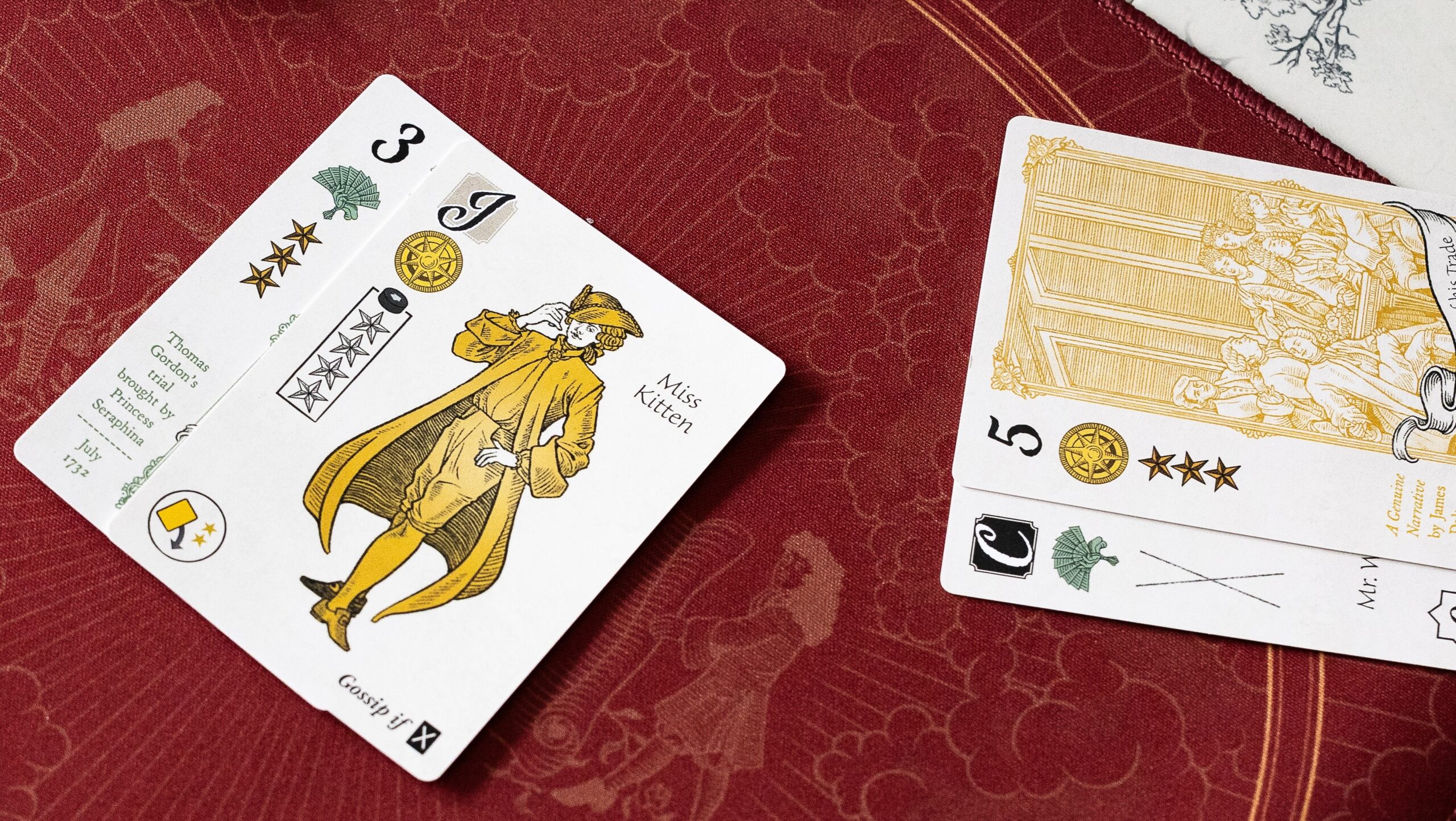
Molly House, from designers Jo Kelly and Cole Wehrle of Wehrlegig Games, follows the studio’s Root and Pax Pamir. Set among London’s “molly houses” — underground meeting places for gender-nonconforming and queer communities in the early 18th century — the game asks players to pursue joy and safe haven while evading informers and the Society for the Reformation of Manners. Due to Molly House’s mechanics that intentionally strip players of control to mirror the precarity of the period, Wehrle described Molly House as the most contentious game he’s worked on in an interview with Wargamer last year. The game is Kelly’s first published design.
Ciclo do Poder (“Cycle of Power”) comes from public-health researchers at Brazil’s Oswaldo Cruz Foundation, developed with the Joaquim Venâncio Polytechnic School of Health and the Universidade Federal Fluminense. The cooperative game guides players through the story of Cris, a middle-schooler navigating her first period, using scenario cards on topics like access to menstrual products and social stigma. There are no right or wrong answers built into the design; the goal is group discussion, typically mediated by an educator. The game won Brazil’s 2024 indie game of the year and took top honors for board game design at the 2024 Brazilian Symposium on Games and Digital Entertainment.
UnCri!! – Decision Now with Resilience Under Crisis, from Japan’s Spica-Design and designer Nobuo Ohshita, puts players in the role of first responders making triage calls at a mass-casualty scene. The game is used in real-world disaster medicine training, per a Games for Change representative. It opens with a call to a fire dispatch center reporting “two to three minor injuries,” but responders arrive to find the situation far more critical than reported, escalating the game’s plot from there. Players command an emergency response team, rotating roles, managing limited information, resources, and time as conditions change turn to turn, explicitly framed as training for real mass-casualty decision-making.