
Samsung Display is accelerating its push into the next-generation extended reality market by participating in this year’s Augmented World Expo USA 2026.
For the second year in a row, Samsung is showing off its wares at the world’s largest XR-focused exhibition taking place in Long Beach, California.
The company is showing latest RGB OLEDoS technology, designed for XR devices such as mixed reality (MR) headsets and augmented reality (AR) smart glasses.
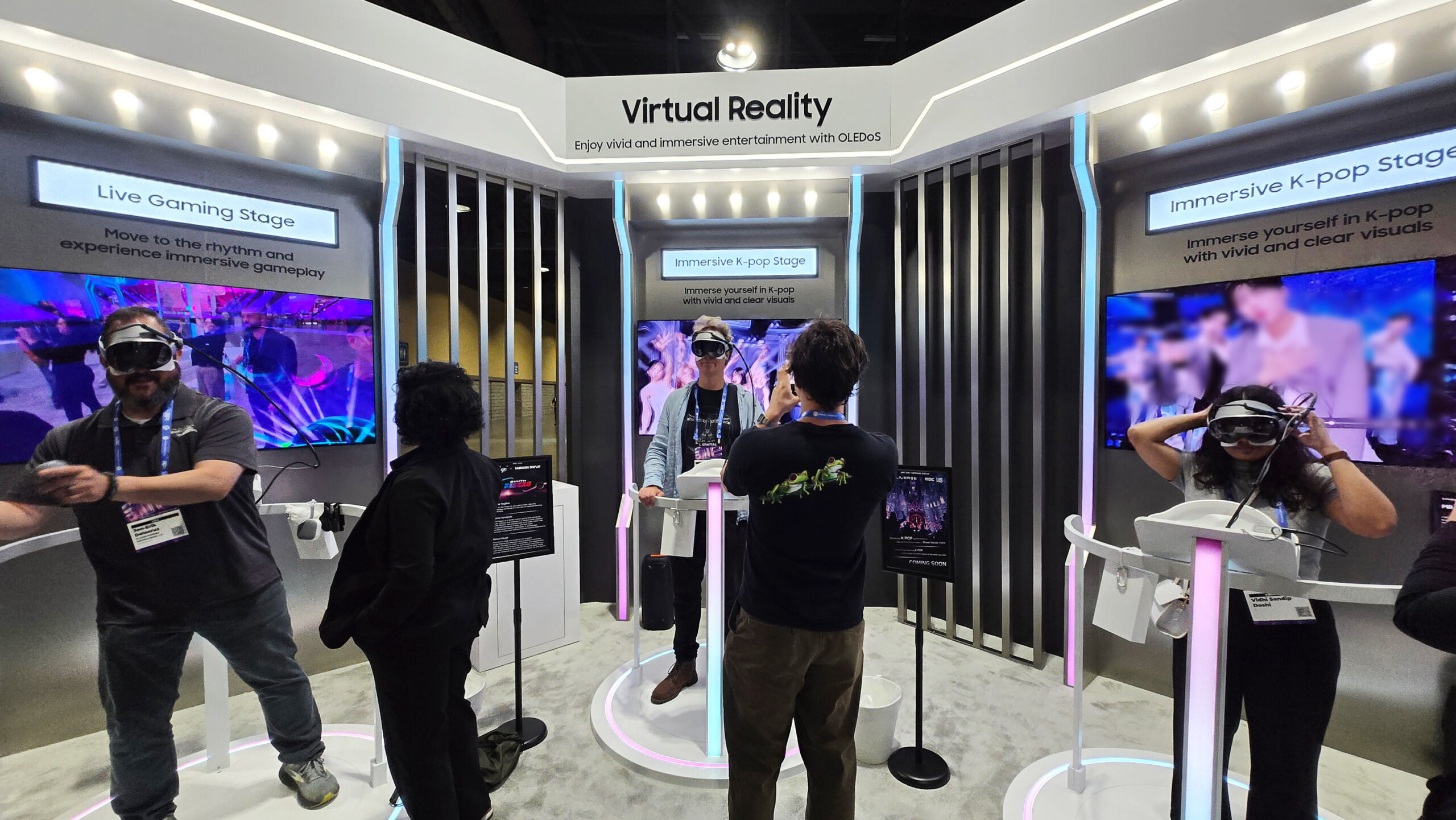
Samsung Display has prepared a variety of interactive experiences that allow visitors to experience firsthand the superior image quality of RGB OLEDoS. Highlights include a dark-room installation designed to demonstrate the ultra-high brightness capabilities of a 1.3-inch, 40,000-nit RGB OLEDoS, AR content featuring the scenery of Long Beach, and MR experiences that enable visitors to enjoy K-pop performance content through an MR headset.
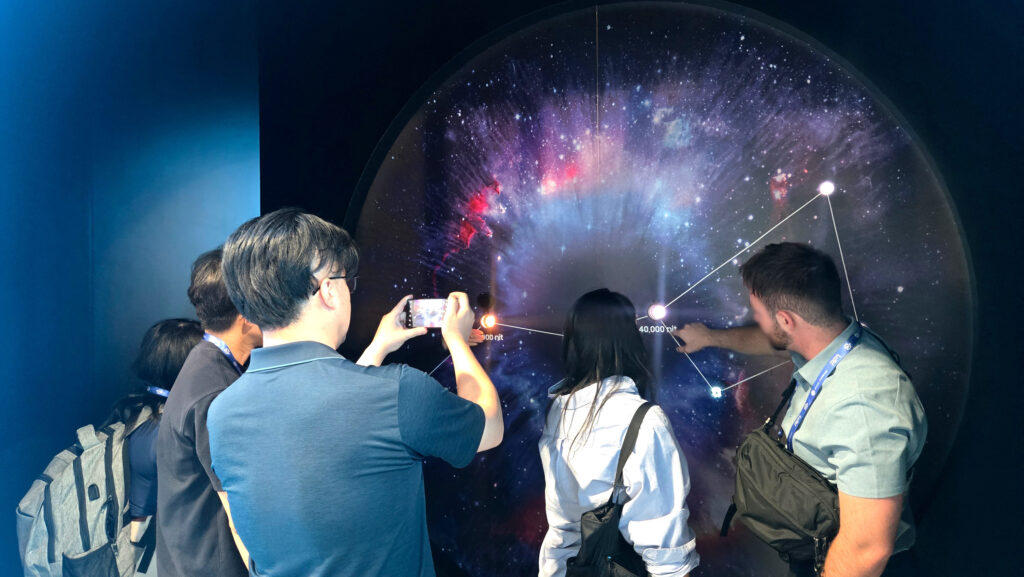
A key attraction is a dark-room exhibition space named “The Big Dipper,” where seven display panels are arranged to recreate the Big Dipper constellation. Among the seven panels, only two feature Samsung Display’s 1.3-inch, 40,000-nit RGB OLEDoS, creating a dramatic contrast in brightness while highlighting the display’s ability to reproduce vivid colors and fine details of the universe.
Within the darkened environment, visitors can simultaneously experience the exceptional brightness and outstanding color reproduction of the company’s ultra-high-brightness RGB OLEDoS technology.
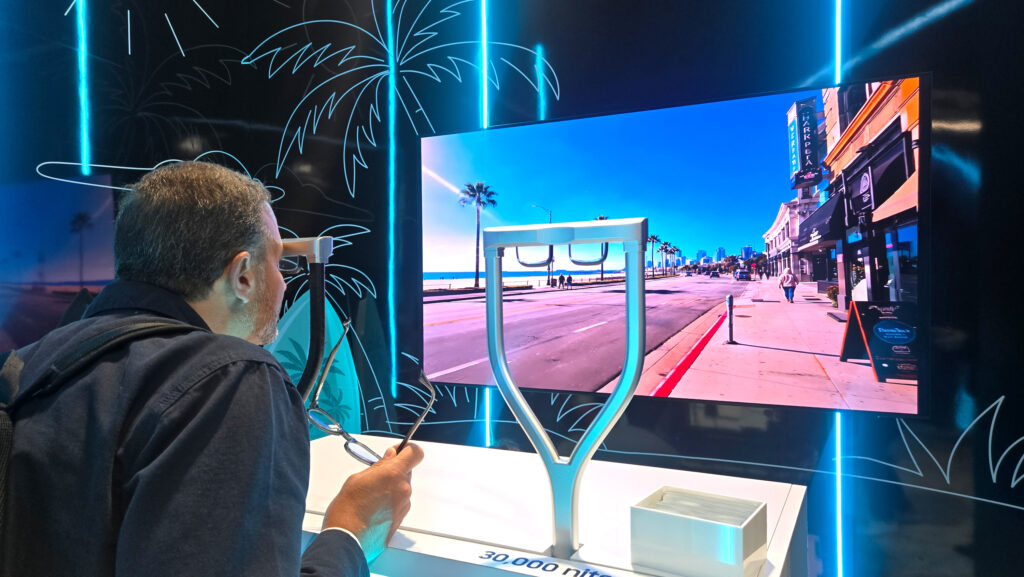
Samsung Display is also demonstrating the possibilities enabled by combining RGB OLEDoS with AR smart glasses in the booth’s “Connected Vision” zone. Against a large-screen backdrop featuring the Long Beach coastline, visitors can access a variety of AR-based information – including real-time translation, navigation, and weather updates – through a prototype smart glasses device equipped with a high-brightness 0.62-inch RGB OLEDoS display.
Samsung Display is focusing on advancing RGB OLEDoS technology as it targets the fast-emerging smart glasses market, which is gaining attention as the next major mobile platform. RGB OLEDoS, which implements OLED on a wafer, offers a simpler panel structure compared with other microdisplay technologies, helping simplify the optical structure of smart glasses.
“RGB OLEDoS is composed of a single panel, making the manufacturing process less complex than other technologies and offering significant advantages in mass production and cost competitiveness,” said a Samsung Display representative. “Based on our world-class OLED technology and extensive mass-production experience, we will continue developing ultra-high-brightness RGB OLEDoS while focusing on improving production efficiency.”
In the “MR Experience” zone, Samsung Display is presenting a prototype MR headset equipped with RGB OLEDoS. Visitors can watch immersive K-pop concert content that creates a sensation of standing in front of the performers, or play ‘Synth Riders,’ a popular rhythm-action game.
“Unlike white OLEDoS, RGB OLEDoS does not require a color filter, enabling higher light efficiency and longer lifespan. These advantages make it highly suitable for delivering excellent color reproduction and high brightness,” said a Samsung Display representative. “This is why RGB OLEDoS is considered an optimal solution for XR devices, which require sharp image quality in compact and lightweight form factors.”
Beyond XR technologies, Samsung Display is also unveiling a range of next-generation concept products that demonstrate how displays can evolve into spatial interfaces through the integration of AI technologies.
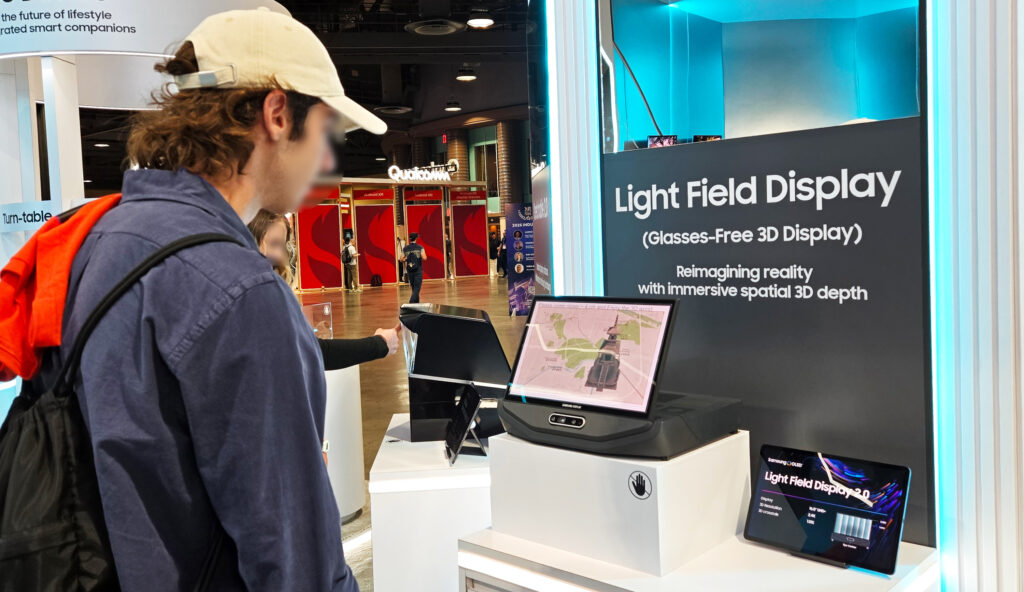
Among them is a stretchable display that can dynamically change its form, remaining flat under normal conditions while protruding from the surface depending on the usage environment. Samsung Display also prepared Light Field Display (LFD), which creates three-dimensional visuals that appear to exist in physical space without requiring glasses or a headset. The LFD at the booth shows a 3D-like image of Dabotap, a historic stone pagoda located at Bulguksa Temple, allowing visitors to view the structure from different angles and observe how the image shifts with changes in viewing position and perspective.
Through its participation at AWE USA 2026, Samsung Display aims to deepen collaboration with leading companies across the global XR ecosystem while further strengthening its position as a technology leader in the rapidly evolving XR market.