
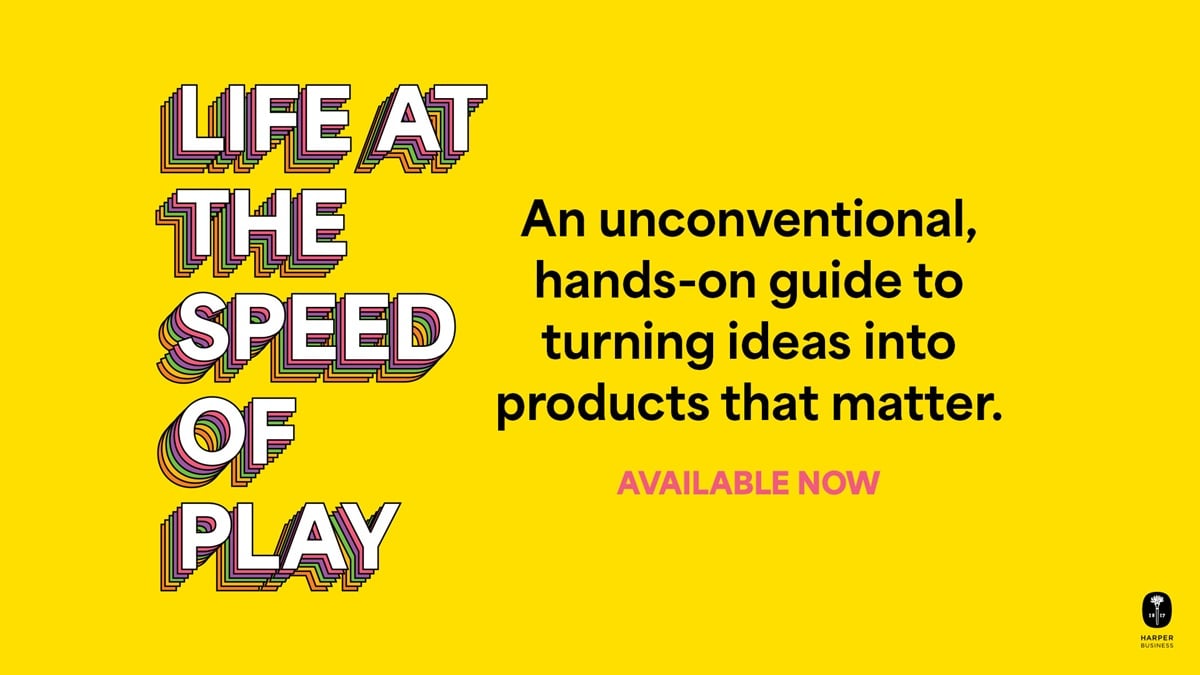
Mark Pincus is a billionaire entrepreneur who founded ten companies. His big winner was Zynga, the social gaming company that Take-Two Interactive bought in 2022 for $12.7 billion. Now he has written a book to pass along his wisdom: Life at the Speed of Play.
The management advice book debuts today and it chronicles how Pincus chased the idea of Internet Treasures — products people can’t imagine living without. The book chronicles his life story as well as the narratives of his startups, but it is also his best attempt to capture his learnings in a playbook that can inspire others to be entrepreneurs and make their mark in any career.
Pincus decided early on to bet his career on viral products. Prior to Zynga, he founded Tribe.net, a social network that preceded Facebook; Support.com, which he took public; and FreeLoader, which was acquired after seven months.
He was a founding investor in category-defining platforms such as Facebook and Twitter, and later cofounded the investment firm Reinvent Capital, which took several companies public at multi-billion-dollar valuations.
He also created the product management class at Stanford Business School, and his teachings and learnings from that class helped him create the book. Pincus, who named his company Zynga after his beloved dog Zinga, graduated from the Wharton School and
earned his MBA from Harvard Business School.
He helped pioneer the idea of social games for casual players, who are the polar opposites of hardcore gamers. I got to know him in his early years at Zynga, watched him take the company public in 2011, hire his own replacement Don Mattrick in 2013, take control of the company back from Mattrick, bring in a new CEO from Electronic Arts (Frank Gibeau), and finally sell the company for billions to the owner of Grand Theft Auto. Along the way, he invested in a lot of hit companies and some duds as well.
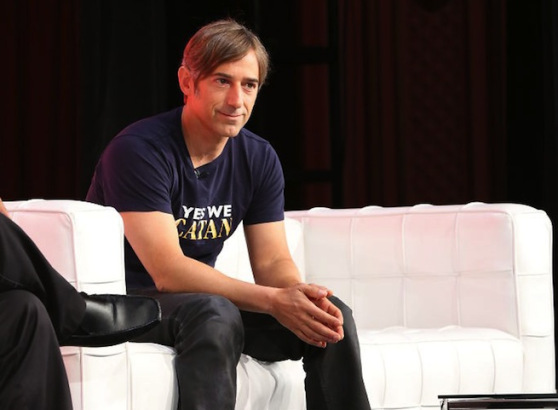
And after Zynga, he quietly founded Dot Earth (formally, Erth.ai), a metaverse company whose aim is to create a social and entertainment platform for the world. Not all of his ideas were successes, but his book emphasizes the need to trust your instincts and to distrust your ideas. He thinks about 25% of your ideas are good ones, and you have to move at speed to find which ones are good.
I found the book to be pretty honest, as Pincus talks about buying and smoking a lot of pot in his early years as he tried to form magical and creative startups. I interviewed him about the book via a virtual call while he was on a vacation in Costa Rica.
There might be some gold in the musings of Pincus. Regarding Napster, he recalls how he invested in the company early on as it needed cash to add more servers. He observed, “It’s become normal for us to record every live show, but what happens to our recordings? They go nowhere. Maybe you do this on the blockchain, and the music industry doesn’t know whom to sue. This seems like a big opportunity that’s still out there. Communities want to share their passion for music directly with one another.”
That’s just one passage from the book that caught my attention. That one is simply a singular opportunity. But another passage is a bit more general and applicable to just about any idea. He wrote, “After decades of building products, I’ve learned that your instinct is probably right, but your idea is probably wrong. And that gap between the two is where most founders lose. The winning path goes through many shots on goal and many failures. Too many founders find an odd sense of honor in sticking with their losing product.”
Here’s an edited transcript of our interview.

GamesBeat: I’m getting into your early years and some things I didn’t know about so much. I find it refreshingly honest. There aren’t tons of those kinds of books around, where CEOs mix the personal experiences in with the very public ones.
There’s a guy in the game industry, John Romero, who worked on Wolfenstein and Doom and all those games. He has what he calls an eidetic memory, so he doesn’t forget things. He remembers conversations. His book was similar in a way, in that it had all the personal stuff that affected who he became, and in such rich detail. It feels authentic. I detect a lot of authenticity in these first pages of yours.
Mark Pincus: I didn’t want it to be a memoir, but I wanted to use my stories as a game mechanic. It’s a good delivery drug. Otherwise it could be too dry. One part of the book I call the PM Bible. Here’s the value, the playbook that I can give you. But if it was just that, I worried that it would be dry.
GamesBeat: You have to hold people’s attention to deliver the message.
Pincus: My co-author, she wrote a book with Ben Horowitz, The Hard Thing About Hard Things. They went through the same question and decided to make half the book his stories and the other half his lessons. It was an easier format to say, “Here’s all my war stories and then here’s all my lessons.” But I tried to weave it together.
GamesBeat: What made you decide this was the right time to write a book?
Pincus: I had a couple of inspirations. I had a very clear inspiration for the core of this book, the product-making, product management side of it. I created this class at Stanford that’s still taught at the GSB. It’s their core product management class. That’s been going for 10 years now. It was all based on my approach to EMing and what we built out with Zynga, the data-centric, rapid iteration and testing, all those things. I wanted to get deeper on the philosophies that make you good at using all those tools. That’s what I try to do in the course. I give that advice to founders a lot.
I know it’s hard to write a book. It never pencils out, the amount–I put about four years of time into it. But I thought that if I could put this down, my hope was that it would be highly referenceable for a long time. The way that Peter Thiel’s book Zero to One–I just reread that last year after 10 years. It was still a good read. It still gave me these deeper philosophical insights that people use. That book is where he got to some things people still use. You should be a monopoly in something. What do you believe that no one else believes? I was hoping to get to that kind of place. Something that could be valuable and referenceable.
The other book that I interspersed–you see it in the beginning. I call the book of life chapter. I have all these life philosophies that have also bled into how I am as a founder, how I built companies, how I think about politics. It’s a bit Tony Robbins, motivational stuff. I thought about that as a book separately, but I thought it’s better in this context. I’m not going to launch a new career as a motivational speaker. Getting people to walk across coals or something.
GamesBeat: It was a little sad to me that you lost that book [which he called his Book of Life] after 22 years of writing your own book of life?
Pincus: It was. I don’t remember if I said it in the book, but it was a casualty of my divorce. When I moved out everything got boxed up and it was just gone after that. My practice was to go back and read all the previous years.
GamesBeat: You seem fairly analytical about it. You would go back five years and see what your old self was like.
Pincus: At this point, after a lot of years of trying, failing, having hopes and dreams, just being able to go back and see–oh, I was feeling the same thing as now. When are you going to do something about this? When are you going to commit? I saw so many years where I wanted to do something and didn’t know how, or didn’t act on it. It becomes a heavy weight of reminders.
GamesBeat: I guess you also don’t want to write it too soon. Maybe you haven’t achieved all you wanted to. You haven’t gotten to a place where you can look back and say, “I’m on top of this mountain now.”
Pincus: Are you ever? But you also–it’s always a work in progress. I just talked to a founder in the last couple of days who’s running a hugely successful internet company. He feels like he’s missed the AI wave. He feels agitated. He doesn’t feel done. He’s running this big successful company, but he feels out of position. It’s just a reminder that no matter where you are, whether you’ve created a successful company or achieved the success everyone dreams of, you still probably aren’t where you hope to be. There’s still more.
GamesBeat: I like how in some of these companies, there were moments where you had to somehow get off the treadmill and think and decide. We have to turn this treadmill in the other direction. [Companies will say], “We’re on this treadmill now and thinking, “Wait a minute. Every day goes by and we don’t get to the big strategic thing we always wanted to do.” There are so many things that keep us going one more step forward on the treadmill. But it looks like you had a regular chance to step off your treadmill and make a big decision.
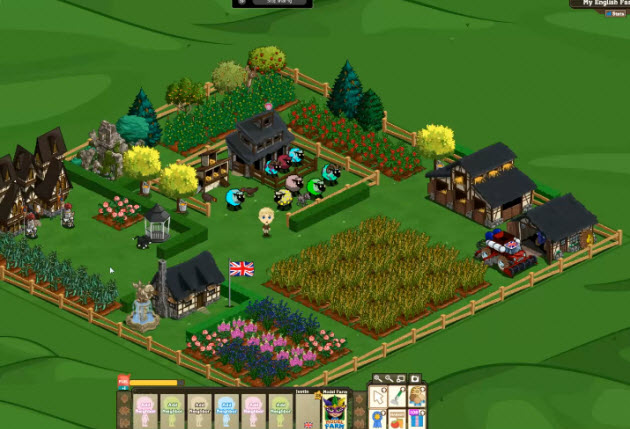
Pincus: This is particularly painful for game companies, game developers. I went through this so many times – it was a constant at Zynga – around greenlighting. We’d greenlight games, try to gate the games. You try to timebox. You try to have dollar limits. But you blow through those. The team goes native. We had this with FarmVille 3. It’s funny. I talked about the pain of trying to build FarmVille 3, which was–maybe they eventually released FarmVille 3. But I started it. Then Don Mattrick did it. Then it finally came back under Frank Gibeau. We spent probably $70-80 million and never got to a fun game.
It had to be better. They went deep on 3D art. Then it was so heavy and expensive that it was really impossible to pivot. It’s too big to fail. You get these projects where there are too many dollars and too many people and too much time committed to admit that it’s not working. They take on a life of their own. It becomes this big elephant in the room that nobody wants to talk about. At Zynga, trying to get these teams to launch their games, just to turn them on, was impossible. They’d say, “It’s not ready yet.” The reality was the game wasn’t what they hoped it would be. It wasn’t fun. They’d rather keep developing than pull the plug.
It’s like that particularly in game development, but I think with any startup–there’s a power in building a culture of intellectual honesty with your team, where you come in every Monday and say, “How are you feeling?” Anything is possible. You should be able to do that at GamesBeat. Come in Monday and say, “Not into this strategy we’re pursuing.” But then everyone says, “What are you talking about? We’re all following you.”
GamesBeat: Something that seemed particularly dramatic, there was a point where you said, “We have to stop greenlighting all these new games and put everything behind Zynga Poker.” What was the exact time frame there? Was that the first year or so?

Pincus: That was the beginning of me understanding what Bing Gordon and I got to, which was the franchise strategy. That was the beginning of me learning it through my own analytical mind and my lived experience. By the end of our first year, by the end of 2007, we had launched all these other word games. I think it was between September 2007 and February 2008. We were spread thin. Each game was maybe a three-person team.
Poker was sitting there flatlining at 400,000 DAUs. Then all these other games together were 100,000. That’s where I said, “It’s risky, but if we put everybody on Poker and make it better and we double it, that’s another 400,000 DAUs. All of these games together are just 100,000.” It started to sink in for me that you’re better off having a franchise and making it better and better, which is also a moat to competitors. It’s harder and harder to compete with a game that gets more feature-rich and more capable.
Also it was this realization that less is more. Especially in the game industry and apps. Getting to one thing that works is actually the golden goose. You’ve seen this so much in the game industry. This happened with Niantic. Niantic had one amazing franchise, but they weren’t happy with that. You get bored with your franchise. They got bored with Pokemon Go. They decided to make five more Pokemon Gos. Harry Potter and all that. Monster Hunter. We see that so much in the game industry. And then the companies that stick to the one franchise, like Epic and Fortnite, who don’t dilute their focus, are far more successful.
That was the first time I got that lesson. I was right.
GamesBeat: The phrase “forever franchise,” which I’m pretty sure I heard for the first time at Zynga.
Pincus: We started saying–sometimes you learn your founding principles when you have to come back and reinvent your company and get back to those principles. When I came back after Mattrick, when I came back as CEO, the company was overextended on this massive slate of new games and ignoring the core franchises. They were getting bad ratings. They were in the threes. They were bleeding users. They were talking about moving them to India. That’s when you mothball something at Zynga, you move it to India.
At the beginning of the turnaround I cut half of the worldwide studios. All the new game slate. We just focused on Words With Friends and Poker. Just these core franchises. That’s when we started saying they were forever franchises. We started writing about that in our investor letter, which no one read at that point. We were a two-dollar stock. We cut the revenues of the company in half, back down to something like $600 million, which was really painful and drastic. But we were profitable and sustainable, because we shored up these franchises. We got them back to high app ratings. It was amazing. Just focusing on quality and app ratings turned around all the metrics.
GamesBeat: That gets me to the question of how I watched a lot of this from the outside. What was it like for you on the inside, when you had to go back and retake the company and steer it in the right direction?
Pincus: It was so painful. It’s kind of like being a parent. It’s a thankless job, but you have to do it. You know your kids, somewhere deep down, will appreciate it, but–knowing that you got them on the right path in life is what you’re there for as a parent. I felt that way with Zynga. I felt like this was my child, the way founders do. It was going to die.

Mattrick was a strong leader, but he wasn’t the right leader for that moment. It was just when we had to reinvent the company for mobile. We brought in a guy who wanted to scale us. Scale wasn’t what we needed. We needed reinvention. Those are different things. I saw–this was in the fall of 2014, into the beginning of 2015. I saw that the company was on a business plan and path that was probably going to lead to eventually going out of business. Zynga had a lot of cash, but he was betting the whole company on this slate of new games. The games kept delaying because they weren’t ready. We weren’t making them in the right way.
Supercell and others–I think now people understand. We see this with Take-Two. You can’t name a date and financial forecast for an unreleased game. That’s understood now in the game industry, but wasn’t then. Mattrick and the team had this big plan, this big slate, and all these numbers. There was no way to actually deliver on that. Also, for me, I was just sitting there watching this. Mattrick was rightly feeling like I was the founder who wouldn’t let go of the wheel. I was trying to reach in and run strategy and stuff. He said, “There can’t be two CEOs.”
Eventually I got to a point where I had to present to the board that this was going to go out of business. This company was going off a cliff. It’s a really risky plan. Your opex is going up more and more at a time where we should cut it down. Because we had so much cash in the bank, it was very hard for the board or anyone else to get their brains around the idea. “Why should we cut opex? We have like a billion two in the bank. We don’t need to save money right now. We need to create hits.”
But what they didn’t understand was that culturally, the hits weren’t to come from spray and pray, a lot of shots on goal. The hits were going to come from focusing on what was working with our core franchises. The way we had built games, we would prove things in a franchise. FarmVille 2 was invented in FarmVille. We tested something called crafting cottages, which was our crafting mechanic, and coopetition. Those two things were the basis of FarmVille 2.
Anyway, what was it like for me as a founder? It was the hardest time in my life. My marriage was falling apart. I was headed for a divorce. No one was asking me to come back to Zynga, too. Think about how hard it is. You have this adolescent teen that you can see needs parenting. They don’t believe they need it. They’re fighting you. No one on the board was begging me to come back to the company. They were saying, “Mark, why don’t you go do something else?” But I saw that this needed to happen to save the company.
That’s the difference between a founder versus an investor or a hired CEO. You feel this commitment to the company succeeding that just runs deeper. It was not particularly good for me personally to go back. They paid me a dollar. No one gave me any stock options. I didn’t have any Elon plan. “If the stock gets to five or 10 you get this.” No. It was just, “Okay, Mark, you think it’s broken? Fine. We’ll let you come in and try to fix it.”
GamesBeat: I remember that Mattrick seemed to want to run Zynga as if he were running EA. Like he had not switched companies. He replaced almost every person you had on your executive team with someone coming from the consoles in some way. He replaced all the social gaming leaders. They greenlit a lot of things that were more like hardcore games, as opposed to social games. To me that was an example of somebody who was just on the wrong mission. He thought he had a different company.

Pincus: There was this moment in time–it’s also my fault. Nothing was working for us on mobile. Or not on the level Words With Friends and Poker were. In 2012 to 2013 our web business was mature and declining, or had stopped growing. It wasn’t clear how we were going to make a hit on mobile. The thought was, maybe there was a different playbook on mobile. Maybe it was more like the video game industry. Maybe it’s about IP and eye-watering fidelity, amazing graphics. That was the point that Mattrick became available. He also was being recruited to be CEO of EA. I was feeling beat up and worn out. I thought, “Wow, this has been intense. Maybe I’m not the best leader for this. Maybe someone else can figure this out where I can’t.”
The hard lesson for me as a founder is, there is no one else to figure it out. You have to figure it out. It’s just hard. If it’s hard for you, it’s going to be hard for everyone, and it’s going to be even harder for a guy who hasn’t been in the seat for a long time. Who doesn’t understand social gaming, hasn’t been doing mobile gaming. EA also failed in mobile gaming. That was a painful lesson.
Part of the point of the book, when I talk about founder mode–the lesson for me in founder mode is that you became a founder because you were sick of being an expert witness. You wanted a chance to bet on yourself and your instincts. Don’t ever turn away from that. Don’t ever question your own instincts and judgment. I went through this dark period there of thinking that maybe someone else could do this better. That was not good for the company, because someone else couldn’t do it better. It was just hard. Sometimes it’s just hard. That’s where mobile gaming was.
My lesson is, it’s not you. It’s the context. If it’s hard, it’s hard for everyone. It’s not because you’re no longer qualified for the job.
GamesBeat: If we bring this back around to the book, then, you did turn it around. You did the IPO and you did a great sale to Take-Two. What did you learn from all of that that’s becoming some of the meat and bones of the book? This is a repeatable thing that other people can do as well.
Pincus: The part that I’m trying to convey in the book that I think is repeatable is that there’s a mindset that we should all have as product makers. I say product makers because it’s not really just product management. You’re not engineering. We’re trying to design and grow successful products. There’s a mindset that we can develop to change our odds of success and be much more likely to succeed as a product maker. That’s the real point of the book.
The other supporting plotlines about the turnaround at Zynga, those are not the primary part of this, other than–I have a whole chapter where I say “fuck scale.” Make sure you spend some time thinking about, what if everything goes right? We spend too much time thinking about, what if none of these plans work out? You either hope it’s going to work out or you’re planning for it to fail. But what are you planning for if everything goes right? When things do go right, a lot of people aren’t ready or prepared for it.
That’s part of the Zynga story. Where I write about “fuck scale,” it’s that–there’s nothing that special and magical and scientific about management. Even though there are MBA courses. You can hire someone from a bigger company like EA or Amazon who can come in and supposedly teach you about scale. But what you see when those people come in, like with Mattrick, is that they can’t teach you how to scale your company and your product. They can just tell you what worked in other places. Everywhere you go it’s actually–it’s homegrown, but with a lot of principles that are repeatable.
I was trying to point out–first of all, management is just getting people to do the right thing when you’re not in the room. That’s all it is. Let’s demystify that. How do you get people to do the right thing when you’re not in the room? Any way you can. That’s all these other tools you have. Your mission, your values, your culture, your stories in your company, your compensation. They’re just tools that we’re using in any way that we can that works to get people to do the right thing when we’re not in the room.

The repeatable playbook out of that–the core idea of the book is, get good at understanding your instincts and separating them from your ideas. That actually applies everywhere, from how you make a product to how you build your company. Don’t be attached to anything. Get attached to the instinct that’s driving you and be ready to throw away every tool you try, every idea. This internet company CEO that I was talking to, who wants to do another big chapter with AI, he’s been much more successful than me, and I still found myself giving him the same advice that I have in this book. I hear your ambition. I hear instincts in what you tell me about AI and the future. They sound brilliant, but I’m not getting this one idea you’re telling me. I don’t know that you have people around you telling you that.
GamesBeat: This wouldn’t be Mark Zuckerberg?
Pincus: No. But I think he could have used the same advice before he wasted $80 billion on the metaverse. It turns out that we all need this advice. I need it. It’s basically, kill your ego. Your ego is going to stop you from succeeding. The more successful you are, the more people are willing to believe you’re right. That’s dangerous.

GamesBeat: The book doesn’t end at Zynga. You’ve spent some years now doing Dot Earth. I wonder how you’re able to use some of these ideas yourself in the new startup.
Pincus: Dot Earth is one of my big instinct veins. Very broadly, it’s the metaverse. Ever since you and I first met, games were never just about entertainment for me. That’s also why we kind of missed each other in the beginning. I saw games as a medium that could be a lot more than just entertainment, and a lot better use of people’s time. For me, the adrenaline came from making the virtual real. That, to me, is the metaverse.
I credit Reid Hoffman with this definition for the metaverse. He defined it as blurring the lines between the virtual and the real, the online and the offline, the digital and the analog. That was the thread, I think the through line in Zynga. We touched nerves and got to the mass market with FarmVille because people believed their farm was real. Time still marched on in your farm. Your crops were going to die. You were interacting with other real people. That was metaversian. You didn’t need goggles and immersive tech to have that experience.
Dot Earth is the broader sense of that whole instinct vein for me. The name of the book, Life at the Speed of Play, has been the tagline and the vision for Dot Earth since I first blogged about it in 2006. We ought to be able to live life at the speed of play. Where we’re headed, I think, whether it’s AI or metaverse or new devices that listen and talk back to us–all these different forces, to me, we’re headed to living our lives at the speed of play. Blurring the line between a game environment where I can just drag and drop stuff, start a little store, and real life. I think they’re colliding in a beautiful way. I want to accelerate that collision.
We saw it, in a weird way, in CityVille. A very beginning of this metaverse, for me, was our franchises. We had this feature, a throwaway feature, where you could start a new franchise. I’d create PincBucks Coffee. You had one 300 pieces of art to choose from. I could turn on my franchise–

GamesBeat: I think I got my first copy of Ready Player One from you.
Pincus: When I first read Ready Player One I was so taken with it. I read the whole book in three or four days. Then I read it to my kids. I was shocked by how into it they were. I sent it to Zuckerberg on a Monday. That Friday, at something like 2:30 in the morning, he texted me back. “Great book. Thanks.” We gave it to every new employee, and then Facebook did the same.
You remember when–he needs a better weapon or something, and so he goes to this planet. He has to fight his way through and survive. Then when he does he comes out with this better weapon or a key or something. That always stuck with me. I’ve always thought that should be a thing. Skill-based gambling for money. I came up with a game I was trying to build with Stem Studio called Survival Shopping. It was a survival escape game, but for money. You go in, pay five dollars, go to a weapon shop. If you can make it through the first three levels, maybe you pick up $20 or $50 worth of loot. You get out alive and sell it back to the store and make real money. Or you die and everything you’re carrying becomes loot. The higher levels, it’s PvP and there might be $5,000 you could win. But I got that idea from that scene in Ready Player One. It’s like a human-scale slot machine. Getting to gamble in a way where we’re playing inside the machine.

Ready Player One was a vibe. The Spielberg movie, where Meta went with it–they got too in love with the technology of it. I don’t think the technology was the story. It was, what will life be like when the lines become blurred? They gave you one variation of that story, where you were going and living your life inside of a game. But I see it as much broader than that. I say it in the book. I think Elon is already living his life at the speed of play. With vibe coding, with agents, our ability to move at that speed and come up with ideas and then see them created in some form, we’re basically there. We’re at inning one of that. That’s the deeper point of the whole book. I’m hopeful that this book will be relevant for people who are living in the first few innings of that.
Where does my story go post-Zynga? I just pulled the plug on the commercial development–with Dot Earth we were building a browser-based game engine called Stem Studio. It’s a Three.js rendering engine. I believe it’s the most sophisticated Three.js rendering engine. But what it can do is actually–any games that are developed in Stem Studio work as stems, like music stems. You can take assets and mechanics, and if they’re built in Stem Studio they’ll just work in any other environment built on Stem Studio. It works really well with AI.
The games business is hard right now. The games tools business is even harder. Being a game platform, we’ve seen a lot of companies fail trying to be a game platform. I went off the rails. I had an original instinct. The idea of Stem Studio was to enable anyone to do proven, better, new. If I make a game and you think my game is great, but there are some missing things you’d like to reinvent, you could just take my game, everything I have–say I make a flight simulator. You could take that and say, “It would be so cool if you could land anywhere, and when you land there’s a zombie fighting game. You have to land to get fuel, but then zombies attack.” It’s basically modding. The idea is to make every game, and eventually every app and experience, moddable.
That was the vision behind Stem Studio. I open sourced it last week. It’s gotten pretty decent interest. Tim Sweeney retweeted me. Our tech is pretty good, pretty mature. It works well with AI now. The team would love to keep working on it. But I was funding this with Reid Hoffman. I just said, “I’m going native here. We don’t have Paul Graham’s ‘here’s our user, here’s the use case, and here’s the revenue.’” There wasn’t a good proven for me to do proven, better, new. I decided it’s better as an open source development effort, that I will hopefully accelerate.
GamesBeat: Is there a conclusion you have in mind about the book and where you’re at right now?
Pincus: My conclusion is that my story, and my book, is a work in progress. As is the internet. I won’t give away the ending, but I start and end the book talking about how I believe the point of this is to build internet treasures. That’s the greatest thing we can do. These services we can’t remember life before or imagine life without. I believe all of the internet treasures, the things that will make our life stack, have not yet been introduced or invented. That’s why I’m still working on it, still optimistic, and still collaborating with other people. I hope people reading the book will find the optimism and excitement to go build more.
I don’t think it’s over. I don’t think our future is just Instagram and WhatsApp. The more things change, the more they stay the same. I think we’ll be using Google and Craigslist. But we’re going to have a whole new set of apps, maybe a new form factor.
By the way, the last thing I want to say on games, because that’s where we started–I don’t want this to come off the wrong way. My point of view on the games industry is, shockingly, exactly where I was in 2007 when I started. You predate me by a long time. But it was a mature, big, boring industry to me in 2007. It wasn’t an industry on the web. It wasn’t even a top 10 thing people did. It was this big niche industry. It was a $23 billion industry. Now it’s 12 times that, 14 times that. It’s so big and so many more people are involved in games every day. And yet I find the industry boring. The only game I play is Chess.com.
That tells me that the same opportunity we had in 2007, we have it now. It’s only bigger. I believe that the game industry is going to 10X from here. We’ll look back on this as a quaint moment when it was only $280 billion. But it’s not on a straight line there right now. It needs its Google moment or its Zynga moment or its Facebook moment. It needs to shift and add a dimension to make it more relevant in people’s lives and a better use of their time. I think it will. I think that when that happens, it’s going to be a $3 trillion industry. I think we’ll remember that we talked just before AI and games got figured out.
Writer’s note: I suggested he play ARC Raiders.