
As game developers rewrite the monetization playbook, they are increasingly making brands key players in their evolving strategies.
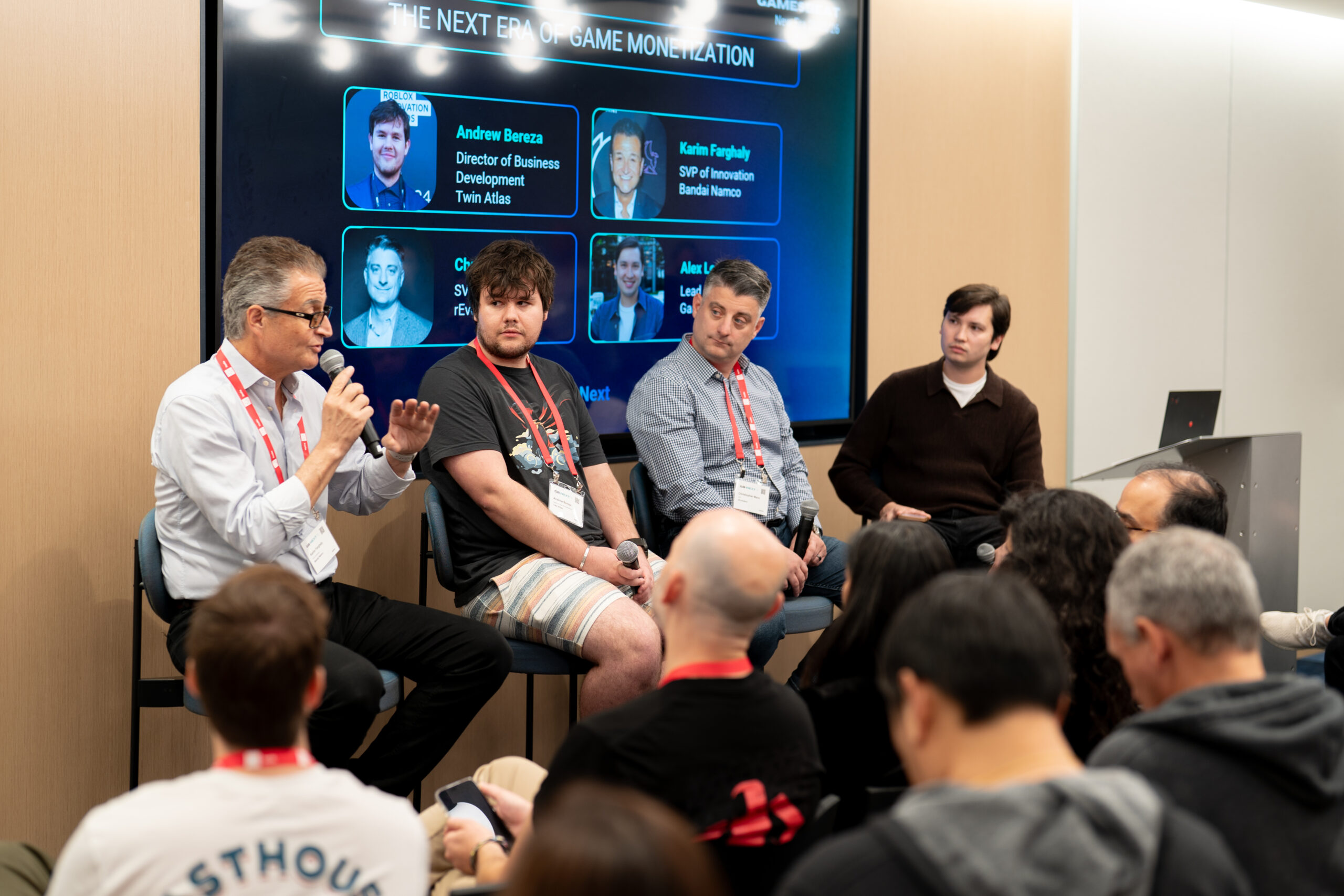
At last month’s GamesBeat Next conference in San Francisco, GamesBeat’s Alexander Lee — disclosure: that’s me — joined Bandai Namco senior vice president of innovation Karim Farghaly, Twin Atlas director of business development Andrew Bereza and Christopher Mann, a senior vice president at the gaming marketing agency REVXP for a discussion of the changing nature of video game monetization in 2025.
The discussion started at a high level, but quickly started to zero in on a key theme: that game developers and publishers are bringing brands into monetization conversations from the very beginning, rather than viewing brands and ads as an extra revenue stream to be layered on top of the main game.
A significant motivation behind game developers’ push to diversify their revenue streams is ballooning game development costs — a major source of discussion across all of GamesBeat Next’s panels and roundtables. With larger teams and longer development times, developers are pulling out all the monetization stops to keep their releases profitable.
“You’re trying to increase the price on something, but you have to determine whether the content that you’re actually offering the fan is actually worth it for them to spend that kind of money,” Farghaly said. “That’s something that we’re challenged with currently, and that’s why we’re trying to find other ways to monetize with our fans.”
One example of Bandai Namco’s expanded approach to game monetization was last year’s integration of Chipotle branding into the Bandai Namco title “Tekken 8” — an activation that Farghaly put together in collaboration with Mann, whose agency manages Chipotle’s gaming strategy. Instead of simply slapping Chipotle logos across Tekken’s characters or loading screens, Chipotle leveraged “Tekken’s” in-game monetization tools to get in front of players in a meaningful way. Players who ordered Chipotle online during the promotion could use a promo code to gain in-game currency, which they could spend on avatars and character costumes.
“A lot of big brands out there have created Fortnite maps or Roblox experiences that nobody plays. For us, we’re always trying to work with our brands to extract the most value out of their partnerships,” Mann said. “We’re not buying media.”
The UGC effect
One shift in the game development landscape that has created a significant opening for brands is the rise of so-called user-generated content, or UGC, platforms like Roblox and Fortnite. Although these platforms are rooted in gaming, their rise reflects the evolution of the medium from a fun pastime into a form of social media, with Roblox’s traffic and engagement dwarfing the numbers of other gaming platforms like Steam and PlayStation.
There’s nothing advertisers like more than attention and engagement, and Roblox creators and developer studios like Twin Atlas are keenly aware. Unlike traditional game developers — which came late to advertising and is still adjusting somewhat to brands’ central role in the industry ecosystem — the UGC gaming ecosystem has grown up around brands, and both UGC game developers and players are much more open to brand integrations as a result.
“There’s a difference in psychology between how a player goes into your traditional free-to-play game, versus how they go into Roblox. I was talking to Karim yesterday and he brought up the ‘pinch point’ which in mobile gaming is when the game starts to get really boring and prompts you to spend money to continue having fun,” Bereza said. “In a Roblox game, a lot of it is gift-card-based; players already have their Robux on their account, and they have nothing to do but spend it. So, they’re going into a game expecting to spend their money, and it’s not about convincing them to spend — it’s just giving them something to spend on.”
Roblox players’ increased tolerance for brand integrations doesn’t mean advertisers can dive into the platform headfirst, according to Bereza.
“The brands that have been very successful in the space are the ones who have shown up authentically and won the support of the community,” he said. “In the Roblox community, when people like you, they become your biggest fans — they become your promoters, they tell everyone about you. And so it makes it a really great space to do cool stuff that excites people.”