
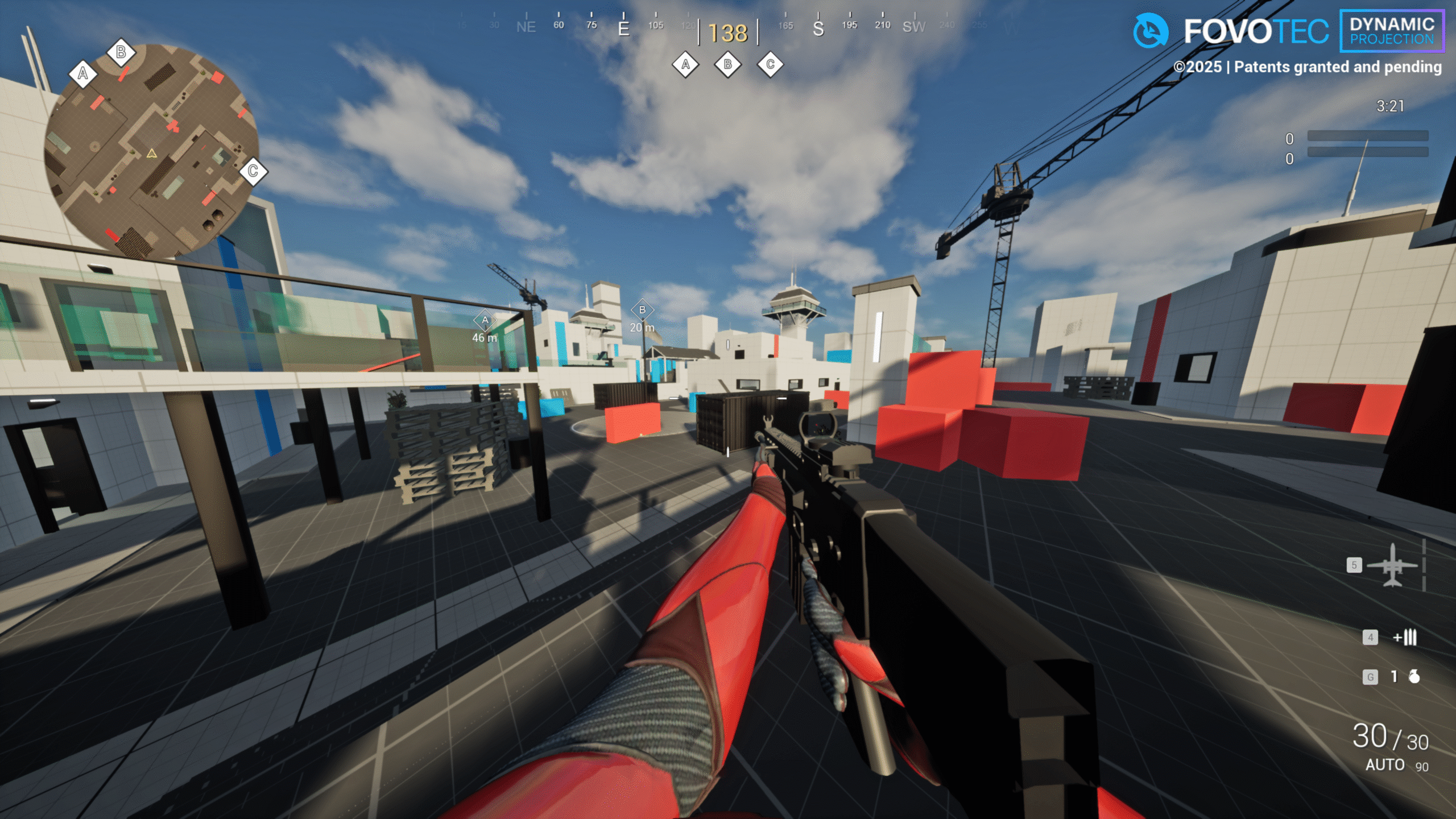
A decade of scientific research is now crossing into game development. FOVO Technology Ltd. (FOVOTEC) today announced that its Dynamic Projection system, a breakthrough in real-time rendering that mimics the way humans actually see, is officially entering early access for game studios.
This marks the first time developers can integrate the company’s distortion-free, human-like field-of-view technology into live projects using Unreal Engine, Unity, or even custom engines.
The closed beta begins today, with a limited number of studios being accepted into the program at the official website.
Reimagining how games see the world
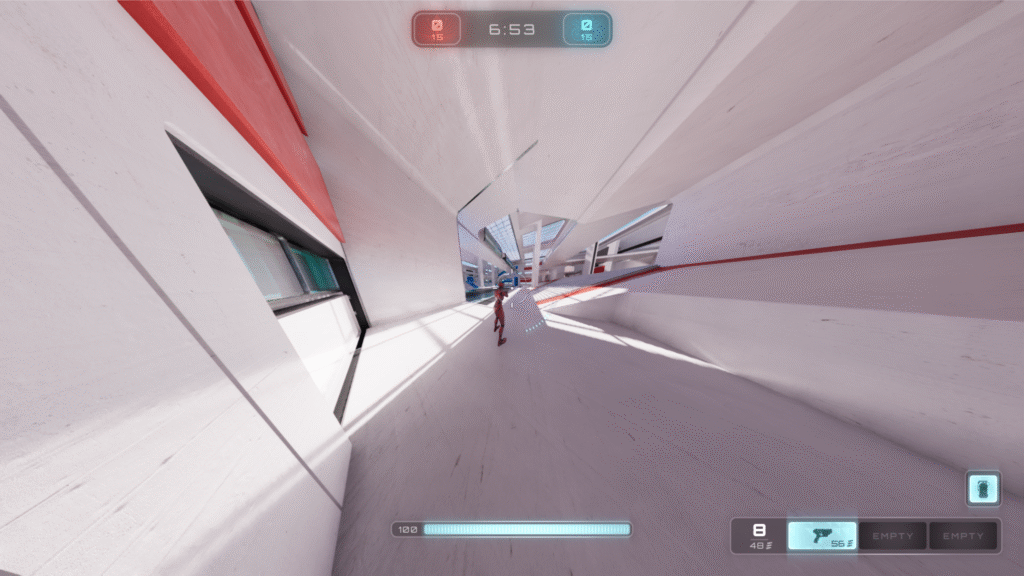
For decades, video games have relied on a visual model constrained by hardware and performance limits. Typical games render scenes at a 90°–110° field of view — anything wider causes stretching at the edges and compresses detail in the center, breaking immersion. Attempts to fix this, from FOV sliders to lens distortion shaders, have always come at the cost of realism or framerate.
FOVOTEC’s Dynamic Projection changes that equation. Developed over 10 years of academic and technical research, the system enables 160°–180° horizontal fields of view at 4K resolution and 60 FPS, all without the warping or tunnel-vision effects that plague wide-angle rendering. The result, the company says, is “a more natural and performative 3D visual experience” that more closely matches human peripheral and central vision.
“The way we see the world around us is very different to how screens display it, but until now we’ve had no way to replicate this in a way designers and developers can access,” Robert Pepperell, co-founder and chief executive officer of FOVOTEC, said in a prepared statement. “With wider fields of view, games can now deliver greater visual realism, improved situational awareness, and a more natural sense of speed and motion, which ultimately elevates the overall gaming experience. Once gamers try it, they won’t want to go back.”
Dynamic Projection’s potential extends beyond prettier screenshots. In competitive and immersive genres — from first-person shooters and racing sims to VR and cinematic games — a more accurate field of view could change how players perceive distance, speed, and motion, improving both realism and gameplay feel.
Built for developers
The early access launch opens the door for professional studios to begin testing the tech in live environments. To keep integration smooth, FOVOTEC has designed a flexible plug-in architecture that can be dropped into an existing pipeline — even mid-production — without the need for reworking a project’s entire graphics stack.
Participants will receive technical documentation, sample projects, and dedicated engineering support, as well as opportunities to provide feedback directly to FOVOTEC’s development team. The company plans a stage-gated rollout, gradually expanding access as partners validate new features.
Historically, the challenge has been computational cost: modeling the nonlinear geometry of human sight requires significant GPU resources. FOVOTEC’s key innovation lies in re-engineering the projection process itself, distributing rendering load dynamically across the scene rather than forcing the engine to treat every pixel equally. This allows the technology to scale across platforms without massive performance penalties.
If the company succeeds, Dynamic Projection could become one of the most meaningful visual upgrades since real-time ray tracing — only this time, focused on human perception rather than light simulation.
For an industry chasing both technical fidelity and emotional realism, the ability to render scenes through a more “human” lens could be transformative.