
Xreal, the Beijing-based AR glasses maker, said it has raised $100 million in a new funding round.
Xreal CEO Chi Xu announced the news on Bloomberg Television, saying the funding at a $1 billion valuation came from unnamed supply chain partners as well as other backers. The news comes after Xreal made a flurry of announcements at CES 2026, the big tech trade show in Las Vegas last week.
To date, the company has raised a total of $433 million in outside funding since its founding in 2017, according to Crunchbase.
Previoulsy, Xreal raised $28.6 million in May 2025 in a round led by Pudong Venture Capital.
Google XR partnership
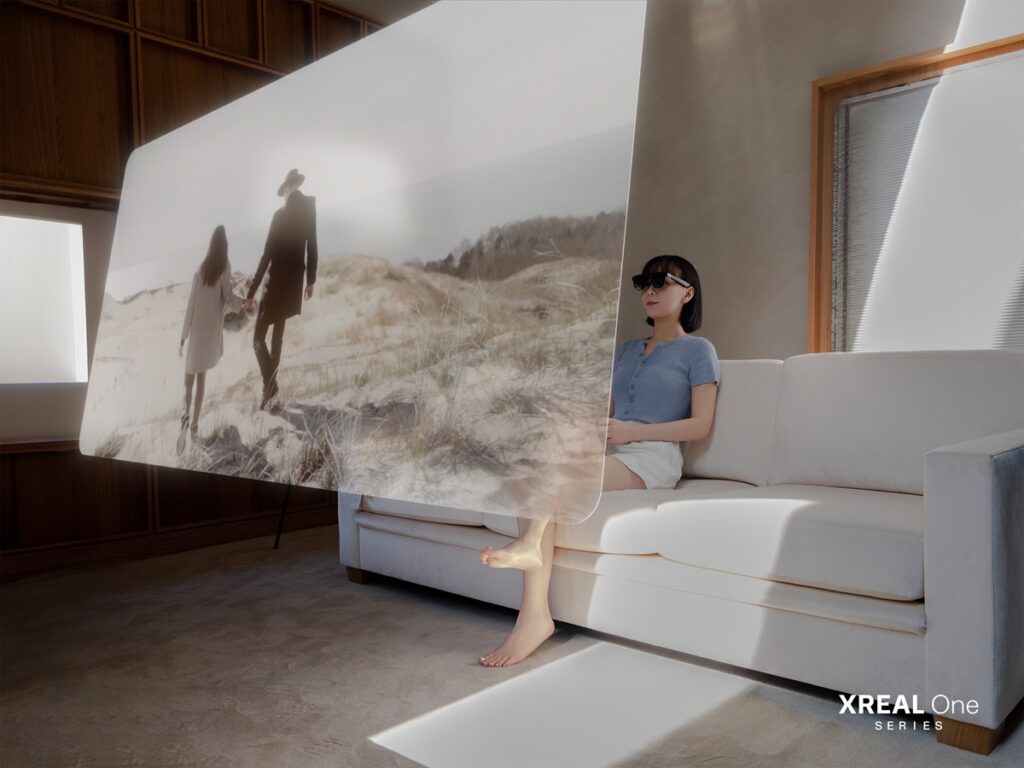
At CES, Google and Xreal announced a multi-year extension of their strategic partnership, with Xreal named lead hardware partner for the Android XR ecosystem.
Building on the foundation of Project Aura, coming in 2026, this deepened collaboration
aligns Xreal’s long-term hardware roadmap with the Android XR platform.
The companies will collaborate on bringing Android XR to optical-see-through devices, like wired XR glasses, and work to expand support for Android XR development.
Further updates on the 2026 consumer launch of Project Aura will be shared later this year.
Working with Asus
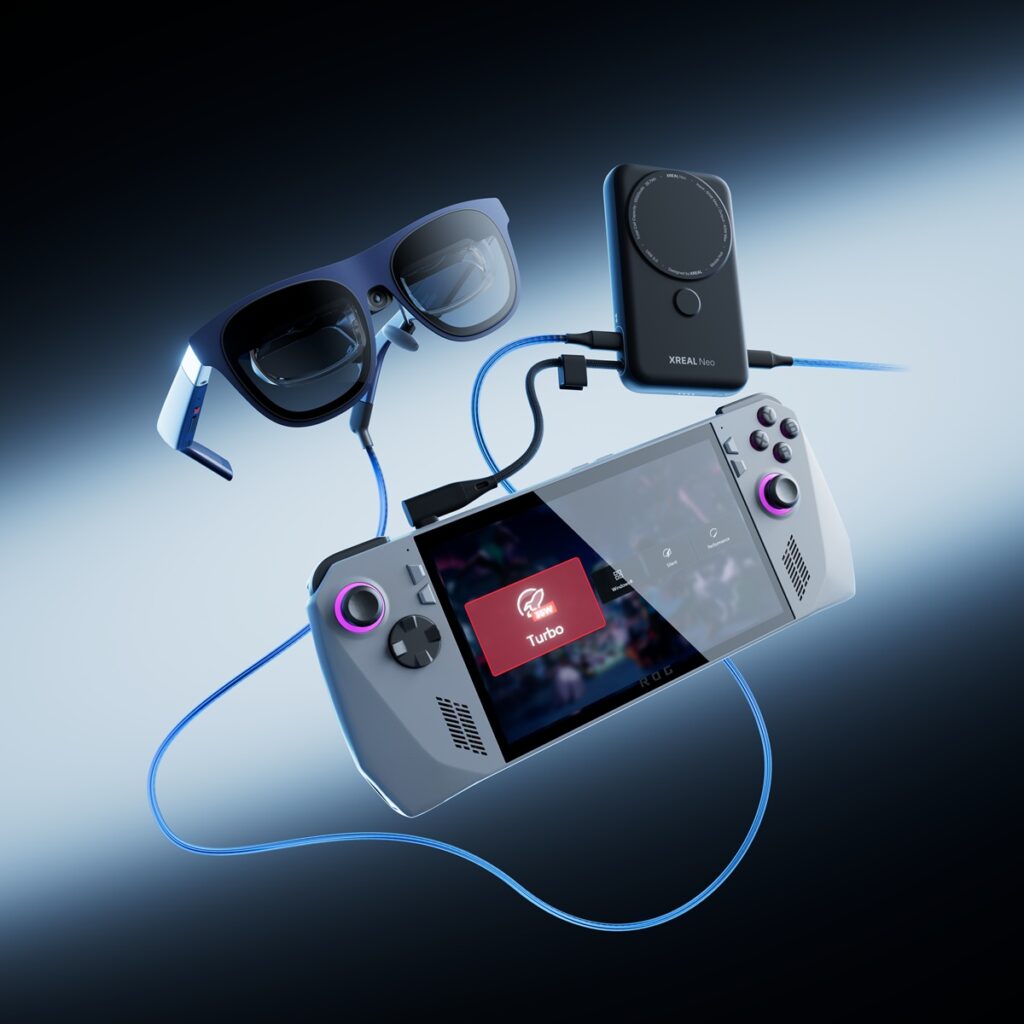
Also at CES, Xreal announced a strategic partnership with Asus Republic of Gamers on a new AR glasses accessory.
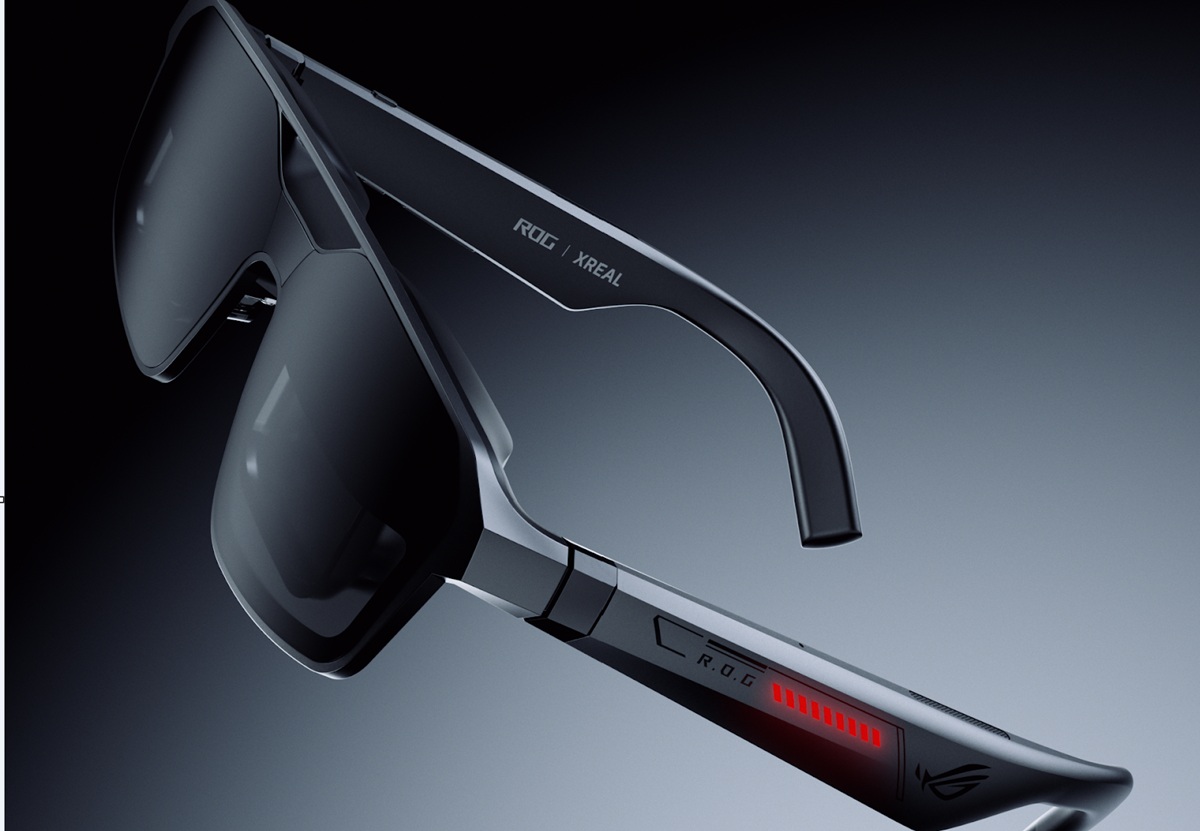
The companies unveiled the ROG Xreal R1 AR Glasses at CES 2026 in Las Vegas today. ROG Xreal R1 is the world’s first 240Hz micro-OLED FHD (1920 x 1080) gaming glasses, featuring the exclusive ROG Control Dock for extensive connectivity and compatibility with PCs and consoles.
Xreal has helped carry the AR glasses industry forward and brings years of market leadership in lightweight XR hardware development. Now it’s working on the ROG Xreal R1, contributing deep expertise in spatial display engineering and proprietary optical systems.
Xreal uses prism-based optical engines – and stands as the market share leader for AR glasses and AR technology innovation for the past five years.
This pairs seamlessly with ROG’s legacy of shattering display boundaries. From launching the world’s first 240Hz, 360Hz, and 540Hz gaming monitors to redefining immersion with the massive Big Format Gaming Displays (BFGD), ROG has consistently set industry benchmarks for speed and scale.
Powered by Xreal’s dedicated X1 chip, the wearer can enjoy a 171-inch virtual screen at 4 meters for up to 57° field of view, covering 95% of the focused viewing area. Additionally, users can make the virtual screen larger or smaller, and farther or closer with the press of a button.
ROG Xreal R1 is expected to ship globally in the first half of 2026. It will be on
display at the XREAL booth (LVCC Central Hall, Booth #14056) and the Asus ROG
booth (Venetian Expo 3F, San Polo #3403) at CES 2026 in Las Vegas.
Xreal 1S glasses and Neo Power Hub
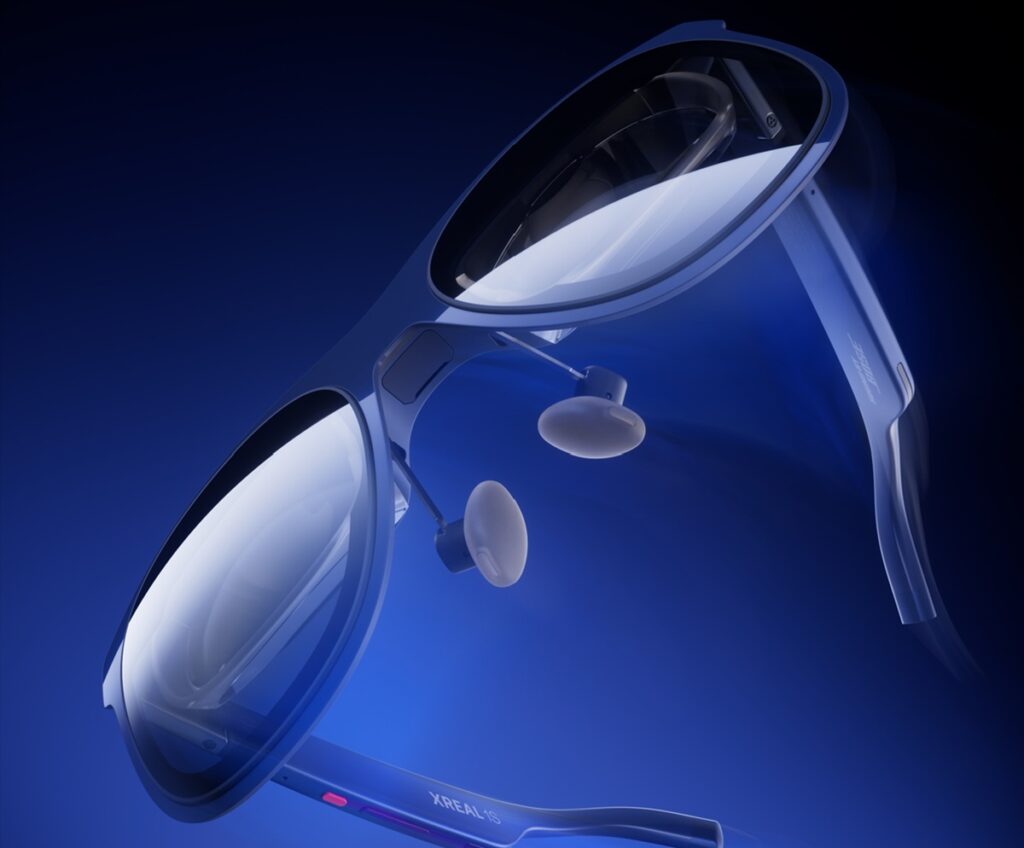
And at CES, Xreal announced the Xreal 1S AR glasses and its Xreal Neo power hub.
The company announced the expansion of its Xreal One Series lineup with the Xreal 1S, a new standard for premium wearable displays at the price of $449, $50 lower compared to its predecessor.
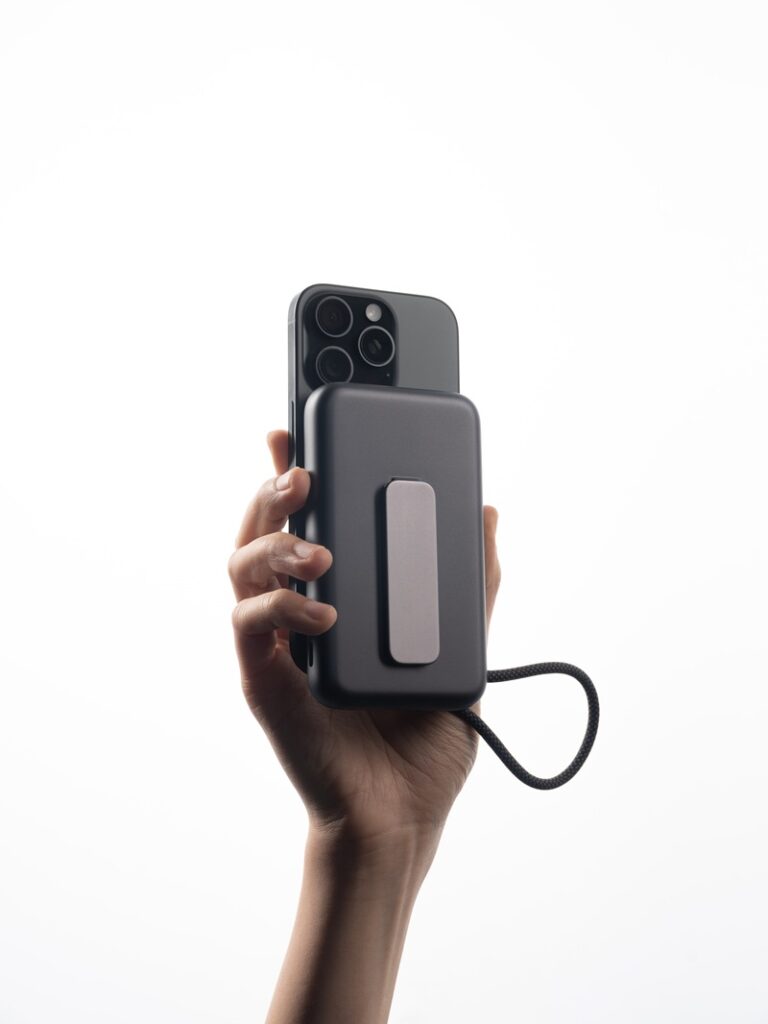
Additionally, the company released Xreal Neo, a compact power hub that combines a high-powered portable battery with DisplayPort video pass-through into one sleek device.
Xreal said the Xreal One Series achieved sales success with the launch of the Xreal One and Xreal One Pro spatial display glasses. The 1S builds upon that momentum, making Xreal’s ecosystem more accessible for everyday users, gamers, and mobile entertainment fans.
The new Xreal 1S aims to set a benchmark for entry-level AR glasses, serving as a mid- generation refresh and market replacement for the initial Xreal One glasses that were released in December 2024.
Xreal 1S delivers an immersive, cinema-grade experience anywhere. It projects an average 171-inch spatial screen while increasing core specs compared to its Xreal One predecessor.
Xreal 1S increases the resolution from 1080p to 1200p FullHD; it increases brightness from 600 nits to 700 nits; it increases standard RGB from 100% to 108%; it increases field of view from 50-degrees to 52-degrees; it increases aspect ratio from 16×9 to 16×10; and it maintains the ultra-smooth 120Hz max refresh rate.
Additionally, users can experience a screen of up to 500 inches thanks to the One Series’ ability to make its virtual screen larger or smaller at the touch of a button. Xreal 1S does all this while lowering the price from its predecessor, Xreal One from $499 to $449.
Xreal Neo is a leap forward for power users who need extended battery life for longer sessions. Xreal Neo serves as both a DisplayPort (DP Alt Mode) video hub and a 10,000 mAh power bank, eliminating the need for multiple adapters or chargers. Most
exciting, Xreal Neo allows Xreal owners to use their AR glasses with Nintendo Switch and Nintendo Switch 2.
With its built-in USB-C cable, magnetic quick connect, and fold-out metal kickstand, Xreal Neo is designed for true grab-and-go use. It supports 30 W input and 20 W output on battery, and up to 45W output when connected to a 65W or higher wall charger, enabling fast power delivery across mobile devices and handheld consoles.
Beyond battery life, Xreal Neo and 1S AR glasses unlock unique video performance gains across portable gaming platforms. When it comes to Nintendo Switch, Neo enables the popular handheld to stream video to Xreal AR glasses — all without the native, previously required, dock.
As Nintendo Switch’s on-board screen is 720p at 90Hz and supports 1080p via video pass through, Neo and Xreal 1S enable users to experience their favorite games at 1080p up to 120Hz.
For SteamDeck owners, they can experience up to 1200p at up to 120Hz when using Neo with their Xreal glasses.
Xreal 1S and Xreal Neo are available starting today through Xreal.com, Amazon and
BestBuy.com. Xreal 1S is priced at $449 while Xreal Neo is available at a special launch price of $99 from January 4 to February 4, before increasing to $119 thereafter. Xreal Neo is expected to begin shipping in February 2026.