
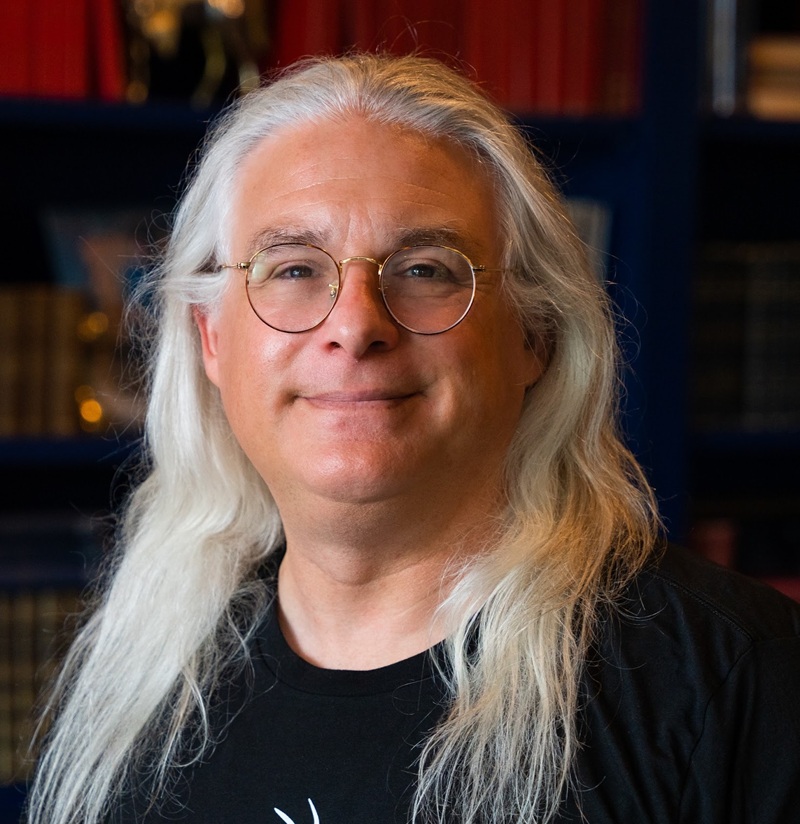
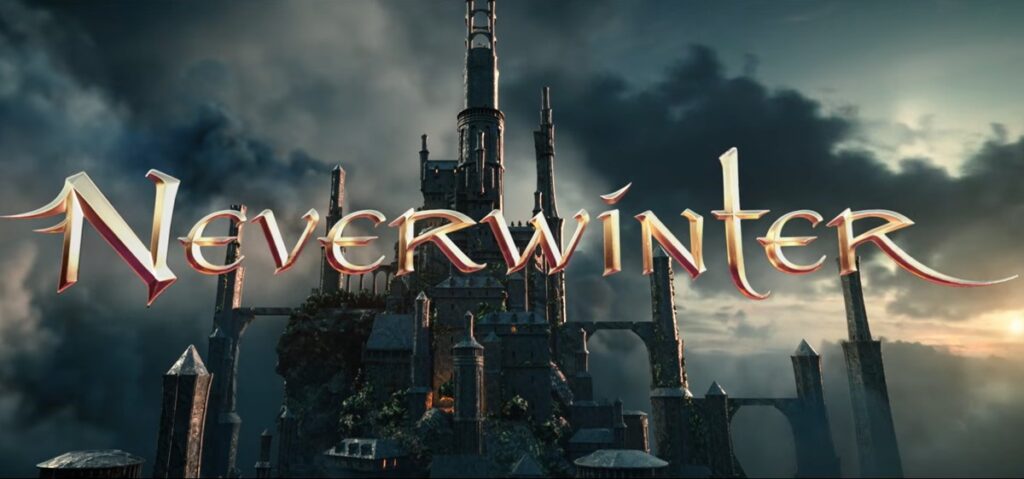
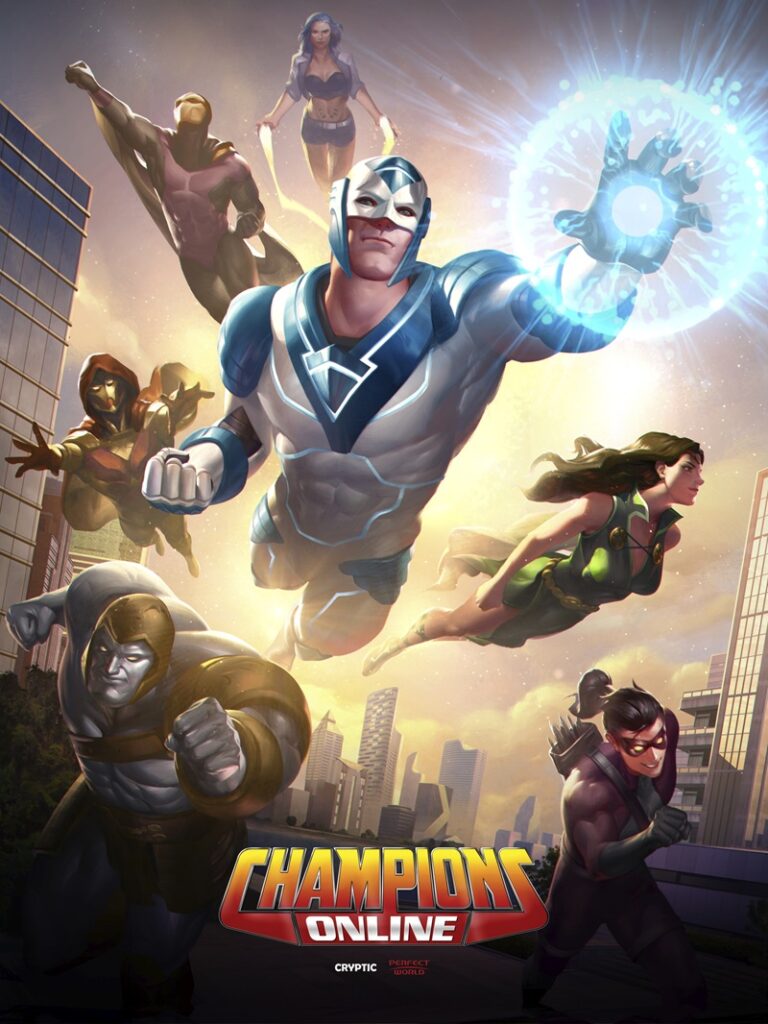
Jack Emmert returned as CEO of Cryptic Studios earlier this year. A cofounder of the studio back in 2000, Emmert helped launch its major MMORPGs, including Star Trek Online, Neverwinter and Champions Online.
He left in 2016, and then came back in January, a decade later. I talked to him about why. Now based in Austin Texas, Emmert is one of the seasoned veterans of massively multiplayer online role-playing games. Now he’s bringing back other veterans too.
Joining the team are veteran developers Landon Falls, Randy Mosiondz and Julia Sprenz. Falls is executive producer on Neverwinter, Mosiondz assumes the role of creative director for the D&D MMORPG, and Sprenz returns as game designer on Champions Online.
His return comes as the market for MMORPGs is changing. Amazon Games was a major backer of the segment but amid 30,000 recent layoffs it laid of much of its game team, canceling plans for a Lord of the Rings MMO, shutting new content for New World: Aeternum and ceasing publishing in the West for Blue Protocol.
Cryptic itself has had more than 32.2 million registered players since 2000, with 1.47 billion hours of total playtime. But the three operating games right now have low thousands of concurrent players on Steam. While Star Trek Online has a registered player based of 7.7 million, the question is how to get the players back. The task has fallen to Emmert, who has also attracted a number of returning veterans to the team. He noted in an earlier interview that his job isn’t to wind the studio down.
Now Cryptic is an independent company as a part of Arc Games, which also owns Remnant II, Remnant: From the Ashes, the Torchlight series, and Fellowship, as well as distinctive indie experiences like Have a Nice Death and Frosthaven.
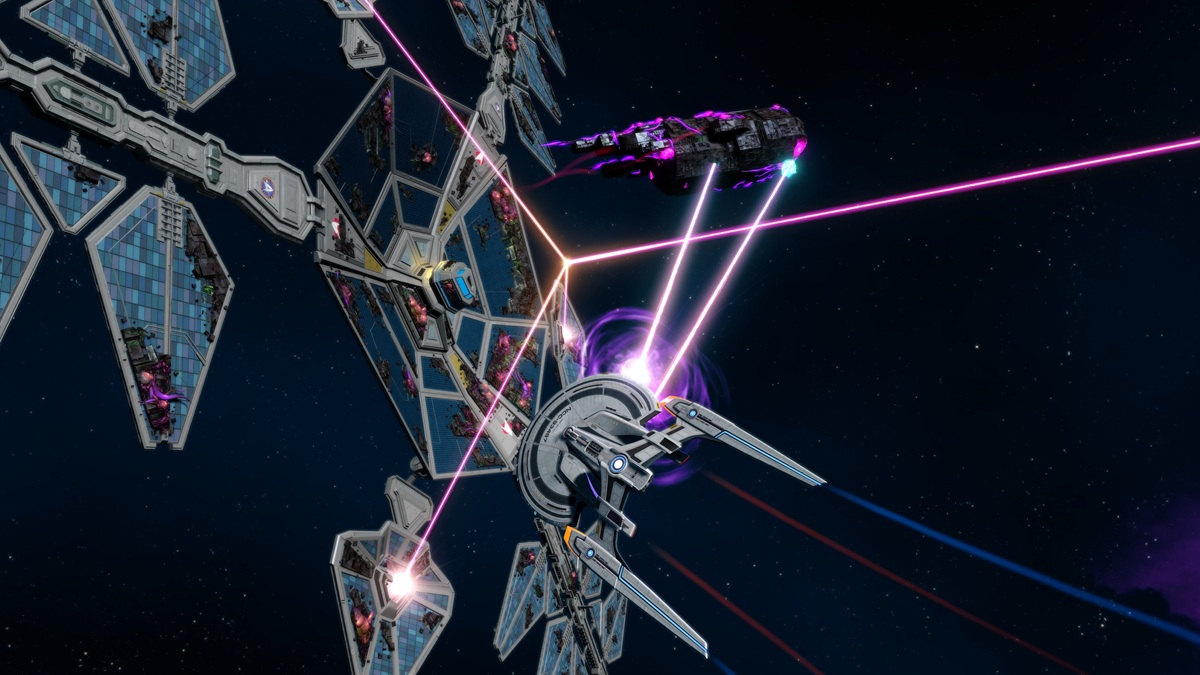
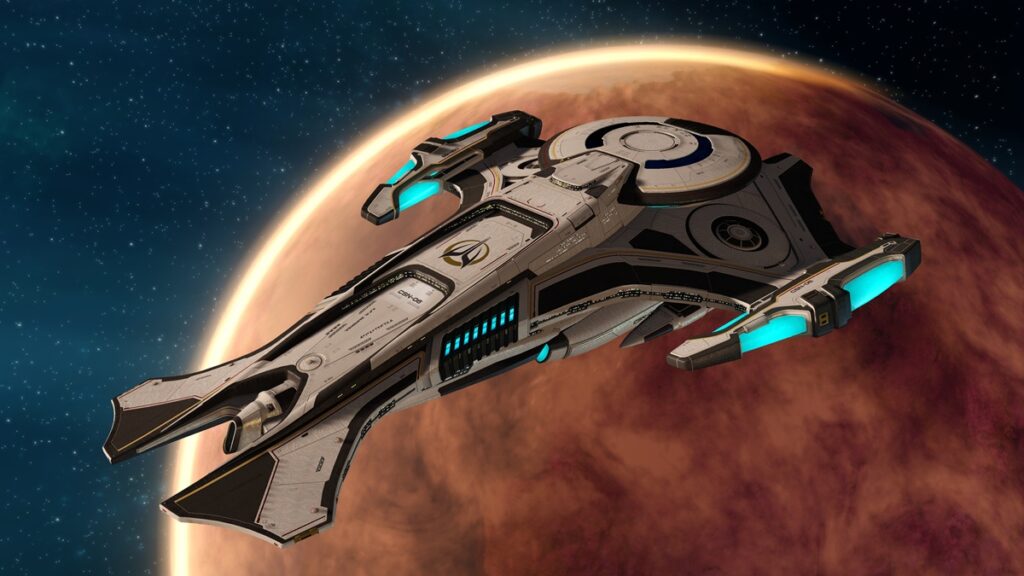
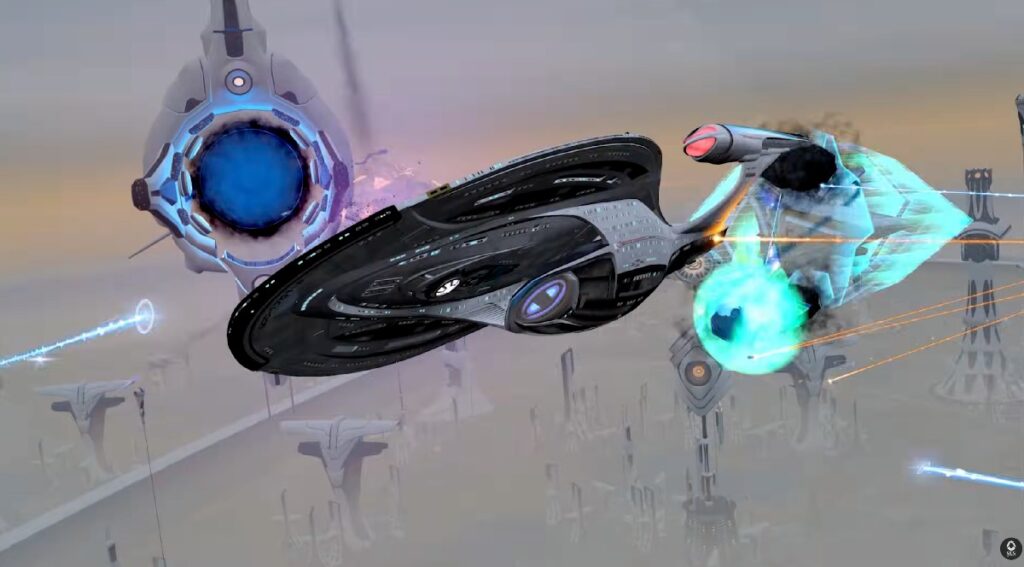
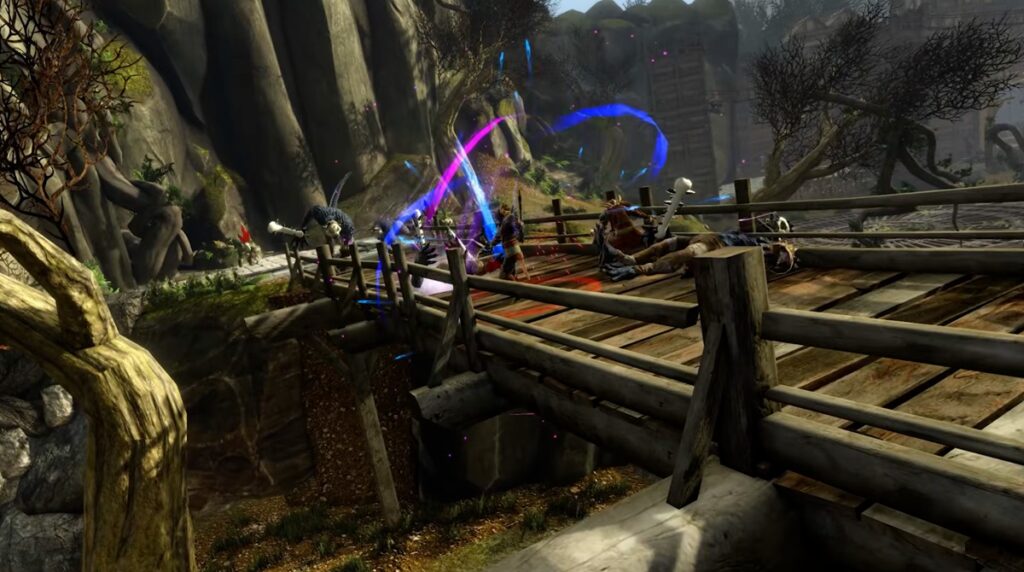
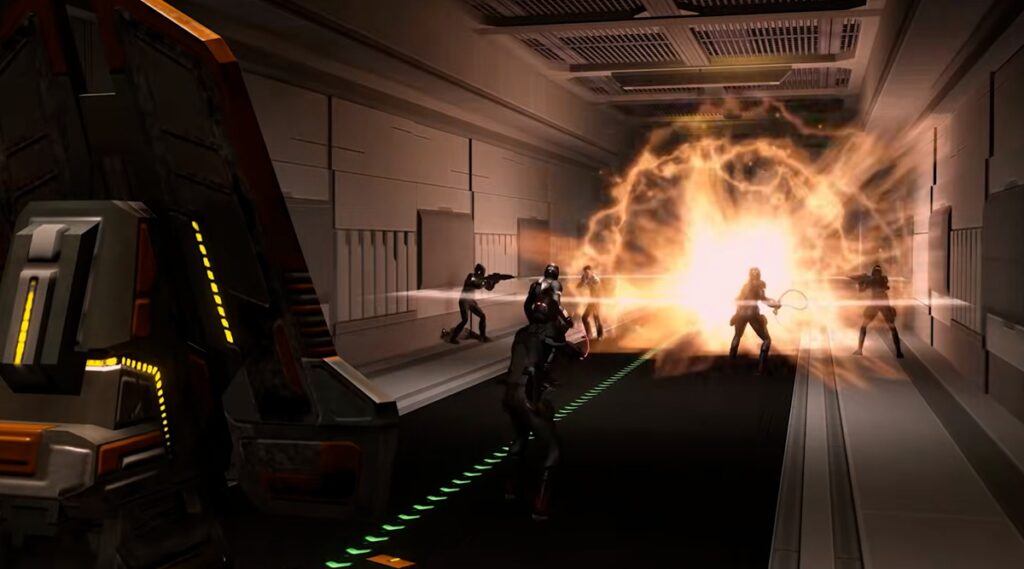
Cryptic Studios recently launched major updates with Star Trek Online starships featured in Star Trek TV series like Picard and Starfleet Academy, while the D&D MMORPG Neverwinter recently introduced a depiction of Thay inspired by Dungeons & Dragons: Honor Among Thieves.
A rich history
Cryptic Studios was founded in 2000 by Michael Lewis, Rick Dakan, Bruce Rogers, Matt Harvey, Cameron Petty and Emmert. They built a superhero MMO, City of Heroes, based on brand new characters.
The studio started building the Cryptic Engine, a proprietary MMO engine that would power every major Cryptic game for the next two decades. But it changed ownership a num,ber of times.
The company partnered with NCSoft from 2001 to 2003. Emmert joined as a designer and became the creative face of Cryptic’s City of Heroes, which launched as a surprise breakout success in 2004. It was a rare Western studio success in the sci-fi market, even though MMOs were dominated by fantasy games at the time.
In 2005, the company launched City of Villains as a standalone expansion. Cryptic and NCSoft worked together on new concepts but then parted ways by 2007. Cryptic started work on Marvel Universe Online with Microsoft, but then that game was canceled by 2008. Cryptic then pivoted into Champions Online, an original IP for superheroes.
In December 2008, Atari acquired Cryptic Studios and it launched the comic-style MMO Champions Online in 2009. Star Trek Online launched in 2010 amid leadership changes. Bill Roper became chief creative officer but departed later that year. Emmert became CEO of Cryptic in March 2011, but Atari sold Cryptic to Perfect World in May 2011, and with that Cryptic shifted to free-to-play monetization and faster content cycles.
Star Trek Online shifted to free-to-play and Neverwinter launched as a free-to-play D&D MMO in 2013. Cryptic became a stable live-service MMO studio and branched into console online MMOs in the subsequent years. Emmert left in 2016 to join Daybreak, where he worked out of the Austin studio and managed DC Universe Online.
By 2018, Star Trek Online launched its fourth expansion and worked with a dozen Star Trek actors reprising their roles in the game. In 2021, Cryptic launched an open beta Magic: Lends, a Magic: The Gathering-inspired RPG, but it missed its mark and was shut down before full release.
In 2022, Embracer Group acquired Perfect World Entertainment and Cryptic and Perfect World Entertainment became part of Gearbox Entertainment.
But in 2023, Embracer Group ran into its own over-expansion troubles. It divested Gearbox Entertainment to Take-Two for $460 million. Then Gearbox Publishing rebranded as Arc Games, still under Embracer Group. The live services team DECA Games served as co-developer on Star Trek Online, Neverwinter and Champions Online.
In 2025, Arc Games and Cryptic Studios spun out of Embracer Group as independent companies, both owned by holding company Project Golden Arc. The DECA Games team members who worked on Cryptic’s titles became a part of the new Cryptic.
Meanwhile, Emmert had started his own game studio with funding from NetEase. But after NetEase pulled back on its North American efforts, it shut Jackalyptic Studios. And after a long absence, Emmert came back to Cryptic Studios. Now he hopes to do more than just operate the existing games.
Here’s an edited transcript of our interview.
Returning to Cryptic
GamesBeat: Where are you now? Did you move out of the bay area?
Jack Emmert: Yeah. Austin, Texas. We’re all virtual now. There’s a handful of people who still go to the headquarters building, but for the most part it’s not used.
GamesBeat: I wanted to catch up and see what’s interesting for you, to boomerang into this role.
Emmert: As my career–I’m 56. How many more years I’ll be doing this I don’t know. But I know that Cryptic–it’s been through some rough years. It’s been around for 26 years. I wanted to get it into a place where it would last another 26. Leave some kind of legacy. It felt like I could contribute the most doing this, as opposed to starting my own company or doing my own game. I felt like the time was right.
GamesBeat: When were you last in charge?
Emmert: Boy. That would be December of 2015. The first time around I was there for 15 years. We started midway through 2000, so 14 and a half years. I was one of the founders. Michael Lewis was our angel investor. He stepped in as CEO a couple years in. He was CEO for a while. Then John Needham was CEO, and then I was CEO.
GamesBeat: Did you think that something like Star Trek Online would be around after so many years?
Emmert: I don’t know whether I ever consciously thought about it, but I could never envision the game shutting down. That was not something–what I think, if I were being honest, knowing what I know now, it’s miraculous that those games are still successful, still running, still have fans. That’s pretty good.
GamesBeat: I was always a little suspicious when Zynga started calling some of their games “forever games.” But some of them have turned out that way, for sure.
Emmert: We aspire to that. We hope for that. But you can’t plan on it.
Lasting decisions
GamesBeat: Do you think there were some design decisions back in those days that made these games last?
Emmert: In the case of Star Trek, the decision, the very early decision–we knew we had to have both ground and space to really encapsulate the experience. That was important. That’s one reason for the longevity. We can create content that’s authentic to Star Trek.
GamesBeat: Did you debate that, or did you always know you had to do it?
Emmert: Oh, yeah. We had a whiteboard and we had an all-day session. What’s this game going to be? We had the license, but we didn’t have a game. We debated a lot of stuff back and forth.
GamesBeat: Enough variety for players to sink their teeth into this thing over and over again was important.
Emmert: Now there’s so much content–I mean, it’s years and years of content. There’s a ton of stuff there.
GamesBeat: What did you learn about as you went, like how often to update?
Emmert: Every time we do an update in any MMO, it’s an opportunity to add something new to the game or change a formula and see how the players resonate. For Star Trek, when we introduced guild housing, it was the single most important retention mechanic I’ve ever seen in any game. We didn’t know that going into it. It was just a system. But we learned that this was really useful.
We learned, in Neverwinter–we had a piece of content where people would–we had timed encounters. People could run around the map, and if they were really good, they could kill all these encounters to get a prize. That worked great. I reused that later in DC Universe Online and that worked great. Every update, you try something, and if it sticks you can reuse it or change it until it doesn’t work. Then you try something else.
GamesBeat: The business of MMOs, do you have a more complete viewpoint on that now, so many years later?
Emmert: I think I was naive about the financial realities of the business when I was younger. Now I know you gotta make more than you spend. Understanding and accepting all of the various things that go into operating an MMO that are not just content. There are lots of supporting functions that serve valuable and necessary functions.
GamesBeat: What do you think about that point in time where the forever game starts to possibly arc downward? Is there something to be done about that point?
Emmert: If a game lasts for a period of time past a decade, you have a really good shot at maintaining it for a long time. EverQuest, Dungeons and Dragons Online, Lord of the Rings Online, Neverwinter, Star Trek Online, these things are all still operating. Once you get past a certain point, you end up with a pretty loyal fanbase. Then a big part of the game is just trying to get former players to come back from time to time.
That’s the key. Understanding that this massive pool of former players–if the game is starting to slip, what can you do to re-engage them? What can get them to come back? Once upon a time they played and loved it, so what happened? See what you can do there.
The arc of MMO gaming
GamesBeat: How can you relate this to–either what happened with Cryptic, or what has happened in the larger MMO industry? I remember some interesting factoids about–I think John Smedley was talking to Jeff Bezos and asking, “What do you want from us?” Bezos’s answer was, “I want you to create computationally ridiculous games.” It was almost like he was thinking about how to fill out his data centers.
Emmert: Probably not a good way to do it.
GamesBeat: They ran their course. They made a huge investment in MMOs, and then they just wound it down. We’ve seen a lot of those people leave. At some point MMOs were very fashionable for even non-gaming tech companies to dive into. Today they’re unloading these things, as if MMOs have run their course. What would be your own analysis of what’s happened over time?
Emmert: Publishers learned very poor lessons. Their conclusion was that MMOs aren’t profitable, which simply isn’t true. But what was happening was that the level of investment being put into MMOs far exceeded the potential return. The problem was not investment. The problem was the amount.
The other part of it is you have to be relentless about how much you spend on video games in general. Too many people were looking at World of Warcraft as a frame of reference. It would be as if every board game ever made used Monopoly as a frame of reference, which would be ridiculous. Instead, board games are made and constructed and evaluated by independent publishers across the world, using metrics and sales that are reasonable.
Folks lost all sense of reason. I’ve been reading about Ashes of Creation. Those guys spent more than $100 million. They were promising that they’d be the next WoW. No. Nobody is going to be the next WoW. Nobody is going to be the next chess. You cannot plan that. It just happens. In my opinion, when you look at games like Ashes of Creation, or Marathon, or Anthem, these quasi-MMOs, any of these things, they just spent too much money. Had they approached it with a more measured–even New World, right?
In some cases publishing infrastructures are not set up to be lean and mean to begin with. Therefore the overhead to operate any studio in a publisher can be very big. The EAs and Microsofts–they’re that way for good reason. It requires a lot to ship FIFA. I get it. But for an MMO, it’s not quite the same. The marketing muscle that you need for FIFA is not the same as for an MMO. It just became too prohibitive. That was simply foolish.
GamesBeat: What if someone came to you and said, “I think there’s a lot of value to unlock here in an MMO. It’s all the data that gets generated in the game. Wouldn’t it be great if we could ingest that data to make models for AI and make them smarter?” I feel like this is partially true, based on some conversations I’ve had. I’m just trying to get my head around it.
Emmert: You have thousands of people with a limited decision tree in an MMO, as compared to real life. That could help educate an AI. I can see the logic. The challenge with AI right now is seeing where it’s going to monetize. But if someone knocked on my door and asked me if I was willing to sell that data–number one, it would be like, yes, but that’s up to the players. From a moral standpoint that’s where I would stop. From a theoretical standpoint, sure. But I personally–that would be a decision for the players. People feel strongly about AI one way or the other, and I wouldn’t want anyone feeling like their activities were being used and reported in a way they didn’t care for.
Going where Star Trek goes
GamesBeat: When I think about the conspiracy theories around this idea, I think, “Well, maybe that’s why Microsoft isn’t getting rid of Xbox.” But I have no idea whether that’s crazy or not.
Emmert: If you’re in AI, video games have obvious AI application possibilities. Whereas if you’re at, I don’t know, a jewelry store, there aren’t necessarily obvious AI applications. AI companies, it’s like a step function. If we can service video games, then the next step–we’ll get to the jewelry store, but it’s one step at a time. I think that’s one of the reasons why AI companies are interested in gaming in general.
GamesBeat: What’s some of the near term potential in Cryptic? What do you think is possible with Star Trek Online, and your operating games in general?
Emmert: Obviously with Star Trek, we go wherever Star Trek goes. Whatever series, whatever movies, we can reflect those stories. Ultimately we can reinvest and add elements that are still missing from the game to make it more authentic to the Star Trek experience. I’d love to add true exploration. In Neverwinter, I’d love to expand the worlds you can go to. Add character classes. I’d love to find a way to add a dungeon master mode in Neverwinter, where it’s sort of asymmetrical PvP. All those things depend on the meat and potatoes of making sure that the games are operating profitably so we have money to reinvest.
GamesBeat: Are there any particular priorities among your projects? Any games getting the most attention right now?
Emmert: Everybody gets attention. When I first started, I started playing Neverwinter again, and then I started playing Star Trek again. Star Trek and Neverwinter are two big ones. I spend the majority of my time on them.
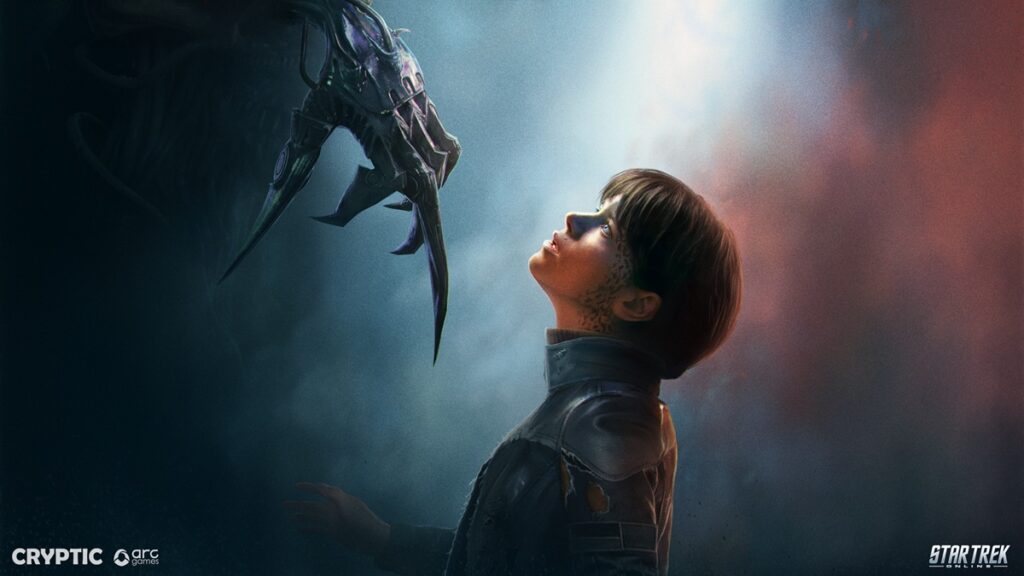
Star Trek Online’s Corruption update
GamesBeat: How did the most recent update for Star Trek go, Corruption?
Emmert: It did really well. Star Trek’s doing better. All of our games are doing better than they have in years over the past couple of months. We have First Contact coming out April 7. We’re just getting started. I’ve only been here a couple of months, but we have a lot planned.
GamesBeat: How many people are there at Cryptic now?
Emmert: I think we have more than 100.
GamesBeat: Are you doing anything to boost that, any hiring for particular reasons?
Emmert: I wouldn’t be surprised. I didn’t come aboard just to maintain our games. I have ideas for other projects I’d like to do. I’m pretty confident that something will kick off in the next three to six months.
GamesBeat: What do you think you’ve learned across your time in games and MMOs, and Cryptic itself?
Emmert: Patience. That’s the number one thing. A lot of humility. A lot of humility. Those are the two things that have affected me the most.
Best decisions? Worst?
GamesBeat: How about a best decision and a worst decision?
Emmert: I don’t know. The decisions that I made were necessary to get me where I am today. I don’t know–well, I can tell you that at least at Cryptic, before I left, there were two games we had in development that never saw the light of day. I blame myself for both of them. Those were the worst decisions. I did not manage them well. There were not good, solid visions for them, and that’s entirely my fault.
I would say that when I was creative director and CEO at Jackalyptic, that might have been a lot. That was a lot to bite off. That was a big challenge. When I went around at Jackalyptic and tried to pitch the game we had been working on with Netease, it obviously didn’t find a home. Maybe I could have pitched differently. Maybe I could have had a different way of doing the content. Best decision would be coming back to Cryptic. That’s been great ever since I started.
GamesBeat: It’s hard to plan your company for unexpected geopolitical events.
Emmert: If I were telling any CEO–operate like next month could be your last. I lost sight of that. If someone is doing a big $100 million project, what’s your pivot if all you had was $10 million to finish? Develop in a fashion where at a moment’s notice, you have something good to show. How can you make sure that you’re ready, at any given moment, for the sky to fall? Over the past 10 years, that’s happened to me a few times, and I wasn’t as prepared as I could have been.
Gaming’s quest to be mass culture
GamesBeat: I read through all of Matthew Ball’s slide deck, and that kind of sent me in two different directions: worried about the game industry, but also seeing some daylight for it at the same time. What would be your own assessment of games? Are they going to take over mass culture the way everyone in the industry wants them to?
Emmert: In a way, that’s already happened. Gaming is part of mainstream culture now. But I think what’s going to radically change is the game industry. My personal take is this. Over the past 20 years, video game publishers have attempted to build infrastructure and companies and processes as mirror images of software companies. We have offices. We have cubes. We have software. We have all this.
I believe the future of the game industry is in Hollywood, and I mean in terms of structure, where you have very thin layers of movie studios, and then you have independent productions thrown together to make a particular project, and then they come apart. You have people migrating from movie to movie. That’s probably a more sustainable option in the long term.
The challenge with the software analogy is that it depends on constant revenue, which games cannot provide, because they’re an artistic endeavor. Microsoft Word is going to sell X units no matter what they do. Very few games can operate like that. This is one of the reasons why large publishers are now simply pivoting to focus only on games with reliable revenue. They’re not interested in new IP. They’re not interested in tiny games. They’re not interested in mid-scale games. They need that reliability to support the infrastructure and processes that they’ve built. That’s my two cents.