
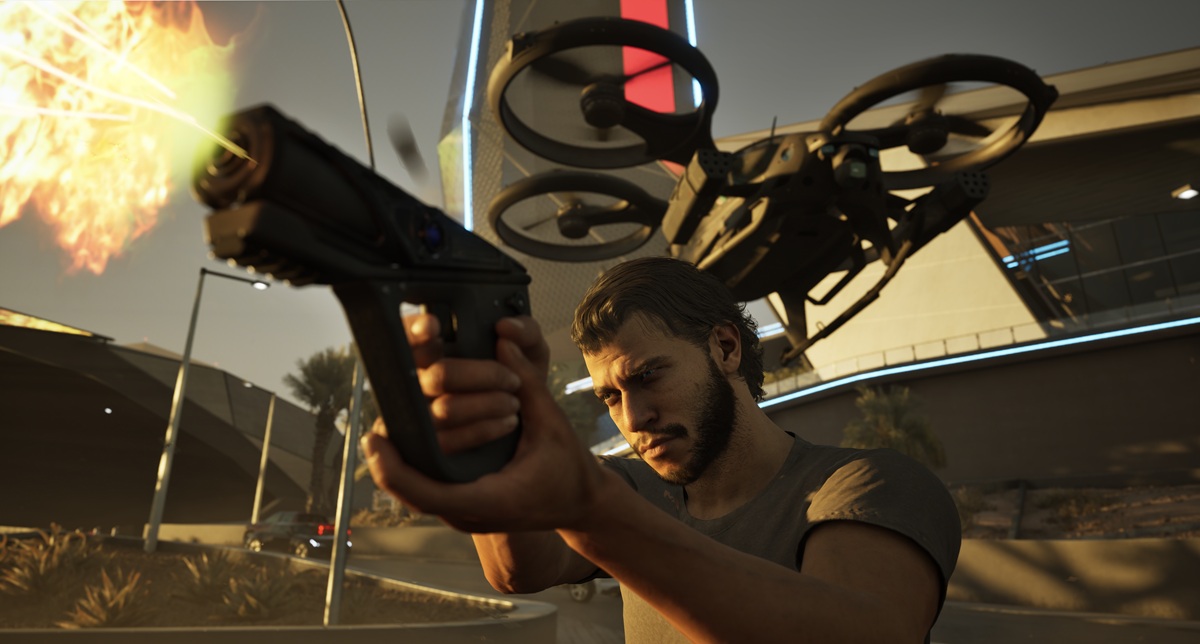
Recently, almost nine months after launch, IOI Partners and Build A Rocket Boy announced they ended their publishing collaboration for MindsEye.
Edinburgh, Scotland-based Build A Rocket Boy, started by Grand Theft Auto V producer Leslie Benzies, assumed the sole publishing responsibilities going forward.
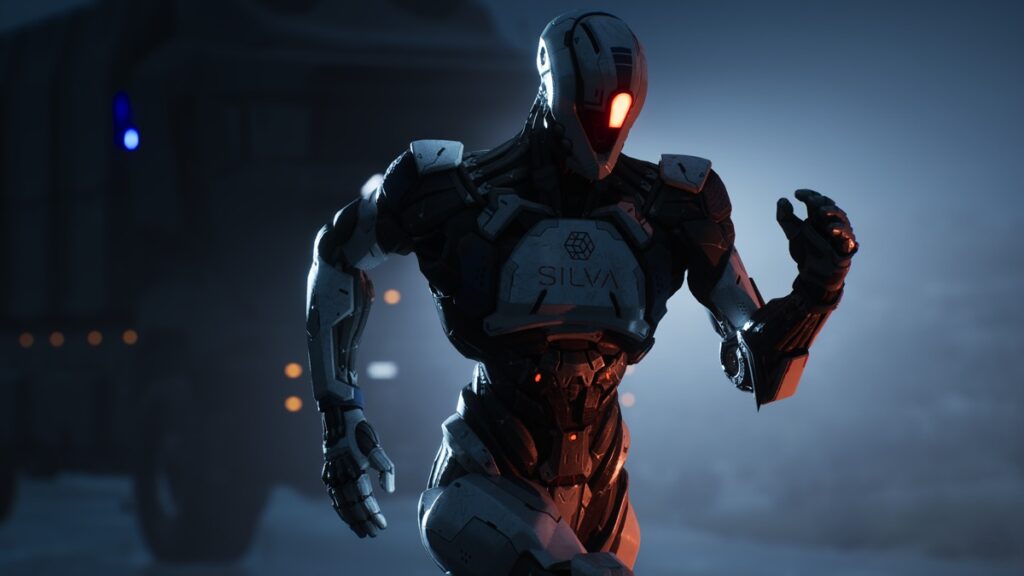
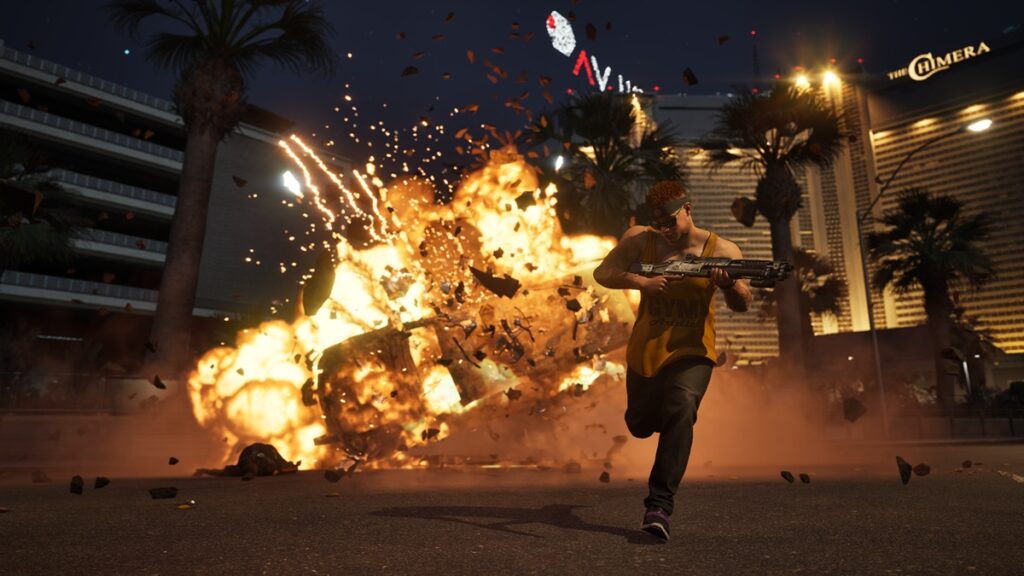
The divorce followed one of the most difficult launches for a modern video game — and there have been a lot of those difficult launches. Build A Rocket Boy suffered a lot of leaks and the haters came out almost immediately after the launch of MindsEye, a futuristic shooter with a mix of street fighting and futuristic AI and drone combat.
But the game was full of bugs at launch and the team had to race to fix them while the rating for the game sank. MindsEye fell off the charts and some players asked for refunds. The team tried to address the problems, but even after raising $151 million, the company ran low on money and it laid off a large number of employees.
Mark Gerhard’s efforts to right the ship
Mark Gerhard, CEO and CTO of Build A Rocket Boy, is trying to right the ship that Benzies started. In an exclusive interview, I asked Gerhard why Build A Rocket Boy chose to end its publishing collaboration with IOI Partners, part of the IO Interactive company that makes and publishes Hitman.
“We’re very excited about this next chapter. We know we had, without doubt, the worst launch in history. And obviously there’s many reasons for that, but we are planning to relaunch our game now that the interference has stopped,” Gerhard said. “The game is being very well-reviewed. The sales are increasing organically, doubling almost weekly.”
He added, “All of that’s very positive. We like being able to control our own destiny as an independent studio. We want to be close to our players. We want to be listening to the community and evolving their game in an organic way.”
IOI didn’t offer a comment for the separation. But the CEO Hakan Abrak told IGN in the fall that the launch “wasn’t what we hoped for.”
He told IGN, “The initial talks we had with those guys were to support them. We thought they had some great ideas and a great world in the background that they were building, and hopefully they’ll get the opportunity to show more of that in the future. And we just wanted to help them distribute the game.”
But Abrak told IGN it was a “tough reception.”
He added, “They’re working hard on turning that around to regain the trust of the gamers out there, and they have tons of potential and content they’re working on. So hopefully they’ll succeed with that in the future.”
Gerhard has been part of Build A Rocket Boy, which Benzies founded in 2016, for almost four years. He became CEO and CTO in August 2024 and helped get the game to its launch in June 2025. The game was full of bugs at that time. MindsEye had crashes and freezes on the PC, PS5 and Xbox Series X/S. It also had performance problems, including stuttering animations, framerate drops, poor optimization even on high-end PCs, and AI behavior bugs. The team has been stamping them out.
Gerhard has a lot of experience. He has been vice chairman of the United Kingdom’s game trade association, TIGA, for 17 years and he has had a mixture of roles as a CEO and investor over time. He founded PlayFusion and ran Jagex, maker of Runescape, for six years from 2009 to 2014.
More layoffs and corporate sabotage investigation
Build A Rocket Boy has had multiple layoffs and it’s still going through them. Meanwhile, CEO and CTO Mark Gerhard told employees that the company had found evidence of wrongdoing, including “corporate sabotage” as part of a campaign against the company. He said authorities are looking into it.
IOI Partners’ involvement with MindsEye is ending, except for any essential transitional functions required to transfer publisher-of-record status to Build A Rocket Boy. Build A Rocket Boy will assume sole publishing responsibilities going forward, ensuring continuity for the MindsEye community and all partners. IOI Partners and BARB are coordinating closely to ensure a seamless transition over the coming weeks.
The game was once described as the “world’s most refunded game.” Gerhard said that returns on Xbox were about 2.2% and PlayStation was 3.2% — within the norms for many games.
“None of that’s true, just a negative or malicious narrative that was amplified,” he said.
As for the conspiracy and espionage that he pointed out to employees, Gerhard said, “Obviously, we were kind of caught flat-footed on that. We didn’t counter the negative narrative. We weren’t sophisticated enough to have done that. But, we’re aware. We’ve called that out. Some of the negativity has been orchestrated around this, and thankfully, as a result, it stopped.”
Regarding those leaked matters, Gerhard said, “We’ve got very strong evidence of this and conducted quite thorough investigations over the months since launch. We’ve identified parties involved, and it’s now with the authorities both U.K. and U.S. to deal with. I can confirm that they’re assisting us with this investigation, but it’s also in their hands now. We’ll leave them to do what they do, make their arrests or any announcements in due course. I think we’re not saying anything further at this stage on that. We’ll just let the natural course of justice take its take its path.”
I noted that there was astonished commentary on the internet that the company seemed to be blaming external parties for the game’s failure at the same time there were known bugs in the game at launch. There’s a chance players won’t give the company the benefit of the doubt when it comes to believing the investigation has merit.
Gerhard noted the bugs that caused the game to crash “is on us.”
“We own that as a leadership team and as a studio. I can say, having done in total 72 games in my life, I’ve never worked on a game that was completely bug-free. It’s always a judgment as to whether you are proud or when it’s good enough. You obviously work tirelessly to make sure you don’t have any showstoppers,” Gerhard said.
But Gerhard said he believes it is important to get the improved game in the hands of players and then learn from the community. That’s what the company is doing.
“We’ve obviously listened to that feedback and continue to invest in the game. So you know, without doubt, it gets better month on month or update after update,” he said. “But without doubt, there was a concerted effort. Some people had their hands on the scale and deliberately tried to shape a negative narrative around the product so it didn’t get a fair chance. It didn’t get to find its community. It didn’t get a chance to be iterated on, as would be typical with these things.”
Being independent and much smaller
In light of the separation between BARB and IOI, the Hitman mission announced in June 2025, planned as a crossover event within MindsEye, will no longer be released. However, BARB plans on working with partners on other projects in the future. Both IOI Partners and Build A Rocket Boy recognize the anticipation this collaboration generated among the community and expressed their appreciation for the support shown by the players.
Gerhard said the separation will allow the company to re-price the game to a more accessible price point.
“That will provide phenomenal value to our players. We’re obviously continuing to invest in the game,” Gerhard said.
As an independent company, Gerhard said BARB will be able to control its own destiny.
Over time, Gerhard hopes to release user-generated content tools and multiplayer for MindsEye. With the UGC tools based on Arcadia, Gerhard said ordinary players will be able to build game content without having to be a programmer. He said the company continues to invest in the game. However, the team is much smaller. Its employee count peaked some time ago at more than 800 people, and it is about 240 now and is in the process of shrinking to around 100.
As it shrinks its staff, Build A Rocket Boy has also been hit with a union‑driven challenge centered on allegations of unfair dismissal, excessive overtime, and mishandled layoff processes. The IWGB Game Workers Union is actively pursuing legal action against the studio, backed by open letters signed by nearly 100 current and former employees.
UGC and multiplayer
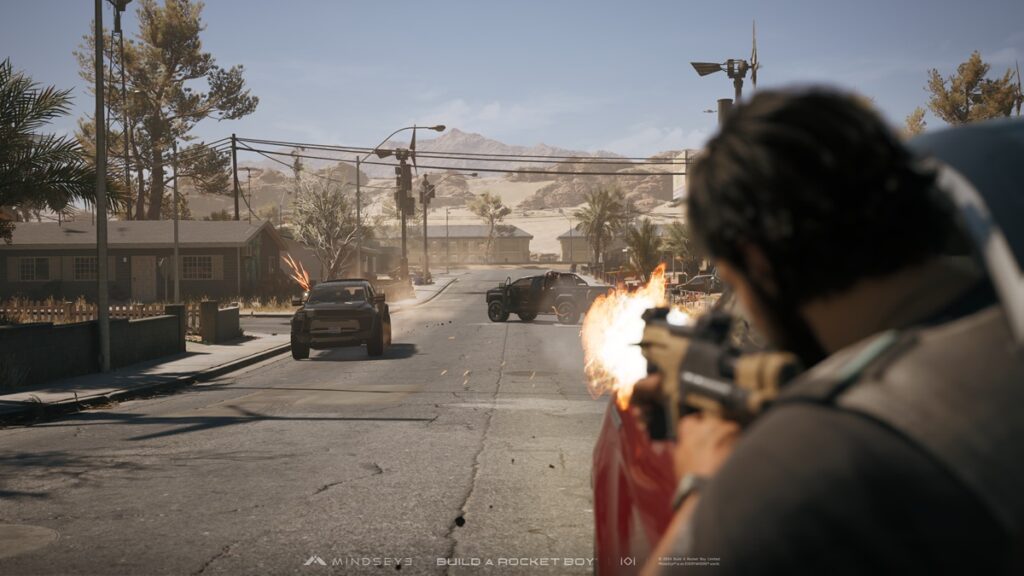
Gerhard said the goal of the UGC is to help democratize game development and give players the “kind of power we’ve had for a decade or more, without needing to have a studio and all the costs associated with it.”
Gerhard said Arcadia was built on “pre-AI” ideas that enabled developers to make game elements without knowing how to code.
“We’re still big believers in that, and are going to continue to work on that,” he said.
Gerhard didn’t say what the sales of MindsEye have been except to say they have been “very modest.” He said there is a small and engaged community that Build A Rocket Boy continues to serve, and that the company continues to evolve the product.
Gerhard told GamesBeat that he is excited about MindsEye’s multiplayer update and a new mission dubbed Blacklist, which introduces a female playable character.
“We’re also using that to share some of the evidence of the sabotage with the community,” he said.
He also said that the company is working on more updates over the coming months.
“The end state we want to be at is where the community can make their own [content] and can dream up their own creations, and again, without being a studio or needing to program or anything. They can actually make really fun and compelling experiences for themselves and their friends. That’s our mission. And I think that’s going to be more and more evident over the next few months,” he said.
Everywhere
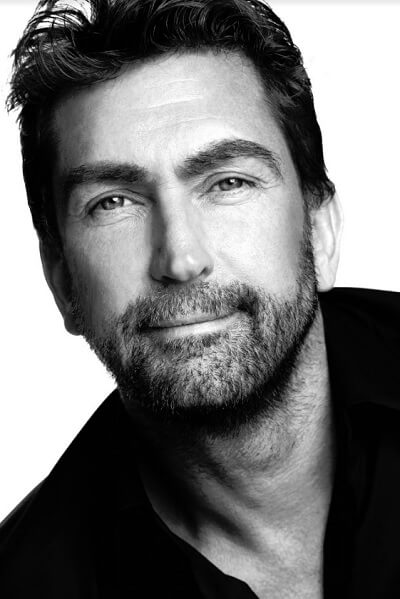
As for Everywhere, Gerhard sees it as one and the same with MindsEye, connected by the Arcadia tools. One will be more realistic than the other and one will be futuristic. Benzies viewed Everywhere, which was Build A Rocket Boy’s first project before it switched to MindsEye, as a kind of Roblox for adults.
“Arcadia is really the interface between the two. We’ve obviously used Arcadia to make MindsEye and used Arcadia to build Everywhere. And I think more and more those two come together. I always thought of it as two sides of the same coin,” he said.
He said the team is stronger for the experience and is learning from it.
“Hindsight is always 20/20. We wish we had more time, wish we had known more ahead of some of this or intervened sooner on certain things. But we’re all human in this,” he said.
Gerhard said that hopes that players will give MindsEye a fair shake, as it has improved after launch. It’s not out of the question that the game could recover, as CD Projekt Red showed with Cyberpunk 2077, which also shipped with a lot of bugs. But it’s also true that Build A Rocket Boy’s team is much smaller than it used to be.
“We’re doing our very best to try and make a success here and keep as many people as we can,” Gerhard said.
Gerhard said the most recent round of layoffs started a couple of weeks ago, acknowledging that the process is painful, and that Build A Rocket Boy tried to avoid it. Gerhard said the ordeal has been tough on Benzies, who has been working on MindsEye for nearly a decade. Benzies took time off following the release, and has come back recently to focus on rebuilding the product.
“He’s incredibly creative and is actively working with the team on the roadmap,” Gerhard said.