
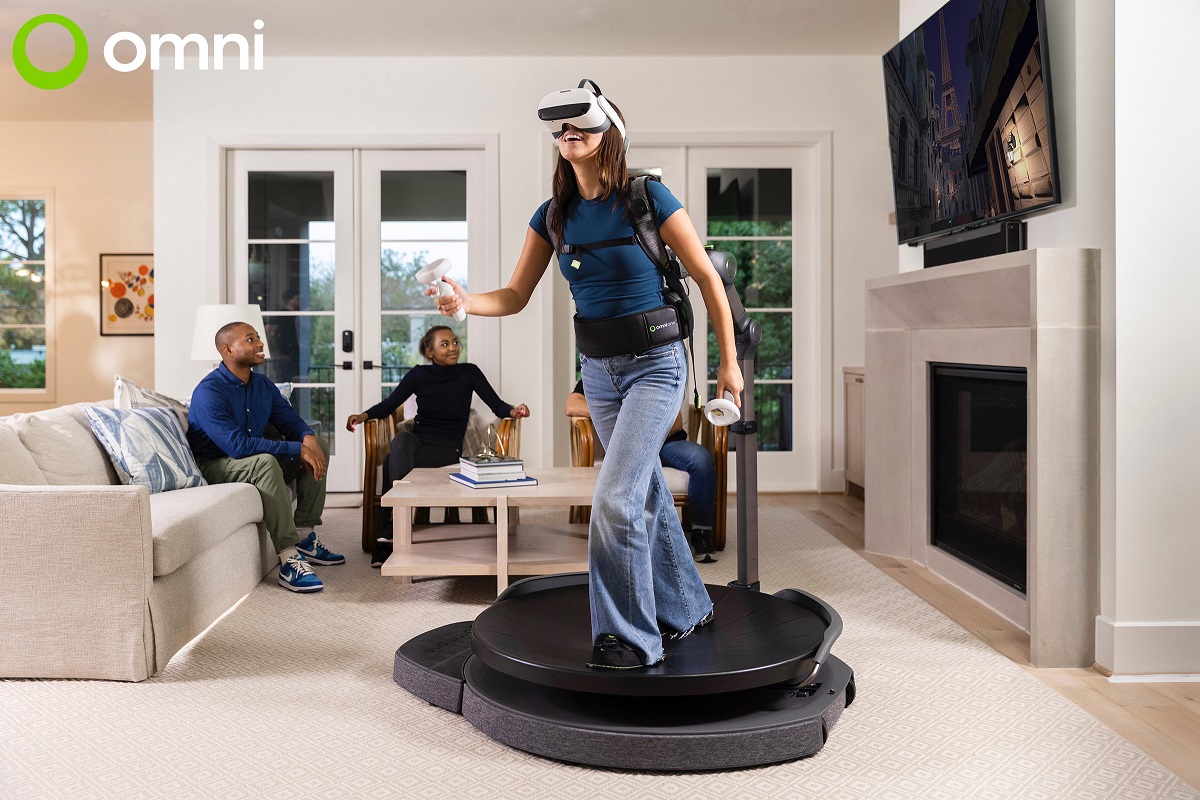
Virtuix, the maker of full-body virtual reality treadmill systems, said it has joined the “Made for Meta” program of Meta Platforms.
Through the program, Virtuix plans to make its “Omni One” 360-degree treadmill compatible with Meta Quest headsets and games, broadening Omni One’s reach to the world’s largest XR user base.
This is the latest move by Virtuix to expand after going public in a micro-cap initial public offering on January 27. Last week, it also announced plans to expand sales to Europe. The IPO price started out good on the first day, closing up 21% to $24.39 a share. But since that time, the price has plummeted to its most recent closing price of $4.65 a share. These efforts are meant to help the company climb back in terms of investor support.
“Joining the Made for Meta program expands our addressable market to millions of active Quest users who already own and love their VR headset and games library,” said Jan Goetgeluk, CEO of Virtuix. “We look forward to collaborating with Meta as we continue to scale our consumer business and bring our immersive, full-body gaming experience to a mass audience.”
Meta operates one of the world’s largest immersive platforms, with tens of millions of Quest headsets in the market and continued investment in XR. The Made for Meta program is a partnership initiative by Meta that authorizes select third-party manufacturers to create high-quality, certified products that integrate with the Meta ecosystem. Virtuix expects to provide additional details regarding product compatibility and timing at a later date.
Described as the “Peloton for Gamers,” Omni One combines immersive gameplay with meaningful physical activity. The omni-directional treadmill lets users walk, run, crouch, and jump naturally in 360 degrees inside video games and other virtual worlds.
Virtuix continues to scale its proprietary full-body movement technology across consumer, enterprise, and defense markets. The company reported 138% year-over-year revenue growth for the six months ended September 30, 2025, and has manufacturing capacity in place to support production up to 3,000 units per month, representing approximately $100 million in annual revenue potential. The company trades under the stock symbol VTIX on Nasdaq.
Virtuix founder and CEO Jan Goetgeluk began developing the original Omni treadmill in 2011, motivated by a desire to walk naturally in virtual worlds rather than pushing buttons on a controller.
You could say that the VR market has always had its ups and downs ever since the big VR bubble kicked off around 2016. The troubles for VR today pale in comparison.
He noted that adoption of VR keeps steadily growing for the new medium, and it’s becoming a more mature part of the entertainment space, with growth also happening in enterprise applications. A decade ago, going public was probably unthinkable, but Goetgeluk has been patient as he started the company a dozen years ago.
Goetgeluk launched a Kickstarter for the product in June 2013 that raised over $1.1 million, making it one of the most successful campaigns of its time. Virtuix has since raised $50 million from high-profile investors, including Mark Cuban, venture funds including Maveron and Scout Ventures, and through equity crowdfunding.
Revenue for the six months ended September 30, 2025, grew 138% year-over-year. To date, Virtuix has brought three generations of products to market, generating over $20 million in sales. However, the company is not profitable, Goetgeluk said.
For the six months ended September 30, 2025, the company reported net sales of $2 million, or 138% year-over-year growth, with a net loss of $4.1 million for the six months. For the six months a year earlier, the net loss was net loss was $10.1 million, so a 60% improvement in the bottom line. That $10.1 million did include a one-time non-cash expense of $4 million, so adjusted for that, net loss was approximately $6 million (or improving about 35% in the latest period). Revenue in fiscal year ended March 31, 2025, was $3.6 million.
Asked about that price fall last week, Goetgeluk said, “We have no concern about that. From our equity crowdfunding campaign, we have about 10,000 retail investors, some of which have been investors with us since 2016 (10 years). So an initial wave of ‘motivated early sellers’ was expected. As a company, we don’t focus on the short-term stock price fluctuations but continue to focus on what we do best: building great products and a great company. We reported strong year-over-year growth, so we’ll keep scaling and drive value for our shareholders.”