
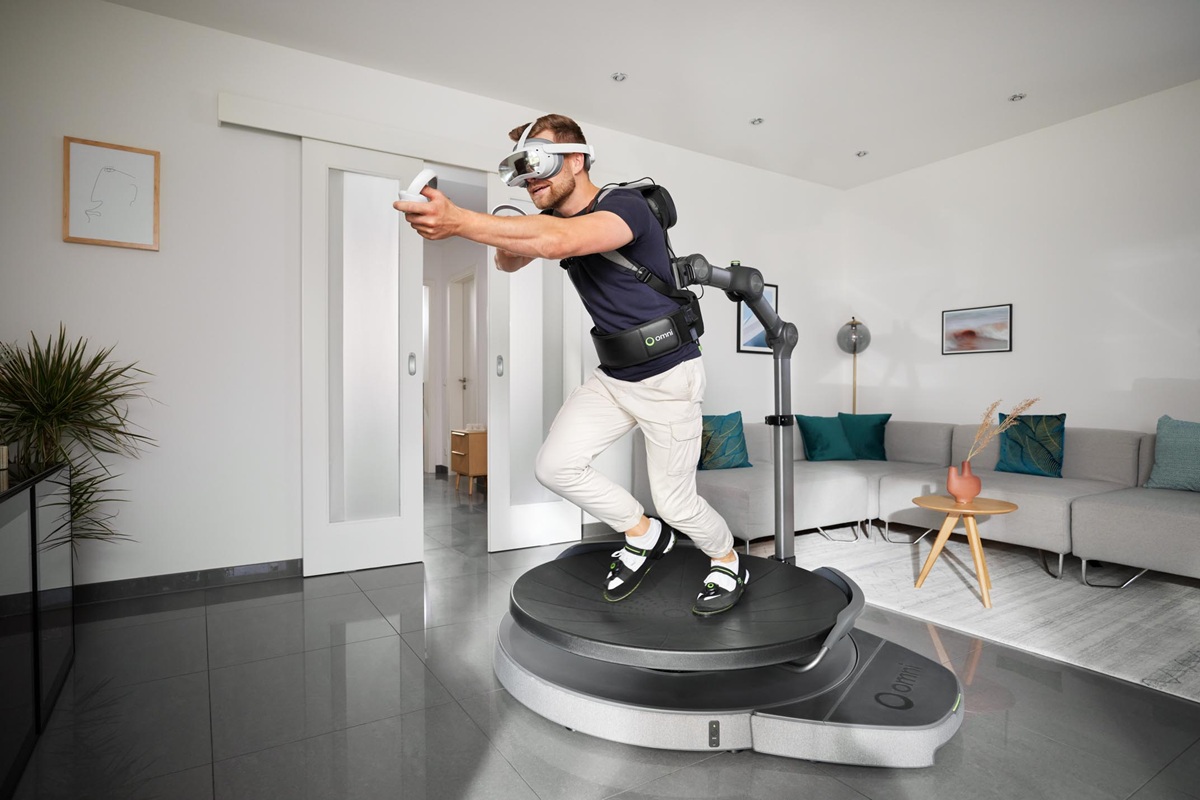
Virtuix, the developer of full-body virtual reality systems where you can get exercise by running on a treadmill, announced the expansion of Omni One sales to Europe just weeks after its initial public offering.
The company said the move is a significant milestone in the company’s international growth. European customers can now place orders across major markets including Germany, United Kingdom, France, and additional EU countries through Virtuix’s
dedicated European Union and United Kingdom storefronts, with initial shipments scheduled to begin between April 13 and April 24, 2026.
The European rollout introduces Omni One Core, Virtuix’s PC-connected consumer system designed for SteamVR gaming. Omni One Core delivers true 360-degree physical movement, enabling players to walk, run, crouch, strafe, and move naturally inside virtual worlds using their existing PC VR headsets.
Pricing for Omni One Core is €2,995 in EU countries and £2,795 in UK (VAT included). Virtuix’s European expansion is supported by a regional partnership with Unbound XR, Europe’s online retailer of extended reality (XR) equipment. Unbound XR will manage local fulfillment and logistics across the EU and UK, ensuring a seamless customer experience from purchase through delivery.
“Europe has long been one of the most active PC gaming markets in the world, and expanding Omni One Core into the region is a natural next step for us,” said Jan Goetgeluk, CEO of Virtuix, in a statement. “With strong demand, an established distribution partner, and a growing community of PC VR gamers, we’re excited to bring Omni One to European players.”
Billed as the “Peloton for Gamers,” Omni One combines immersive gameplay with meaningful physical activity. Depending on gameplay intensity, users can burn up to 700 calories per hour, with some customers reporting significant fitness results, including losing more than 40 pounds in four months while playing on Omni One.
The European launch builds on strong global momentum for Virtuix. The company reported 138% yearover-year growth for the six months ended September 30, 2025, and Omni One maintains an average customer rating of 4.8 out of 5 stars. In 2025, Omni One was recognized with the Auggie Award for Best VR Interaction Product, underscoring its commercial success and product-market fit.
Virtuix has production capacity in place to support up to 3,000 units per month, representing approximately $100 million in annual revenue potential, positioning the company to scale efficiently as international demand grows. The company recently listed on the Nasdaq Stock Exchange, securing an $11 million investment to support expanded sales, marketing, and ongoing product development.
European customers can now place orders and learn more about Omni One Core by visiting Virtuix’s EU and UK online stores.
On January 27, 2026, Virtuix was listed and began trading on the Global Market tier of The Nasdaq Stock Market LLC under the ticker symbol “VTIX.” The price is down 74% as of yesterday’s closing price.
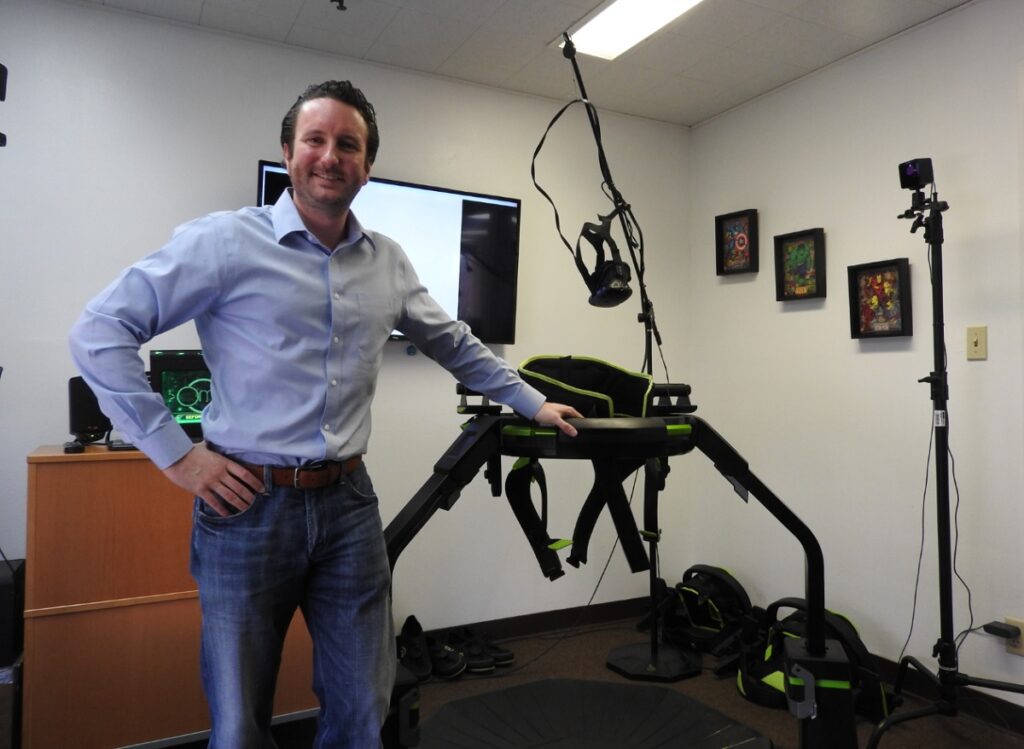
Virtuix founder and CEO Jan Goetgeluk began developing the original Omni treadmill in 2011, motivated by a desire to walk naturally in virtual worlds rather than pushing buttons on a controller.
You could say that the VR market has always had its ups and downs ever since the big VR bubble kicked off around 2016. The troubles for VR today pale in comparison.
He noted that adoption of VR keeps steadily growing for the new medium, and it’s becoming a more mature part of the entertainment space, with growth also happening in enterprise applications. A decade ago, going public was probably unthinkable, but Goetgeluk has been patient as he started the company a dozen years ago.
Goetgeluk launched a Kickstarter for the product in June 2013 that raised over $1.1 million, making it one of the most successful campaigns of its time. Virtuix has since raised $50 million from high-profile investors, including Mark Cuban, venture funds including Maveron and Scout Ventures, and through equity crowdfunding.
Revenue for the six months ended September 30, 2025, grew 138% year-over-year. To date, Virtuix has brought three generations of products to market, generating over $20 million in sales. However, the company is not profitable, Goetgeluk said.
For the six months ended September 30, 2025, the company reported net sales of $2 million, or 138% year-over-year growth, with a net loss of $4.1 million for the six months. For the six months a year earlier, the net loss was net loss was $10.1 million, so a 60% improvement in the bottom line. That $10.1 million did include a one-time non-cash expense of $4 million, so adjusted for that, net loss was approximately $6 million (or improving about 35% in the latest period). Revenue in fiscal year ended March 31, 2025, was $3.6 million.
The IPO price started out good on the first day, closing up 21% to $24.39 a share. But since that time, the price has plummeted to a closing price yesterday of $5.17 a share.
Asked about that price fall, Goetgeluk said, “We have no concern about that. From our equity crowdfunding campaign, we have about 10,000 retail investors, some of which have been investors with us since 2016 (10 years). So an initial wave of ‘motivated early sellers’ was expected. As a company, we don’t focus on the short-term stock price fluctuations but continue to focus on what we do best: building great products and a great company. We reported strong year-over-year growth, so we’ll keep scaling and drive value for our shareholders.”
The IPO was a test of whether the stock market still believes in the dream of VR, particularly after Meta laid off 10% of the employees in its Reality Labs division recently and closed a few VR game studios.