
A lot has changed on movie sets over the last thirty years. One change you might not expect? Almost everyone working on the production — from the leading actor to the gaffer — plays games. The passion involved in making movies based on gaming properties has grown significantly since the 1990s.
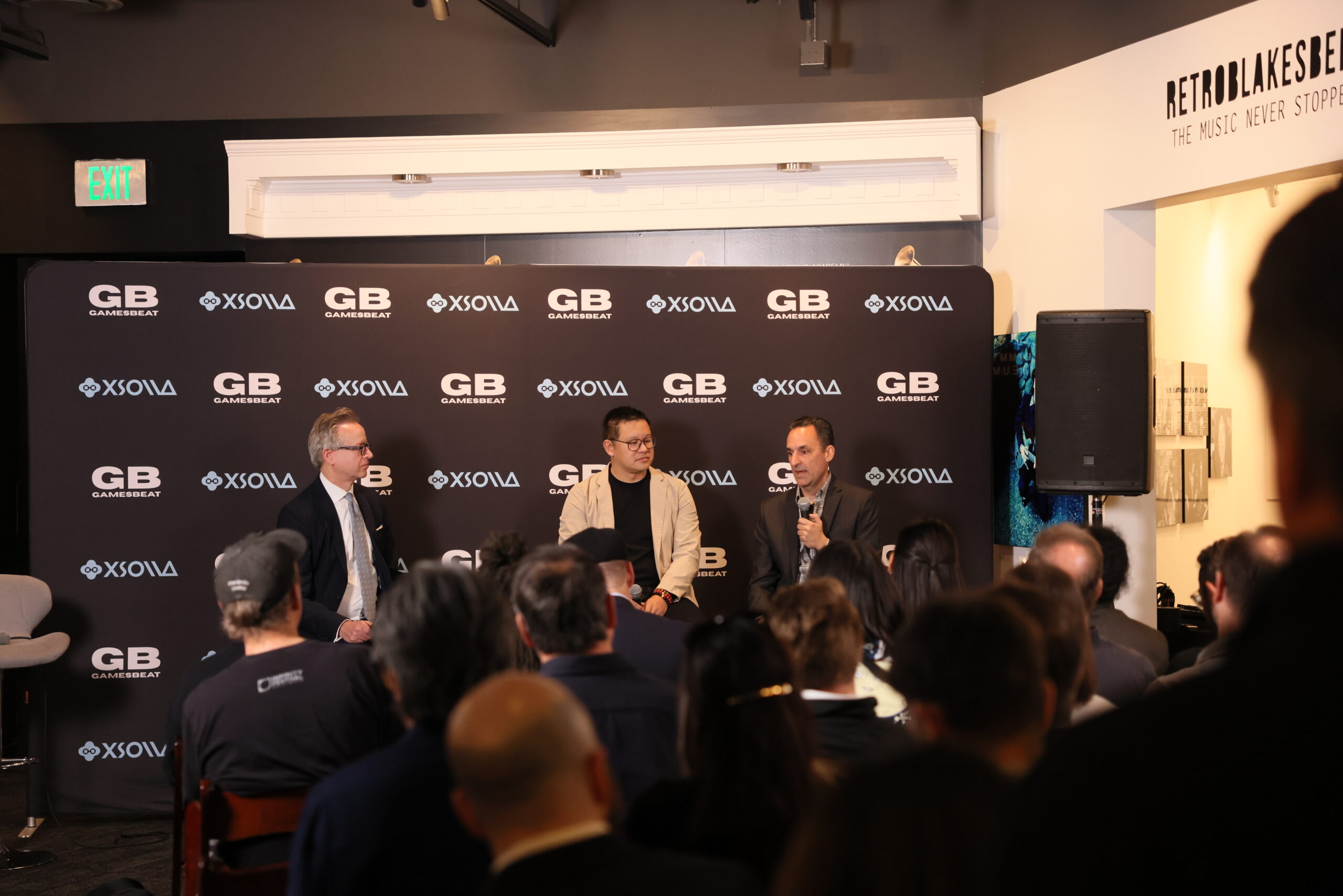
The evolution of Hollywood’s game adaptations was a core element of the discussion in “Video Game IP, Licensing, and the Future of Entertainment,” a panel at last week’s GamesBeat Insider Series: Hollywood & Games. Moderator David Hoppe, founder and managing partner at Gamma Law, was joined by Yong-Yi Zhu, VP, head of strategy, business operations, and compliance at Tencent Games Global — who sponsored the talk — and Capcom Pictures VP of media business Stefan Makoul. The three executives spoke about how the perception of video games has changed in Hollywood and what they look for when choosing creatives to work on their IPs.
A tale of two Street Fighter productions
Hoppe began the talk by citing one of the earliest video game movie adaptations, the 1994 “Street Fighter” movie starring Jean-Claude Van Damme. Makoul helped bring that movie to fruition. A new Street Fighter movie starring Jason Momoa and David Dastmalchian is being released in 2026.
“It’s probably a lot of people’s guilty pleasure,” he said of the 1994 movie. “It’s interesting because at that time — Capcom fully financed that — video games were brand new to Hollywood and the people making movies were just looking to reach another audience. But it’s very different from what we see with the movie we see being filmed today.”
Gaming was nowhere near where it is today when the movie was made in the early 1990s, and the production reflected that fact. Makoul recalled how he didn’t believe anyone involved in the movie was a fan of the Street Fighter franchise. Raul Julia, who played M. Bison and is known for his role in the Addams Family, joined the movie because his kids were fans of the game.
“Whereas you flash forward to today, the director, the actors, down to everyone in the crew grew up with Street Fighter,” Makoul said. “You can see the passion going into the movie that you didn’t see 30 years ago.”
As with every successful gaming project, authenticity is key
The number of gaming-inspired movies has exploded in recent years. Titles like “Sonic the Hedgehog,” “A Minecraft Movie,” “Detective Pikachu” and others have not only been popular, but they’ve showcased a depth of knowledge only possible if the movies were created by passionate creatives who were familiar with the properties they were adapting.
“Most of the people we speak to on the creative side are gamers,” Zhu said. “For us it’s important to have directors and writers who are deeply entrenched […] It’s hard enough to make a game that resonates with thousands of fans. It’s harder to adapt that into a movie.”
Tencent excels at creating engaging games-as-a-service titles that players stick with for years. Zhu admitted that the company is not as experienced at creating compelling narratives found in games like The Last of Us.
Honor of Kings, a MOBA developed by Tencent’s TiMi Studio Group, is one of the most popular mobile games in China. Multiplayer games like that heavily emphasize gameplay and the player experience, rather than a strong narrative. That’s why Tencent partnered with Tim Miller, Blur Studio, and Amazon MGM Studios to create an entry in the animated series Secret Level that explores the Honor of Kings universe.
The success of Secret Level is also a testament to how audiences have changed over the last several decades, according to Zhu.
“Back in the day it used to be North American and a Western Europe was the key target audience,” he said. “Now there are audiences all over the place. [Our goal] is identifying global audiences and identifying those types of opportunities.”
Bringing together the worlds of games and movies
Live-service gaming has become one of the most prominent business models in the industry. Games are no longer released and then moved on from; instead they continue to update their content roadmaps to bring new ideas and features to players years after release. These ongoing updates make for great crossover between movies and games, per Makoul.
“Instead of putting a Street Fighter movie when we launch a new game, and there are a ton of problems with that, we can release the movie and as we ramp up to it we can have an update that syncs with the release of the movie and give something to the fans,” he said.
The discussion highlighted how far gaming and Hollywood have come in the past thirty years, and how authenticity, passion, and a global perspective are key to successful adaptations. As the industry continues to evolve, collaborations between games and movies are likely to become deeper, more creative, and more connected to the communities that inspire them.
Disclosure: This panel discussion and the resulting article were sponsored by Tencent.