
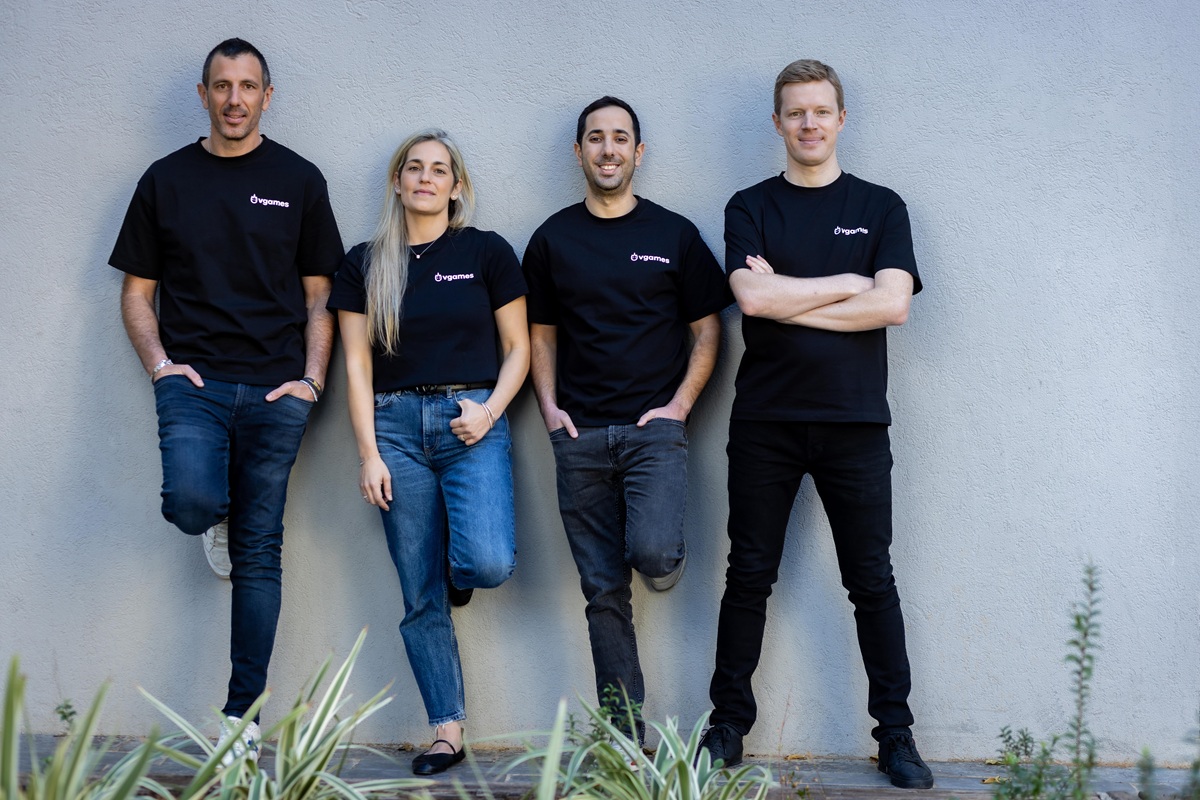
Vgames and General Catalyst’s Customer Value Fund have partnered to offer growth financing for gaming studios worldwide.
Through this partnership, they have already deployed over $350 million and expect to deploy over $500 million in the coming year.
Vgames has announced a strategic partnership with General Catalyst to provide Growth Financing for gaming studios worldwide. This collaboration brings together Vgames’ deep expertise in gaming investments and General Catalyst’s innovative Customer Value Fund to offer a unique funding solution for gaming founders seeking to scale.
Now it turns out that companies have another option besides giving away equity to get money. They can now finance user acquisition with upfront funding that is repaid only if the user cohorts it supports perform, said Eitan Reisel, founder and managing partner of Vgames, in an interview with GamesBeat.
“From the very beginning, our mission has been to back and support gaming entrepreneurs at every stage,” said Reisel, who runs Vgames with Daniel Mironov. “By partnering with General Catalyst, we are expanding our ability to provide gaming studios with access to large-scale capital that allows them to scale efficiently, without diluting their ownership or adding risk to the business.”
“Gaming is a rapidly evolving industry with significant scaling opportunities,” said Pranav Singhvi from General Catalyst, in a statement. “By partnering with vgames, we are creating a financial framework that empowers gaming entrepreneurs to compound their businesses over the long term. This partnership is about unlocking new possibilities for studios looking to accelerate growth while maintaining control over their companies.”
Vgames has been at the forefront of gaming investments, having backed 40 companies globally since its launch in March 2020. The fund has played a key role in early-stage investments while also leading later-stage rounds in some of the industry’s most promising companies. The new initiative will allow founders to access growth capital tailored to their unique business needs, complementing traditional equity that ought to be used for product and engineering investments.
Over the past several years, vgames and General Catalyst have already collaborated on multiple opportunities, including successful partnerships with SuperPlay and Candivore, both part of vgames’ portfolio. These engagements have demonstrated the strength and scalability of the model, delivering meaningful growth while maintaining founder alignment and capital efficiency.
The financing model, powered by General Catalyst’s Customer Value Fund, is designed to address one of the biggest challenges faced by fast-growing gaming studios: funding user acquisition and marketing efficiently.

Traditionally, growth-stage gaming companies have relied on using their own cash and equity capital to fuel their sales and marketing (S&M) expenses, this is a poor use of cash. With this new model, Vgames and General Catalyst will pre-fund a studio’s growth initiatives in return for a capped entitlement to the future lifetime value created from the specific cohorts it funded. Unlike traditional debt, this approach aligns financing with value generation, ensuring that studios only pay when they earn, and never out of pocket.
This partnership further reinforces Vgames’ commitment to supporting top-tier gaming talent across multiple geographies, including Israel, the Middle East, Europe, and the U.S. The fund remains dedicated to identifying and investing in high-potential gaming studios, leveraging a data-driven approach to assess market trends, player engagement, and business viability.
“As a fund, we believe in being founder-first. Providing alternative financing options ensures that studios can focus on creating amazing content and reaching new audiences without the constant pressure of raising equity rounds,” said Daniel Mironov, partner at Vgames. “This partnership with General Catalyst is a testament to our commitment to gaming founders worldwide.”
With this new initiative, vgames and General Catalyst are set to redefine how gaming studios finance their growth, offering a flexible and scalable approach to capital that aligns with the fast-moving nature of the industry.
Vgames said it is the most active mobile gaming venture capital fund globally, backing category-defining founders from inception. With $400 million in assets under management and top performance across funds, Vgames is a multistage investor providing both equity and non-dilutive financing to companies shaping how billions play, connect, and create — across gaming, interactive entertainment, and consumer experiences.
Headquartered in Israel, Vgames has invested in over 40 companies, including SuperPlay, Innplay Labs, Candivore, GOAT Studios, 44pixels, and PeerPlay, among many others.
How user acquisition financing is coming into fashion

Singhvi said in an interview that the General Catalyst Customer Value Fund started 5.5 years ago and it has scaled up a lot.
“The idea behind the fund was pretty simple. As a technology company, once you reach a certain size and scale, the vast majority of your money is just deployed in sales and marketing, what’s known as customer acquisition cost,” said Singhvi. “In the gaming world, companies spend those dollars and they generate lifetime value from their core customers on an ongoing basis, and they do this month after month, quarter after quarter. The big challenge for companies is that they invest dollars today, but it takes some time for them to realize those dollars.”
The payback time could be 12 months, 18 months or 24 months. It just depends. That would be a huge cash sink for the company, where they deploy the money and don’t see a return for up to 24 months.
“But they have to keep scaling it if they want to grow,” Singhvi said. “That cash can’t be used for other things like reinvesting in products or more engineering or M&A. The idea behind this fund was to really solve that problem for companies and founders, which is, go to companies and say, instead of using your own cash to fund sales and marketing, we will provide you a dedicated balance sheet to fund your ongoing sales and marketing spend.”
But it’s not a blank check. It invested in certain cohorts of users. If that cohort pays off, then the fund reaps the rewards. But if it doesn’t, it sees the downside risk.
“This does not add any risk to the company, and this is very important,” Singhvi said. “This is the key thing that allows companies to be a lot more front-loaded about growth. So the fund has scaled up quite a bit since our inception; we’ve deployed over $5 billion across more than 65 companies.”
By partnering with Vgames, General Catalyst can reach more of the promising game companies that have relationships with Vgames.
“Eitan has been an extremely close advisor to us, specifically in the mobile gaming world. When we started out, we started working with some of his portfolio companies, SuperPlay being a big one. But even beyond that, as he scaled his business. It’s been amazing to see the kind of relationships he has in the broader mobile gaming ecosystem,” Singhvi said. “This was a very natural partnership for us to effectively formalize.”
How it works
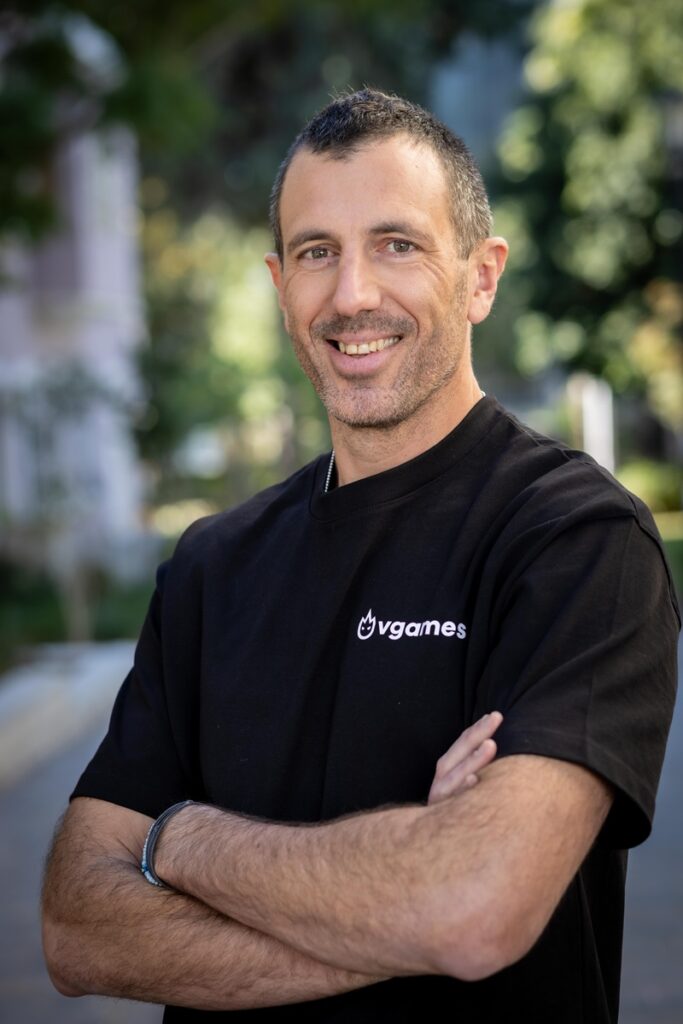
צילום אריק סולטן
16/12/2024
Reisel said that in the consumer and gaming industries, multiples for valuations are not that high. But the teams need a lot of capital to grow successful games, and that’s why the General Catalyst money is important. Companies like SuperPlay are a good example. Vgames had a good outcome with that investment, but a lot of the growth was supported with non-dilutive funding like user-acquisition financing, Reisel said.
“General Catalyst really nailed it on what I think is the best way to see growth capital, because that means that unit economics are where they should be, and now it’s only a matter of feeding the engine. And it made total sense, on our end, to take another angle to just support gaming companies globally, or consumer companies globally,” Reisel said.
“From our perspective, this is a very broad ecosystem, in that there are different kinds of companies and founders who have very different ambitions as well,” Singhvi said. “So if you think of our partnership as PvX, they’re working with indie developers and so they’re focused in that part of the market, which is very different than what this partnership is about. This partnership about companies that are looking to scale over time and have massive equity outcomes.”
Reisel added, “The outcome for founders is unbelievable, right? Because they are taking capital with interest. It’s much less expensive than giving the equity from their own shares.”
Reisel said that a decade ago, mobile game publishers were very strong with a hypercasual business that was growing. Indie game devs around the world started to prosper as marketing costs rose. It became clear this needed to evolve.
“They want to sponsor their own growth because that’s the way for them to benefit the most from their outcome and not get a 60% rev share,” Reisel said. “Where this model makes the most sense, as I said before, it’s not on the cap table, but it’s also not diluting them on the profits or the revenue. And I think it’s just an evolution for this business. Marketing has become more expensive. It’s becoming a big lever of where we’re putting our equity capital, even in seed investments.”
For mobile casual game studios, 60% of their seed investment capital might need to go into marketing.
Singhvi said the difference between this version of user acquisition growth capital and financing methods of the past is that this one is “fully risk aligned.”
He said, “We specifically invest in a cohort, and we get fully paid back from that cohort. So if the cohort doesn’t work, we own the full downside risk. That also means we cannot work with every company. It’s a product that is for high-quality companies only. And so from our perspective, it can scale a lot better. And so when you ask about the question about all the different [user acquisition financing] products that have existed in the past that are just basically variations of traditional debt, people can market it however they want.”
And he said, “Ultimately, the reason they fizzled out, or never even took off, was that nobody ever deployed it at scale. The product didn’t make sense. It added risk to the company, and that is a big part of what is required to get to scale. But the point is not to encumber the company with risk.”
The cohorts in question are extremely resilient pools of customers that they’re acquiring that can be very systematically tracked. All these companies typically centralize their data in a data warehouse like Snowflake or Redshift or BigQuery.
“You can actually look at that data to understand the resiliency of that cohort really well. And so what we do, in partnership with Vgames, is actually get access to the transaction data of these companies to understand how their cohorts are going to perform over the long term and feel comfortable understanding and pricing that risk,” said Singhvi. “You have many different kinds of cohorts based on the kind of business, whether you’re in app purchases, whether you’re in app ads, whether you’re, you know, something like real-money gaming. All that will be a function of the business itself, and the shape of the curve will vary based on the nature of the business and the specific category that it is in. But from our perspective, what we really seek to do is to find consistency in cohorts.”
The trick is to invest $1 in user acquisition growth and generate more than $1 in return.
“If you can do it consistently, that means you can scale it, and if you can scale it, that’s actually very interesting, because then you can go build a big business in a way that makes sense for all your other shareholders as well,” Singhvi said. “That’s how we think about both the cohorts and also the broader underwriting of what we’re doing here.”
The Customer Value Fund is designed for this kind of deal, where you fund sales and marketing through user acquisition financing.
Educating both investors and founders

Singhvi believes there is growing private equity interest in the gaming sector, especially with some of the most recent deals announced.
“Gaming is a big piece of entertainment,” Reisel said. “We are bringing that gaming expertise and Pranav brings amazing expertise at scale.”
Singhvi said, “I actually fundamentally believe that a lot of mobile gaming companies are massively undervalued. I think people don’t understand how resilient these cohorts are, and the reason they’re undervalued is that they have to keep reinvesting their own cash in sales and marketing, or UA. When you have to do that, by definition, your return on equity is significantly worse because you have to keep diluting yourself. And you’re not going to be able to do something else with it. The second you bring in a source of capital like that, the return on equity of that business skyrockets.”
Singhvi added, “It’s actually completely transformational. One of the reasons this entire ecosystem is very interesting is that I actually just think that it’s an ecosystem that is massively undervalued. I actually think if these companies were capitalized appropriately, they would be some of the most spectacular equity investments that one can think about. The cohorts are so resilient when you actually look at the data, and that’s something that is causing us to lean in.”
Mironov said in an interview that he spends his time with founders who are looking for capital and many are starting to understand their dilution of ownership a lot better.
“This market education works,” he said.
“Educating fuonders about this product is very difficult,” Reisel said. “It’s new. There’s always a level of healthy level of skepticism when something is new.”
The future of growth capital
Growing a big mobile game company today seems impossible to grow today because you need ” a dense amount of capital,” Reisel said. “Marketing is not becoming cheaper. There are fewer platforms that you can market on. And really, if you want to build the next SuperPlay, the only way to do that is to access non-dilutive financing. That’s actually the new growth capital. And I think that’s tremendous. That’s where we’re such good believers on this.”
Reisel said that you have to give the companies the confidence to invest in their own growth now.
Asked about what he thought about three years of tough times in gaming and his expectations for 2026, Reisel acknowledged the industry has seen hard times, especially in triple-A games.
“It’s becoming more and more expensive to build very big games and IPs are difficult. You need a lot of capital to grow them over time. But I think we’re very optimistic about the business,” Reisel said. “I think who’s building games is transitioning.”
“I think we’re going to be surprised by that in two or three years. It’s going to be new folks that we don’t even know about now,” Reisel said. “We’re very optimistic. If you look at our portfolio, we’re one of the only funds that support cross-platform mobile gaming first because the distribution is easier. That’s going to be the same in five years. I don’t think gaming is going anywhere.”