
As gaming industry jobs and talent flow away from the coasts, Chicago is becoming a not-so-secret hub for gaming in the Midwest and beyond.
On June 16, a mix of Chicago’s best and brightest game makers, industry observers, and user-generated content creators came together at Chicago’s Row 24 event venue for GamesBeat Engage, the latest iteration in GamesBeat’s Engage series of panel and networking events, which is sponsored by Xsolla.
The June 16 edition of GamesBeat Engage was hosted by Keisha Howard, the founder of Sugar Gamers. Over cocktails and hors d’oeuvres, speakers and attendees discussed the evolution of Chicago’s gaming industry — and celebrated Epic Games’ decision to host its annual Unreal Fest conference in Chicago, which made the Windy City a temporary center of gravity for the industry between June 16 and 18.
The Midway Mafia
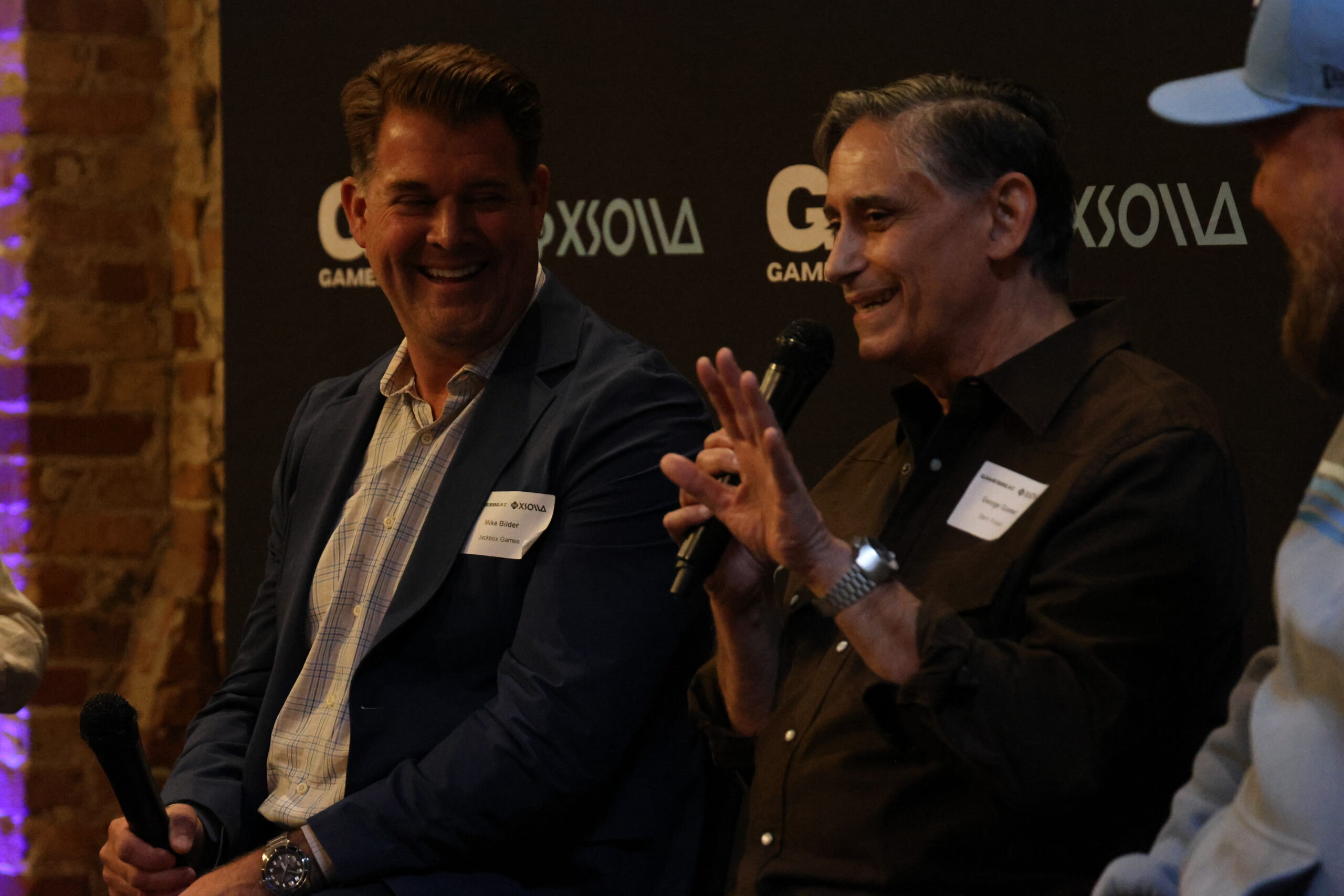
GamesBeat’s Engage event was capped off by a panel discussion featuring Jackbox Games chief executive officer Mike Bilder, Stern Pinball chief creative officer and executive vice president George Gomez, and Vivrato founder and chief executive officer Adam Boyes, moderated by GamesBeat lead news writer Alexander Lee (that’s me). Bilder, Gomez, and Boyes spent years working together at the now-shuttered Midway Games — which for decades was the undeniable center of the Chicago game industry — and spent 30 minutes reflecting on the numerous shifts they had experienced during their careers and how the industry in Chicago had been reshaped as a result.
Gomez, who began his career at Midway in 1978 and whose portfolio includes legendary games like Tron and Spy Hunter, reflected on Chicago’s central role in the development of both arcade gaming and pinball, quoting the old joke that the gravity in Chicago is perfectly attuned to pinball.
“We know games as commercial products that we interact with in lots of new ways today, but they were all born of the arcade,” Gomez said during the panel. “They were born of the coin-op arcade business, which was situated here.”
All three of the panel’s speakers praised Chicago as a strong location for game companies to build their business, citing benefits including the large amount of nearby top-level comedy writing talent at clubs like Second City and iO Chicago, the proximity of high-ranked colleges and universities, and the significantly lower cost of living compared to cities like Los Angeles and San Francisco.
“We are about 70 cents on the dollar from a West Coast salary on average in the gaming sector [in Chicago] — but if we look at the median cost of a home in San Francisco, it’s $1.29 million, and in the greater LA area, it’s $945,000,” Boyes said during the panel discussion. “In Chicago, the average was $336,000. So, if you think about a 20 percent down payment in San Francisco, you’re actually buying a full house here in Chicago.”
During the panel, I pointed out that the Chicago gaming industry appeared to have its own “Midway Mafia,” reminiscent of the so-called Paypal Mafia of the Silicon Valley tech industry. Boyes, Gomez, and Bilder agreed with the transition, pointing out that they were far from the only members of the Midway diaspora who had become leaders in the gaming industry, both in Chicago and beyond.
“There’s lots of great stories to tell, there’s lots of great history that happened, there’s lots of fun employees and drama and things that occurred [at Midway],” Bilder said. “So, when we get together at events, either locally or just seeing each other out and about, we’re always telling stories — and so that ‘Midway Mafia’ thing is kind of a real thing.”
Developer or creator?
It was Epic Games’ Unreal Fest that brought many of GamesBeat Engage’s attendees to Chicago in the first place, so we would be remiss to have hosted the event without an ample amount of programming dedicated to the growing user-generated content space and the role of creators and platforms within it.
The event kicked off with a panel discussion featuring Xsolla global enterprise sales director Joe Pierpont, JOGO Studios lead game designer Jeremy Pedron, and JOGO Studios engineering lead Brennin Landrean, moderated by Howard. The discussion focused on the way user-generated content creators and studios often straddle the line between approaching their business as traditional development studios and as content creators more akin to creators on platforms like YouTube or TikTok — and the ways JOGO borrows from both sides of the industry to succeed.
Much of the discussion focused on discovery, with Pedron and Landrean pointing out the benefits of JOGO’s large social following to get the word out about the studio’s new creations. Pedron said that JOGO had built its marketing strategy around a network of Fortnite content creators and community voices, with these players featuring their games in their content using a “regular rhythm” to help “direct an audience that we could control.”
“JOGO really early on noticed that discovery is a very volatile place — it could change in the snap of a finger in an update,” Pedron said during the panel discussion. “All of a sudden, the metrics in which you are hoping your game does well can change, and how you build your game is completely based on that data, so when you don’t have full access to that data, it makes it really rough.”
JOGO’s full marketing strategy is a mix of creator partnerships and more traditional marketing tools like trailers and articles, per Landrean, who said that much of JOGO’s marketing focused on short-form content on TikTok, YouTube Shorts, and Instagram Reels.
“Doing it pretty consistently is a big part of it, and I will also add as many lines that we can throw into the pool — you never know what you’ll catch,” Landrean said during the discussion. “To your point, creativity is massive — knowing your target audience, what platforms they’re on, and how they’re doing community, and finding as many lines to throw in those pools.”
Pierpont praised JOGO’s creator-forward marketing strategy, highlighting that game makers who want to take advantage of a similar approach can also plug into pre-existing creator partner networks like Xsolla’s to market their games.
“From our side, there’s a lot of tools you have available to really get to your audience as well,” Pierpont said during the panel discussion. “If you already have a Discord community built up, it’s important to really go direct, where you have all the platforms you can ship on — but if you’re going right to the audience you’ve already built up, you could go for the partner network that we have, where you can partner with all the content creators that are on there as well.”
Debating UGC platforms
The event’s second speaker session was a spirited debate about which user-generated content platform is best between Roblox and Fortnite for game makers looking to build their business in 2026. The Fortnite side of the debate was represented by the prominent Unreal Editor for Fortnite creator Tom Jank, who argued that the relatively nascent nature of Epic Games’ creator platform created more opportunities for game makers looking to establish themselves without having to compete against the many major players already making games on Roblox.
“On Roblox, there’s top things, and they’re all happening right now — whereas with Fortnite, to me, at least, it feels like they’re waiting for those moments still,” the Fortnite creator said during the debate. “My goal is to be one of those big tentpoles, and to hit that.”
The Roblox side of the debate was argued by Stephen Dypiangco, a UGC consultant and the writer of the newsletter Max Power Gaming, whose work largely focuses on the Roblox ecosystem. To demonstrate the strength of Roblox as a platform for game makers to build their business, Dypiangco cited the wealth of strong pre-existing IP on the platform as a potential blueprint for newer UGC creators looking to achieve lasting success from their creations.
“People are building real businesses — not just through in-game monetization, but they’re really building franchises, they’re building IP,” Dypiangco said during the debate. “You have these top games — Dandy’s World or Brookhaven — that are doing things like book deals, and getting their merchandise in Walmart and Target, et cetera. So the potential is to not just hit a big game, but to have something that becomes lasting.”