
Epic Games CEO Tim Sweeney unveiled Unreal Engine 6 today during The State of Unreal address at the Unreal Fest in Chicago today.
The first brand new version of Unreal Engine in six years, UE6 will debut in 2027 (ish) and it will bring together Unreal Engine 5 and Unreal Editor for Fortnite (UEFN). Epic is targeting a Unreal Engine 6 Early Access release at the end of 2027.
Sweeney noted that Epic first teased Unreal Engine 6 at Rocket League’s competitive esports event in Paris, today was about the next step in Epic’s mission to make great games and tools and share them with devs to bring their ideas to life.
UE6 will be a single, unified engine for the next generation of gaming, Sweeney said. It will keep doing things like doing better rendering and running games. Cook times will come down. Iteration loops will get tighter. Mobile will be increasingly capable, said Marcus Wassmer, executive vice president of development at Epic Games, during the keynote.
Sweeney acknowledged that things “are kind of awkward” today with two different ways to build in Unreal, with Unreal Engine 5 for standalone games on stores with triple-A features, and then Unreal Editor for Fortnite (UEFN) with a tool set that enables devs to build a game once and deploy it to all platforms that are live on Fortnite with its 80 million monthly active users.
Each one has unique and cool features, but they lack the features of the other one, he said.
“Our big initiative to bring them together is the core of the Unreal Engine 6 effort. It’s UE5 plus UEFN equals UE6, plus some more cool stuff on the way,” Sweeney said. “The vision is that if you build things once the Unreal Engine 6 way, then you can have a game that you can ship everywhere, including the console stores, the PC stores, the mobile stores, and also ship live into the Fortnite ecosystem, or any other Unreal Engine 6 based game ecosystem built by any other developer.”
The details
In a post, Epic Games said UE6 exists distinctly from an incremental UE5 development path because three things about game development need to change at the same time:
- Epic is moving the gameplay programming model to Verse, Epic’s programming language which “transactionalizes” C++, for increased accessibility of development and so that devs can build persistent, large-scale, live experiences with thousands of contributors.
- Epic is enabling content, code, and economies to become portable and interoperable across games, ecosystems, and engines through open standards, to enable developer collaboration on much greater scales than ever before.
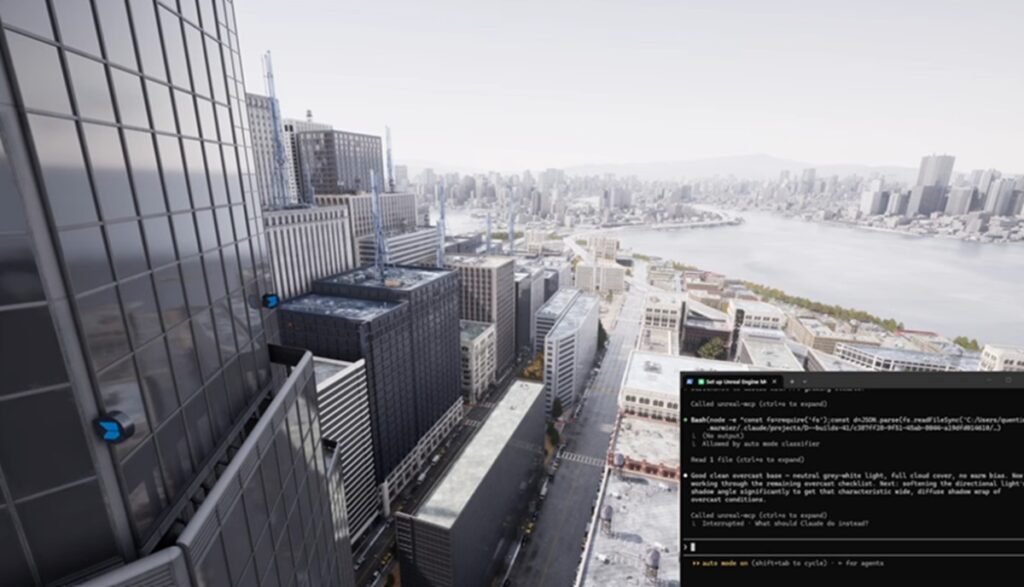
- And Epic is building development pipeline features such as an MCP with integrations for Claude, Gemini, and others, as creativity and productivity multipliers so that teams can focus their efforts on the essential creative and technical tasks of development rather than time on time-consuming manual tasks.
A new gameplay framework
UE6 will include an entirely new gameplay framework known collectively as Scene Graph, built from scratch on Verse.
Verse is the foundation for Epic’s future programming model. It’s a next-generation programming language purpose-built to power massive, persistent game worlds at scale, where global state just works, and transactionally correct concurrency is handled by the runtime.
Scene Graph is a modern, high-level gameplay framework that will give devs a true foundation for creating games and experiences easily, and sharing their interoperable components between games, Epic said.
Verse draws ideas from functional, logic, and imperative languages, and should feel immediately familiar to anyone who has worked with languages like Python or C#. But it also has some unique features, aimed at solving the complexity and scaling problems of modern game development—starting with its unique software transactional memory model.
All functions in Verse run as part of atomic transactions, which can be rolled back and resimulated when needed. These transactional semantics also extend to any C++ code that is called from Verse, Epic said.
Real multithreading for scaling games
For now, to make all this work, Verse runs on a single thread and calls C++ code built via a custom LLVM compiler that automatically transactionalizes the C++ code. In principle we can extend this method to automatically run transactions concurrently on different threads, but we have some work to do to get there on hardware that will scale appropriately.
The more interesting thing this enables for large, live worlds is that with UE6, we’re working to build a full distributed software transactional memory system. Epic said it intends to take the existing single-threaded-style Verse game code, then distribute it across multiple servers automatically. When an object is needed on one server in the cluster, the Verse runtime rolls back the current transaction, migrates the object to the appropriate server, then re-runs the transaction with the object now present.
Epic said the magic here is that your game code can be written as if it were running on a single machine without needing to coordinate custom networking code all over the place. Behind the scenes, many servers can be spun up to distribute the work automatically. Epic said the early prototype work is promising and has shown that we can both write ‘single-server’ code and get performance scaling out of distributing the work transparently.
Even better, the distribution and the transactional semantics make saving game data way simpler. The Verse runtime can automatically synchronize and save any global state for the program, and share that state across all running instances of a game or ecosystem, Epic said.
To the game programmer, this means that setting up something like save state for a player is as simple as defining a single global map of player to saved state. No more having to set up databases and coordinate schemas between your game and other backend services. You can do all of this without ever leaving Verse. You can see the early stages of this at work in UEFN’s weak_map persistence features which are forward compatible with the general purpose method.
Epic thinks all of this together results in a really powerful new programming model for the future.
Portable content

There’s a second guiding principle of UE6: Content and code should be portable across games and engines.
Epic said its goal is to give the games industry a whole new way to grow our ecosystems with cross-promotion, portable player value, and to really lean into all of the positive-sum dynamics that Metcalfe’s Law predicts for connecting experiences and social graphs together.
The company said it is going to do this with a determined effort to move UE beyond just extensibility and into open specifications for interoperability. Where existing standards such as glTF or USD are capable of fulfilling UE6’s needs, Epic will make them “first-class formats” within the engine. Where a standard doesn’t yet exist that serves the needs of game ecosystems, Epic will open up Unreal Engine’s own systems as open specifications with Verse APIs, defined asset conventions, and documentation that any engine, tool, or studio can implement against.
Fortnite cosmetics will be Epic’s first real proof point of portability. The team will start by moving the base system to an open UE6 module. This means devs will have the option to use a player’s entitled Fortnite Outfits in their own games, and they will get the tools to build Outfits for your own games that work inside Fortnite.
Epic is tackling this problem first because we want to prove things out with a system that’s complex enough to be a meaningful existence proof of the idea, and one that inherently comes with a ton of player value by respecting their purchases across an interconnected ecosystem of games.
The team sees this as the first step toward building a shared economy for smart assets: functional assets with logic and functionality that work across games, to recognize players’ time and spending in a better way.
In the end, this isn’t really a Fortnite story, Epic said. It’s about proving that such a mature, complex system can work at scale—and that every game that works with these systems will immediately benefit from them.
Creativity and productivity multipliers with your preferred AI models

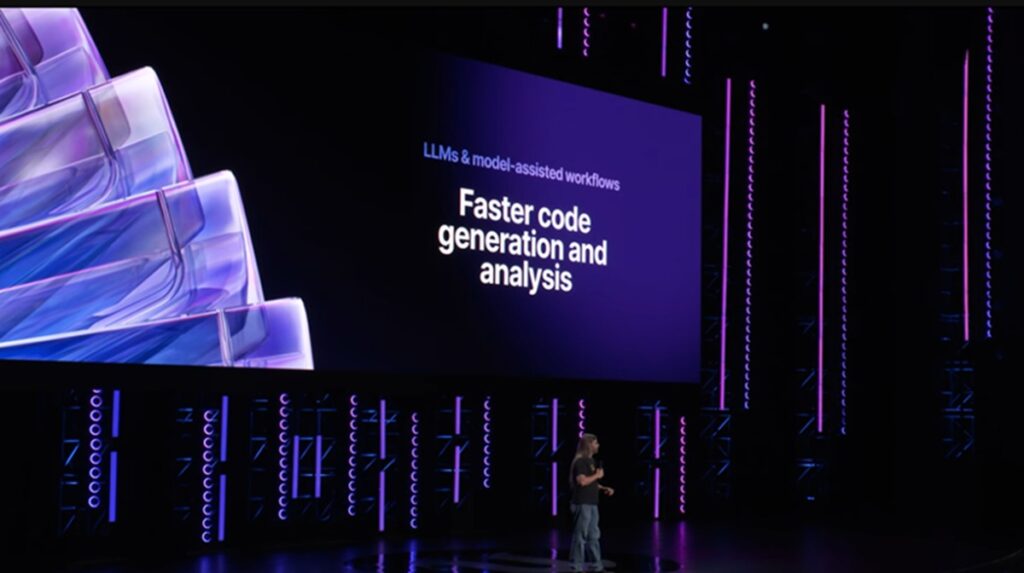
On the topic of model-assisted creation, Epic sees Unreal Engine 6 helping tighten iteration loops and reducing time-consuming manual setup of levels, character rigs, particle systems, skinning bone weights, as well as adjusting lighting, etc: all the manual work required to translate professional creative intent into interactive, performant, and cross-platform games. Crucially, Unreal Engine is uniquely placed to be the efficient, cross-platform, high-fidelity runtime that will remain the substrate on which much of the world’s best games run, Epic said.
Thus, for UE6, the team see LLMs, generative AI models, and tools like Claude and Codex playing a central role in helping you build content faster while maintaining the creative control devs need.
A big part of Epic’s effort is going into exposing a broad set of engine capabilities through the MCP protocol, so that developers can mix and match the best leading-edge models and build custom integrations of all sorts on an open Unreal Engine 6 MCP foundation. Epic will also also improving the Epic Developer Assistant (EDA) as an optional turnkey solution, available to all by default.
Epic’s goal for UE6 is to greatly reduce the tedious work in authoring content to leave more time for creative exploration, and increase the amount of iterations a team can make to polish their content. UE6 will ship with tools and workflows where devs can choose to bring their own favorite models, battletested against internal development and in UEFN.
Also, internally at Epic, the team is investigating what works and what doesn’t for code generation. Epic recently opened up pretty broad usage for code generation and AI analysis across our backend, engine, and game development engineering teams.
Epic has had particular success with people writing custom tools for their own work, fast code indexing tools for helping LLMs deal with large codebases like Unreal Engine, fast incidence response analysis, automated root cause crash and CIS job failure analysis, automated test generation, and of course the acceleration and parallelization you’d expect on backend service development.
What’s interesting is that most of these use cases aren’t even generating mainline Unreal Engine code, though that will probably come eventually as well. Epic said you can expect Unreal Engine 6 to also include all of the key learnings for using codegen for engineering along with content workflows.
The path from here to there
UE6 converges two threads that Epic has been running in parallel: UE5 for high-end stand-alone game and content development, and Unreal Editor for Fortnite as the live environment where the new programming model has been getting battle-tested.
As UE5 and UEFN merge into one editor, you will be able to ship traditional games and projects exactly as you do today. You’ll be able to ship directly in Fortnite, or ship to your own ecosystem, and optionally, make it compatible with Epic’s. Devs will have an easy path from one to another, Epic said.
Epic’s philosophy through this transition is to bring existing projects along, not to force a hard break. Studios shipping on UE5 today should expect a manageable, and clear path forward when UE6 is ready for them. To allow for this, Actors and Blueprints will be in early versions of UE6. Eventually, these will be deprecated when the new framework is sufficiently mature, and you’ll have conversion tools to move projects from one framework to the other.
Epic is targeting a Unreal Engine 6 Early Access release at the end of 2027, with the full release of UE6 coming 12 months to 18 months later. In the meantime, a new UE6 development stream is now on GitHub, publicly visible, just like the UE5 stream has always been. The Verse language implementation has moved out to be visible here, though it’s not intended for general adoption at this point.
Any remaining UE5 changes will merge to UE6 to not get lost, but not vice versa. In addition, Fortnite development will be attached to the UE6 stream so you can see all ongoing work live and cherry-pick changes as needed. However, this stream is not meant to be any kind of Alpha: it exists just to be transparent with where we’re going. And while Epic isn’t currently planning another official UE5 release after 5.8, the company is reserving the option to release a 5.9, if needed.
Building this together
UE6 is going to change a lot about how games are made. It will not change the thing that matters most, which is that the people in this industry—the game developers, the filmmakers, our Unreal Engine family—are the ones who make anything actually happen.
Epic will have a lot more to share on the road to Early Access, including deep dives on the new gameplay framework, Verse, Scene Graph, and model-assisted workflows we’re bringing into production tools. In the meantime, keep building on UE5 and UEFN. Everything you ship today is a step toward what Epic is going to ship together in UE6.
Tim Sweeney’s additional remarks
In prior generations, Sweeney said Epic put graphics first in leading and announcing technology, but with Unreal Engine 6, he said Epic is focusing first and foremost on the foundations of the engine to prepare for the next generation of game development and for gaming.
“And the most critical change here is the move to the Verse programming language for gameplay development alongside the low level C engine, and the reason for this is to enable massive scale code and content interoperability across games,” he said. “Today we have a lot of content interoperability features. You go to the Fab content marketplace, you download a bunch of cool objects, you stick them in your game, but then you have to wire them up and make them work yourself.”
Then Sweeney said, “In the Unreal Engine 6 generation, by having a unified set of APIs and a unified language that works everywhere, you’ll be able to build smart assets that are completely portable between games and between projects, and can be shared at any scale with the potential to have millions of developers collaborating together on a shared body of work that anybody can use.”
Unreal Engine 6 will also enable far larger game simulations. He said the original Battle Royale movie in 1999 that inspired the battle royale genre of games just happened to have 100 people dropping onto an island.
“It’s a nice coincidence, because that’s actually the number of maximum number of players our code base could support running on a single thread on the server. If they had 1,000 players, we don’t have been able to do it,” he said.
“But the goal of Unreal Engine six is to introduce software and transactional memory technology,” he said.
That will enable scaling of games to any amount of computers that can fit into a data center: hundreds, thousands, potentially even millions of players in the future.
He said this tech is in the research lab now and the team is working very rapidly to make it into a practical shipping system.
Another major aim of Unreal Engine 6 is something Sweeney first talked about at the Siggraph computer graphics show back in 2016.
“There, I talked about a potential future of gaming as an open system, like the web is open, in which any developer can run a server, build a game, host their own content, and the user can go anywhere they want, from place to place, bringing all of their stuff with them and tearing down the walls and barriers that exist between games to have a completely interoperable ecosystem,” Sweeney said.
Sweeney said, “We’re tantalizingly close now to fully realizing this idea of an open gaming ecosystem with the ability to travel from game to game and independent developer freedom to build everything they want everywhere they go.”
He said Epic’s aim is to work with all developers in the industry to build this system together.
“We want a system with no overlord. We’ve been spending some time fighting against overlords in the industry with some amount of success, and we don’t want to be the next one,” Sweeney said. “Rather, we want to be a partner to every company in the industry, including all game developers and also other makers of technology and services, in order to build the best stuff and connect it all up together.”
He said a huge part of this effort is effort is going to be Epic adopting open standards like the Pixar’s USD file format and glTF, and also working with standards bodies and releasing specifications to bring new standards into the industry where they’re lacking and needed.”
Wassmer’s take
Wassmer said if you looked back at the history of Unreal Engine, he noted version four in 2014 opened the engine to all by making the tools free to use and the source accessible on Github. UE5 (announced in 2020 and shipped in 1.0 in 2022) reinvented how worlds are built, helping to create bigger, higher density and more dynamic detail than before.
UE6 is about how evolving how Epic ships and operates games. He said Epic will embrace standards and open up Unreal’s own systems as open specifications with first APIs, defined asset contentions and documentation that any engine tool or studio can implement against. He said Fortnite cosmetics will be the first real proof point of portability.
We’re going to start by moving the base system to an open UE6 module that’s usable by all games, and this means that you’ll have the option to use the players entitled Fortnite outfits in your own games, and you’ll get the tools to build outfits for your own games that work inside Fortnite,” Wassmer said. “We’re tackling this problem first, because we want to prove things out with a system that’s complex enough to be a meaningful existence proof of the idea, and one that inherently comes with a ton of player value by respecting their purchases across an interconnected ecosystem of games.”
Epic sees this as the first step towards building a shared economy for smart assets, functional assets with logic and functionality that work across games to recognize players’ time and spending in a better way.
“In the end, this isn’t really a Fortnite story, it’s just about proving that such a mature, complex system can work at scale, and that every game that works with these systems will immediately benefit from them,” Wassmer said.
He said Epic thinks that AI-assisted game creation will tighten iteration loops, reduce time-consuming manual setup of levels, character rigs, particle systems, getting bone weights, adjusting lighting — all of the manual work required to translate professional creative intent into performant and cross-platform games.
“Crucially, Unreal Engine is uniquely placed to be the efficient cross-platform high-fidelity runtime that will remain the substrate on which much of the world’s best games run,” he said.
He added, “Our goal for UE6 is to greatly reduce the tedious work in authoring content to leave more time for creative exploration and increase the amount of iterations a team can make to polish their content. UE6 will ship with these workflows, battle tested against internal development and in UEFN.”
He said Epic has been investigating the future of coding and engineering
“as well. Internally at Epic, we’ve been doing a lot of investigation to see what works and what doesn’t, and we recently opened up pretty broad usage for code generation and AI analysis across our backend engine and game development engineering teams,” Wassmer said. “We’ve had a lot of great success stories. We’ve had particular success with people writing custom tools for their own work, fast code indexing tools for helping LLMs deal with large code bases like UE, fast incident response analysis, automated root cause analysis for crashes, automated test generation, and of course the wins you’d expect on backend service development.”
But he said most of those cases aren’t even generating mainline Unreal Engine code yet, though that’ll come.
You can expect Unreal Engine 6 to include all the key learnings for using AI for engineering, along with content workflows,” Wassmer said.