
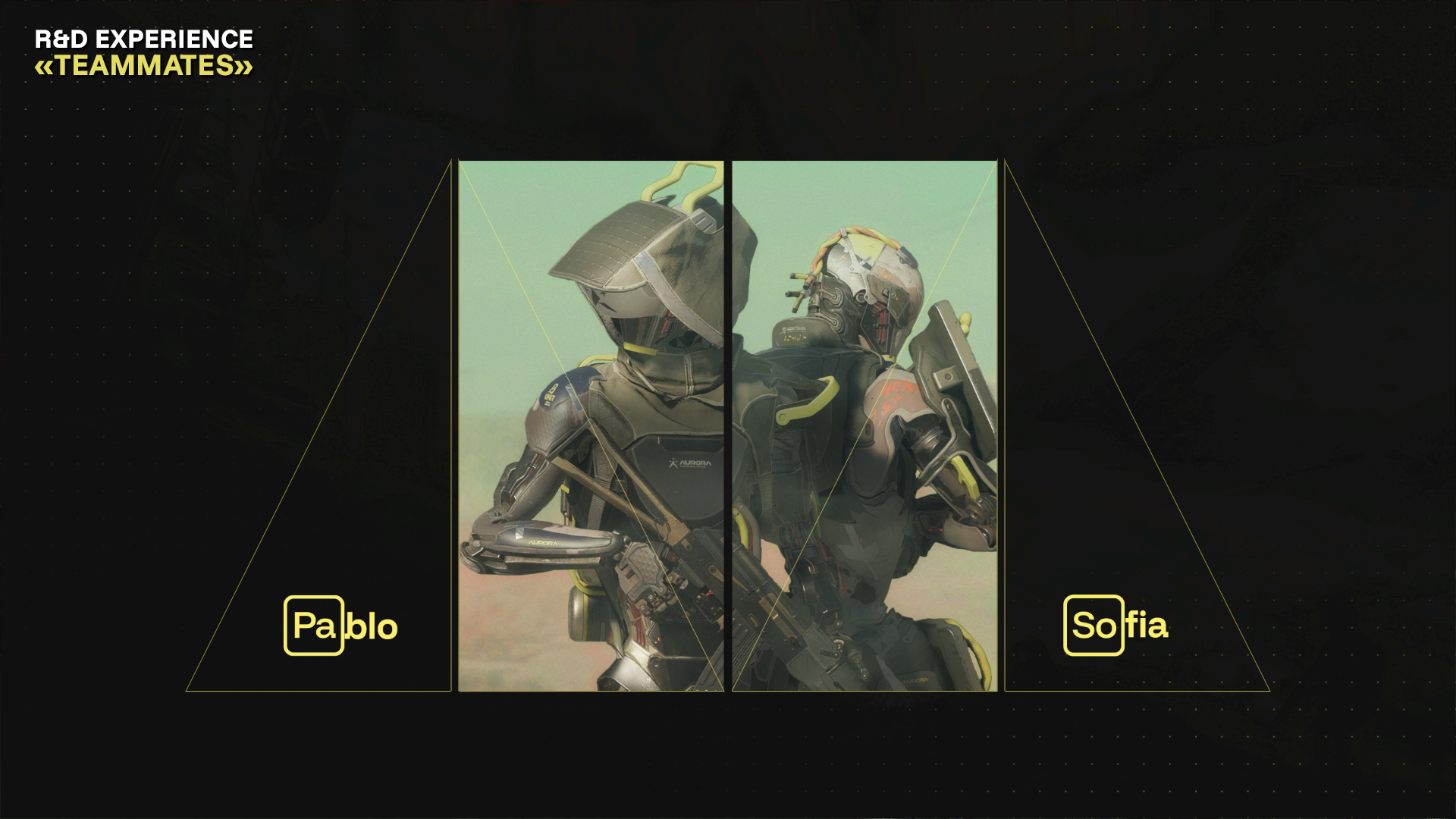
Ubisoft’s new AI demo, “Teammates,” represents the bleeding edge of artificial intelligence in gaming — including the ongoing challenges still present in the space.
As game developers look to integrate AI more deeply into their work, Ubisoft has gone all-in, expanding its internal AI programming team from roughly 30 individuals in March 2024 to about 80 in November 2025, according to an estimate provided by Ubisoft senior lead programmer Emmanuel Astier in an interview with GamesBeat last week.
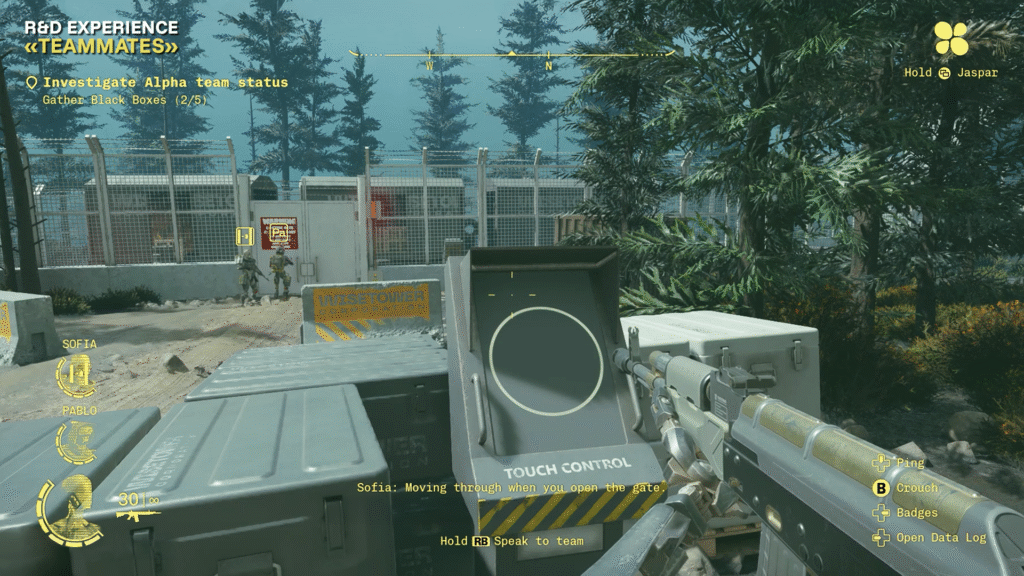
On November 21, Ubisoft unveiled its flashiest AI product yet — a game demo titled “Teammates” showcasing both AI-powered in-game teammates named Sofia and Pablo and a disembodied AI assistant named Jaspar — and GamesBeat was able to experience the demo hands-on.
AI-powered non-player characters are arguably the most obvious and desired method of integrating artificial intelligence into games, but attempts to implement this concept have occurred in fits and starts in recent years, and most AI teammates and enemies in video games are limited to a small range of actions and responses, without being able to truly improvise.
Ubisoft’s AI characters and assistant showcased true improvisation in the “Teammates” experience — a first-person shooter in which the player could speak to Jaspar and direct Sofia and Pablo using commands spoken into a mic — failing to repeat a single action or dialogue line throughout GamesBeat’s hour-plus demo. In many ways, Pablo and Sofia felt like real human teammates. They had different personalities — Sofia was vocal and quick to action, while Pablo was more reserved — and gladly followed orders like “flank that enemy over there” or “establish a defensive position” while freely disobeying orders that put them at risk.
At long last, attendees whispered to each other, AI NPCs had arrived.
“This is the demo that I was expecting two years ago,” said Tommy Thompson, the creator of the AI and Games YouTube channel and lead organizer of the AI and Games conference, who attended last week’s “Teammates” demo event.
Growing pains
Relatively smooth gameplay notwithstanding, Ubisoft’s AI NPCs were far from perfect. The demo was built using Ubisoft’s Snowdrop engine, but used Gemini 2 as its primary AI model, using ElevenLabs to generate spoken dialogue. As a result, there were some moments of unexpected latency in the experience.
“It did bite them a little bit,” Thompson said in an interview with GamesBeat. “Because Gemini 3 is out, the servers are getting hammered, and so there was additional latency. Sometimes, they responded reasonably quickly, and then other times it was a couple of seconds.”
Ubisoft’s AI characters were also prone to occasional hallucinations. Healing was not implemented in the demo experience, for example, but when asked how to heal, Jaspar shared nonsensical instructions about nonexistent health packs that could purportedly be found on the map. The AI characters were also heavily dependent on manually-entered metadata to identify each object, and were sometimes unable to accurately identify objects whose visual details were left untagged. In one case, the AI assistant was unable to read graffiti within the virtual environment of the demo.
“Under the hood, there is an LLM taking text as an input, so we have to explain the perception of the world as text at some point. For every object in the world, we have textual descriptions: ‘This is a tree, this is a red car that’s broken.’ So we can be missing some details — something you see, that we can’t describe fully,” Astier said. “We have some ideas to change that; machine learning can now describe some images.”
Indeed, many of the growing pains experienced by Ubisoft’s AI tech come from its roots in large-language models. To both create unique AI personalities and build a world that those personalities can perceive and inhabit, Ubisoft developers have had to write thousands upon thousands of words, creating a tremendous amount of work for narrative directors like Virginie Mosser, who worked on the “Teammates” demo. Creating deeper personality descriptions and more in-depth metadata tags could help decrease latency and reduce the number of hallucinations offered by AI characters, but Mosser’s team is still trying to find the right balance of narrative text to guide the experience.
“Traditionally, we write dialogue, we record and this is it,” Mosser said in an interview with GamesBeat. “There is a lot of effort to put in original content to nurture the LLM, so it was a different way of writing and working.”
For now, the “Teammates” demo uses a mix of LLMs and traditional action trees for its AI NPCs. Jaspar, the assistant, operates off of a pure LLM, but the AI teammates Sofia and Pablo simply use LLMs to fill in information or directions that they can’t get from their character trees.
“They can shoot, cover, follow you, et cetera, but then you have the LLM that has the information that, usually, you don’t have — ’the player is wanting this, the world is doing that,’” said Ubisoft direct of gameplay generative AI Xavier Manzanares in an interview with GamesBeat.
Ubisoft is already at work addressing some of the growing pains in its AI demo. Ubisoft has opened the experience up to a select group of players, who share their feedback via platforms like Discord. One significant change to the experience that resulted from this feedback was Ubisoft’s implementation of AI-generated player achievements.
“It’s an ongoing process to ensure that we can discover everything,” said Ubisoft data and AI director Rémi Labory.
The “Teammates” demo experience is never meant for public consumption, its findings will have a significant impact on future AI development at Ubisoft — across all genres, not just first-person shooters. Labory and his colleague Reynald Francois, a creative director on the “Teammates” project, said that their insights are in high demand at Ubisoft’s multitude of constituent studios, with developers across the company jumping at the opportunity to implement AI NPCs in their ongoing productions.
“If I started making a game tomorrow, I would completely embrace thinking NPCs and thinking characters as a core component of my gameplay, because this is changing the deal,” Francois said. “When you have people that really listen to you — answer you, respond to you, and can interact with each other — the game is never going to be the same.”
Disclosure: Ubisoft covered travel and lodging costs for this reporter to attend a “Teammates” demo event.