
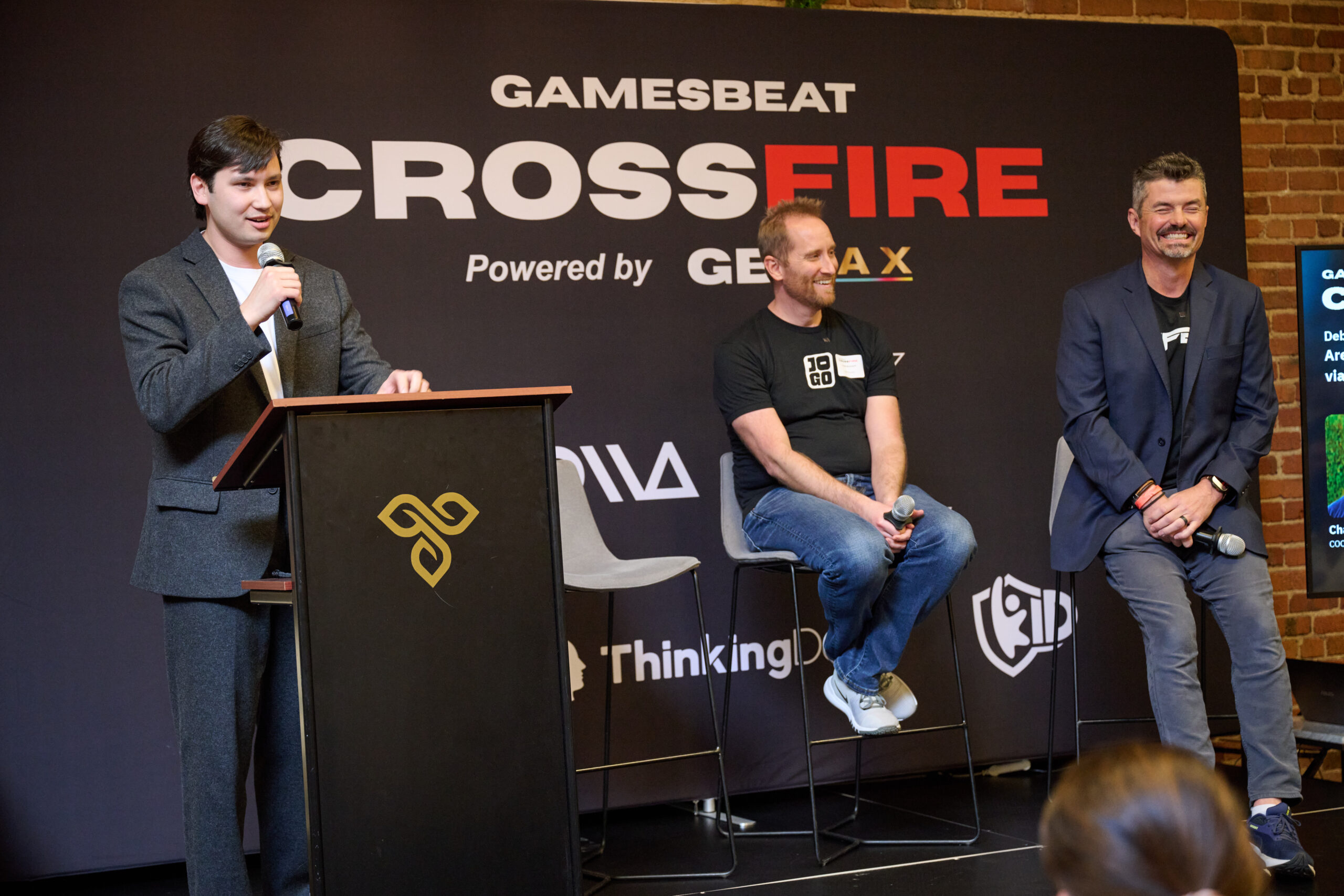
This year’s GDC Festival of Gaming featured more user-generated content than ever — and debaters at GamesBeat Crossfire were primed and ready to discuss the shift.
On March 10, over 500 game industry leaders attended GamesBeat Crossfire — our debate-themed event in San Francisco during the week of GDC — to observe or participate in debates about the industry’s hot-button topics in 2026. One of those topics was user-generated content, with leading Unreal Editor for Fortnite developer and JOGO Studios chief operating officer Chad Mustard joining EmptyVessel general manager Garrett Young for a discussion about the UGC opportunity for independent game makers.
Although Mustard and Young are approaching the business of making games in significantly different ways — JOGO iterates rapidly on Fortnite games, while EmptyVessel focuses on a double-A development strategy using more traditional game distribution ecosystems — their discussion was marked by a healthy dose of respect between the debaters, with Young pointing out that UGC was simply not an option when he started his career decades ago.
“We are in such a better world than we were in the 90s,” Young said. “Not as smooth a world as we used to be — but Electronic and Walmart, they were the judge and jury of what a player is going to like. That was it; there was no access to players.”
UGC and traditional developers’ different levels of access to players formed the crux of the discussion at GamesBeat Crossfire. The most stark difference between Mustard’s and Young’s business strategies was in how the two companies approach game discovery and user acquisition, with Mustard enjoying the benefits of a much more direct relationship with a player base more interested in jumping around between smaller, snackable games than traditional core gamers.
“That’s one thing that JOGO has as a competitive advantage — we already had built-in communities, so we can leverage our communities to influence the algorithms,” Mustard said. “We know that there’s certain things that trigger the algorithm, and so we use our communities to trigger those things. When we combine the community with the algorithm, that’s when you start seeing real success.”