

GamesBeat: There’s another creative issue here as well. Do developers want to make their own game with their own IP? Do they resist the idea of making a game with someone else’s brand on it?
Leopold: That really depends on the developer. I’ve spoken to a number of developers who are either trying to build their own IPs, or have entertained these conversations with big IP owners. It really depends on what the developer’s trying to accomplish.
When our team’s looking at games for the global publishing side, we’re specifically trying to find that next IP, an original IP that we can make into a brand. We were able to do that with Crossy Road. We partnered up with bigger brands to promote that game, like PS-Y from Korea. It’s about identifying what defines that brand.
If the developer wants to go after a bigger brand, that is an investment on their own side, in terms of game design and background story. It can be worth it in the end. But it’s definitely much more difficult to push that.
Eger: We’ve never published an external IP. It was always important for us to create our own IP. We know it’s difficult, but you’re super flexible with what you can do. When you hit a success then you can leverage that. You can make another game based on your own IP. Especially when you have in-game seasonal events or whatever, you’re completely independent. You can decide for yourself what you want to do with the game. Once you make it with your own IP, there are lots of ways to leverage that.
GamesBeat: Matt, what do you think about what there is from the west that works in China, and why?
Leopold: There’s this perception that a lot of the big brands automatically make it in the Chinese market, just because there has to be a market there for them. The truth is that there aren’t many really big IPs appearing in the top-grossing charts. You see games like Marvel up there. Marvel does well all over the world. But if you look at the IP itself, it really started with the movies. The comics never resonated with Chinese readers. The IP only works in China when it draws from the movies. Looking at a game like Marvel Puzzle Quest, where it uses a lot of the art style from the comic books and old cartoons, that doesn’t resonate very well with Chinese players. You have to dissect a brand and find out what aspects of the brand work in what region.
An IP that works very well in both China and western countries is Transformers, where the cartoons in the ‘80s—those were actually dubbed into Chinese and shown on TV. They were able to penetrate the market early on and get traction. Now it’s grown into a bigger IP since the movies have come out. These generations are getting older. There’s a massive audience in China for Transformers compared to smaller IPs that haven’t had time to become known in the market.
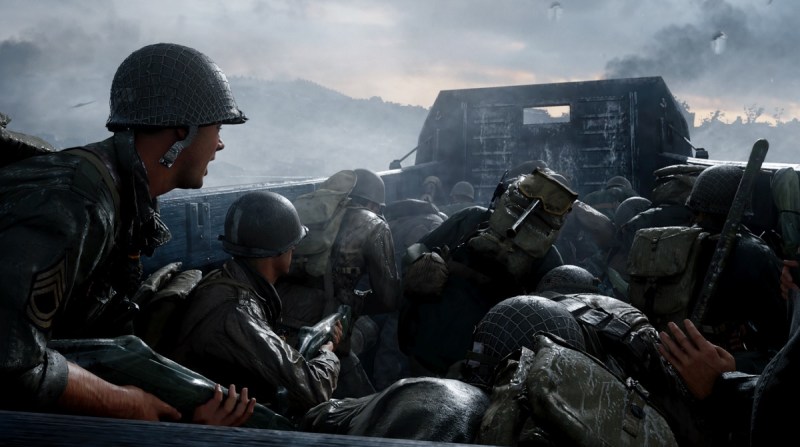
GamesBeat: Let’s talk about Call of Duty and Halo. Halo was a big smash hit on the original Xbox. It instantly became a brand for Microsoft. With Halo 2, though, there was some conflict there. J Allard was running the Xbox business with Robbie Bach above him and they wanted the next Halo to come in real fast. Ed Fries and the Bungie team resisted the idea of doing a sequel fast, because while it took them only a short time to get Halo to the original Xbox, they wanted to make Halo 2 bigger and better. They took three years to get it out. Ever since then, that team has expanded and increased the frequency of releasing new games. But one of the reasons Ed Fries is no longer at Microsoft is because of arguments like that.
With Call of Duty, the same kind of thing happened. The Infinity Ward development team, which made Call of Duty, was purchased by Activision. Eventually they got into a big lawsuit after Call of Duty: Modern Warfare came out. The notion was that Bobby Kotick, at the top of Activision, wanted to do a new game every year, and give the game to more studios in order to do that. Infinity Ward wanted to remain the stewards of the brand and didn’t want to do a new game every year.
If you look at Call of Duty now, it comes out every year. It has surpassed $15 billion in revenue. Call of Duty: WWII could be one of the most successful games of all time. So who made the right decision? Was Bobby Kotick right? Were the guys running the Xbox business right?
Auclair: It’s a tricky question. Obviously the way you have to look at it is, how does the consumer respond to the brand? Consumers sometimes have a habit of wanting something every year – like Madden, like Call of Duty now. Some others like to wait for a longer period of time. You can say that about Star Wars. I think both were right, because both have had tremendous success.
Could Halo have had bigger success with a new game every year? I’m not sure. The brand, the IP, is very specific. It doesn’t have that kind of depth, necessarily. When they went for too much depth, with too many extra storylines, people actually stepped back. It was too much – too many villains, too many planets. Call of Duty, they can go for different periods of history, whether it’s the modern day or back to WWII. There’s a lot of material for them to do a game a year. And it’s not the same kind of audience. There’s a gap between Halo fans and Call of Duty fans.
Ultimately Call of Duty has had more success than Halo, but I don’t think that’s necessarily because of that specific decision. You have to know your fans and understand what they want. That’s how you should make your decision.
Audience: From a business model perspective, Activision obviously made the right move. Like we were talking about earlier, they could have fallen into a trap, overusing the brand every year.
GamesBeat: The deciding factor seems to be whether the quality stays high. With Activision, they had some foresight to put three studios on it, so they could each do one game every three years and the quality on each game stays high.
Audience: When we were talking about what makes a brand, we were talking about what a brand can bring to your game. It’s the reversed situation. Activision was right, because what does a game bring to the brand? You mentioned that with Call of Duty, each time they can explore a different setting. They can keep exploring the brand that is Call of Duty with this elegant way of doing a new setting for every game, every year. Halo doesn’t have that that breadth, so maybe they don’t have an opportunity to do a game every year that brings something as interesting to the brand.
GamesBeat: So the kind of brand matters — whether it’s a brand that’s suitable for making sequels or not.
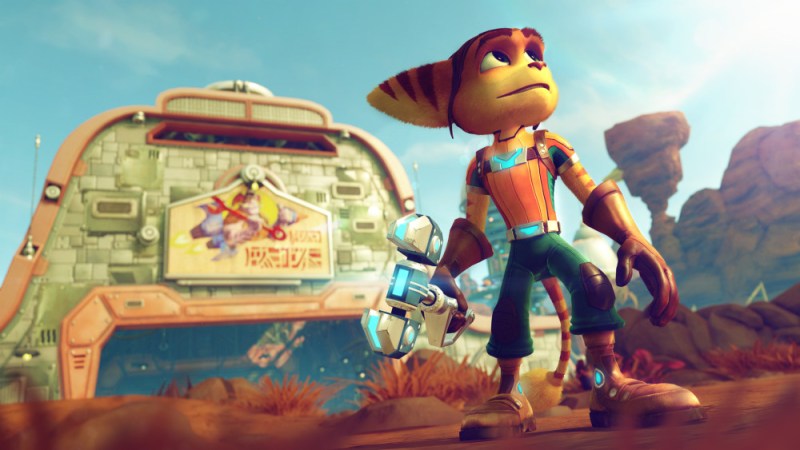
Audience: I work at Insomniac, and I’m in charge of branding there, so I have some perspective. Ratchet and Clank is a good example of what we’re talking about. There have been a lot of Ratchet and Clank games over the years, and we’ve made a lot of consecutive Ratchet and Clank games. When we did that, it was our primary studio focus. Always we always weighed what the quality would be, but we also had to look at what else we were doing at the time.
When we broadened our portfolio, we expanded it to include games like Resistance, Sunset Overdrive, and now we’re working on Spider-Man. We had to take that into account. What can we do to honor our franchise, honor our fans, and be proud of the work we’re doing? Balancing those things from a development perspective, at the same time taking into account what a publisher is looking for, all those things have to be weighed together. I don’t think it’s as black and white as “Was Activision right?” It’s the whole recipe together. Hopefully you can negotiate and figure out what’s best for everyone.
GamesBeat: So you can rotate brands as well. Keep them from getting exhausted.
Audience: For us, from a brand perspective, first and foremost it’s about making sure we’re a good place to work. That trumps everything. But from there, you want to be smart enough — when we were serializing Resistance and Ratchet and Clank, yeah, we were leapfrogging back and forth. When we came out with Ratchet and Clank for PS4, obviously we’d been working on Spider-Man at the same time. You look at what your priorities are as a studio, the value of the brand, what the publisher is looking for, the quality you’re trying to attain, and that’s what informs your decision.
Auclair: You’re also talking about two different things. The brand of Insomniac itself, the studio, that’s a brand. You have to maintain that brand at the same time you’re managing the brands of your products. You have to cater to both, because if you only make Ratchet and Clank every year, you probably won’t be a great place to work. People are going to be pissed off making the same game. You have to think about those two brands.
That’s part of why the studio resisted at Activision. They were the brand owner. Their brand was “we’re the makers of Call of Duty.” They were afraid of that. It’s a lot of branding to take into consideration. Even people are brands now.