
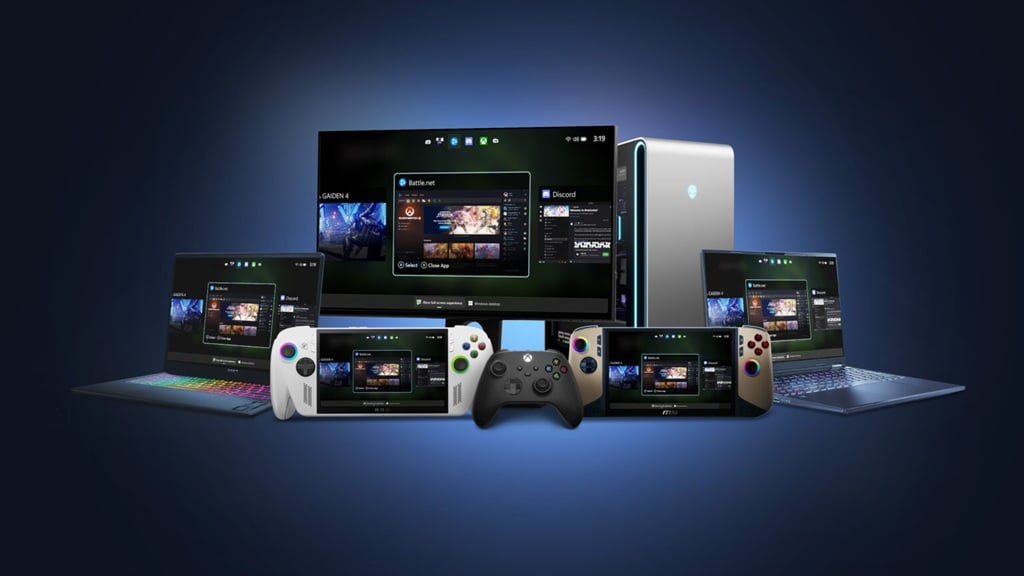
Last week, Microsoft released its financial earnings report for the second quarter of the 2026 fiscal year, which included details about its gaming division and hardware. There wasn’t much information in the official documents — but perhaps that, in and of itself, is a piece of information. What we do know is that total gaming revenue for the company was down 9% year-on-year.
That’s already not an encouraging number, but the report also notes that Xbox hardware revenue is down a whopping 32% (though it doesn’t specify the exact revenue amount). In its SEC filing, Microsoft says this is down to “lower volume of consoles sold” (points for honesty) and noted that gaming being down overall is due to 2024 having “benefited from strong first-party content performance.”
Leaving aside the topic of content and software — a topic which calls for its own dissection and analysis at some future point — what does the current market look like for the Xbox? I ask this question because the topic of Xbox’s hardware future recently got a boost in interest thanks to a throwaway comment in a recent AMD earnings call (good ear, Dean) and it makes me wonder: What sort of world will this new Xbox launch into?
What’s the world of Xbox look like now?
Microsoft’s strategy with gaming seems to be touting the universality of its software — “everything is an Xbox,” after all. In addition to rolling out Xbox to enabled smart devices like phones and TVs, it’s also crossing platform lines to put its games on PlayStation and Nintendo consoles.
That being said, the company still maintains that it’s making a next-gen piece of hardware as part of its “Dream Team” with AMD. The latter revealed that the fruits of these efforts are tentatively scheduled to launch in 2027. Hardware sales have been in decline for several quarters in a row.
In addition to the above, the recent GDC State of the Game Industry survey featured the question, “Which platform most interests you as a developer right now?” On those results, only 20% of respondents said they were most interested in the Xbox Series X/S. Compare that with the numbers for Nintendo Switch 2 (39%), PlayStation 5 (40%) and PC (80%).
Where is Xbox the strongest?
If Xbox’s hardware sales aren’t the most impressive, then it has other areas of potential growth. Microsoft said that Game Pass’s subscriber count is likely to go up in the coming year — or perhaps, since the service has increased in price, perhaps it offers more value to the company per subscriber.
In a recent interview with Mat Piscatella of industry-tracking firm Circana, I asked what areas of the industry are offsetting declines, and he told me that “a lot more people leaning in on subscriptions, playing on devices they own,” alongside free-to-play taking up a larger part of the market. He also confirmed that price increases are also a large part of growth metrics.
Asus also said that its handheld device created in partnership with Xbox, the ROG Ally X, sold better than expected and had a largely positive reception. Perhaps that opens up interesting multi-platform options in the next-generation of consoles. It could be that the current gen “black refrigerator” has a more mobile successor.