
Partner Content, presented by Xsolla
GamesBeat Engage, powered by Xsolla, was an invite-only, salon-style event designed for candid conversations and fresh insights. This time, GamesBeat Editorial Director Dean Takahashi brought the salon to Seattle, where discussions explored the state of the games industry and the evolving structure of game companies in two interactive panels, plus a fireside chat with Ed Fries, General Partner at 1Up.
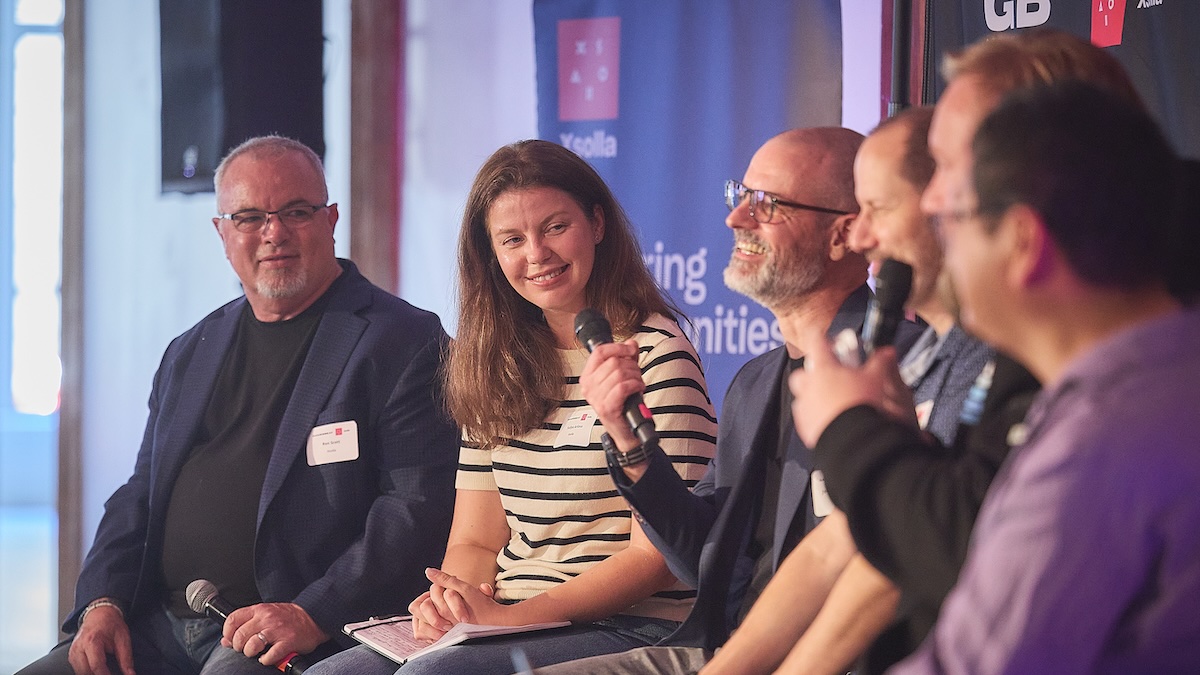
First up, to talk about what’s happening in an industry where growth is uncertain and new business models are key, Takahashi was joined by Adam Boyes, Founder and CEO, Vivrato; Dominic Lobbia, VP Engineering, Zynga; Joost van Dreunen, CEO, Aldora; Yuliya Arlova, Business Development Director, Xsolla; and Ron Scott, SVP Strategic Business Partnerships, Xsolla.
Session 1: Strategies for a growth plateau
Growth is anemic, van Dreunen said. What’s needed to break out of the market stalemate is not necessarily new content, but new ways to distribute that content and reach consumers. The games as a service and free-to-play trend has overstayed its welcome, and consumers are losing interest.
“Every time you hit this plateau in growth, then everyone has to be a little smarter about what they do. In my mind, this is a correction,” he said. “We’re adjusting our mindset, our strategies, our mental picture of what the industry does and who we’re making this stuff for, as opposed to just building it and seeing if they’ll come.”
Thriving global markets
Funding, discoverability, and finding your audience are still key issues. But unexpectedly, indie developers have been finding a lot of global success, Arlova said, while mobile game developers are still finding ways to break into new and emerging markets.
“Those indie game developers, especially in the PC space, I think they’re still in a very good position in North America and in Europe, especially when they find their niche, when they find a genre they want to be really good at,” she said. “For the Middle East and Southeast Asia, as well as Latin America, it’s a rising market right now for mobile, especially for those games that have local payments and sell through web shops.”
New avenues for growth
Thanks to Epic’s efforts in the courts, both Apple and Google are starting to open up their ecosystems. They’re no longer able to charge their 30 percent taxes or fees, and the direct to consumer channel has become a rapidly growing opportunity. There are challenges and some friction, converting users from a one-click purchase option in iOS or Android to setting up a card or other payment method, but the returns are worth it, Lobbia says.
“With the landscape changing and the way it’s already changed, we see that getting to 20% is table stakes at this point, if you want to look at how much you’re doing direct payments versus going through an app store,” he said. “We think we can push that much higher.”
Session 2: Foundations first: partnering to build scalable games
In the second panel, “Foundations first: partnering to build scalable games,” Takahashi spoke to Alex Park, Head of KRAFTON Online Services Engineering, Junaili Lie, Co-founder and CEO at AccelByte and Jana Hodgins, Director of Strategic Partnerships, Xsolla about the role that strategic partnerships play in helping games scale not only faster, but smarter.
Park’s team at Krafton rose directly from the company’s experience publishing their major title, PUBG. They had a team supporting the platform for PUBG, but expanding it to other games has been a challenge.
“We had a lot of struggles with how we could work with teams here, and so many other studios worldwide — one single central tech team can’t have all the experience needed to support studios worldwide,” he said. “As a small team, we looked for the best ways we could do that. We looked for partners like Keywords, like Xsolla, like AccelByte.”
The most important thing for a small backend tech team is being a true partner and sharing experience, he added.
“Cost efficiency is the most important thing that companies are looking for, but we shouldn’t be nearsighted,” he said. “We can definitely use a service in the short term and deliver it to the studios who say goodbye, we’ve got it. But working like that, we can’t survive in this industry. The most important thing is thinking about your partner as not just a service provider, but you have to treat them as an extension of your team.”
Collaboration for smoother launches
“The only way for the game to be shipped successfully is when you collaborate with your partner, whether it’s a central tech team or your vendor,” Lie said. “Collaboration doesn’t just mean sharing plans. It means really understanding the profile of the game. With deeper collaborations, you can avoid surprises. Launches can be smoother.”
This is especially critical in a world where user expectations are growing. Ten years ago, latency wasn’t the deal breaker that it is today.
“That kind of expectation makes it harder and harder to overcome problems,” Park said. “Sometimes it goes well, but sometimes it makes for a lot of complexity. It can cause a lot of trouble. This is the reason that we have to work with experienced partnerships. They have that experience. They already know how to handle this.”
Creating a successful partnership
“If I’m on a game team and I want to evaluate a partnership, I’m looking for not only partners who talk about shared success, but who really mean it,” Lie said. “As a partner, the requirements for a good partner is, how much pain are you willing to take, both technically as well as maybe financially so that shared success can happen.”
But from a partnership perspective, having a good relationship isn’t really enough. You need to invest in tooling that complements the relationship. For example, if a partner promises successful load testing, it ought to have the right tools to come through on that promise.
To build that relationship, game companies should be more transparent, Park said.
“All companies are looking for cost efficiency, but as the customer, we cannot use them like a tool. We’re a team working together,” he said. “We should be seeing the same vision to eventually achieve it. We have to discuss and be more transparent about what kind of plan we have. What kind of tech do we need, how can we achieve our goals in the near future.”
Session 3: Fireside chat with Ed Fries
In the final session, Takahashi caught up with Ed Fries, the former Microsoft vice president who built and ran the company’s game publishing business all the way through the launch of the first Xbox. Now General Partner at 1Up Ventures, Fries talked about how his decades of experience in the game industry have shaped his vision for his investment company, including his strategy.
That includes having a very broad portfolio, which Microsoft had the resources for, but is difficult to do in smaller venture setups.Fries does it by connecting with lead investors — those who lead the rounds, get involved with each individual company, complete the legal work, and sit on the board of the company.
“If we could ride along with the lead investors, was my thinking, be followers on seed rounds, we could come in early and create a broad portfolio,” he said. “It means you have to work closely with the lead investors. You have to be a good partner. And you have to bring value that’s more than just money.”
The value that 1Up brings is a community of indie investors. The management fees the fund generates goes directly into the community, buying industry data, doing events at big conferences around the world, throwing an annual retreat to network and connect and so on.
“Talk to anybody who’s taken investment from 1Up, I think they’re going to say really good things about what they’ve taken from the community and how meaningful it’s been to them,” he said.
Lessons learned
The game industry is more than efficiency, spreadsheets, and sales, Fries says, pointing to the success of Expedition 33, a game widely lauded for its artistic merits, made by a small team in France where work-life balance actually exists, and a bona fide blockbuster hit.
“It made me realize that our industry is ultimately, at its core, about creating art,” he said. “If I came and pitched you with, I want to make a game about the pain that parents and siblings have, you’d say, really? You have to remember that the games business is like the end of a long path of human beings trying to understand the world. It goes back to as long as we’ve had writing. Before writing. Poetry. Plays. Books. Movies. Now games. We have to be telling stories about the human condition. We’re the tip of the spear there, of that job now.”
Game developers need to take their art more seriously, he added, and make things that are more ambitious. Perhaps the industry can draw inspiration from Hollywood, where media creators are celebrated as artists, and each role is recognized as vital to the storytelling process.
“We can’t survive just making copies and sequels,” he explained. “We have to have higher artistic goals to win against our competitors around the world, and ultimately to do what’s really been handed to us, which is this legacy of storytelling.”
Emerging markets are stepping into the spotlight not only by opening up exciting new business opportunities, but also by bringing fresh voices, original art, and unique stories that truly connect with audiences worldwide. This creativity is what ensures the game industry won’t just endure, but continue to flourish and expand.